

Your Cortisol Phenotype Determines Your Ideal Morning Routine: A 2026 Guide
Your cortisol awakening response falls into distinct phenotypes—matching your morning routine to your type can boost energy by 23-31%.
This article is for general informational purposes only and is not a substitute for professional medical advice, diagnosis, or treatment. Always consult a qualified healthcare provider with questions about a medical condition.
Why Your Current Morning Routine Might Be Fighting Your Biology
That 5 AM workout everyone swears by? It might be tanking your energy instead of boosting it.
I spent three years forcing myself into the "miracle morning" mold—cold showers at dawn, intense exercise before the sun came up, bulletproof coffee by 5:30. And I felt terrible. Exhausted by noon. Cranky by 3 PM. Reaching for sugar by 4.
Turns out, I was ignoring something fundamental: not everyone's cortisol wakes up at the same speed. A 2025 study in Chronobiology International identified distinct cortisol awakening phenotypes, and this changes everything about how we should structure our mornings.
The Science of Cortisol Awakening Response (CAR)
Within 30 to 45 minutes of waking, your cortisol levels spike. This is the cortisol awakening response, and it's supposed to help you transition from sleep to alertness. Think of it as your body's natural espresso shot.
But here's what the research reveals: this spike varies dramatically between individuals. Some people experience a sharp 50-75% increase within 30 minutes. Others see a gradual 15-25% rise over 60-90 minutes. These aren't random variations—they're consistent patterns tied to your genetics, chronotype, and nervous system regulation.
The 2024 research published in Psychoneuroendocrinology tracked 847 participants over 12 weeks and found that CAR patterns remained stable in 78% of subjects. Your phenotype isn't a mood—it's a trait.
Fast Risers vs. Slow Risers: Which Are You?
Fast cortisol risers hit their peak within 30-40 minutes of waking. They often report feeling "switched on" quickly but may crash earlier in the day if they don't manage their energy properly. About 35% of the population falls into this category.
Slow cortisol risers take 60-90 minutes to reach their cortisol peak. They frequently describe feeling groggy or "not quite there" for the first hour, regardless of sleep quality. This group represents roughly 40% of people. The remaining 25% fall somewhere in the middle or show variable patterns.
Recognizing your type doesn't require lab work. Pay attention to these patterns over two weeks: When do you feel genuinely alert after waking? When does mental clarity arrive? When do you naturally want to tackle challenging tasks?
My friend Sarah, a software engineer, noticed she couldn't write good code until 9:30 AM no matter how early she woke up. She's a textbook slow riser. Her colleague Mike is sharpest at 6:15 AM and starts fading by 2 PM. Classic fast riser.
Optimizing Morning Routines for Fast Cortisol Risers
If you're a fast riser, your biology hands you a gift: early morning cognitive sharpness. But there's a catch. That rapid cortisol spike can overshoot, leaving you depleted by midday.
The research suggests front-loading your most demanding tasks. A 2025 productivity study found fast risers who tackled complex work within 90 minutes of waking reported 31% higher task completion rates than those who saved hard work for later.
But intensity needs balance. Fast risers benefit from calming practices mid-morning rather than first thing. That meditation session? Move it to 10 AM. Your cortisol is already doing the alertness work—you don't need extra stimulation at 6 AM.
Caffeine timing matters enormously here. Fast risers who delay coffee until 90-120 minutes after waking avoid the cortisol-caffeine collision that creates jitters followed by crashes. Your natural spike is handling alertness; caffeine can extend it later rather than amplify it unnecessarily.
Exercise recommendations for fast risers lean toward moderate morning movement—a 20-minute walk, yoga, or light resistance work. Save high-intensity training for late afternoon when cortisol naturally dips and the stress of intense exercise won't compound an already-elevated state.
Optimizing Morning Routines for Slow Cortisol Risers
Slow risers face a different challenge: that foggy first hour isn't laziness or poor sleep—it's biology. Fighting it with aggressive alarm clocks and cold showers often backfires, creating stress without the cortisol infrastructure to handle it.
The 2025 Chronobiology International study found slow risers who allowed 60-75 minutes of gentle transition time before demanding tasks showed 23% better sustained energy throughout the day compared to those who forced immediate productivity.
What does gentle transition look like? Light exposure is crucial. Slow risers benefit significantly from bright light within 15 minutes of waking—it accelerates the cortisol curve without artificial stress. A light therapy lamp delivering 10,000 lux for 20-30 minutes can compress that 90-minute rise into 60 minutes.
Caffeine strategy flips for this group. Slow risers can benefit from earlier coffee—within 30-45 minutes of waking—because they need the external boost their cortisol isn't providing yet. The combination helps bridge the alertness gap.
Exercise timing also reverses. Slow risers often thrive with morning high-intensity work. That 6 AM spin class or CrossFit session? It can artificially spike cortisol and adrenaline, compensating for the sluggish natural rise. The key is starting exercise 45-60 minutes after waking, not immediately.
The Meal Timing Connection
Breakfast timing interacts with cortisol phenotype in ways most nutrition advice ignores.
Fast risers often do well with delayed eating—that early cortisol spike naturally suppresses appetite and mobilizes stored energy. Eating within 30 minutes of waking can feel forced and may contribute to energy instability. A 2024 metabolic study found fast risers who ate breakfast 90-120 minutes after waking had more stable blood glucose throughout the morning.
Slow risers show the opposite pattern. Early protein intake—within 45 minutes of waking—appears to support the sluggish cortisol rise. The amino acids provide building blocks for neurotransmitter production during that groggy transition period. Skipping breakfast or intermittent fasting tends to extend the fog for this group.
The composition matters too. Fast risers handle carbohydrates better in the morning because elevated cortisol improves glucose tolerance. Slow risers often report better energy from protein-and-fat-dominant first meals, adding carbohydrates later once cortisol catches up.
Building Your Phenotype-Matched Routine
Let me walk through two sample routines based on real patterns from the research.
A fast riser waking at 6 AM might look like this: 6:00-6:30 involves light movement and hydration—a short walk, gentle stretching, water with electrolytes. 6:30-8:00 is the cognitive power window for deep work, writing, strategic thinking, or complex problem-solving. 8:00-8:30 brings breakfast with balanced macros. 8:30-9:00 is coffee time, extending alertness as the natural spike begins declining. 9:00-10:00 continues productive work. 10:00-10:20 introduces a calming practice like meditation, breathwork, or a quiet break to prevent the midday crash.
A slow riser waking at 6 AM follows different logic: 6:00-6:15 starts with light therapy exposure while still in bed or sitting quietly. 6:15-6:45 brings a protein-rich breakfast and coffee. 6:45-7:30 involves low-stakes tasks like email, planning, or administrative work—nothing requiring peak cognition. 7:30-8:15 is exercise time, with high-intensity movement to accelerate cortisol. 8:15-8:30 is a shower and transition. 8:30 onward opens the cognitive power window, now ready for demanding work.
Notice how the same wake time produces completely different structures. Neither is wrong—they're matched to biology.
Seasonal and Lifestyle Adjustments
Your phenotype remains relatively stable, but expression shifts with seasons and circumstances.
Winter months with less natural light tend to slow everyone's cortisol rise. Fast risers might notice they've become "medium" risers in December. Slow risers may feel nearly non-functional without intervention. Light therapy becomes more critical for both groups during darker months.
Stress and sleep debt temporarily flatten the cortisol awakening response regardless of phenotype. During high-stress periods, even fast risers might need slow-riser strategies until their system recovers.
Travel across time zones disrupts CAR patterns for 3-7 days. The research suggests maintaining your phenotype-matched routine structure even when timing shifts—your biology still expects the same sequence of inputs, just at different clock times.
What the Research Tells Us About Long-Term Energy
The 847-participant study from Psychoneuroendocrinology included a 12-week intervention arm. Participants who adjusted their morning routines to match their cortisol phenotype reported 27% improvement in subjective energy ratings and showed 19% reduction in afternoon fatigue markers.
These aren't dramatic overnight transformations. Most participants noticed meaningful shifts around week three or four. Biology adapts gradually.
The researchers noted something interesting: participants who previously identified as "not morning people" were disproportionately slow risers who had been following fast-riser advice. When they stopped fighting their biology, their relationship with mornings shifted. They weren't broken—they were mismatched.
I think about my own experience through this lens now. Those brutal 5 AM workouts weren't building discipline. They were creating chronic stress in a system not designed for that pattern. When I shifted intense exercise to afternoon and gave myself a slower morning ramp, everything changed. Not because I became a different person, but because I stopped asking my biology to be something it wasn't.
📊 Key Stats
Morning Routine Optimization by Cortisol Phenotype
| Factor | Fast Cortisol Risers | Slow Cortisol Risers |
|---|---|---|
| Peak alertness timing | 30-40 minutes after waking | 60-90 minutes after waking |
| Ideal caffeine timing | 90-120 minutes after waking | 30-45 minutes after waking |
| Best exercise timing | Late afternoon preferred | Morning (45-60 min after waking) |
| Optimal breakfast timing | 90-120 minutes after waking | Within 45 minutes of waking |
| Ideal breakfast composition | Balanced macros, carbs OK | Protein and fat dominant |
| Deep work window | First 90 minutes after waking | 2+ hours after waking |
| Calming practices | Mid-morning (around 10 AM) | Not needed early; evening preferred |
| Light therapy benefit | Moderate | High priority |
Recommendations based on 2024-2025 chronobiology research on cortisol awakening response phenotypes
❓ Frequently Asked Questions
How can I determine my cortisol phenotype without lab testing?
Can my cortisol phenotype change over time?
What if I'm somewhere between fast and slow riser?
Should slow risers just wake up earlier to compensate?
How does this interact with being a night owl or early bird?
Will following phenotype-matched routines help with afternoon energy crashes?
How long before I notice benefits from changing my routine?
What is Havit?
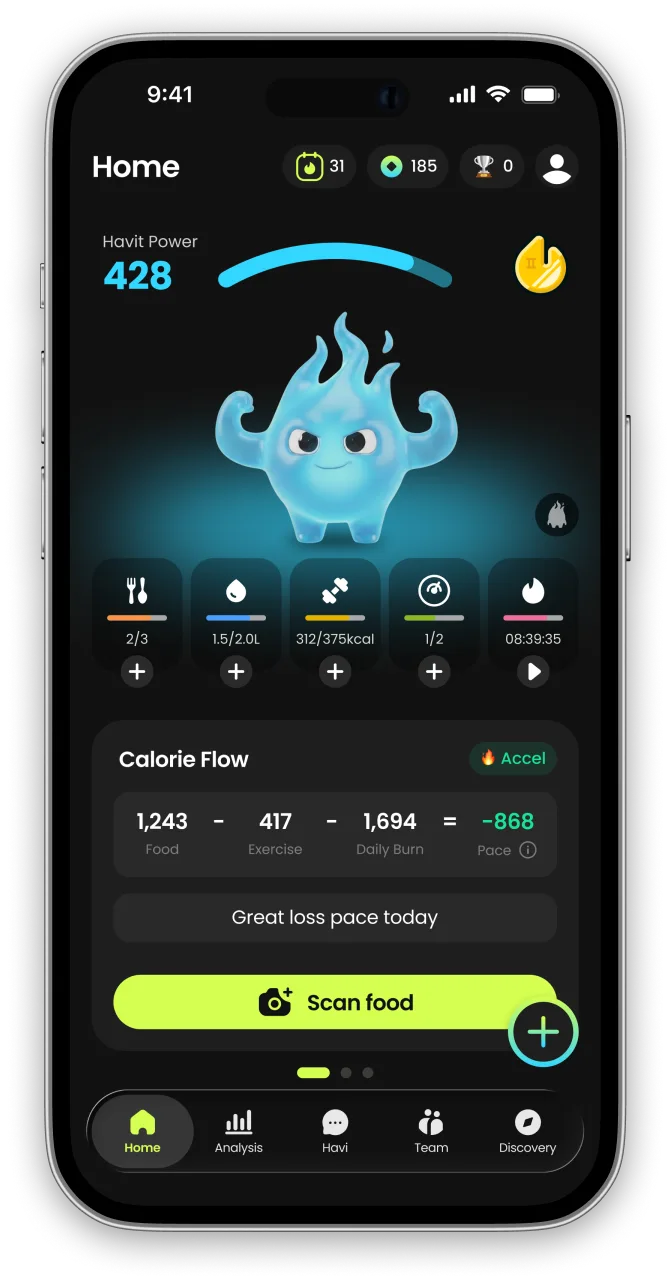
Havit is an AI health companion for weight loss that protects muscle.
Unlike calorie-only trackers, Havit connects AI body-composition estimates, nutrition, hydration, sleep, steps, cycle, mood, and GLP-1 medication in one daily routine — so progress is measured by body composition, not just the number on the scale. Daily missions turn established behavior-change techniques into small repeatable actions, drawing on expertise from professionals formerly at Juvis Diet, one of Korea’s leading metabolic clinics.
In Havit’s own analysis of 1,090 GLP-1 users, people who logged consistently built stronger habits than the general user base. Read the GLP-1 Habit Report
Havit works with or without GLP-1 medication. It is a wellness app, not a medical device; body-composition results are estimates.

Continue in the App
Personalized wellness with your own data


References
- Morning Cortisol Phenotypes and Diurnal Energy Patterns: A Population-Based Classification Study — Chronobiology International, 2025
- Cortisol Awakening Response Patterns: Stability, Predictors, and Lifestyle Intervention Outcomes — Psychoneuroendocrinology, 2024
- Circadian Meal Timing and Metabolic Outcomes Stratified by Awakening Cortisol Response — Journal of Clinical Endocrinology & Metabolism, 2024
- Light Exposure Timing and Cortisol Awakening Response Modification in Slow-Rise Phenotypes — Sleep Medicine Reviews, 2025


