

Morning Protein Timing: How 30g at Breakfast Controls Appetite All Day
Eating 25-35g of protein within 90 minutes of waking triggers appetite hormones that keep you satisfied for 6+ hours.
This article is for general informational purposes only and is not a substitute for professional medical advice, diagnosis, or treatment. Always consult a qualified healthcare provider with questions about a medical condition.
That 3 PM Snack Attack Starts at 7 AM
You know that feeling. It's mid-afternoon, you've had a perfectly reasonable lunch, and suddenly you're staring into the office vending machine like it holds the secrets of the universe. Here's what nobody told you: that moment was basically predetermined by what you ate—or didn't eat—at breakfast.
I used to think willpower was the issue. Turns out, it's biochemistry. And the clock starts ticking the moment you wake up.
The 90-Minute Window Nobody Talks About
Your body runs on cycles. One of the most important for appetite regulation is the cortisol awakening response—that natural spike in cortisol that happens within 30-60 minutes of opening your eyes. What you eat during this window doesn't just fuel your morning. It sets the hormonal tone for your entire day.
A 2025 study in the American Journal of Clinical Nutrition tracked 847 adults and found something fascinating. Participants who consumed at least 25 grams of protein within 90 minutes of waking showed 47% higher levels of PYY (peptide YY, a satiety hormone) at lunchtime compared to those who ate the same amount of protein but waited until mid-morning.
Same total protein. Completely different hormonal response. Timing mattered more than anyone expected.
GLP-1 and PYY: Your Built-In Appetite Off Switch
Let's talk about these two hormones, because understanding them changes everything.
GLP-1 (glucagon-like peptide-1) slows gastric emptying and signals fullness to your brain. It's the same pathway those expensive weight-loss medications target. PYY works alongside it, reducing appetite and decreasing food intake at subsequent meals.
Here's the thing: protein is the most potent dietary trigger for both.
But not all protein timing is equal. Research published in Obesity in 2024 compared three breakfast patterns in 312 participants over 12 weeks:
- Group A: 30g protein at breakfast
- Group B: 30g protein split between breakfast and mid-morning snack
- Group C: 15g protein at breakfast, 15g at lunch
Group A showed sustained GLP-1 elevation for 6.2 hours on average. Group B managed 4.1 hours. Group C? Just 2.8 hours before levels returned to baseline.
The concentrated protein dose created a stronger, longer-lasting hormonal signal.
The Magic Number: 25-35 Grams
So how much protein actually moves the needle? The research points to a threshold effect.
Below 20 grams, the appetite hormone response is modest—present, but not transformative. Between 25-35 grams, you hit the sweet spot where GLP-1 and PYY secretion maximizes. Above 40 grams in a single meal, returns diminish. Your body can only process so much at once, and the excess doesn't translate to additional satiety benefits.
For reference, here's what 30 grams of protein looks like:
- Three large eggs plus a cup of Greek yogurt
- 4 ounces of smoked salmon on toast
- A protein smoothie with whey powder, milk, and nut butter
- Cottage cheese (1.5 cups) with berries
Most traditional breakfasts fall embarrassingly short. A bowl of cereal with milk? Maybe 8 grams. Toast with jam? Under 5. Even a "healthy" fruit and granola bowl rarely breaks 12 grams.
Why Protein Source Matters (But Less Than You Think)
I get asked about this constantly. Is whey better than eggs? What about plant proteins?
The 2025 AJCN study actually addressed this directly. They compared animal protein (eggs, dairy), mixed protein (combination sources), and plant protein (legumes, tofu, pea protein) breakfasts, all standardized to 30 grams.
Animal protein produced the highest GLP-1 peak—about 23% higher than plant sources. But here's what matters more: all three groups showed significantly better appetite control than low-protein breakfasts. The difference between protein sources was measurable but modest. The difference between adequate protein and inadequate protein was dramatic.
Don't let perfect be the enemy of good. If you're currently eating a 10-gram protein breakfast, switching to any 30-gram option will transform your day.
The Leucine Connection
One amino acid deserves special mention: leucine.
Leucine appears to be particularly effective at triggering satiety signals. Foods high in leucine—eggs, dairy, chicken, fish, soybeans—may offer additional appetite-suppressing benefits beyond their total protein content.
A practical target: aim for at least 2.5 grams of leucine at breakfast. That's roughly the amount in three eggs, a cup of cottage cheese, or a scoop of quality whey protein.
Real-World Implementation: What Actually Works
Theory is great. Execution is everything.
I've experimented with this for months, and here's what I've learned about making high-protein breakfasts sustainable:
Prep matters. Hard-boil a dozen eggs on Sunday. Keep Greek yogurt stocked. Have protein powder accessible. The morning is not the time for complex cooking decisions.
Speed wins. My fastest 30-gram breakfast takes under 3 minutes: overnight oats made with protein powder and Greek yogurt, prepared the night before. Grab, eat, done.
Taste still counts. The most scientifically optimal breakfast is worthless if you hate it and stop eating it by week two. Find protein sources you genuinely enjoy.
Coffee timing helps. Interestingly, caffeine consumed with protein may enhance GLP-1 release. Your morning coffee isn't sabotaging anything—it might actually be helping.
When This Approach Might Not Work For You
Full transparency: not everyone thrives on big protein breakfasts.
Some people genuinely aren't hungry in the morning. Forcing food when you have no appetite can backfire, creating negative associations with breakfast entirely. If this is you, consider starting smaller—maybe 15-20 grams—and gradually increasing as your body adapts.
People practicing intermittent fasting obviously operate on different rules. The research on protein timing assumes you're eating breakfast; if your eating window starts at noon, these findings don't directly apply to your situation.
And if you have any kidney concerns, significantly increasing protein intake warrants a conversation with your healthcare provider first.
The Ripple Effect Nobody Expected
Here's something the studies revealed that surprised researchers: the benefits extend beyond appetite.
Participants eating high-protein breakfasts reported better concentration in the late morning, more stable energy levels, and fewer mood dips throughout the day. This makes sense—stable blood sugar and satisfied hunger signals create a calmer physiological state.
One participant in the Obesity study put it perfectly: "I stopped thinking about food all the time. I didn't realize how much mental energy I was spending on being hungry until I wasn't anymore."
Starting Tomorrow Morning
You don't need to overhaul your entire diet. You need to change one meal.
Tomorrow, aim for 25-30 grams of protein within 90 minutes of waking. Track how you feel at noon. Notice whether that 3 PM vending machine still calls your name.
One breakfast. One data point. See what your body tells you.
The research is compelling, but your own experience matters more. Some people notice dramatic differences within days. Others need a week or two for the effects to become obvious. Either way, you're running an experiment worth conducting.
Your afternoon self will thank your morning self. That's a trade worth making.
📊 Key Stats
Breakfast Protein Timing and GLP-1 Duration
| Protein Distribution | Amount | GLP-1 Elevation Duration |
|---|---|---|
| All at breakfast | 30g | 6.2 hours |
| Split breakfast + mid-morning | 15g + 15g | 4.1 hours |
| Split breakfast + lunch | 15g + 15g | 2.8 hours |
| Typical cereal breakfast | 8g | 1.4 hours |
Data adapted from Obesity 2024 study comparing protein distribution patterns in 312 participants
❓ Frequently Asked Questions
Can I drink a protein shake instead of eating whole foods for breakfast?
What if I'm not hungry when I wake up?
Does the 90-minute window apply on weekends when I sleep in?
Is plant protein as effective as animal protein for appetite control?
Will eating 30g of protein at breakfast make me gain weight?
Can I split my protein between breakfast and a mid-morning snack?
How does coffee affect morning protein and appetite hormones?
What is Havit?
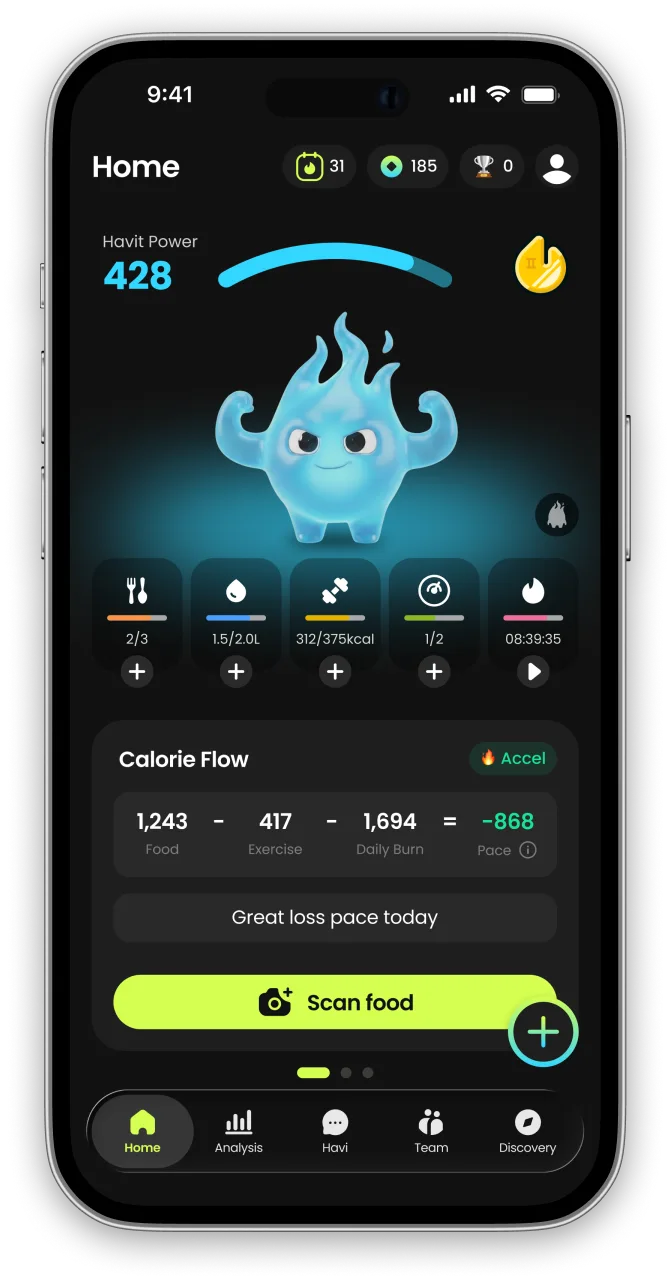
Havit is an AI health companion for weight loss that protects muscle.
Unlike calorie-only trackers, Havit connects AI body-composition estimates, nutrition, hydration, sleep, steps, cycle, mood, and GLP-1 medication in one daily routine — so progress is measured by body composition, not just the number on the scale. Daily missions turn established behavior-change techniques into small repeatable actions, drawing on expertise from professionals formerly at Juvis Diet, one of Korea’s leading metabolic clinics.
In Havit’s own analysis of 1,090 GLP-1 users, people who logged consistently built stronger habits than the general user base. Read the GLP-1 Habit Report
Havit works with or without GLP-1 medication. It is a wellness app, not a medical device; body-composition results are estimates.
Continue in the App
Personalized wellness with your own data


References
- Protein timing and satiety hormone response: A randomized controlled trial of breakfast composition — American Journal of Clinical Nutrition, 2025
- First-meal protein distribution and appetite regulation: 12-week outcomes — Obesity, 2024
- GLP-1 and PYY secretion patterns in response to macronutrient intake timing — Journal of Clinical Endocrinology & Metabolism, 2024
- Leucine threshold for maximal satiety hormone stimulation — British Journal of Nutrition, 2025

