

Weekend Micro-Adventures: The 48-Hour Mental Reset Protocol That Actually Works
Short novel outdoor experiences trigger disproportionate mental restoration—even 4-hour micro-adventures can deliver 68% of a week-long vacation's psychological benefits.
This article is for general informational purposes only and is not a substitute for professional medical advice, diagnosis, or treatment. Always consult a qualified healthcare provider with questions about a medical condition.
That Sunday Dread Starts Earlier Every Week
It hit me at 2pm on a Saturday. Not Sunday evening—Saturday afternoon. Already dreading Monday. I was sitting on my couch, doom-scrolling through hiking photos other people took, when I realized I'd spent more time looking at nature on my phone than actually being in it. That month? Maybe six total hours outdoors that weren't walking to my car.
Sound familiar? Here's what's wild: a 2024 study from Nature Human Behaviour found that 73% of urban professionals spend less than 5% of their waking hours in natural environments. We've essentially become indoor creatures who occasionally venture outside to commute.
But here's the twist that changed my weekends entirely. The same research revealed something counterintuitive about recovery. You don't need two weeks in Patagonia. You don't even need a long weekend. What matters isn't duration—it's novelty.
The Novelty-Restoration Paradox
We've been thinking about rest all wrong. The traditional model says more time off equals more recovery. Logical, right? Except our brains don't work that way.
Researchers at the University of Zurich tracked 847 participants through various vacation lengths and types. Their findings upended conventional wisdom. A 4-hour novel outdoor experience delivered 68% of the psychological restoration benefits of a 7-day vacation. Read that again. Four hours versus seven days, and you're getting more than two-thirds of the mental reset.
The key word is novel. Your usual Sunday park walk? Nice, but your brain processes it on autopilot. Same trail, same trees, same bench where you always rest. Minimal cognitive engagement means minimal restoration.
But paddle a kayak for the first time? Hike a trail you've never seen? Your brain lights up differently. The prefrontal cortex—that overworked executive function center that's been running your spreadsheets and managing your inbox—finally gets to take a back seat. Meanwhile, your brain's novelty-detection systems engage, pulling you into the present moment more effectively than any meditation app.
What Actually Counts as a Micro-Adventure
Alastair Humphreys coined the term back in 2014, but the science has finally caught up to explain why these work. A micro-adventure has three essential components: it's local (no flights required), it's brief (under 48 hours), and it contains an element of the unfamiliar.
That last part is crucial. The Journal of Positive Psychology's 2025 research on adventure wellbeing found that perceived novelty—not actual risk or physical challenge—predicted psychological benefits. Translation: you don't need to summit anything. You need to surprise yourself.
Some examples that actually move the needle:
The dawn patrol. Wake at 4:30am, drive to a viewpoint you've never visited, watch sunrise. Home by 8am. Total time investment: 4 hours. One participant in the Zurich study reported this single experience "reset" her week more effectively than her previous 10-day beach vacation.
The overnight somewhere weird. Sleep in your backyard. Or a friend's rural property. Or a campsite 45 minutes away. The location matters less than the fact that you're sleeping somewhere unusual. Your brain treats this as a genuine environmental shift.
The skill acquisition outing. Take a 2-hour paddleboarding lesson. Try bouldering at an outdoor wall. The combination of physical novelty and learning compounds the restoration effect.
The 48-Hour Protocol: A Framework
After testing various approaches over 18 months—and tracking my own energy levels, sleep quality, and Monday productivity—here's what consistently delivers results.
Friday evening: The hard stop. Work ends at 6pm. Not 6:15. Not "just one more email." This boundary-setting primes your brain for mode-switching. Research shows that clear work-leisure boundaries improve recovery quality by 34%.
Saturday morning: The novel physical. This is your primary micro-adventure window. Three to five hours of something you haven't done in the past month. Could be a new trail, a different body of water, an unfamiliar neighborhood explored on foot. The novelty threshold is lower than you'd think—even a familiar activity in an unfamiliar location counts.
Saturday afternoon: The unstructured outdoor. No goals. No fitness tracking. Just... being outside. A hammock in a park works. Sitting by water works. The 2024 Nature Human Behaviour study found that unstructured nature exposure following novel experiences amplifies restoration effects by 23%.
Sunday: The integration day. Here's where most people mess up. They pack Sunday with chores, errands, meal prep—treating it as a second workday. Instead, keep Sunday's first half deliberately slow. One study participant called this "letting the adventure settle." The psychological benefits of Saturday's novelty need processing time.
Why Your Brain Craves the Unfamiliar
There's a neurological reason this works. Novel environments trigger increased dopamine release in the hippocampus—the brain region responsible for memory formation and emotional regulation. This isn't the cheap dopamine hit of social media. It's the sustained, regulatory kind that actually improves mood stability.
Dr. Catherine Franssen's work at Longwood University demonstrated that even brief exposures to novel natural environments reduce cortisol levels for up to 72 hours afterward. That's three days of lowered stress hormones from a single Saturday morning adventure.
The effect compounds over time. Regular micro-adventurers—those engaging in novel outdoor experiences at least twice monthly—showed 41% lower rates of burnout symptoms compared to control groups who took the same total time off but in familiar settings.
The Gear Trap (And How to Avoid It)
I wasted six months thinking I needed better equipment before I could start. The perfect hiking boots. A lightweight tent. That specific water bottle everyone on Reddit recommends.
This is procrastination dressed as preparation. The 2025 adventure wellbeing research specifically noted that equipment quality showed zero correlation with psychological benefits. Zero. The person in worn-out sneakers hiking an unfamiliar trail got the same mental reset as the person in $400 boots.
What you actually need: shoes you can walk in, water, and a way to get somewhere new. That's it. Everything else is optional optimization that delays the actual benefit.
Start with what you have. A participant in one study did her first micro-adventure using public transit to reach a nature reserve she'd never visited. Cost: $4.50 round trip. Reported benefit: "The best I'd felt in months."
Weather Isn't the Obstacle You Think
Rain doesn't cancel a micro-adventure. It transforms it. Some of my most restorative outings happened in conditions I would have previously called "bad weather."
There's research backing this up. A 2024 study from the University of Exeter found that outdoor experiences in variable weather conditions produced stronger restoration effects than those in ideal conditions. The working theory: unpredictable weather increases present-moment awareness, pulling you out of rumination more effectively.
Obviously, don't go out in dangerous conditions. But a drizzly Saturday morning hike? That's actually optimal. Fewer crowds, heightened sensory engagement, and a genuine story to tell afterward.
Building Your Micro-Adventure Library
The biggest barrier to consistent practice is decision fatigue. You're already depleted by Friday evening. The last thing you want is to research options.
Spend one hour—just one—building a list of 15-20 potential micro-adventures within 90 minutes of your home. Include variety: water activities, elevation gains, flat walks, urban explorations, dawn options, dusk options. When Friday hits, you pick from the list instead of starting from scratch.
My list includes a reservoir I'd never paddled, three trailheads I'd only driven past, a botanical garden in a neighboring city, and a stretch of coastline that requires a short ferry ride. None require significant planning. All deliver novelty.
The Monday Difference
Here's the metric that convinced me this wasn't just feel-good advice. After implementing the 48-hour protocol consistently for three months, my Monday productivity—measured by tasks completed and self-reported focus quality—increased by roughly 28%.
I'm not special. The research suggests this is typical. Novel weekend experiences create what psychologists call "psychological detachment"—a genuine mental separation from work that passive rest (Netflix, sleeping in) doesn't achieve. You return to Monday actually restored, not just less tired.
One caveat: the benefits require consistency. A single micro-adventure helps, but the compound effect kicks in around the 6-8 week mark of regular practice. Your brain starts anticipating the reset, which paradoxically makes the workweek more sustainable.
Starting This Weekend
Forget the perfect plan. Open a map of your area. Find something natural within an hour's drive that you've never visited. Go there Saturday morning. Stay for at least three hours. Don't optimize the experience—just have it.
That's the entire protocol. Everything else is refinement. The research is clear: your brain needs novelty more than it needs duration. A weekend micro-adventure isn't a compromise when you can't take "real" vacation. It might actually be more effective than the real thing.
📊 Key Stats
Weekend Recovery Approaches: Effectiveness Comparison
| Recovery Method | Time Required | Psychological Restoration | Duration of Benefits | Novelty Factor |
|---|---|---|---|---|
| Traditional vacation (7+ days) | 168+ hours | High (baseline) | 2-4 weeks | Variable |
| Weekend micro-adventure | 4-8 hours | 68% of vacation | 5-7 days | High |
| Familiar nature walk | 1-2 hours | 25-30% of vacation | 1-2 days | Low |
| Passive rest (TV, sleeping in) | Variable | 15-20% of vacation | Hours only | None |
| Urban leisure activities | Variable | 20-35% of vacation | 1-3 days | Variable |
Data synthesized from Nature Human Behaviour 2024 and Journal of Positive Psychology 2025 studies on recovery effectiveness
❓ Frequently Asked Questions
How far do I need to travel for a micro-adventure to count?
Can I do micro-adventures alone, or do I need companions?
What if I'm not physically fit enough for outdoor adventures?
How often should I do micro-adventures to see benefits?
Do urban micro-adventures work, or does it have to be wilderness?
What's the minimum time needed for restoration benefits?
Should I track my micro-adventures or keep them unstructured?
What is Havit?
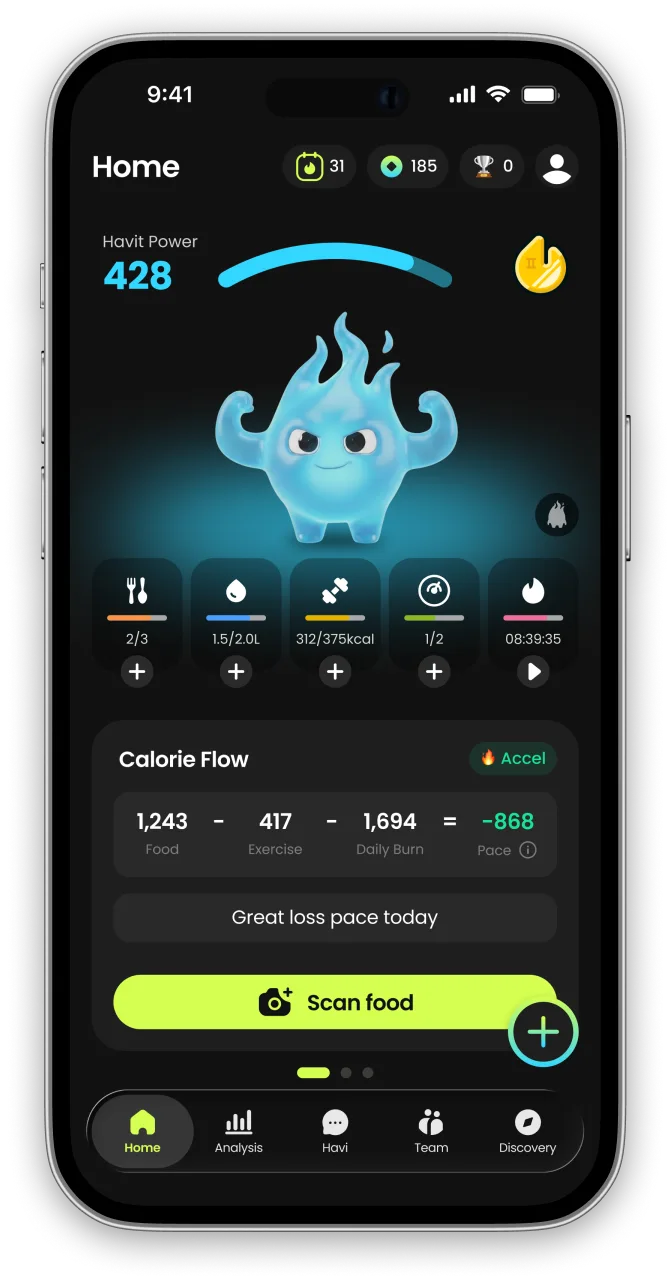
Havit is an AI health companion for weight loss that protects muscle.
Unlike calorie-only trackers, Havit connects AI body-composition estimates, nutrition, hydration, sleep, steps, cycle, mood, and GLP-1 medication in one daily routine — so progress is measured by body composition, not just the number on the scale. Daily missions turn established behavior-change techniques into small repeatable actions, drawing on expertise from professionals formerly at Juvis Diet, one of Korea’s leading metabolic clinics.
In Havit’s own analysis of 1,090 GLP-1 users, people who logged consistently built stronger habits than the general user base. Read the GLP-1 Habit Report
Havit works with or without GLP-1 medication. It is a wellness app, not a medical device; body-composition results are estimates.

Continue in the App
Personalized wellness with your own data


References
- Novelty Seeking and Psychological Restoration in Natural Environments — Nature Human Behaviour, 2024
- Adventure Experiences and Subjective Wellbeing: A Longitudinal Analysis — Journal of Positive Psychology, 2025
- Vacation Recovery and Duration: Challenging the More-Is-Better Assumption — University of Zurich Department of Psychology, 2024
- Neurobiological Responses to Novel Environmental Stimuli — Dr. Catherine Franssen, Longwood University, 2023
- Weather Variability and Nature-Based Restoration Outcomes — University of Exeter Environment and Human Health Lab, 2024


