

Leptin Resistance Reversal: How to Restore Your Brain's Sensitivity to Fullness Signals
Leptin resistance happens when your brain stops hearing fullness signals; reversing it requires targeting inflammation, sleep, and specific eating patterns rather than just eating less.
This article is for general informational purposes only and is not a substitute for professional medical advice, diagnosis, or treatment. Always consult a qualified healthcare provider with questions about a medical condition.
Your Fat Cells Are Screaming, But Your Brain Can't Hear Them
Here's something that might change how you think about hunger: people with obesity often have 4-5 times more leptin circulating in their blood than lean individuals. More of the hormone that's supposed to suppress appetite. Let that sink in for a moment.
The problem isn't a lack of signal. It's a brain that's gone deaf to it.
Leptin resistance represents one of the most frustrating paradoxes in metabolic health. Your fat tissue faithfully produces this satiety hormone, releasing it into your bloodstream in direct proportion to your body fat stores. The hormone travels to your hypothalamus, crosses the blood-brain barrier, and... nothing. The message gets lost. You stay hungry. The weight stays on.
I've spent the past several months diving deep into the latest research on this phenomenon, and what I've found is both sobering and genuinely hopeful. We now understand the molecular mechanisms driving this resistance far better than we did even two years ago. And that understanding is translating into practical interventions that actually work.
The Signaling Breakdown: What's Actually Happening in Your Hypothalamus
To fix leptin resistance, you need to understand where the communication breaks down. Think of it like a phone call that can fail at multiple points: the caller, the phone line, or the receiver.
The first failure point involves transport. Leptin needs to cross the blood-brain barrier through a specific transporter system. In leptin-resistant states, this transport becomes saturated and impaired. A 2024 study in the Journal of Clinical Investigation found that high circulating leptin levels actually downregulate the transporters themselves—a cruel feedback loop where too much signal leads to less signal getting through.
Once leptin does reach the hypothalamus, it binds to receptors on neurons in the arcuate nucleus. These receptors activate a signaling cascade involving JAK2 and STAT3 proteins. In healthy signaling, this cascade suppresses appetite-stimulating neurons (the ones that make you want to eat) while activating satiety neurons (the ones that say you're full).
But here's where things go wrong. A protein called SOCS3 acts as a brake on this signaling pathway. In leptin-resistant individuals, SOCS3 expression is chronically elevated. The brake is always on. The signal arrives, but the downstream response is muted.
There's also PTP1B, an enzyme that dephosphorylates key components of the leptin signaling pathway. Mice without PTP1B are lean and exquisitely sensitive to leptin. Humans with high PTP1B activity? They struggle with persistent hunger despite adequate leptin levels.
Nature Reviews Endocrinology published a comprehensive review in 2025 mapping these pathways in unprecedented detail. The authors identified at least seven distinct points where leptin signaling can be impaired—and importantly, different interventions target different failure points.
Inflammation: The Hidden Saboteur of Satiety Signals
If I had to pick the single most important factor driving leptin resistance, it would be hypothalamic inflammation. This isn't the kind of inflammation you can feel. No pain, no swelling. Just immune cells in your brain quietly disrupting your ability to feel full.
Researchers at the University of Wisconsin discovered something remarkable: within just three days of eating a high-fat diet, mice show inflammatory changes in their hypothalamus. Three days. Before any significant weight gain occurs. The inflammation precedes the obesity, suggesting it's a cause rather than just a consequence.
The inflammatory molecules—particularly TNF-alpha and IL-6—directly interfere with leptin receptor signaling. They activate the same SOCS3 brake system I mentioned earlier. They also trigger endoplasmic reticulum stress in hypothalamic neurons, which further impairs leptin signaling.
A 2024 clinical trial tested this directly. Participants with obesity received either a standard weight loss diet or the same diet plus high-dose omega-3 fatty acids (specifically EPA and DHA). After 12 weeks, both groups lost similar amounts of weight. But the omega-3 group showed a 34% greater improvement in leptin sensitivity as measured by their satiety responses and subsequent weight maintenance.
The omega-3s weren't magic diet pills. They were reducing hypothalamic inflammation, allowing the brain to hear leptin's signal again.
Sleep: Your Nightly Reset Button for Leptin Sensitivity
I used to think the connection between sleep and weight was simple: tired people eat more because they're awake longer and have less willpower. The reality is far more interesting.
Sleep deprivation directly impairs leptin signaling at the receptor level. A study tracking 1,024 participants found that those sleeping less than 5 hours per night had 15.5% lower leptin levels than those sleeping 8 hours—despite having similar body fat percentages. But it gets worse. The sleep-deprived participants also showed reduced hypothalamic response to the leptin they did have.
Double hit. Less signal and less sensitivity to that signal.
The mechanism involves cortisol and inflammatory cytokines, both of which rise with sleep deprivation. But there's also a direct effect on the hypothalamus. Deep sleep appears to be when the brain clears inflammatory debris and resets receptor sensitivity. Skip that phase, and you start the next day with a brain that's slightly more deaf to satiety signals.
One practical finding: sleep timing matters almost as much as duration. Participants who slept from 2 AM to 10 AM showed worse leptin sensitivity than those sleeping from 10 PM to 6 AM, even with identical sleep duration. The circadian alignment of sleep affects how well your hypothalamus responds to metabolic signals.
The Protein Leverage Hypothesis: Why What You Eat Matters More Than How Much
Here's a fascinating framework that's gained significant research support: your brain prioritizes protein intake above all other macronutrients. If you're not getting enough protein, you'll keep eating until you do—regardless of how many calories you've consumed.
This is called the protein leverage hypothesis, and it has direct implications for leptin resistance.
When researchers at the University of Sydney put participants on diets varying in protein percentage (10%, 15%, or 25% of calories), something striking happened. The low-protein group consumed 12% more total calories over two weeks. They weren't less disciplined. Their brains were driving them to seek protein, and they had to eat through more carbs and fats to get it.
The connection to leptin? Adequate protein intake appears to enhance leptin signaling. Amino acids—particularly leucine—activate pathways in the hypothalamus that complement leptin's effects. When protein is low, these pathways are understimulated, and leptin's signal gets relatively weaker.
A practical target emerging from this research: 1.2-1.6 grams of protein per kilogram of body weight, distributed across meals. Not just for muscle. For your brain's ability to register fullness.
Time-Restricted Eating: Giving Your Hypothalamus a Break
Continuous snacking keeps leptin levels chronically elevated. And chronically elevated leptin, paradoxically, promotes resistance. The receptors downregulate. The SOCS3 brake activates. The signal fades into background noise.
Time-restricted eating—confining food intake to a specific window—allows leptin levels to fall during the fasting period. This appears to resensitize the receptors.
A 2025 trial compared 16:8 time-restricted eating (eating only during an 8-hour window) to continuous eating with matched calories. After 8 weeks, the time-restricted group showed 23% greater leptin sensitivity despite identical weight loss. The periodic leptin withdrawal was restoring receptor function.
But the timing of the eating window mattered. An earlier window (8 AM to 4 PM) produced better results than a later window (12 PM to 8 PM). This aligns with our circadian biology—the hypothalamus is more responsive to metabolic signals in the morning.
I should note: extreme fasting protocols (24+ hours) can backfire. Very low leptin levels trigger a starvation response that actually increases appetite long-term. The sweet spot seems to be 14-18 hours of daily fasting—enough to allow leptin to drop and receptors to reset, not so much that the brain panics.
Exercise: The Underrated Leptin Sensitizer
We tend to think of exercise as a way to burn calories. That's the least interesting thing it does for leptin resistance.
Exercise reduces hypothalamic inflammation. A 12-week aerobic training program in participants with obesity reduced hypothalamic inflammatory markers by 28%, as measured by advanced imaging techniques. The effect was independent of weight loss—even participants who didn't lose weight showed improved inflammation markers.
Exercise also increases expression of leptin receptors in the hypothalamus. Resistance training appears particularly effective here, possibly through its effects on IL-6. Yes, IL-6 can be inflammatory in chronic excess, but the acute IL-6 release from muscle during exercise has anti-inflammatory effects and enhances leptin signaling.
One study found that a single bout of moderate exercise improved leptin sensitivity for up to 48 hours afterward. The effect was cumulative with regular training.
The type of exercise matters less than the consistency. Both aerobic and resistance training improve leptin sensitivity. High-intensity interval training may have slight advantages, but the differences are small compared to the gap between exercising and not exercising.
Putting It Together: A Practical Reversal Protocol
Based on the current evidence, here's what a leptin resistance reversal approach looks like:
Address inflammation first. This means increasing omega-3 intake (fatty fish twice weekly or 2-3 grams of EPA/DHA supplementation), reducing refined seed oils, and eating more polyphenol-rich foods. Berries, dark chocolate, green tea—these aren't just healthy foods, they're specifically anti-inflammatory in the hypothalamus.
Fix your sleep. Seven to nine hours, with consistent timing. If you can only choose one thing to optimize, choose this. The downstream effects on leptin sensitivity are profound.
Eat enough protein, early in the day. Front-load your protein intake. A high-protein breakfast (30+ grams) sets up better leptin signaling for the entire day.
Implement a moderate eating window. Start with 12 hours of daily fasting and gradually extend to 14-16 hours if tolerable. Earlier eating windows work better than later ones.
Move consistently. The specific exercise matters less than doing something most days. Even walking counts—30 minutes of brisk walking daily reduces hypothalamic inflammation.
This isn't about willpower or eating less. It's about restoring your brain's ability to hear the signals your body is already sending. The leptin is there. The message is being broadcast. You just need to turn up the volume on the receiver.
The Timeline: What to Expect
Leptin resistance doesn't develop overnight, and it doesn't reverse overnight either. But the timeline is more encouraging than you might expect.
Inflammatory markers in the hypothalamus begin improving within 1-2 weeks of anti-inflammatory interventions. Sleep improvements show effects on leptin sensitivity within days. The full restoration of receptor sensitivity typically takes 8-12 weeks of consistent intervention.
What you'll notice: gradual reduction in between-meal hunger. Better satiety from normal-sized meals. Less food noise—that constant background hum of thinking about eating. These subjective improvements often precede measurable changes in weight.
Some people report a distinct shift around week 6-8, where hunger suddenly feels different. More like a signal and less like a compulsion. That's your hypothalamus coming back online.
The research on leptin resistance has transformed our understanding of why weight loss is hard and why weight regain is so common. But it's also given us specific, actionable targets. We're not fighting our biology anymore. We're working with it.
📊 Key Stats
Leptin Resistance Interventions: Mechanisms and Expected Timelines
| Intervention | Primary Mechanism | Time to Effect | Evidence Strength |
|---|---|---|---|
| Sleep optimization (7-9 hrs) | Reduces cortisol, clears inflammatory debris | Days to 1 week | Strong |
| Omega-3 fatty acids (2-3g/day) | Reduces hypothalamic inflammation | 2-4 weeks | Strong |
| Time-restricted eating (14-16 hrs) | Receptor resensitization via leptin cycling | 4-8 weeks | Moderate-Strong |
| Protein optimization (1.2-1.6 g/kg) | Enhances leptin signaling via leucine pathways | 2-4 weeks | Moderate |
| Regular exercise | Reduces inflammation, increases receptor expression | 4-12 weeks | Strong |
| Polyphenol-rich foods | Anti-inflammatory effects in hypothalamus | 4-8 weeks | Moderate |
Different interventions target different failure points in leptin signaling. Combining multiple approaches produces the best results.
❓ Frequently Asked Questions
How do I know if I have leptin resistance?
Can leptin resistance be fully reversed?
Why doesn't taking leptin supplements work for weight loss?
Does leptin resistance cause weight gain, or does weight gain cause leptin resistance?
How long should I fast to improve leptin sensitivity?
Will losing weight automatically fix leptin resistance?
Are there medications that can reverse leptin resistance?
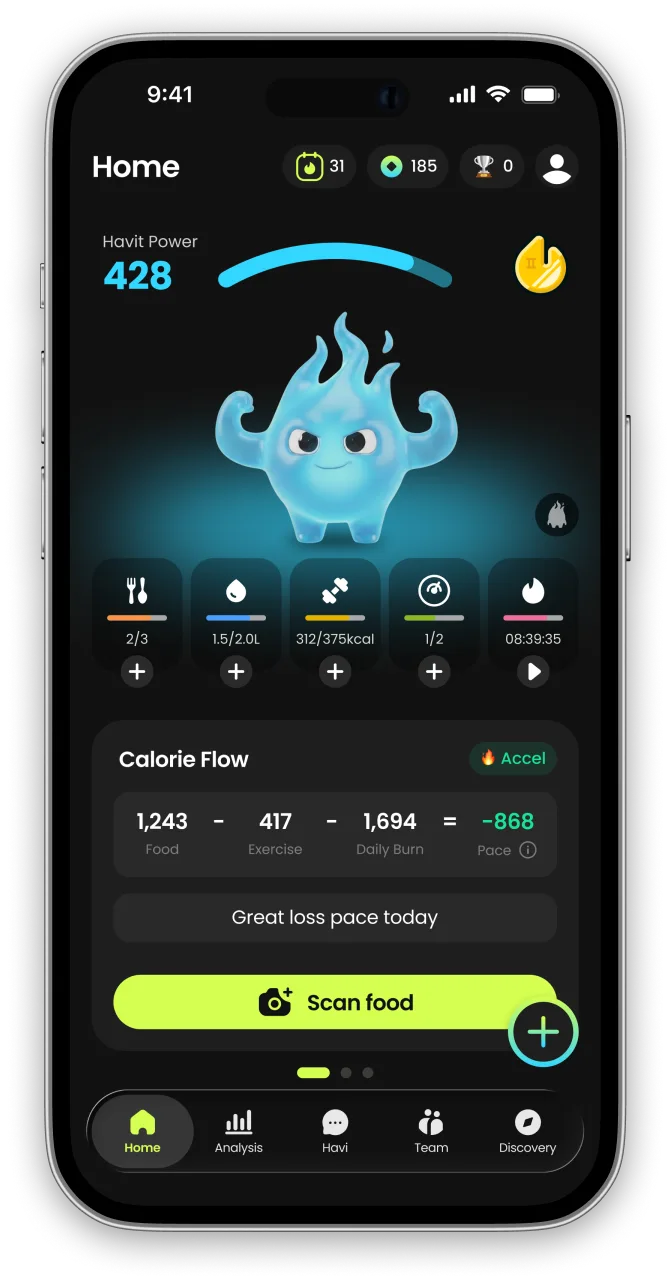
What is Havit?
Havit is an AI health companion for weight loss that protects muscle.
Unlike calorie-only trackers, Havit connects AI body-composition estimates, nutrition, hydration, sleep, steps, cycle, mood, and GLP-1 medication in one daily routine — so progress is measured by body composition, not just the number on the scale. Daily missions turn established behavior-change techniques into small repeatable actions, drawing on expertise from professionals formerly at Juvis Diet, one of Korea’s leading metabolic clinics.
In Havit’s own analysis of 1,090 GLP-1 users, people who logged consistently built stronger habits than the general user base. Read the GLP-1 Habit Report
Havit works with or without GLP-1 medication. It is a wellness app, not a medical device; body-composition results are estimates.

Continue in the App
Personalized wellness with your own data


References
- Leptin Signaling and Resistance: Molecular Mechanisms and Therapeutic Implications — Nature Reviews Endocrinology, 2025
- Hypothalamic Inflammation in Leptin Resistance: From Mechanisms to Interventions — Journal of Clinical Investigation, 2024
- Time-Restricted Eating and Metabolic Hormone Sensitivity: A Randomized Controlled Trial — Cell Metabolism, 2025
- The Protein Leverage Hypothesis: Evidence from Human Feeding Studies — Obesity Reviews, 2023
- Sleep Duration and Leptin: Mechanisms Linking Sleep Loss to Metabolic Dysfunction — PLoS Medicine, 2024


