

Iodine Deficiency and Your Thyroid: Why Seaweed and Iodized Salt Still Matter in 2026
About 2 billion people worldwide still don't get enough iodine, yet too much can be just as problematic—finding the balance requires knowing your sources.
This article is for general informational purposes only and is not a substitute for professional medical advice, diagnosis, or treatment. Always consult a qualified healthcare provider with questions about a medical condition.
The Mineral You Forgot About
Your thyroid gland weighs about 20 grams—roughly the same as four nickels stacked together. This tiny butterfly-shaped organ at the base of your neck controls your metabolism, heart rate, body temperature, and brain development. And it runs almost entirely on one element: iodine.
Here's what caught my attention recently. A 2024 analysis published in Thyroid found that nearly 29% of the global population still has insufficient iodine intake. We're not talking about remote villages with no access to fortified foods. Researchers found pockets of deficiency in Western Europe, parts of the United States, and across developed Asian nations. The assumption that "we solved iodine deficiency decades ago" turns out to be dangerously optimistic.
Why Modern Diets Fall Short
Iodine doesn't show up where you'd expect. Unlike calcium (dairy) or iron (red meat), there's no obvious food category that screams "iodine here." The mineral exists primarily in seafood, seaweed, dairy products from cows fed iodine-supplemented feed, and iodized salt. That's basically the list.
The problem? Each of these sources has been declining in Western diets. Sea salt and Himalayan pink salt have replaced iodized table salt in many kitchens—neither contains meaningful iodine. Plant-based milk alternatives don't carry the iodine that cow's milk does unless specifically fortified. And unless you're eating fish three times a week or snacking on nori sheets, seafood probably isn't filling the gap either.
A British study tracked iodine intake among women of childbearing age and found that 67% fell below the WHO's recommended threshold. These weren't people making unusual dietary choices. They were eating what most health-conscious people eat: whole grains, vegetables, lean proteins, olive oil. The Mediterranean diet, ironically, can leave you iodine-deficient if you're not paying attention.
What Happens When You Don't Get Enough
Mild iodine deficiency doesn't announce itself with dramatic symptoms. You might feel slightly more tired than usual. Your skin might seem drier. You could gain a few pounds that diet and exercise don't seem to touch. The thyroid compensates by working harder, sometimes enlarging slightly—a condition called goiter that was once so common it defined entire geographic regions (the "Goiter Belt" of the American Midwest, for instance).
Severe deficiency during pregnancy poses the greatest risk. The developing fetal brain requires thyroid hormones for proper formation, and those hormones require iodine. A 2025 review in Endocrine Reviews analyzed 34 studies and confirmed that even mild-to-moderate maternal iodine deficiency correlates with measurable reductions in children's IQ scores—an average of 6 to 10 points in some populations.
The stakes are lower for adults, but still meaningful. Hypothyroidism from chronic low iodine intake affects energy levels, cognitive sharpness, and cardiovascular health. One Japanese cohort study found that participants with the lowest iodine intake had 23% higher rates of cardiovascular events over a 12-year follow-up period.
The Seaweed Solution (With a Catch)
Japan has the highest iodine intake in the world, averaging 1,000 to 3,000 micrograms daily—sometimes 10 to 20 times the recommended amount. The reason is simple: seaweed. Kombu, wakame, and nori appear in soups, salads, rice dishes, and snacks throughout Japanese cuisine.
A single gram of dried kombu contains roughly 2,500 micrograms of iodine. For context, the recommended daily intake for adults is 150 micrograms. One small piece of kombu in your miso soup delivers more than two weeks' worth.
This creates an interesting paradox. Japanese populations have adapted to high iodine intake over generations, and their thyroid disease rates remain relatively low. But when people from low-iodine backgrounds suddenly adopt high-seaweed diets, problems can emerge. Excess iodine can trigger hyperthyroidism in susceptible individuals or, counterintuitively, suppress thyroid function through a mechanism called the Wolff-Chaikoff effect.
The practical takeaway: seaweed works beautifully as an iodine source, but dosing matters. Nori sheets (the kind wrapped around sushi) contain much less iodine than kombu—about 16 to 43 micrograms per sheet. That's a reasonable supplement to your diet. Eating kombu daily, on the other hand, requires more caution.
Iodized Salt: The Boring Hero
In 1924, the United States began adding iodine to table salt. Within a decade, goiter rates plummeted by 74% in previously endemic regions. It remains one of the most successful public health interventions in history, quietly preventing millions of cases of thyroid disease and developmental delays.
One quarter teaspoon of iodized salt contains approximately 71 micrograms of iodine—about half the daily requirement. Two meals seasoned with iodized salt gets most people to adequate levels without any special planning.
But here's the catch. Public health messaging has spent decades telling us to reduce sodium intake. That advice is valid—excess sodium does contribute to hypertension in salt-sensitive individuals. However, the unintended consequence has been reduced iodine intake among people who switched to unsalted cooking or non-iodized specialty salts.
The solution isn't complicated. If you use salt, make it iodized. The sodium content is identical; only the trace iodine differs. Sea salt labeled "with iodine" works fine too. Just check the label—most gourmet salts skip the fortification.
Finding Your Balance: A Practical Framework
Iodine requirements vary by life stage. Pregnant women need 220 micrograms daily. Breastfeeding mothers need 290. Most adults need 150. Children need less, scaling with age.
Here's a rough daily accounting:
- One cup of milk: 56 micrograms
- One egg: 24 micrograms
- Three ounces of cod: 99 micrograms
- One sheet of nori: 16-43 micrograms
- Quarter teaspoon iodized salt: 71 micrograms
A person eating eggs for breakfast, using iodized salt in cooking, and having fish once or twice a week will likely meet their needs without thinking about it. A vegan avoiding iodized salt and rarely eating seaweed might fall significantly short.
The Endocrine Reviews analysis from 2025 emphasized that population-level interventions (salt iodization programs) remain more effective than individual supplementation for preventing deficiency. But in countries where iodized salt use has declined, individuals need to take responsibility for their own intake.
When Supplements Make Sense
Most multivitamins contain 150 micrograms of iodine—exactly the adult RDA. Prenatal vitamins typically contain 150 to 220 micrograms. These provide useful insurance for people whose diets might fall short.
Standalone iodine supplements exist too, often in the form of kelp tablets. These require more caution. Kelp iodine content varies wildly between brands and even between batches of the same brand. A 2023 analysis of 25 kelp supplements found that actual iodine content ranged from 45% to 1,045% of the labeled amount. Some tablets contained over 8,000 micrograms per dose.
For most people, a standard multivitamin or prenatal vitamin provides adequate supplementation without the risks of kelp variability.
The Upper Limit Question
The tolerable upper intake level for iodine is set at 1,100 micrograms daily for adults. Below this threshold, most people experience no adverse effects. Above it, risks increase—particularly for people with pre-existing thyroid conditions.
Japanese populations routinely exceed this limit with apparent safety, which has led some researchers to question whether the upper limit is too conservative. The current consensus holds that genetic adaptation, gradual exposure, and dietary context all influence tolerance. Someone whose family has eaten seaweed for generations may handle high iodine intake differently than someone suddenly adopting a kelp-heavy diet.
The prudent approach for most people: aim for 150 to 300 micrograms daily through food and standard supplements. Avoid megadose supplements. Enjoy seaweed in reasonable quantities without making it the centerpiece of every meal.
Putting It Together
Iodine deficiency hasn't disappeared. It's just become invisible—a quiet nutritional gap in otherwise healthy-seeming diets. The fixes are simple: use iodized salt, include some dairy or fish in your diet, enjoy seaweed occasionally, and consider a multivitamin if your diet is restricted.
The thyroid asks very little of us. Twenty micrograms of iodine per day keeps it functioning. A hundred fifty micrograms keeps it functioning optimally. That's the weight of a few grains of salt. Small investment, significant returns.
📊 Key Stats
Iodine Content in Common Foods
| Food Source | Serving Size | Iodine (mcg) | % Daily Value |
|---|---|---|---|
| Dried kombu seaweed | 1 gram | 2,500 | 1,667% |
| Cod | 3 ounces | 99 | 66% |
| Iodized salt | 1/4 teaspoon | 71 | 47% |
| Milk (cow's) | 1 cup | 56 | 37% |
| Shrimp | 3 ounces | 35 | 23% |
| Egg | 1 large | 24 | 16% |
| Nori seaweed | 1 sheet | 16-43 | 11-29% |
| Cheddar cheese | 1 ounce | 12 | 8% |
Based on USDA FoodData Central 2024. Daily Value = 150 mcg for adults.
❓ Frequently Asked Questions
Can I get enough iodine from sea salt or Himalayan pink salt?
Is it possible to get too much iodine from eating seaweed?
Do plant-based milks contain iodine?
Should I take an iodine supplement if I'm pregnant?
How do I know if I'm iodine deficient?
Does cooking destroy iodine in food?
Are kelp supplements safe?
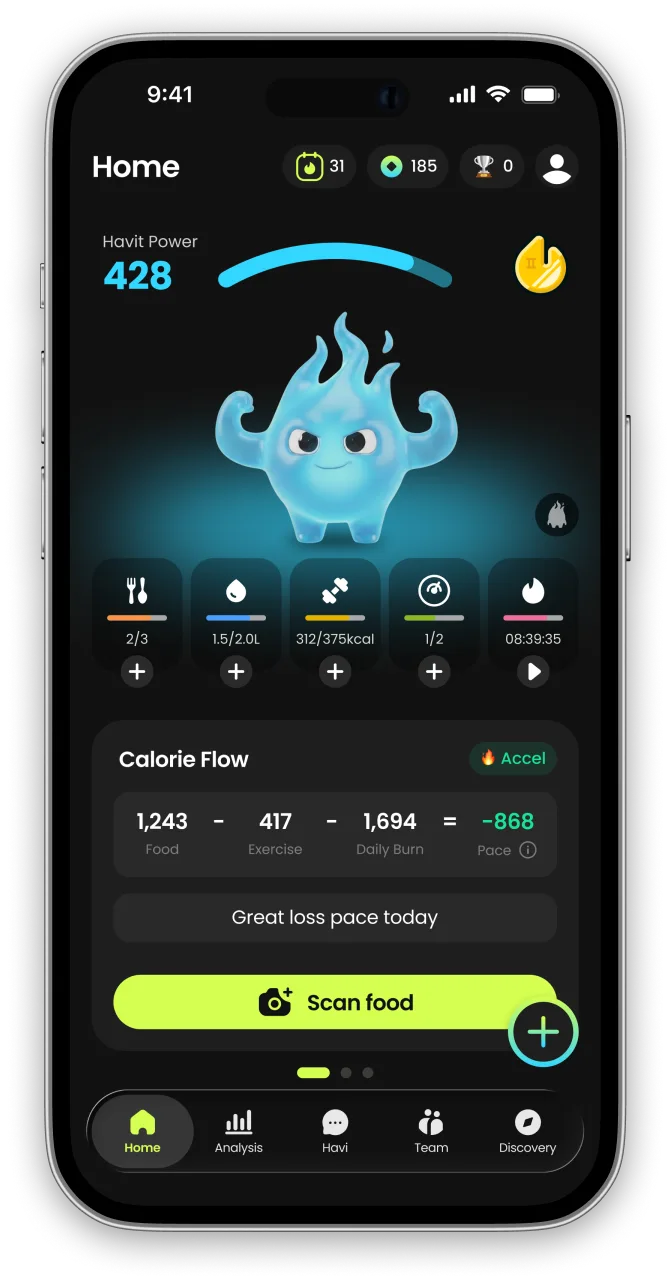
What is Havit?
Havit is an AI health companion for weight loss that protects muscle.
Unlike calorie-only trackers, Havit connects AI body-composition estimates, nutrition, hydration, sleep, steps, cycle, mood, and GLP-1 medication in one daily routine — so progress is measured by body composition, not just the number on the scale. Daily missions turn established behavior-change techniques into small repeatable actions, drawing on expertise from professionals formerly at Juvis Diet, one of Korea’s leading metabolic clinics.
In Havit’s own analysis of 1,090 GLP-1 users, people who logged consistently built stronger habits than the general user base. Read the GLP-1 Habit Report
Havit works with or without GLP-1 medication. It is a wellness app, not a medical device; body-composition results are estimates.

Continue in the App
Personalized wellness with your own data


References
- Global Iodine Nutrition Status and Trends Over the Past Decade — Thyroid, 2024
- Iodine Intake and Thyroid Function: Mechanisms, Requirements, and Clinical Implications — Endocrine Reviews, 2025
- Iodine Deficiency in the UK: National Diet and Nutrition Survey Analysis — Lancet Diabetes & Endocrinology, 2023
- Variability of Iodine Content in Kelp Dietary Supplements — Journal of Clinical Endocrinology & Metabolism, 2023
- FoodData Central: Iodine Content Database — USDA Agricultural Research Service, 2024


