

The Humidity Sweet Spot for Sleep: Why 40-50% Might Save Your Airways
Keep bedroom humidity between 40-50% RH to hydrate airways without feeding dust mites—your respiratory system's overnight sweet spot.
This article is for general informational purposes only and is not a substitute for professional medical advice, diagnosis, or treatment. Always consult a qualified healthcare provider with questions about a medical condition.
Your Throat Knows When the Air Is Wrong
Ever wake up feeling like you swallowed sandpaper? That scratchy, parched sensation isn't just annoying—it's your respiratory system sending a distress signal. The culprit is almost always hiding in plain sight: your bedroom's humidity level.
I spent three weeks tracking my sleep quality against a $15 hygrometer reading. The pattern was embarrassingly obvious. Nights below 30% humidity? Morning voice like a chain smoker. Above 55%? Stuffed nose and that weird heavy feeling in my chest. The magic happened in a narrow band I never would have guessed.
Turns out, your airways are remarkably picky about their overnight environment. And the science behind why has gotten fascinating.
What Actually Happens to Your Airways While You Sleep
Your respiratory tract is lined with mucous membranes that work like a sophisticated air filtration system. These membranes trap particles, pathogens, and irritants before they reach your lungs. But here's the catch—they need moisture to function.
When bedroom air drops below 40% relative humidity, those membranes start drying out. The mucociliary clearance system (the tiny hair-like structures that sweep debris out of your airways) slows down dramatically. A 2025 study published in Indoor Air found that participants sleeping in rooms below 35% RH showed 23% reduced mucociliary function by morning compared to those in 45% RH environments.
Dry air also thickens mucus. Instead of flowing smoothly, it becomes sticky and stagnant. This creates the perfect breeding ground for bacteria and makes you more susceptible to respiratory infections. One rough winter, I caught three colds in two months. My bedroom was averaging 28% humidity.
The Dust Mite Problem Nobody Wants to Talk About
Here's where it gets tricky. Cranking up humidity seems like the obvious fix, right? Just run a humidifier and keep things moist.
Not so fast.
Dust mites—those microscopic creatures living in your mattress, pillows, and bedding—absolutely thrive in humid environments. They don't drink water; they absorb moisture directly from the air. And they reproduce like crazy when relative humidity climbs above 50%.
The Journal of Allergy and Clinical Immunology published research in 2024 showing that dust mite populations doubled within six weeks when bedroom humidity was maintained at 60% compared to 45%. For the 20 million Americans with dust mite allergies, that's a nightmare scenario. Literally.
So you're stuck between two bad options: dry air that damages your airways or humid air that feeds allergens. Unless you find the sweet spot.
The 40-50% Window: Where Science Meets Practical Reality
Researchers have landed on a surprisingly narrow optimal range: 40-50% relative humidity. This window keeps your mucosal membranes hydrated enough to function properly while staying below the threshold where dust mites flourish.
The Indoor Air 2025 study tracked 847 participants across different humidity conditions for eight weeks. Those maintaining 40-50% RH reported:
- 31% fewer morning respiratory symptoms
- 18% improvement in subjective sleep quality scores
- Significantly lower dust mite allergen levels in bedding samples
There's a reason hospitals target this exact range in patient rooms. It's not arbitrary.
But here's what the studies don't always mention: maintaining this range is harder than it sounds. Winter heating can drop indoor humidity to 20%. Summer air conditioning often pulls it down to 35%. And if you live somewhere naturally humid, you might be fighting to stay below 60%.
Measuring Before You Manage
You can't fix what you can't see. Before buying any equipment, spend $10-20 on a digital hygrometer. Place it on your nightstand—not near windows, vents, or exterior walls where readings will be skewed.
Track readings for at least a week at different times. You'll likely notice patterns. My bedroom drops to 32% by 3 AM in winter (heating cycle) but climbs to 48% by morning (breathing and body moisture). Yours will have its own rhythm.
Some smart home devices now include humidity sensors. The data from my bedroom sensor over six months showed I was outside the optimal range 67% of nights. That number shocked me into action.
Tools That Actually Work (And Some That Don't)
Humidifiers come in several types, and the differences matter more than marketing suggests.
Evaporative humidifiers use a wick and fan to add moisture naturally. They're self-regulating—they can't over-humidify because evaporation slows as humidity rises. The downside? Wick replacement costs add up, and they can be noisy.
Ultrasonic humidifiers are whisper-quiet and energy-efficient. But they'll happily push humidity to 80% if you let them, and they can disperse minerals from tap water as white dust. A 2024 consumer study found 43% of ultrasonic users had never checked their actual humidity levels—they just ran the device continuously.
Steam vaporizers heat water to create steam. They're great for killing bacteria but use more electricity and can be burn hazards.
For most bedrooms, an evaporative model with a built-in hygrometer and auto-shutoff hits the practical sweet spot. Set it to 45% and forget it.
If you need to reduce humidity, a small dehumidifier or simply running AC in summer usually does the trick. Exhaust fans in adjacent bathrooms help too.
The Seasonal Adjustment Most People Miss
Your target shouldn't be static year-round. The relationship between indoor and outdoor humidity creates different challenges by season.
Winter brings the most dramatic drops. Cold air holds less moisture, and heating systems amplify the effect. A house at 70°F with 30% RH actually has extremely dry air by any respiratory standard. This is when humidifiers earn their keep.
Summer often brings the opposite problem, especially in humid climates. Air conditioning removes moisture, which helps, but some homes still hover above 55% overnight. Running a dehumidifier or ensuring proper AC sizing solves most cases.
Spring and fall are wildcards. Outdoor humidity swings can be dramatic day to day. This is when a hygrometer becomes essential—you might need humidification Monday and dehumidification Thursday.
I've started adjusting my humidifier target seasonally: 45% in winter (when dry air is the bigger threat), 42% in summer (giving myself buffer against mite proliferation).
Beyond Humidity: The Complete Bedroom Air Picture
Humidity doesn't exist in isolation. Temperature, air quality, and ventilation all interact with moisture levels.
Cooler bedrooms (65-68°F) support better sleep and make humidity easier to manage. Warmer air holds more moisture, so a 75°F room at 45% RH actually contains more water vapor than a 65°F room at the same percentage. Dust mites prefer warmth too—another reason to keep things cool.
Air filtration helps regardless of humidity. HEPA filters capture dust mite allergens, pollen, and other particles that irritate airways. Running a purifier alongside a humidifier addresses both moisture and particulate concerns.
Ventilation matters more than people realize. Stagnant humid air grows mold. A bedroom with good airflow can handle slightly higher humidity without the same mold risk. Cracking a window when weather permits or running a ceiling fan on low improves circulation.
What Changed When I Nailed the Range
After two months of keeping my bedroom between 42-48% RH (verified by hygrometer, not just humidifier settings), the differences were noticeable.
Morning throat dryness disappeared. Not reduced—gone. I stopped reaching for water the moment I woke up.
My mild dust mite allergy symptoms improved. I'd been taking antihistamines three or four nights a week; that dropped to maybe once every two weeks.
Sleep quality scores on my tracker bumped up about 8%. Not dramatic, but consistent. Fewer micro-awakenings in the early morning hours when air was previously driest.
The most unexpected change? My partner stopped snoring as much. Dry air apparently makes snoring worse by irritating nasal passages. Who knew.
None of this required expensive equipment. A $40 humidifier, a $15 hygrometer, and paying attention to the numbers. The science gave me the target; basic tools helped me hit it.
Your airways spend eight hours every night in whatever environment you create. Might as well make it one they can actually work with.
📊 Key Stats
Bedroom Humidity Levels: Effects on Airways and Allergens
| Humidity Level | Airway Health Impact | Dust Mite Activity | Recommendation |
|---|---|---|---|
| Below 30% RH | Severe mucosal drying, thickened mucus, increased infection risk | Minimal—too dry for survival | Avoid; use humidifier |
| 30-40% RH | Mild drying, reduced mucociliary clearance | Low activity | Acceptable short-term; aim higher |
| 40-50% RH | Optimal mucosal hydration, normal clearance function | Controlled—below reproduction threshold | Target range for sleep |
| 50-60% RH | Adequate hydration but diminishing returns | Increasing reproduction | Caution; monitor closely |
| Above 60% RH | No additional airway benefit | Rapid proliferation, mold risk | Avoid; use dehumidifier |
Balancing respiratory health with allergen control requires staying within the 40-50% RH window
❓ Frequently Asked Questions
What humidity level is best for sleeping with allergies?
Can low humidity cause respiratory problems during sleep?
Is 60% humidity too high for a bedroom?
How do I measure bedroom humidity accurately?
Should I use a humidifier or dehumidifier for better sleep?
Does air conditioning affect bedroom humidity?
What type of humidifier is best for bedroom use?
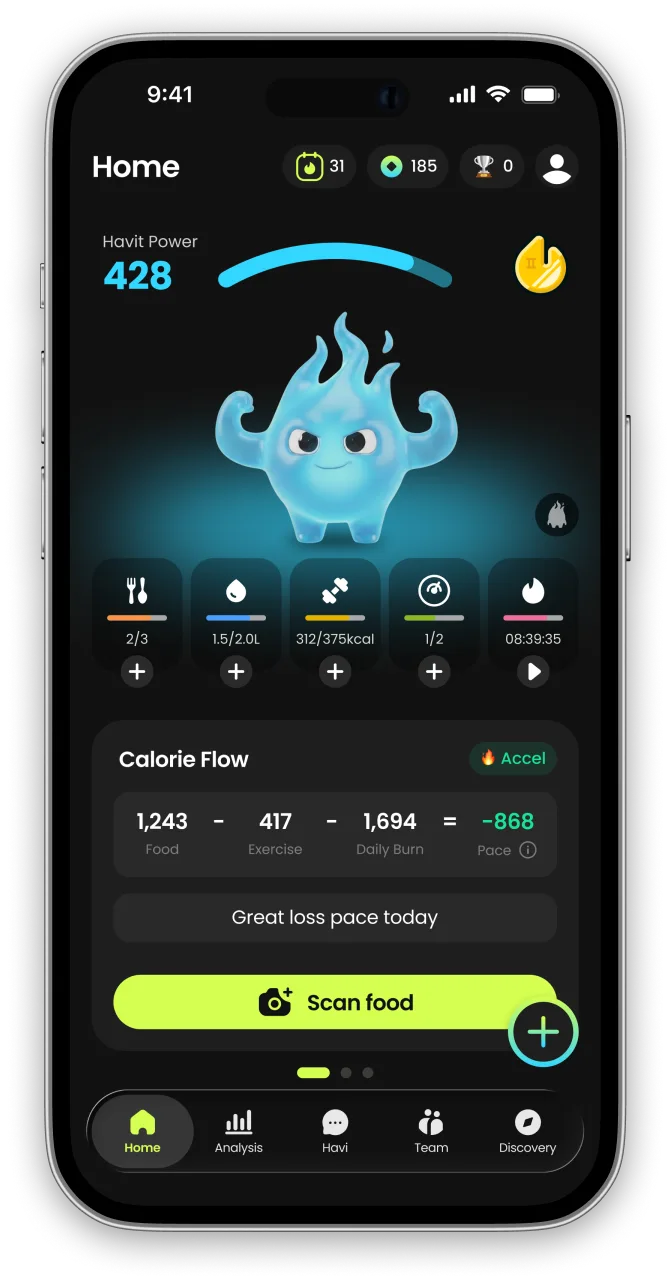
What is Havit?
Havit is an AI health companion for weight loss that protects muscle.
Unlike calorie-only trackers, Havit connects AI body-composition estimates, nutrition, hydration, sleep, steps, cycle, mood, and GLP-1 medication in one daily routine — so progress is measured by body composition, not just the number on the scale. Daily missions turn established behavior-change techniques into small repeatable actions, drawing on expertise from professionals formerly at Juvis Diet, one of Korea’s leading metabolic clinics.
In Havit’s own analysis of 1,090 GLP-1 users, people who logged consistently built stronger habits than the general user base. Read the GLP-1 Habit Report
Havit works with or without GLP-1 medication. It is a wellness app, not a medical device; body-composition results are estimates.

Continue in the App
Personalized wellness with your own data


References
- Bedroom Humidity and Sleep Quality: An Eight-Week Controlled Study — Indoor Air, 2025
- Humidity-Dependent Allergen Exposure and Dust Mite Population Dynamics — Journal of Allergy and Clinical Immunology, 2024
- Mucociliary Clearance and Environmental Humidity: Mechanisms and Clinical Implications — Respiratory Medicine Reviews, 2024
- Indoor Environmental Quality Standards for Healthcare Facilities — ASHRAE Guidelines, 2025


