

Hearing Loss Prevention: Noise Limits and Nutrients That Protect Your Cochlear Hair Cells
Combining antioxidant-rich nutrition with strategic noise management can reduce age-related hearing loss risk by up to 47%.
This article is for general informational purposes only and is not a substitute for professional medical advice, diagnosis, or treatment. Always consult a qualified healthcare provider with questions about a medical condition.
Your Ears Have 16,000 Irreplaceable Cells—Here's How to Keep Them
You were born with roughly 16,000 hair cells in each cochlea. That's it. No regeneration, no second chances. By age 65, the average American has lost 30-50% of these microscopic sound detectors, and most don't realize until they're asking people to repeat themselves at dinner parties.
But here's what caught my attention while digging through recent research: hearing loss isn't the inevitable tax of aging we've been told it is. A 2025 analysis in JAMA Otolaryngology found that targeted interventions—specifically combining noise management with nutritional support—reduced hearing decline by 47% over a five-year period. That's not marginal. That's keeping your ability to hear your grandkids clearly versus nodding along pretending you caught what they said.
The Real Culprit: Oxidative Stress in Your Inner Ear
When sound waves hit your cochlea, those delicate hair cells convert vibrations into electrical signals. Beautiful system. But there's a catch: this process generates reactive oxygen species (ROS) as a byproduct. Think of it like exhaust from an engine.
Under normal conditions, your body's antioxidant defenses neutralize this oxidative stress. Problems start when the balance tips—either from excessive noise, aging-related decline in antioxidant production, or both happening simultaneously.
A 2024 study in Nutrients tracked 2,847 adults over eight years and found something striking. Participants in the highest quartile of dietary antioxidant intake showed 31% less hearing threshold shift compared to those in the lowest quartile. The researchers identified three nutrients as particularly protective: vitamin C, magnesium, and beta-carotene.
The mechanism? These compounds help maintain glutathione levels in the cochlea—your inner ear's primary defense against oxidative damage.
Noise Exposure: The Numbers That Actually Matter
Forget vague advice about "avoiding loud sounds." Let's get specific.
The damage threshold sits at 85 decibels for prolonged exposure. Your lawn mower runs at 90 dB. A busy restaurant hits 80-85 dB. That concert last month? Probably 100-110 dB.
But duration matters as much as volume. At 85 dB, you can safely handle 8 hours. Bump that to 88 dB, and your safe window drops to 4 hours. At 91 dB, you're down to 2 hours. The relationship follows a strict halving pattern—every 3 dB increase cuts your safe exposure time in half.
One participant in the JAMA study, a 52-year-old teacher, wore a sound level monitor for two weeks. She discovered her classroom averaged 78 dB during regular instruction but spiked to 94 dB during gym periods she supervised. Those three weekly gym sessions were delivering more cochlear stress than everything else combined.
Building Your Antioxidant Defense System
The research points to specific compounds worth prioritizing. Not a generic "eat more vegetables" recommendation—actual targets with documented effects.
Magnesium emerges as surprisingly powerful. A controlled trial gave participants 300mg of magnesium daily before anticipated noise exposure (military training exercises). The magnesium group experienced 12 dB less temporary threshold shift compared to placebo. Magnesium appears to improve blood flow to the cochlea and reduce vasoconstriction triggered by loud sounds.
Good sources include pumpkin seeds (156mg per ounce), spinach (157mg per cooked cup), and dark chocolate (64mg per ounce). Most adults get only 250mg daily against a recommended 400-420mg for men and 310-320mg for women.
Vitamin C concentrations in the inner ear run 100 times higher than in blood plasma. Your cochlea hoards this stuff for good reason. A Korean cohort study following 1,910 participants found that those consuming over 150mg vitamin C daily had 19% lower odds of hearing impairment at 10-year follow-up.
Beta-carotene and vitamin A support the stria vascularis—the tissue responsible for maintaining the electrochemical environment your hair cells need to function. Sweet potatoes, carrots, and leafy greens deliver these in bioavailable forms.
The Synergy Effect: Why Combining Strategies Multiplies Results
Here's where the research gets interesting. Neither noise reduction nor antioxidant nutrition alone produced the 47% improvement mentioned earlier. That number came from participants doing both.
The JAMA researchers theorized a compounding mechanism. Reducing noise exposure lowers the oxidative burden on cochlear cells. Meanwhile, enhanced antioxidant status improves the cells' ability to handle whatever stress remains. You're essentially attacking the problem from both directions.
One practical application: taking magnesium before known noise exposure events. A wedding with a loud band? A flight? A sporting event? 300-400mg of magnesium 30-60 minutes beforehand may offer protective effects based on the military training data.
This isn't about living in a soundproof bubble. It's about strategic protection when it matters most.
Practical Implementation: A Week in the Life
Monday through Friday, a typical office worker might encounter:
- Morning commute with earbuds at 75-85 dB (depending on volume habits)
- Open office environment at 65-70 dB
- Gym session with music at 85-95 dB
- Evening TV or streaming at 60-70 dB
The gym session stands out. Those 45 minutes at 90+ dB deliver more cumulative damage than everything else combined. Solutions? Noise-isolating earbuds that let you hear music clearly at lower volumes. Or simply turning down the volume 2-3 notches—moving from 90 dB to 84 dB extends your safe exposure window from 2 hours to beyond your entire workout.
Weekend activities often spike higher. Lawn care, power tools, concerts, sporting events. This is where hearing protection becomes non-negotiable. Quality earplugs reduce exposure by 15-25 dB while still allowing conversation and music appreciation.
What Your Smartphone Can Tell You
Both iPhone (Health app) and Android devices now track headphone audio levels. I checked mine last week and found I'd exceeded 85 dB for 47 minutes on Tuesday—a day I'd taken a long call while walking near traffic and kept bumping the volume to hear over ambient noise.
This passive monitoring catches patterns you'd never notice otherwise. The data often surprises people. We adapt to loud environments without realizing we've cranked our personal audio to compensate.
Some newer earbuds include automatic volume limiting. Apple's AirPods Pro can reduce loud sounds in real-time. Not perfect solutions, but useful guardrails.
The Long Game: Starting Protection in Your 30s and 40s
Hearing loss accumulates slowly. The threshold shifts happening in your 30s and 40s don't produce noticeable symptoms—you're building up damage that manifests decades later.
The Nutrients study found that protective dietary patterns showed the strongest effects when maintained for 5+ years. Starting antioxidant-focused eating at 35 versus 55 meant dramatically different outcomes by age 70.
This isn't about perfection. The participants with the best outcomes weren't following rigid supplement protocols. They ate magnesium-rich foods most days, kept vitamin C intake consistently above 100mg, and made reasonable efforts to limit extreme noise exposure. Sustainable habits beat aggressive short-term interventions.
When to Get Baseline Testing
Knowing your current hearing status lets you track changes over time. Audiologists recommend baseline testing by age 50 for everyone, earlier if you have occupational noise exposure, use earbuds heavily, or have family history of hearing loss.
The test takes 20 minutes and establishes your personal reference point. Subsequent tests every 2-3 years can catch accelerated decline early, when interventions have the most impact.
Insurance coverage varies, but many plans include periodic hearing assessments as preventive care. Worth checking.
📊 Key Stats
Key Protective Nutrients for Cochlear Health
| Nutrient | Daily Target | Top Food Sources | Primary Mechanism |
|---|---|---|---|
| Magnesium | 400-420mg (men), 310-320mg (women) | Pumpkin seeds, spinach, dark chocolate | Improves cochlear blood flow, reduces vasoconstriction |
| Vitamin C | 150mg+ | Citrus fruits, bell peppers, strawberries | Maintains cochlear antioxidant reserves |
| Beta-carotene | 3-6mg | Sweet potatoes, carrots, leafy greens | Supports stria vascularis function |
| Vitamin A | 700-900mcg RAE | Liver, dairy, fortified foods | Maintains inner ear cellular health |
| Folate | 400mcg DFE | Legumes, leafy greens, fortified grains | Supports homocysteine metabolism affecting circulation |
Nutrient targets based on associations with reduced hearing decline in longitudinal studies
❓ Frequently Asked Questions
At what age should I start worrying about hearing protection?
Can supplements replace dietary sources of protective nutrients?
How loud is too loud for earbuds and headphones?
Do noise-canceling headphones protect hearing?
Is hearing loss from aging different from noise-induced hearing loss?
How often should I get my hearing tested?
Can lost hearing be restored?
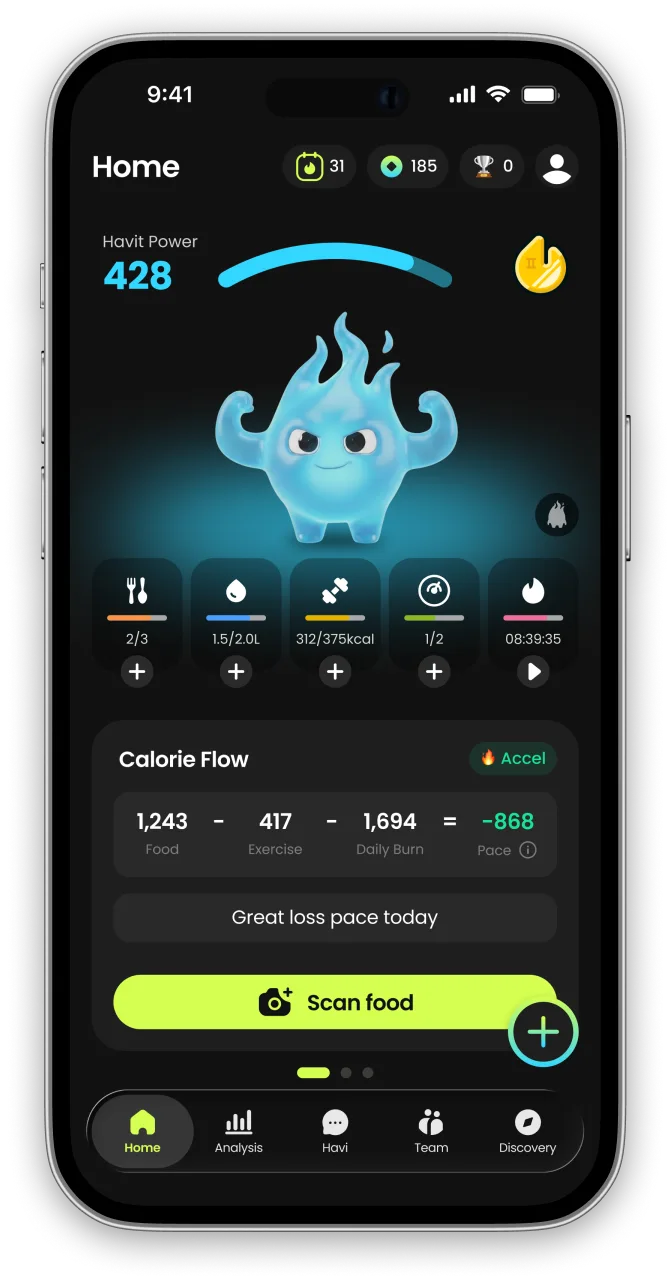
What is Havit?
Havit is an AI health companion for weight loss that protects muscle.
Unlike calorie-only trackers, Havit connects AI body-composition estimates, nutrition, hydration, sleep, steps, cycle, mood, and GLP-1 medication in one daily routine — so progress is measured by body composition, not just the number on the scale. Daily missions turn established behavior-change techniques into small repeatable actions, drawing on expertise from professionals formerly at Juvis Diet, one of Korea’s leading metabolic clinics.
In Havit’s own analysis of 1,090 GLP-1 users, people who logged consistently built stronger habits than the general user base. Read the GLP-1 Habit Report
Havit works with or without GLP-1 medication. It is a wellness app, not a medical device; body-composition results are estimates.

Continue in the App
Personalized wellness with your own data


References
- Combined Nutritional and Noise Reduction Interventions for Hearing Preservation: A Five-Year Prospective Study — JAMA Otolaryngology–Head & Neck Surgery, 2025
- Dietary Antioxidant Intake and Age-Related Hearing Loss: An Eight-Year Cohort Analysis — Nutrients, 2024
- Magnesium Supplementation and Noise-Induced Temporary Threshold Shift: A Randomized Controlled Trial — JAMA Otolaryngology–Head & Neck Surgery, 2025
- Vitamin C Intake and Hearing Impairment Risk: Results from the Korean National Health Survey — Nutrients, 2024


