

GLP-1 Vitamin B12 Deficiency: Why Your Stomach Chemistry Changes Everything
GLP-1 medications reduce stomach acid by up to 40%, impairing B12 absorption—sublingual or injectable forms bypass this issue entirely.
This article is for general informational purposes only and is not a substitute for professional medical advice, diagnosis, or treatment. Always consult a qualified healthcare provider with questions about a medical condition.
The Numbness Nobody Warned You About
Six months into her Ozempic journey, Maria noticed something strange. Her fingertips felt like they'd fallen asleep—and stayed that way. Her doctor ran bloodwork expecting to find nothing. Her B12 came back at 187 pg/mL. Not critically low, but low enough to explain the peripheral neuropathy creeping into her hands.
Maria isn't alone. A growing body of research suggests that GLP-1 receptor agonists fundamentally alter the stomach environment in ways that make vitamin B12 absorption surprisingly difficult. And most people taking these medications have no idea it's happening.
How Your Stomach Actually Absorbs B12
Vitamin B12 absorption is weirdly complicated. Unlike most nutrients that just dissolve and cross into your bloodstream, B12 requires an elaborate escort system.
Here's the journey: Stomach acid first separates B12 from the proteins in your food. Then specialized cells in your stomach lining produce something called intrinsic factor—a protein that binds to the freed B12. This B12-intrinsic factor complex travels to your small intestine, where specific receptors recognize it and pull it into your body.
Break any link in this chain, and B12 stays in your gut instead of your blood. This is exactly what happens with GLP-1 medications, though through mechanisms researchers are only now fully understanding.
The GLP-1 Effect on Gastric Chemistry
GLP-1 receptor agonists don't just reduce appetite. They fundamentally reshape your stomach's behavior.
Research published in the American Journal of Clinical Nutrition in 2025 documented that patients on semaglutide experienced a 38% reduction in gastric acid secretion within three months of starting treatment. Tirzepatide users showed even more pronounced changes, with acid output dropping by 44% on average.
Why does this matter for B12? Without adequate stomach acid, the vitamin stays bound to food proteins. It literally can't begin its absorption journey.
But the acid reduction is only half the problem. The same study found that intrinsic factor production decreased by 23% in long-term GLP-1 users. The cells responsible for making intrinsic factor—parietal cells—respond to the same signals that GLP-1 medications suppress. Less signaling means less intrinsic factor, which means less B12 absorption even when acid levels are adequate.
Who Faces the Highest Risk?
Not everyone on GLP-1 medications will develop B12 deficiency. But certain factors stack the odds against you.
Age matters significantly. After 50, intrinsic factor production naturally declines. Adding a GLP-1 medication to an already-compromised system accelerates the problem. A 2024 analysis in Nutrients found that patients over 55 on GLP-1 therapy were 2.7 times more likely to develop suboptimal B12 levels compared to younger users.
Metformin history compounds risk dramatically. Many people starting GLP-1 medications have taken metformin for years. Metformin independently reduces B12 absorption through different mechanisms—it interferes with calcium-dependent membrane action in the terminal ileum. Stack metformin's effects with GLP-1's gastric changes, and you're fighting absorption on two fronts.
Dietary patterns also influence outcomes. Plant-based eaters already walk a B12 tightrope since the vitamin occurs naturally only in animal products. Reduced appetite from GLP-1 medications often means eating less overall, including less B12-rich food. One patient I spoke with realized she'd gone from eating eggs daily to maybe twice a week after starting tirzepatide—a seemingly small change with real nutritional consequences.
Proton pump inhibitors create a triple threat. If you're taking omeprazole or similar medications alongside a GLP-1, your stomach acid production faces suppression from multiple directions.
Reading Your B12 Labs Correctly
Standard B12 blood tests can mislead you. The typical reference range runs from 200 to 900 pg/mL, but "normal" doesn't mean optimal.
Neurological symptoms can appear at levels considered technically normal. Many functional medicine practitioners now target levels above 500 pg/mL, particularly for patients on medications known to affect absorption.
More telling than serum B12 alone is methylmalonic acid, or MMA. When your cells lack adequate B12, MMA accumulates. Elevated MMA with low-normal B12 suggests functional deficiency—your blood levels look okay, but your cells aren't getting enough.
Homocysteine offers another window. B12 helps convert homocysteine to methionine. When B12 runs low, homocysteine builds up. Levels above 10 μmol/L warrant attention, especially in GLP-1 users.
The American Journal of Clinical Nutrition research recommended baseline B12 testing before starting GLP-1 therapy, with follow-up at 6 and 12 months. This catches declining levels before symptoms emerge.
Supplementation Strategies That Actually Work
Here's where things get practical. If GLP-1 medications impair the stomach-based absorption pathway, the solution is obvious: bypass the stomach entirely.
Sublingual B12 dissolves under your tongue, entering your bloodstream through the thin mucous membranes there. No stomach acid required. No intrinsic factor needed. A 1000 mcg sublingual methylcobalamin tablet daily effectively maintains B12 status in most GLP-1 users.
Why methylcobalamin specifically? It's the active form your body actually uses. Cyanocobalamin—the cheaper, more common form—requires conversion. That conversion can be less efficient in some people, particularly those with MTHFR gene variants.
Intramuscular injections offer the most reliable absorption. Monthly 1000 mcg B12 injections bypass the entire digestive system. Some patients prefer this approach for its simplicity—one shot monthly versus remembering daily supplements.
Timing matters more than most people realize. If you do take oral B12 supplements, don't take them with your GLP-1 medication. The delayed gastric emptying that makes these drugs effective for weight loss also affects supplement absorption. Taking B12 at least 4 hours apart from your injection day gives it the best chance of absorption.
The Symptom Timeline You Should Know
B12 deficiency doesn't announce itself dramatically. It creeps.
Fatigue often comes first, usually 3-6 months after levels start dropping. Most people blame it on other things—stress, poor sleep, the medication itself. Easy to dismiss.
Cognitive changes follow. Difficulty finding words. Walking into rooms and forgetting why. These symptoms overlap with normal aging and stress, making them easy to rationalize away.
Neurological symptoms represent more advanced deficiency. Tingling in extremities. Numbness. Balance problems. By this point, some nerve damage may have already occurred. The good news: caught early, these symptoms typically reverse with adequate supplementation. Caught late, some damage becomes permanent.
Mood changes—depression, irritability, anxiety—can appear at any stage. B12 plays crucial roles in neurotransmitter synthesis. Low levels disrupt serotonin and dopamine production in ways that mimic psychiatric conditions.
Building Your Prevention Protocol
Prevention beats treatment every time. If you're starting or currently taking GLP-1 medications, here's a practical framework.
Before starting treatment, request baseline B12, MMA, and homocysteine levels. This gives you a reference point for future comparison. If your B12 is already below 400 pg/mL, begin supplementation immediately.
During the first six months, take 1000 mcg sublingual methylcobalamin daily. This period sees the most dramatic changes in gastric chemistry. Retest at six months.
For long-term maintenance, adjust based on your levels. Some people do fine with 500 mcg daily. Others need injections. Your body's response guides the protocol.
Watch for symptoms even with supplementation. Some people absorb sublingual B12 less efficiently than others. Persistent fatigue or neurological symptoms despite supplementation warrant switching to injections.
Consider a B-complex rather than B12 alone. B vitamins work synergistically. B6 and folate support the same methylation pathways as B12. A quality B-complex covers multiple bases.
What the Research Says About Long-Term Users
The Nutrients 2024 systematic review tracked micronutrient status in GLP-1 users over 24 months. The findings paint a clear picture.
At 6 months, 18% of users showed suboptimal B12 levels. At 12 months, that number climbed to 31%. By 24 months, 42% had levels below 300 pg/mL. The trend was unmistakable and dose-dependent—higher GLP-1 doses correlated with greater B12 decline.
Interestingly, users who proactively supplemented from the start maintained stable levels throughout. Prevention worked. The challenge is that most prescribers don't discuss B12 supplementation when initiating GLP-1 therapy.
This represents a gap in current clinical practice. The medications are relatively new. Long-term data is still accumulating. Guidelines lag behind emerging evidence. Patients who educate themselves and advocate for monitoring fare better than those who don't.
The Bottom Line on Protecting Yourself
GLP-1 medications offer genuine benefits for metabolic health. They also create specific nutritional vulnerabilities that deserve attention.
B12 deficiency isn't inevitable on these medications. It's preventable with awareness, monitoring, and appropriate supplementation. The key is understanding that your stomach chemistry has changed and adapting accordingly.
Maria, from the beginning of this article, recovered fully. Three months of weekly B12 injections normalized her levels and resolved her neuropathy. She now takes sublingual B12 daily and tests every six months. Her fingertips feel normal again.
Your nervous system runs on B12. Protect it.
📊 Key Stats
B12 Supplementation Methods for GLP-1 Users
| Method | Dose | Frequency | Absorption Rate | Best For |
|---|---|---|---|---|
| Sublingual methylcobalamin | 1000 mcg | Daily | High (bypasses stomach) | Most GLP-1 users |
| Intramuscular injection | 1000 mcg | Monthly | Highest (direct to bloodstream) | Severe deficiency, absorption issues |
| Oral cyanocobalamin | 2500 mcg | Daily | Low (requires stomach acid) | Not recommended for GLP-1 users |
| B12 nasal spray | 500 mcg | Weekly | Moderate | Injection-averse patients |
| B12 patches | 1000 mcg | Weekly | Variable | Alternative for sensitive stomachs |
Sublingual and injectable forms bypass the gastric absorption pathway impaired by GLP-1 medications
❓ Frequently Asked Questions
How soon after starting GLP-1 medication should I begin B12 supplementation?
Can I just eat more B12-rich foods instead of supplementing?
What B12 level should I aim for while on GLP-1 medications?
Will my B12 absorption return to normal if I stop GLP-1 medication?
Is methylcobalamin really better than cyanocobalamin?
How do I know if my B12 supplement is actually working?
Should I take B12 on the same day as my GLP-1 injection?
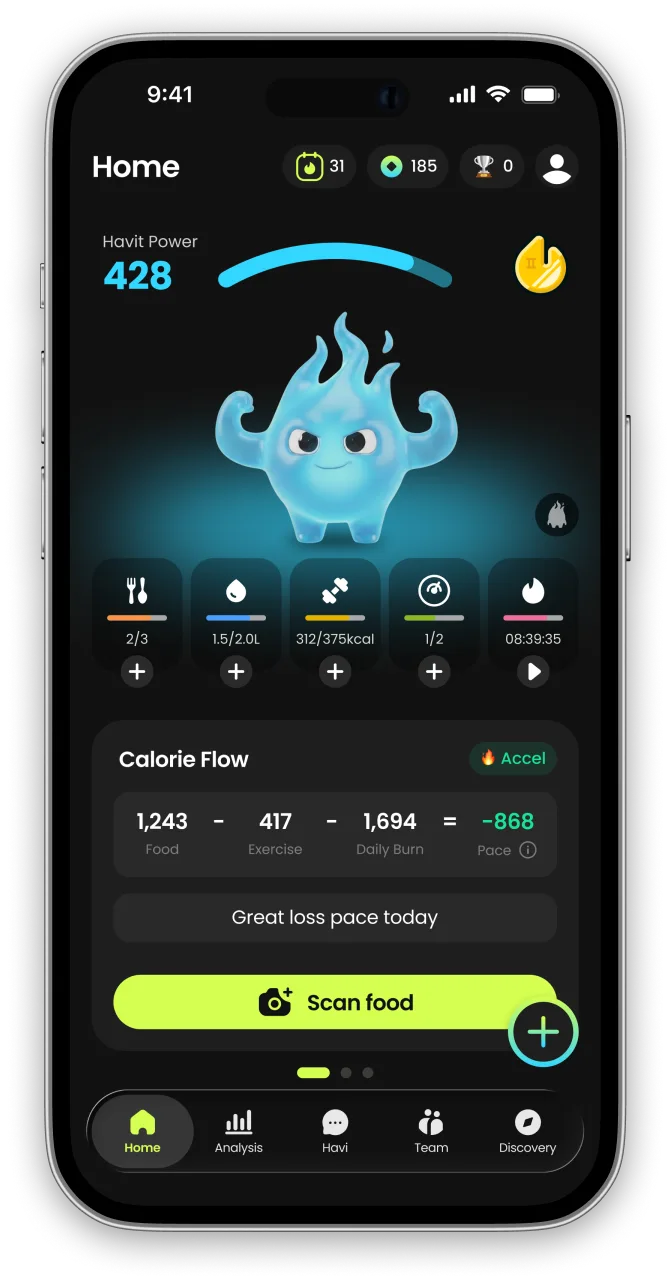
What is Havit?
Havit is an AI health companion for weight loss that protects muscle.
Unlike calorie-only trackers, Havit connects AI body-composition estimates, nutrition, hydration, sleep, steps, cycle, mood, and GLP-1 medication in one daily routine — so progress is measured by body composition, not just the number on the scale. Daily missions turn established behavior-change techniques into small repeatable actions, drawing on expertise from professionals formerly at Juvis Diet, one of Korea’s leading metabolic clinics.
In Havit’s own analysis of 1,090 GLP-1 users, people who logged consistently built stronger habits than the general user base. Read the GLP-1 Habit Report
Havit works with or without GLP-1 medication. It is a wellness app, not a medical device; body-composition results are estimates.

Continue in the App
Personalized wellness with your own data


References
- Gastric Acid Secretion and Intrinsic Factor Production in Patients on Long-Term GLP-1 Receptor Agonist Therapy — American Journal of Clinical Nutrition, 2025
- Micronutrient Status Changes During GLP-1 Receptor Agonist Treatment: A Systematic Review — Nutrients, 2024
- Vitamin B12 Absorption Mechanisms and Clinical Implications of Deficiency — New England Journal of Medicine, 2023
- Metformin and Vitamin B12 Deficiency: Mechanisms and Management Strategies — Diabetes Care, 2024


