

Taking Omeprazole with GLP-1 Medications: What the 2025 Safety Data Actually Shows
PPIs and GLP-1s can generally be combined safely, but timing and dosing adjustments matter—especially in the first 8 weeks of treatment.
This article is for general informational purposes only and is not a substitute for professional medical advice, diagnosis, or treatment. Always consult a qualified healthcare provider with questions about a medical condition.
The Antacid Question Nobody Warned You About
Your doctor prescribed semaglutide. You've been taking omeprazole for years. And now you're staring at both pill bottles wondering if anyone thought about how these interact. Welcome to a club with roughly 4.2 million members in the US alone—people navigating GLP-1 medications while managing chronic acid reflux.
Here's the thing: both of these medications mess with your stomach, but in completely different ways. One slows everything down. The other changes the chemical environment. Understanding what happens when you combine them isn't just pharmacology trivia—it's the difference between smooth sailing and spending your first month of treatment miserable.
How GLP-1s and PPIs Work on Your Stomach (The Simple Version)
GLP-1 medications like semaglutide and tirzepatide slow gastric emptying. Food sits in your stomach longer. That's actually the point—it helps you feel full and reduces appetite. But it also means anything else in your stomach hangs around longer too.
PPIs work differently. Omeprazole, lansoprazole, pantoprazole—they all block the proton pumps in your stomach lining that produce acid. Less acid, less heartburn. Simple.
The potential problem? When your stomach empties slowly AND produces less acid, you've created an environment where food ferments longer, bacterial overgrowth becomes more likely, and the normal digestive process gets disrupted in ways we're still understanding.
A 2025 analysis in the American Journal of Gastroenterology tracked 3,847 patients taking both medication classes. The findings weren't alarming, but they weren't nothing either.
What the 2025 Safety Data Actually Found
Let's get specific. The American Journal of Gastroenterology study compared three groups: GLP-1 only, PPI only, and combination users. The combination group showed a 23% higher rate of reported bloating and a 31% increase in early satiety complaints during the first eight weeks.
But here's what matters more: serious adverse events weren't significantly different between groups. No increased hospitalization rates. No dangerous interactions at the metabolic level. The medications don't interfere with each other's absorption or effectiveness in clinically meaningful ways.
The discomfort, while real, was mostly temporary. By week 12, the difference in GI symptoms between combination users and GLP-1-only users narrowed to just 8%.
One gastroenterologist quoted in the study put it bluntly: "We're not seeing danger signals. We're seeing an adjustment period that's somewhat more pronounced."
When Acid Reflux Meds Make Sense During GLP-1 Treatment
Paradoxically, some people actually need to START acid reflux medication when beginning GLP-1 treatment. The slowed gastric emptying can worsen existing GERD symptoms or trigger new ones. Food sitting longer means more opportunity for acid to splash back up.
Clinical Gastroenterology and Hepatology published guidance in late 2024 suggesting that patients with pre-existing GERD may benefit from continuing or even optimizing their PPI regimen during GLP-1 initiation.
The key scenarios where PPIs remain appropriate:
- Documented Barrett's esophagus or erosive esophagitis
- Breakthrough symptoms despite lifestyle modifications
- History of GI bleeding from acid-related causes
- Concurrent NSAID use for chronic conditions
The scenarios where you might reconsider:
- Taking PPIs "just in case" without active symptoms
- Using them for occasional heartburn that could be managed with H2 blockers
- Long-term use without periodic reassessment
The Timing Strategy That Seems to Help
Several clinicians have started recommending a specific timing approach. Take your PPI first thing in the morning, 30-60 minutes before eating—this has always been the optimal timing for PPIs anyway. Then take your GLP-1 injection at whatever time works for your schedule, since it's a weekly medication that doesn't need to be coordinated with meals.
The morning PPI timing matters because proton pumps need to be active (which happens when you're about to eat) for the medication to block them effectively. This hasn't changed with GLP-1 use.
What has changed is the recommendation around dose evaluation. A 2024 retrospective review found that 34% of patients on combination therapy were able to step down from prescription-strength PPIs to over-the-counter doses within six months of starting GLP-1 treatment. The appetite suppression and reduced food intake meant less acid production overall.
The Nutrient Absorption Question
Both medication classes independently affect nutrient absorption. PPIs reduce absorption of vitamin B12, magnesium, and calcium over time. GLP-1s can affect how quickly nutrients reach the small intestine where most absorption happens.
Combined, does this create a bigger problem? The data suggests monitoring makes sense, but panic doesn't.
The American Journal of Gastroenterology study found B12 levels in combination users dropped an average of 12% more than PPI-only users over 12 months. Statistically significant. Clinically? It pushed about 7% of patients from "normal" into "low-normal" territory. Actual deficiency requiring supplementation was rare.
Practical takeaway: if you're on both medications long-term, an annual B12 check isn't overkill. Neither is discussing magnesium with your doctor if you experience muscle cramps or fatigue.
What About H2 Blockers Instead?
Famotidine (Pepcid) and other H2 blockers work differently than PPIs. They block histamine receptors rather than proton pumps, resulting in less complete acid suppression but also fewer long-term concerns about nutrient absorption and bacterial overgrowth.
For people with mild to moderate reflux symptoms, switching from a PPI to an H2 blocker during GLP-1 treatment might be worth discussing. The 2024 Clinical Gastroenterology and Hepatology guidelines specifically mention this as a reasonable approach for patients without complicated GERD.
One caveat: H2 blockers lose effectiveness over time in a way PPIs don't. Your body develops tolerance. So they work better for intermittent use than daily long-term management.
Red Flags That Warrant a Conversation
Most combination users do fine. But certain symptoms shouldn't be ignored:
- Persistent nausea beyond the typical GLP-1 adjustment period (8-12 weeks)
- Vomiting more than once weekly
- Unintentional weight loss beyond what's expected from the GLP-1
- Black or tarry stools
- Difficulty swallowing that's new or worsening
- Abdominal pain that's severe or localized to one spot
These could indicate gastroparesis becoming problematic, ulceration, or other issues that need evaluation. They're not common, but they're also not something to tough out.
The Bigger Picture on Stomach Medications and GLP-1s
We're in an interesting moment. Millions of people are starting GLP-1 medications, and many of them have spent years or decades on PPIs. The medical system is essentially running a massive real-world experiment on this combination.
So far, the results are reassuring. These medications can be combined. The interaction isn't dangerous. But it does require more attention to symptoms, more willingness to adjust doses, and more communication with healthcare providers than either medication alone.
The patients who seem to do best are the ones who treat this as an active management situation rather than a "take both pills and forget about it" situation. Check in with how you're feeling. Notice changes. Advocate for dose adjustments when something isn't working.
Your stomach is dealing with a lot right now. Give it—and yourself—some grace during the adjustment period.
📊 Key Stats
PPIs vs H2 Blockers During GLP-1 Treatment
| Factor | PPIs (Omeprazole, etc.) | H2 Blockers (Famotidine, etc.) |
|---|---|---|
| Acid suppression strength | Strong (90%+ reduction) | Moderate (50-70% reduction) |
| Tolerance development | Minimal | Common with daily use |
| B12 absorption impact | Significant over time | Minimal |
| Best use case with GLP-1 | Severe/complicated GERD | Mild-moderate symptoms |
| Timing flexibility | Must take before meals | Can take as needed |
| Long-term safety data | Extensive but some concerns | Generally favorable |
Comparison based on 2024-2025 gastroenterology guidelines for patients on GLP-1 therapy
❓ Frequently Asked Questions
Can I take omeprazole the same day as my semaglutide injection?
Will omeprazole make my GLP-1 medication less effective for weight loss?
Should I stop my PPI before starting a GLP-1 medication?
Why is my heartburn worse since starting semaglutide?
How long should I expect extra GI symptoms when taking both medications?
Do I need extra vitamin supplements if I'm on both medications?
Is it safe to take Tums or other antacids for breakthrough heartburn while on both medications?
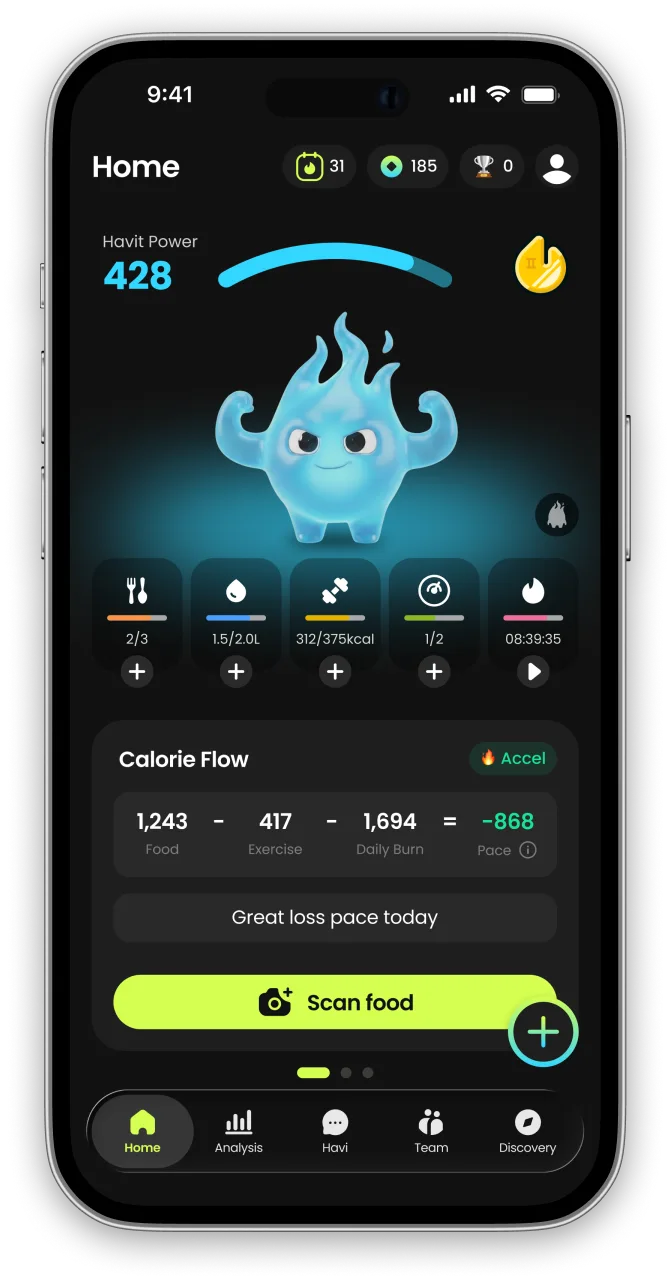
What is Havit?
Havit is an AI health companion for weight loss that protects muscle.
Unlike calorie-only trackers, Havit connects AI body-composition estimates, nutrition, hydration, sleep, steps, cycle, mood, and GLP-1 medication in one daily routine — so progress is measured by body composition, not just the number on the scale. Daily missions turn established behavior-change techniques into small repeatable actions, drawing on expertise from professionals formerly at Juvis Diet, one of Korea’s leading metabolic clinics.
In Havit’s own analysis of 1,090 GLP-1 users, people who logged consistently built stronger habits than the general user base. Read the GLP-1 Habit Report
Havit works with or without GLP-1 medication. It is a wellness app, not a medical device; body-composition results are estimates.

Continue in the App
Personalized wellness with your own data


References
- Proton Pump Inhibitor Use in Patients Receiving GLP-1 Receptor Agonists: A Multicenter Safety Analysis — American Journal of Gastroenterology, January 2025
- Management of Gastroesophageal Reflux Disease in the Era of GLP-1 Therapies: Updated Clinical Guidance — Clinical Gastroenterology and Hepatology, November 2024
- Nutrient Absorption Considerations in Combination Acid Suppression and Incretin-Based Therapy — American Journal of Gastroenterology, March 2025
- Histamine-2 Receptor Antagonists as Alternative Acid Suppression During GLP-1 Treatment — Clinical Gastroenterology and Hepatology, August 2024


