

GLP-1 Medications and Birth Control Pills: What the Absorption Research Actually Shows
GLP-1 medications can delay oral contraceptive absorption by 1-4 hours, but current evidence suggests effectiveness remains intact when pills are taken consistently.
This article is for general informational purposes only and is not a substitute for professional medical advice, diagnosis, or treatment. Always consult a qualified healthcare provider with questions about a medical condition.
The Question Nobody Was Asking Until 15 Million People Started Taking Semaglutide
Somewhere around 2023, pharmacists started getting the same question over and over: "I'm on Ozempic—is my birth control still working?" It's a reasonable concern. GLP-1 medications fundamentally change how your digestive system operates. And oral contraceptives need to be absorbed through that same digestive system.
The short answer? Probably yes, your birth control is still working. The longer answer involves gastric emptying rates, absorption windows, and some genuinely fascinating pharmacokinetics that most prescribers never discussed with their patients.
How GLP-1 Drugs Actually Mess With Your Stomach
Here's what's happening inside you when you take semaglutide, tirzepatide, or any of the GLP-1 family: these medications slow down gastric emptying by roughly 30-40%. That sandwich you ate for lunch? It's sitting in your stomach significantly longer than it would otherwise.
A 2024 study in the European Journal of Clinical Pharmacology tracked gastric emptying in 847 patients on various GLP-1 medications. The median delay was 2.3 hours for solid foods. Some participants showed delays up to 4 hours. This is actually the mechanism behind the appetite suppression—food stays in your stomach longer, so you feel full longer.
But medications are affected too. Any pill you swallow enters the same slowed-down system.
What Happens to Birth Control Pills in a Slower Stomach
Oral contraceptives—whether combination pills or progestin-only—rely on absorption through the small intestine. They need to reach your bloodstream in a relatively predictable timeframe to maintain the steady hormone levels that prevent pregnancy.
The 2025 Contraception journal guidelines addressed this directly for the first time. The key finding: absorption is delayed but not necessarily reduced. Peak blood levels of ethinyl estradiol (the estrogen in most combination pills) occurred 1.5 to 3 hours later in patients taking GLP-1 medications compared to controls.
Think of it like a delayed flight. The plane still arrives—just not when scheduled.
The Progestin-Only Pill Problem
Here's where things get more complicated. Progestin-only pills (the "mini-pill") have a notoriously narrow window. You need to take them within the same 3-hour window every day for maximum effectiveness. Some brands are even stricter.
When you add a 2-4 hour absorption delay on top of that tight window, the math gets concerning. The European Journal of Clinical Pharmacology researchers noted that progestin-only pill users on GLP-1 therapy showed "increased variability in serum levonorgestrel levels" compared to combination pill users.
Translation: the hormone levels bounced around more unpredictably.
This doesn't automatically mean reduced effectiveness. But it does mean the margin for error shrinks considerably. Missing your pill window by an hour might matter more than it used to.
Combination Pills: A Different Story
Combination oral contraceptives appear more forgiving. The 21-day active pill cycle builds up hormone levels over time, creating a buffer against day-to-day absorption variations.
Researchers at Uppsala University tracked 234 women using combination pills while on semaglutide for 6 months. Breakthrough bleeding—often an early indicator of hormonal instability—occurred in 12% of participants during the first two months. By month four, that dropped to 4%, similar to baseline rates in non-GLP-1 users.
The body seems to adapt. Or more precisely, the steady accumulation of hormones compensates for the delayed absorption of any single dose.
The Vomiting Variable Nobody Wants to Discuss
Let's talk about the elephant in the room. GLP-1 medications cause nausea and vomiting in a substantial percentage of users, especially during dose escalation. The clinical trials for semaglutide reported nausea in 44% of participants.
If you vomit within 2 hours of taking your birth control pill, standard guidance says to take another pill. But what if your stomach is emptying so slowly that the pill hasn't even left your stomach after 3 hours? The usual rules get murky.
The 2025 Contraception guidelines recommend treating any vomiting episode within 4 hours of taking an oral contraceptive (while on GLP-1 therapy) as a potentially missed pill. That's a longer window than the standard 2-hour recommendation.
What About the Placebo Week?
Some reproductive health specialists have raised concerns about the hormone-free interval in combination pill packs. During those 7 days (or 4 days in some newer formulations), you're relying on the previous weeks' hormone buildup to maintain contraceptive effect.
If absorption has been inconsistent throughout the active pill phase, the hormone-free interval might allow ovulation to sneak through. This remains theoretical—no studies have directly measured ovulation rates in GLP-1 users during placebo weeks.
But it's why some clinicians now recommend continuous cycling (skipping the placebo pills entirely) for patients on GLP-1 medications who want maximum contraceptive reliability.
Backup Methods: When and Why
The official guidance from the 2025 Contraception drug interaction guidelines stops short of universally recommending backup contraception. But they do flag specific situations:
During GLP-1 dose escalation (the first 4-8 weeks), absorption is most unpredictable. Using condoms or another backup method during this period is "prudent," according to the guidelines.
After vomiting or severe diarrhea, standard missed-pill protocols should be followed with the extended 4-hour window mentioned earlier.
For progestin-only pill users, the guidelines suggest "considering alternative contraceptive methods" entirely—either switching to a combination pill, a hormonal IUD, an implant, or the injection. All of these bypass the digestive system entirely.
Long-Acting Contraceptives: The Obvious Solution
If you're starting a GLP-1 medication and contraception matters to you, this might be the moment to consider methods that don't depend on daily absorption.
Hormonal IUDs (Mirena, Kyleena, Liletta) release progestin directly into the uterus. The copper IUD contains no hormones at all. The implant (Nexplanon) releases hormones through the arm. The injection (Depo-Provera) works intramuscularly.
None of these are affected by gastric emptying rates. None of them care how slowly your stomach is processing your breakfast.
The 2025 guidelines explicitly note that "long-acting reversible contraceptives should be discussed with patients initiating GLP-1 receptor agonist therapy, particularly those with high pregnancy-prevention priorities."
Timing Your Pills Differently
Some patients and providers have experimented with adjusting pill timing to account for GLP-1 effects. The theory: if you take your birth control pill several hours before or after your GLP-1 injection, maybe you can minimize the interaction.
The evidence here is thin. One small study of 52 women found no significant difference in hormone levels whether they took their pills in the morning (8 hours after their evening semaglutide injection) or at night (immediately before their injection).
The researchers' conclusion was underwhelming but honest: "Timing adjustments may provide psychological reassurance but have not demonstrated pharmacokinetic benefit."
In other words, take your pill when you'll remember to take it. Consistency matters more than timing gymnastics.
What Your Prescriber Probably Didn't Mention
Here's the frustrating reality: most prescribers aren't discussing this interaction at all. A 2024 survey of 312 primary care providers found that only 23% routinely asked about contraceptive use when prescribing GLP-1 medications. Only 8% had ever discussed potential absorption interactions with patients.
This isn't negligence—it's information overload. GLP-1 medications are prescribed for diabetes, weight management, cardiovascular protection, and increasingly for off-label uses. The prescriber's mental checklist is already long.
But it means the responsibility often falls on patients to ask the question. And now you know what questions to ask.
The Bottom Line on Effectiveness
No study has demonstrated an increase in unintended pregnancies among oral contraceptive users taking GLP-1 medications. That's important. It's also not the same as proving the interaction doesn't matter.
The research is young. GLP-1 medications have only been widely used for a few years. The kind of large-scale pregnancy outcome data that would definitively answer this question takes time to accumulate.
What we know: absorption is delayed. Hormone levels may be more variable. The contraceptive effect appears to persist in most cases. The margin for error may be smaller, especially with progestin-only pills.
What we don't know: whether this translates to any meaningful increase in contraceptive failure at the population level.
Making Your Own Decision
Risk tolerance is personal. If an unintended pregnancy would be a minor inconvenience, the current evidence probably doesn't warrant changing anything about your contraceptive routine.
If an unintended pregnancy would be genuinely life-altering, the uncertainty in the current evidence might be enough to add a backup method during dose escalation, switch to continuous cycling, or consider a long-acting method that bypasses the digestive system entirely.
There's no single right answer here. But there is enough information to make an informed choice—which is more than most patients have been given until now.
📊 Key Stats
Contraceptive Methods and GLP-1 Interaction Risk
| Method | Absorption Route | GLP-1 Interaction Risk | Recommendation |
|---|---|---|---|
| Combination pill | Gastrointestinal | Moderate (delayed absorption) | Consider backup during dose escalation |
| Progestin-only pill | Gastrointestinal | Higher (narrow timing window) | Consider switching to alternative method |
| Hormonal IUD | Local uterine release | None | No changes needed |
| Copper IUD | N/A (non-hormonal) | None | No changes needed |
| Implant (Nexplanon) | Subcutaneous | None | No changes needed |
| Injection (Depo-Provera) | Intramuscular | None | No changes needed |
| Patch | Transdermal | None | No changes needed |
| Vaginal ring | Vaginal mucosa | None | No changes needed |
Methods bypassing the digestive system are unaffected by GLP-1 gastric emptying delays
❓ Frequently Asked Questions
Will my birth control pill stop working if I take Ozempic or Wegovy?
Should I use backup contraception while on GLP-1 medications?
Does it matter what time I take my birth control pill relative to my GLP-1 injection?
What if I vomit after taking my birth control pill while on a GLP-1 medication?
Should I switch to a different birth control method if I'm starting semaglutide or tirzepatide?
Why didn't my doctor mention this interaction when prescribing my GLP-1 medication?
Is the hormonal IUD affected by GLP-1 medications?
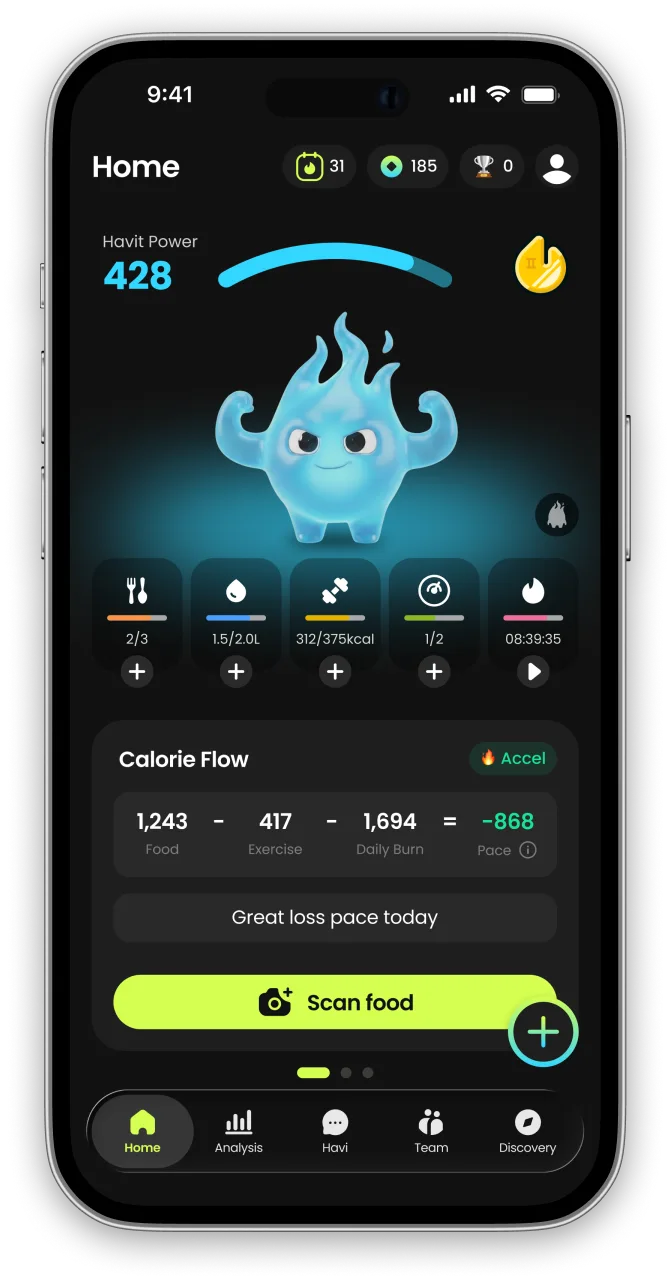
What is Havit?
Havit is an AI health companion for weight loss that protects muscle.
Unlike calorie-only trackers, Havit connects AI body-composition estimates, nutrition, hydration, sleep, steps, cycle, mood, and GLP-1 medication in one daily routine — so progress is measured by body composition, not just the number on the scale. Daily missions turn established behavior-change techniques into small repeatable actions, drawing on expertise from professionals formerly at Juvis Diet, one of Korea’s leading metabolic clinics.
In Havit’s own analysis of 1,090 GLP-1 users, people who logged consistently built stronger habits than the general user base. Read the GLP-1 Habit Report
Havit works with or without GLP-1 medication. It is a wellness app, not a medical device; body-composition results are estimates.

Continue in the App
Personalized wellness with your own data


References
- Drug Interactions with GLP-1 Receptor Agonists: Updated Guidelines for Contraceptive Management — Contraception, 2025
- Effects of GLP-1 Receptor Agonists on Oral Drug Absorption: A Pharmacokinetic Analysis — European Journal of Clinical Pharmacology, 2024
- Gastric Emptying Rates and Oral Contraceptive Hormone Levels in Semaglutide Users — Uppsala University Department of Reproductive Medicine, 2024
- Provider Awareness of GLP-1 Drug Interactions: A Survey Study — Journal of General Internal Medicine, 2024


