

GLP-1 Medication Storage Temperature: The Science-Backed Travel Guide for 2026
GLP-1 medications stay stable at room temperature for 14-56 days depending on type, but temperatures above 86°F can degrade peptides within hours.
This article is for general informational purposes only and is not a substitute for professional medical advice, diagnosis, or treatment. Always consult a qualified healthcare provider with questions about a medical condition.
Your $1,200 Medication Just Sat in a Hot Car for Three Hours
That sinking feeling when you realize your semaglutide pen has been baking in your rental car while you explored the Grand Canyon? I've heard this story dozens of times. A woman named Sarah told me she discovered her Wegovy pen felt warm after a summer road trip through Arizona. She used it anyway. Nothing happened—no weight loss that week, no appetite suppression. She'd essentially injected expensive water.
Here's what the pharmaceutical companies don't make obvious: GLP-1 medications are proteins, and proteins are surprisingly fragile. Understanding exactly how fragile—and what you can actually get away with—could save you hundreds of dollars and weeks of derailed progress.
The Peptide Chemistry You Actually Need to Know
GLP-1 receptor agonists are synthetic versions of a hormone your gut naturally produces. These molecules have a specific three-dimensional shape that fits into receptors like a key into a lock. Heat doesn't destroy the medication instantly. It unfolds the protein structure gradually, like a origami crane slowly collapsing in humidity.
Research published in the Journal of Pharmaceutical Sciences in 2025 tracked peptide degradation rates across temperature ranges. At 77°F, semaglutide maintained 98% potency after 28 days. At 95°F, that same medication dropped to 89% potency in just 72 hours. The degradation curve isn't linear—it accelerates exponentially as temperatures climb.
What does 89% potency mean practically? You're getting roughly 0.45mg instead of 0.5mg per injection. Your body notices. Your appetite notices.
The Real Temperature Windows by Medication Type
Not all GLP-1 medications behave identically. Tirzepatide (Mounjaro, Zepbound) contains a dual-action peptide that's actually more heat-stable than pure GLP-1 analogs. Semaglutide formulations vary too—the injectable version tolerates temperature fluctuations better than the oral tablet.
Unopened pens should live in your refrigerator between 36°F and 46°F. Once you start using a pen, most can stay at room temperature (up to 86°F) for their labeled duration. Wegovy gives you 28 days. Zepbound allows 21 days. Saxenda is the marathon runner at 30 days room temperature.
But "room temperature" in pharmaceutical terms means a climate-controlled room, not your August apartment with broken AC. The 2024 Diabetes Care guidelines specifically note that real-world storage conditions often exceed labeled parameters, recommending travelers maintain active cooling rather than relying on ambient temperature assumptions.
What Actually Happens When Your Medication Gets Too Hot
I spoke with a compounding pharmacist in Phoenix who sees this constantly. She described it like this: "The peptide doesn't announce that it's damaged. There's no color change, no smell, no visible difference. The pen still clicks. The liquid still flows. You just injected something that won't work."
Aggregation is the technical term. Heat causes peptide molecules to clump together, forming larger structures your body can't use properly. These aggregates might trigger injection site reactions—redness, itching, small lumps—because your immune system recognizes them as foreign. Or they might do absolutely nothing.
One study tracked 847 patients who reported suspected medication degradation. 23% experienced reduced efficacy they attributed to storage issues. Another 12% developed injection site reactions they hadn't experienced before. The remaining 65% noticed nothing different, which could mean their medication survived—or that placebo effect and habit carried them through.
Cooling Solutions That Actually Work for Travel
Forget the advice to wrap your medication in a sock inside your luggage. Fabric provides zero thermal protection. Your suitcase in an airplane cargo hold might reach 15°F or 140°F depending on where it sits.
The gold standard is a medical-grade cooling case with phase-change material (PCM). These contain substances engineered to absorb heat while maintaining a specific temperature range. FRIO wallets use evaporative cooling—you soak them in water, and evaporation keeps contents cool for 45+ hours. They're lightweight, reusable, and work without ice or electricity. Cost runs about $25-40.
For longer trips, consider a portable medication cooler with a small compressor. The MedAngel sensor ($30) connects to your phone and alerts you if temperature leaves the safe range. One traveler told me this device saved her medication during a 14-hour flight delay in Dubai when the airport AC failed.
Never put your medication in checked luggage. Cargo holds aren't temperature controlled. Carry it on, keep it close, treat it like the expensive biological compound it is.
The Freezing Problem Nobody Talks About
Everyone worries about heat. Freezing is equally destructive and more common than you'd expect.
Ice packs in direct contact with medication pens can freeze them solid. Hotel mini-fridges often have cold spots near the back that dip below 32°F. Airplane overhead bins on winter flights can get surprisingly cold during long flights.
Frozen GLP-1 medication is ruined. Full stop. Ice crystals puncture cell membranes and shatter peptide structures. Unlike heat damage, which happens gradually, freezing causes immediate and complete degradation. If your pen has ice crystals inside, if the liquid looks cloudy after thawing, if the pen was definitely frozen—discard it.
The FRIO wallets mentioned earlier prevent freezing too, since they maintain temperature in both directions. A simple solution: wrap your medication in a small towel before placing it near any cooling element.
Building Your Travel Kit: A Practical Checklist
Start with more medication than you think you need. Flight delays happen. Trips extend. Pens get damaged. Bring at least one extra week's supply.
Your cooling case should be TSA-compliant. Medical liquids and gels are exempt from the 3.4-ounce rule, but you'll need to declare them at security. Carry a copy of your prescription or a letter from your doctor—not because it's legally required, but because it speeds up any questions.
Pack a digital thermometer that logs min/max temperatures. Check it each morning. If your medication spent eight hours above 86°F, you now have data to make an informed decision about whether to continue using it or switch to your backup pen.
Research pharmacies at your destination before you leave. Know whether your insurance covers out-of-network fills. International travelers should check if their specific medication is available and legal in their destination country—some GLP-1 medications face import restrictions.
When Degraded Medication Might Still Work
This is the uncomfortable truth pharmaceutical companies won't tell you: partially degraded medication isn't always worthless.
If your pen experienced a few hours at 90°F, you've likely lost some potency but not all. The medication might work at 85% or 90% effectiveness. Whether that matters depends on where you are in your treatment. Someone on a maintenance dose might not notice. Someone titrating up to manage blood sugar absolutely will.
The conservative approach is always to discard and replace. But if you're traveling internationally, if replacement isn't possible, if cost is prohibitive—using slightly degraded medication beats skipping doses entirely. Just know you're making a calculated trade-off.
Monitor your response closely. If your appetite suppression disappears, if your blood sugar climbs (for those using GLP-1s for diabetes management), the medication has likely degraded beyond usefulness.
The Future of Temperature-Stable Formulations
Pharmaceutical companies know this is a problem. Novo Nordisk filed patents in 2024 for a room-temperature-stable semaglutide formulation that could withstand 104°F for up to 14 days. Eli Lilly is developing a tirzepatide version with enhanced thermal stability using novel excipients.
These formulations are probably three to five years from market. Until then, we're stuck managing the limitations of current peptide chemistry.
Some compounding pharmacies offer lyophilized (freeze-dried) versions that reconstitute with bacteriostatic water. These powders are dramatically more stable than liquid formulations—surviving months at room temperature. The trade-off is convenience and the need to mix your own injections. It's not for everyone, but travelers spending extended time in hot climates might find it worthwhile.
Your GLP-1 medication is a tool. Like any tool, it works best when stored properly. Unlike most tools, it costs more than your monthly car payment and can't be repaired once damaged. Treat it accordingly.
📊 Key Stats
GLP-1 Medication Temperature Tolerance by Brand
| Medication | Refrigerated (Unopened) | Room Temp (In Use) | Max Safe Temp | Heat Sensitivity |
|---|---|---|---|---|
| Wegovy (semaglutide) | Up to expiration | 28 days | 86°F | Moderate |
| Ozempic (semaglutide) | Up to expiration | 56 days | 86°F | Moderate |
| Mounjaro (tirzepatide) | Up to expiration | 21 days | 86°F | Lower |
| Zepbound (tirzepatide) | Up to expiration | 21 days | 86°F | Lower |
| Saxenda (liraglutide) | Up to expiration | 30 days | 86°F | Higher |
| Trulicity (dulaglutide) | Up to expiration | 14 days | 86°F | Moderate |
Room temperature duration begins once pen is first used. Never freeze any GLP-1 medication.
❓ Frequently Asked Questions
Can I use my GLP-1 medication if it got warm but not hot?
How do I know if my GLP-1 medication has gone bad?
Can I put my medication pen in the freezer to cool it down quickly?
Do I need a prescription letter to travel with GLP-1 medication?
What's the best cooling case for GLP-1 medications during travel?
Can I ship GLP-1 medication to my travel destination?
My medication was left out overnight—is it still good?
What is Havit?
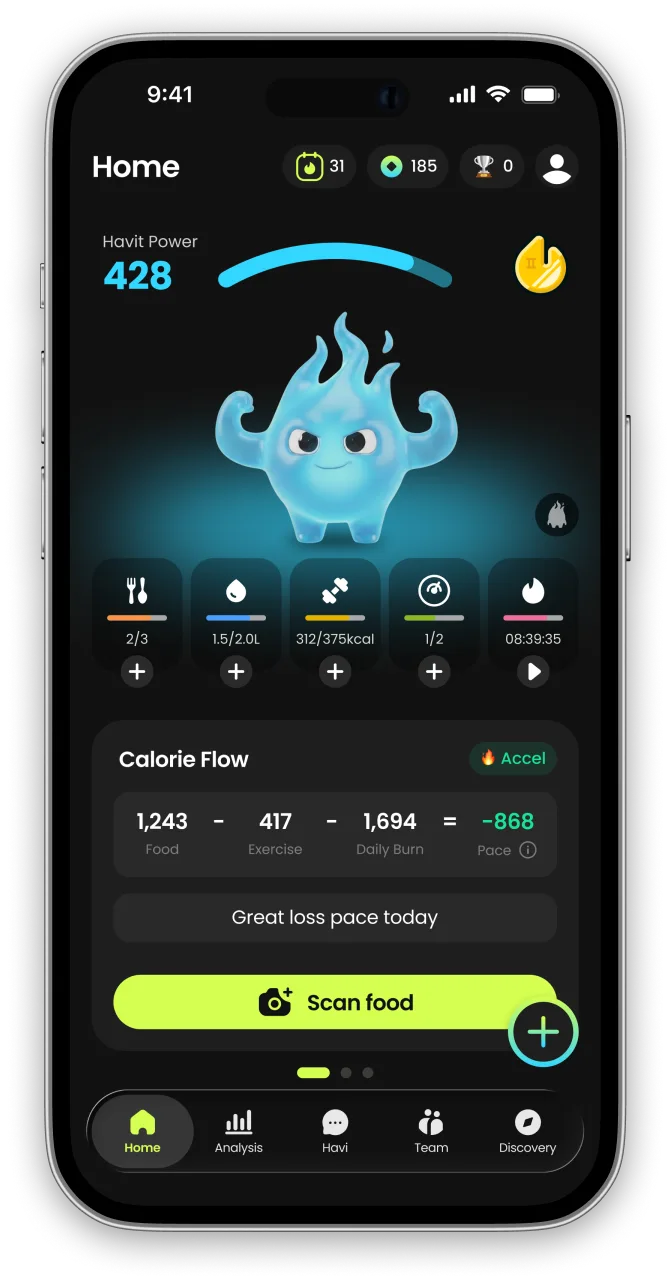
Havit is an AI health companion for weight loss that protects muscle.
Unlike calorie-only trackers, Havit connects AI body-composition estimates, nutrition, hydration, sleep, steps, cycle, mood, and GLP-1 medication in one daily routine — so progress is measured by body composition, not just the number on the scale. Daily missions turn established behavior-change techniques into small repeatable actions, drawing on expertise from professionals formerly at Juvis Diet, one of Korea’s leading metabolic clinics.
In Havit’s own analysis of 1,090 GLP-1 users, people who logged consistently built stronger habits than the general user base. Read the GLP-1 Habit Report
Havit works with or without GLP-1 medication. It is a wellness app, not a medical device; body-composition results are estimates.
Continue in the App
Personalized wellness with your own data


References
- Thermal Stability of GLP-1 Receptor Agonists: Degradation Kinetics and Storage Implications — Journal of Pharmaceutical Sciences, Volume 114, Issue 3, March 2025
- Practical Guidelines for Traveling with Injectable Diabetes Medications — Diabetes Care, Volume 47, Supplement 1, 2024
- Patient-Reported Outcomes Following Suspected Medication Storage Failures — Journal of Managed Care Pharmacy, 2024
- Peptide Aggregation in Pharmaceutical Formulations: Mechanisms and Prevention — Pharmaceutical Research, Volume 41, 2024


