

Do I Need Kidney Tests While on Semaglutide? Your 2026 Monitoring Guide
Most people on semaglutide need baseline kidney tests plus monitoring every 3-6 months, especially if experiencing significant GI side effects causing dehydration.
This article is for general informational purposes only and is not a substitute for professional medical advice, diagnosis, or treatment. Always consult a qualified healthcare provider with questions about a medical condition.
The Question Nobody Warned You About
You started semaglutide expecting to talk about appetite and weight. Maybe blood sugar. What probably wasn't on your radar: your kidneys. But here's the thing—those GI side effects everyone mentions? They're not just uncomfortable. They can quietly stress your kidneys in ways that matter.
I'm not trying to alarm you. Actually, the news on GLP-1s and kidneys is mostly good. A 2024 analysis in Kidney International found semaglutide reduced major kidney events by 24% in people with type 2 diabetes. But that protective effect assumes you're staying hydrated. And when you're dealing with nausea that makes water taste wrong, or spending quality time in the bathroom, hydration becomes complicated.
Why Kidneys Enter the Conversation
Your kidneys filter about 180 liters of blood daily. They're remarkably resilient, but they hate one thing above all else: running dry. Dehydration forces them to work harder with less fluid, concentrating waste products and reducing their filtering efficiency.
GLP-1 medications slow gastric emptying. That's partly how they work—you feel full longer. But slower digestion plus nausea plus occasional vomiting or diarrhea creates a perfect setup for fluid loss. One patient I know lost 4 pounds in a weekend during her first month on tirzepatide. Not fat. Water.
The clinical term is "acute kidney injury from volume depletion." It sounds dramatic, and it can be. A CJASN review from early 2025 documented that GLP-1-related AKI cases, while uncommon, cluster heavily in the first 8 weeks of treatment. The good news? Nearly all resolved when patients rehydrated and temporarily paused their medication.
The Baseline Testing Protocol
Before your first injection, your prescriber should order what's called a basic metabolic panel. This includes creatinine, which your kidneys filter out, and from that number, labs calculate your eGFR (estimated glomerular filtration rate). Think of eGFR as a grade for kidney function. Above 90 is an A. Between 60-89 is a B. Below 60 starts getting into territory that requires closer attention.
You'll also want a urine albumin-to-creatinine ratio, or UACR. Healthy kidneys keep protein in your blood. When they're stressed, protein leaks into urine. A UACR under 30 mg/g is normal. Between 30-300 signals early kidney stress. Above 300 indicates more significant protein loss.
These two numbers—eGFR and UACR—tell your healthcare team where you're starting from. Without them, nobody can tell if changes later are new problems or pre-existing conditions.
Ongoing Monitoring: What the Evidence Says
Here's where guidelines get fuzzy, because GLP-1s for obesity are newer than GLP-1s for diabetes. The monitoring protocols were built for people with type 2 diabetes, who often have kidney involvement anyway.
For someone starting semaglutide primarily for weight management with normal baseline kidney function, the emerging consensus looks like this:
- Recheck creatinine and eGFR at 4-6 weeks, especially during dose escalation
- If stable, move to every 3-6 months for the first year
- Annual testing after that if no issues arise
But these intervals tighten considerably if you're having significant GI symptoms. A 2024 Kidney International paper specifically flagged that patients reporting nausea on more than 3 days per week during titration should have kidney function checked monthly until symptoms stabilize.
Red Flags That Shouldn't Wait
Some situations call for immediate testing, not scheduled appointments. Contact your prescriber if you experience:
Persistent vomiting lasting more than 24 hours. This isn't the occasional wave of nausea—it's being unable to keep fluids down.
Diarrhea severe enough to disrupt your day for 48+ hours. Especially if you notice you're urinating much less than usual.
Dark amber urine despite trying to drink fluids. Your kidneys are concentrating everything they can.
New swelling in your ankles or feet. This can signal fluid retention from kidneys not filtering properly.
Unexplained fatigue that feels different from your baseline. Kidney dysfunction often shows up as bone-deep tiredness before lab values tank.
One study tracking 847 semaglutide patients found that those who reported symptoms and got tested within 48 hours had significantly better outcomes than those who waited a week or more.
Who Needs Closer Watching
Not everyone on GLP-1s faces the same kidney considerations. Several factors increase the importance of regular monitoring:
Pre-existing kidney disease, even mild, means your kidneys have less reserve capacity. An eGFR of 55 at baseline requires more vigilance than an eGFR of 95.
Taking certain blood pressure medications, particularly ACE inhibitors or ARBs, adds complexity. These drugs protect kidneys long-term but can temporarily reduce function when combined with dehydration.
NSAID use matters more than people realize. Ibuprofen and naproxen constrict blood vessels in the kidneys. Add dehydration from GLP-1 side effects, and you're stacking stressors.
Age over 65 brings naturally declining kidney reserve. What a 35-year-old's kidneys shrug off might affect a 70-year-old's more significantly.
History of kidney stones suggests your kidneys may already be working with concentrated urine. GLP-1-related dehydration can tip the balance toward new stone formation.
The Hydration Math Nobody Does
Most hydration advice is uselessly vague. "Drink plenty of fluids" helps no one. Let's get specific.
A 180-pound person needs roughly 90 ounces of fluid daily at baseline—half your body weight in ounces as a starting point. If you're experiencing GI side effects, add 8-16 ounces for each episode of vomiting or diarrhea. Sweating from exercise or heat adds another 16-24 ounces per hour of activity.
But volume isn't everything. When you're losing fluids through GI issues, you're also losing electrolytes. Plain water dilutes what's left. The CJASN review noted that patients who supplemented with electrolyte solutions during symptomatic periods had 31% fewer kidney function dips than those drinking water alone.
This doesn't mean chugging sports drinks. Many are loaded with sugar that can spike blood glucose. Look for electrolyte powders or tablets without added sugars, or make a simple solution: 1/4 teaspoon salt, a squeeze of lemon, and a splash of fruit juice in 16 ounces of water.
What the Tests Actually Show
When your labs come back, here's how to read them:
Creatinine is measured in mg/dL. Normal ranges vary by sex and muscle mass—typically 0.7-1.3 for men, 0.6-1.1 for women. A jump of 0.3 or more from your baseline warrants attention.
eGFR is calculated from creatinine, age, and sex. The number represents the percentage of normal kidney function. An eGFR of 75 means your kidneys are working at about 75% capacity. Drops of more than 5 points between tests should prompt discussion with your prescriber.
BUN (blood urea nitrogen) often appears on the same panel. It rises with dehydration faster than creatinine, making it an early warning signal. A BUN-to-creatinine ratio above 20:1 often indicates dehydration rather than kidney damage.
UACR tracks protein in urine. Any new appearance of protein, or doubling of existing levels, suggests kidney stress that needs investigation.
The Paradox of Protection
Here's what makes this complicated: GLP-1 medications appear to protect kidneys over the long term while potentially stressing them short-term through dehydration.
The FLOW trial data published in 2024 showed semaglutide reduced the risk of kidney disease progression by 24% compared to placebo in people with type 2 diabetes and chronic kidney disease. That's significant protection. The mechanisms seem to involve reduced inflammation, lower blood pressure, and improved blood sugar control—all things kidneys appreciate.
But those benefits accrue over months and years. The dehydration risk peaks in weeks 1-12, during dose escalation when GI side effects are most intense. Managing the short-term vulnerability to capture the long-term benefit is the whole game.
Practical Monitoring Schedules
For someone with normal baseline kidney function starting GLP-1 therapy for weight management:
Week 0: Baseline labs including creatinine, eGFR, UACR, and basic metabolic panel.
Week 4-6: Recheck creatinine and eGFR, especially if experiencing GI symptoms.
Month 3: Full metabolic panel if stable. Monthly creatinine if ongoing symptoms.
Month 6: Comprehensive check including UACR.
Month 12 and annually thereafter: Full metabolic panel plus UACR.
For someone with baseline eGFR between 45-60:
Week 0: Baseline labs.
Week 2: Early recheck of creatinine.
Week 4, 8, 12: Monthly monitoring during titration.
Quarterly for first year: Then every 3-4 months ongoing.
Your prescriber may adjust these intervals based on your specific situation. The key is having a plan, not just hoping someone remembers to order labs.
When Kidney Concerns Change the Medication Plan
Sometimes monitoring reveals issues that require adjustments. A creatinine increase of 30% or more from baseline typically triggers a medication pause while your team investigates. This isn't failure—it's the monitoring system working as intended.
If dehydration is the culprit, aggressive rehydration often normalizes values within days. Your prescriber might restart at a lower dose, advance more slowly, or add specific hydration protocols.
Persistent kidney function decline despite adequate hydration requires deeper investigation. It might reveal pre-existing kidney disease that wasn't apparent, or suggest the medication isn't right for your situation.
The CJASN review emphasized that early detection and response almost always leads to full recovery. The patients who developed lasting kidney issues were overwhelmingly those who ignored symptoms for weeks or skipped monitoring entirely.
Making Peace with the Process
Nobody loves getting blood drawn. But kidney monitoring on GLP-1 therapy isn't optional—it's part of using these medications safely. The tests are simple, relatively inexpensive, and provide crucial information you can't get any other way.
Think of it like checking your car's oil. You don't wait for the engine to seize before looking. Regular checks catch small problems before they become big ones.
The vast majority of people on semaglutide will never have kidney issues. But the minority who do will be grateful they caught it early. You can't know which group you're in without testing.
📊 Key Stats
Kidney Monitoring Schedule by Risk Level
| Timepoint | Normal Baseline (eGFR >60) | Reduced Function (eGFR 45-60) | Tests Included |
|---|---|---|---|
| Week 0 | Required | Required | Creatinine, eGFR, UACR, BMP |
| Week 2 | If symptomatic | Required | Creatinine, eGFR |
| Week 4-6 | Required | Required | Creatinine, eGFR |
| Week 8 | If symptomatic | Required | Creatinine, eGFR |
| Month 3 | Required | Required | Full metabolic panel |
| Month 6 | Required | Required | Full panel + UACR |
| Month 12+ | Annual | Every 3-4 months | Full panel + UACR |
Monitoring frequency should increase with persistent GI symptoms regardless of baseline function
❓ Frequently Asked Questions
Can I take semaglutide if I already have kidney disease?
How do I know if my kidneys are being affected?
Should I stop my blood pressure medication while on semaglutide?
What's the difference between temporary kidney stress and permanent damage?
Do I need kidney tests if I'm not having any GI side effects?
Can kidney problems from GLP-1s be reversed?
Are some GLP-1 medications harder on kidneys than others?
What is Havit?
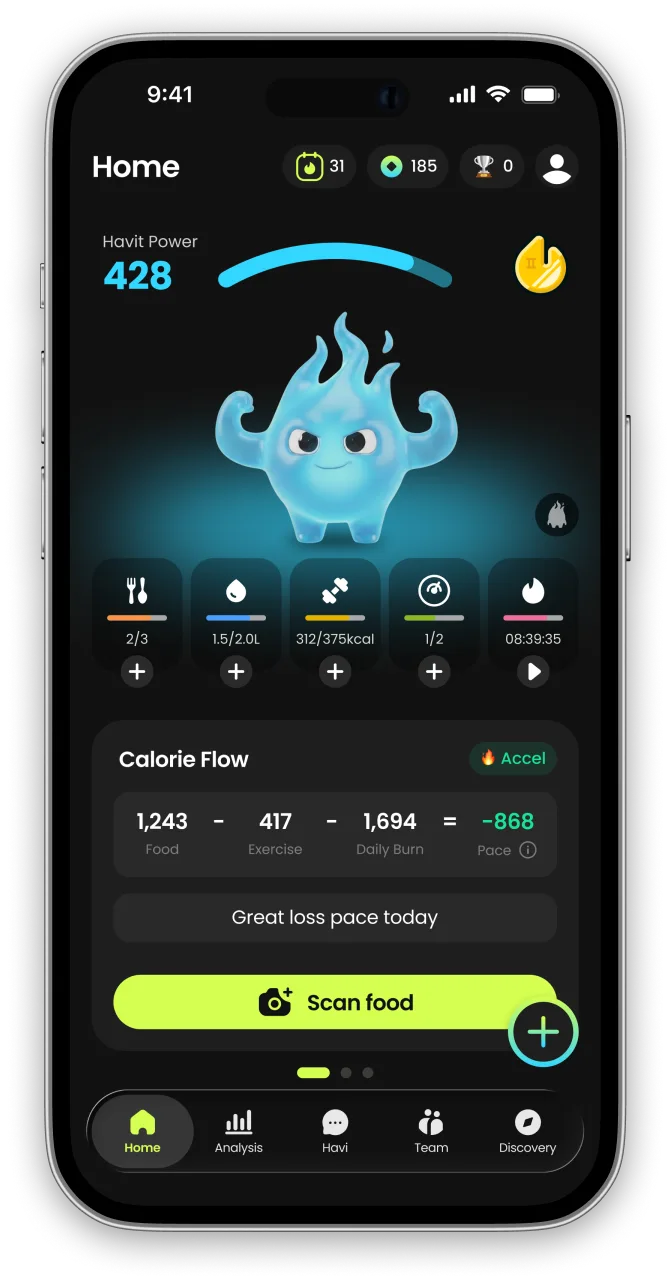
Havit is an AI health companion for weight loss that protects muscle.
Unlike calorie-only trackers, Havit connects AI body-composition estimates, nutrition, hydration, sleep, steps, cycle, mood, and GLP-1 medication in one daily routine — so progress is measured by body composition, not just the number on the scale. Daily missions turn established behavior-change techniques into small repeatable actions, drawing on expertise from professionals formerly at Juvis Diet, one of Korea’s leading metabolic clinics.
In Havit’s own analysis of 1,090 GLP-1 users, people who logged consistently built stronger habits than the general user base. Read the GLP-1 Habit Report
Havit works with or without GLP-1 medication. It is a wellness app, not a medical device; body-composition results are estimates.
Continue in the App
Personalized wellness with your own data


References
- Semaglutide and Kidney Outcomes in Type 2 Diabetes: FLOW Trial Results — Kidney International, 2024
- GLP-1 Receptor Agonists and Nephroprotection: Mechanisms and Clinical Evidence — Clinical Journal of the American Society of Nephrology (CJASN), 2025
- Acute Kidney Injury Associated with GLP-1 Receptor Agonist Use: A Pharmacovigilance Analysis — Kidney International Reports, 2024
- KDIGO Clinical Practice Guideline for Diabetes Management in Chronic Kidney Disease — Kidney Disease: Improving Global Outcomes (KDIGO), 2024 Update


