

Ozempic Gastroparesis Symptoms: How Long Does It Last and When to Worry
Most GLP-1 stomach slowing resolves within 8-12 weeks, but persistent vomiting, severe bloating, or unintended weight loss beyond 5% signals true gastroparesis requiring evaluation.
This article is for general informational purposes only and is not a substitute for professional medical advice, diagnosis, or treatment. Always consult a qualified healthcare provider with questions about a medical condition.
The Stomach That Forgot How to Move
Your friend lost 40 pounds on Ozempic and swears by it. But she also mentioned something odd—she ate half a sandwich at noon and still felt stuffed at dinner. Is that the drug working, or something going wrong?
This question haunts millions of GLP-1 users. The medications work partly by slowing stomach emptying. That's a feature, not a bug. But somewhere between "working as intended" and "my stomach has stopped functioning" lies a gray zone that confuses patients and doctors alike.
Here's what the latest research tells us about where that line actually sits.
How GLP-1 Medications Deliberately Slow Your Stomach
Semaglutide and tirzepatide don't just reduce appetite through brain signaling. They physically slow the rate at which food leaves your stomach and enters your small intestine. This delay serves multiple purposes.
Food stays in your stomach longer, which means you feel full longer. Blood sugar rises more gradually after meals because nutrients trickle into absorption zones slowly. The sensation of "I couldn't possibly eat another bite" kicks in earlier and lingers.
A 2025 study in Gastroenterology measured gastric emptying times in 847 patients starting semaglutide. Before treatment, the average half-emptying time—how long until 50% of a meal leaves the stomach—was 72 minutes. After 12 weeks on maintenance doses, that stretched to 127 minutes. Nearly double.
That's a massive physiological shift. And for most people, it's completely fine. The stomach adapts. The body recalibrates hunger signals. Life continues with smaller portions and fewer cravings.
But 127 minutes is an average. Some patients barely notice changes. Others experience half-emptying times exceeding 200 minutes. That's when things get complicated.
Normal Adjustment Period vs. Something Wrong
The first 8-12 weeks on a GLP-1 medication feel rough for many people. Nausea, bloating, early satiety, occasional vomiting—these symptoms appear in 40-60% of users during dose escalation. They're unpleasant but expected.
What happens during this window? Your stomach is learning a new rhythm. The pyloric sphincter—the valve between stomach and small intestine—responds to GLP-1 signals by staying closed longer. Meanwhile, stomach muscle contractions become less frequent and less forceful.
Most bodies adjust. By week 12, nausea rates drop to under 15%. Bloating becomes manageable. People learn their new portion sizes and eating patterns.
But some stomachs don't bounce back. They stay sluggish. Food sits for hours. Symptoms worsen instead of improving. This is where normal drug effects shade into gastroparesis territory.
The Red Flags That Separate Discomfort from Danger
Gastroparesis means your stomach can't empty properly regardless of what you eat or how you eat it. It's not just feeling full. It's a motility disorder that can cause serious complications.
The JAMA 2024 analysis of gastroparesis signals during semaglutide therapy identified specific warning signs that distinguish pathological slowing from expected drug effects.
Vomiting undigested food more than 4 hours after eating. If you throw up lunch at dinner time and recognize the food, your stomach isn't just slow—it's stalled. Occasional vomiting during dose increases is normal. Regularly vomiting recognizable meals hours later is not.
Unintended weight loss exceeding 5% of body weight. GLP-1 medications cause weight loss, obviously. But if you're losing weight faster than expected, unable to keep food down, or dropping pounds despite desperately trying to eat—that's malnutrition from non-functioning digestion, not successful treatment.
Severe abdominal distension with pain. Mild bloating after meals is common. A visibly swollen, tight abdomen that hurts and doesn't resolve overnight suggests food and gas are trapped.
Symptoms worsening after week 12 instead of improving. The adaptation curve should trend toward better, not worse. If you felt okay at week 8 but miserable at week 16, something has shifted.
Blood sugar instability despite consistent eating. For people with diabetes, gastroparesis creates unpredictable glucose patterns. Insulin kicks in before food absorbs, causing lows. Then food finally empties all at once, causing highs. Wild swings that weren't happening before deserve attention.
Duration: How Long Does GLP-1 Stomach Slowing Actually Last?
This is the question everyone wants answered with a specific number. The honest answer is: it depends on which type of slowing you're experiencing.
Expected GLP-1 effects persist as long as you take the medication. Your stomach will empty more slowly than it did pre-treatment for the entire duration of therapy. This is permanent while on the drug and reverses within 2-5 weeks after stopping.
Adjustment-phase symptoms (nausea, significant bloating, early satiety that interferes with eating) typically resolve by weeks 8-12. Some people feel better by week 4. Others need 16 weeks. Slow dose titration helps—jumping to higher doses too quickly extends this uncomfortable period.
True gastroparesis, if it develops, may or may not resolve after stopping the medication. The Gastroenterology 2025 data showed that among patients who developed gastroparesis criteria while on GLP-1 therapy, 67% recovered normal motility within 8 weeks of discontinuation. But 33% had persistent symptoms at 6-month follow-up.
That 33% is concerning. It suggests that for some people, GLP-1 medications may trigger or unmask a motility disorder that doesn't simply reverse when the drug clears their system. Whether these individuals had subclinical gastroparesis before starting treatment remains unclear.
Who Faces Higher Risk?
Not everyone has equal odds of stomach trouble. Several factors increase gastroparesis risk during GLP-1 therapy.
Long-standing diabetes tops the list. Years of high blood sugar damage the vagus nerve, which controls stomach contractions. If your vagus nerve is already compromised, adding a medication that further slows motility can push you over the edge. The JAMA analysis found gastroparesis rates of 3.7% in patients with diabetes duration exceeding 15 years, compared to 0.8% in those with shorter disease duration.
Previous GI surgery matters. Gastric bypass, fundoplication, or any procedure that altered stomach anatomy changes how the organ responds to motility signals.
Certain medications compound the problem. Opioids slow gut motility. So do some antidepressants, antihistamines, and blood pressure medications. Layering a GLP-1 on top of existing motility-slowing drugs multiplies effects.
Pre-existing functional GI disorders—irritable bowel syndrome, functional dyspepsia, chronic nausea—suggest a sensitive gut that may react more intensely to GLP-1 effects.
Management Strategies That Actually Help
If you're in the uncomfortable-but-not-dangerous zone, several approaches can ease symptoms without stopping medication.
Meal architecture matters enormously. Large meals overwhelm a slow stomach. Eating 5-6 small portions spread throughout the day keeps the stomach working without overloading it. Think snack-sized eating, not traditional meals.
Texture affects emptying speed. Liquids empty faster than solids. Soft foods empty faster than tough, fibrous ones. During rough patches, emphasizing soups, smoothies, well-cooked vegetables, and tender proteins helps food move through.
Timing around medication can help. Some patients tolerate food better in the morning, before GLP-1 effects peak. Others find evening eating easier. Tracking your patterns reveals personal windows of better tolerance.
Walking after meals genuinely works. A 15-minute walk stimulates gut motility. It's not a cure, but it's free and has solid evidence behind it.
Dose reduction provides relief. If symptoms are severe, stepping back to a lower dose often helps. Many patients find a "sweet spot" dose that provides benefits without intolerable GI effects. This might mean staying at 0.5mg semaglutide instead of pushing to 1mg or 2.4mg.
When to Stop the Medication
Some situations warrant discontinuation, at least temporarily.
Inability to maintain adequate nutrition is a clear stop sign. If you're losing weight too fast, can't keep food down, or showing signs of dehydration or malnutrition—the medication isn't worth it.
Persistent vomiting that doesn't respond to management strategies needs evaluation and likely medication pause. Continuing to vomit regularly damages esophageal tissue, depletes electrolytes, and prevents the drug from absorbing properly anyway.
Severe abdominal pain shouldn't be pushed through. Pain indicates something wrong—possibly bezoar formation (a mass of undigested material), gastric outlet obstruction, or other complications.
The decision to stop should involve your prescriber. Abrupt discontinuation is fine from a safety standpoint—GLP-1 medications don't require tapering—but the underlying symptoms need investigation.
Testing for Gastroparesis: What to Expect
If your doctor suspects true gastroparesis rather than expected drug effects, testing can clarify the situation.
The gold standard is a gastric emptying study. You eat a meal containing a small amount of radioactive tracer (usually eggs or oatmeal), then lie under a scanner that tracks how quickly the tracer leaves your stomach. Normal emptying means less than 10% of the meal remains at 4 hours. Gastroparesis is defined as more than 10% retention at 4 hours.
Importantly, this test should ideally be performed after stopping the GLP-1 medication for at least 2-3 weeks. Testing while still on the drug will show slowed emptying—that's what the drug does. The question is whether your stomach recovers normal function without the drug.
Other tests might include upper endoscopy to rule out physical obstruction, or smart pill studies that track a swallowed capsule through your entire GI tract.
The Bigger Picture on Risk
Let's put numbers in perspective. Among all GLP-1 users, severe gastroparesis requiring hospitalization occurs in roughly 0.1-0.2% of patients. That's 1-2 people per thousand.
Mild to moderate symptoms that resolve with management affect 15-25% of users at some point during treatment. Most of these people continue the medication successfully after adjustments.
The remaining 75-85% experience minimal GI effects or adjust quickly without significant issues.
These odds look different if you have risk factors. A 60-year-old with 20 years of diabetes and existing neuropathy faces meaningfully higher risk than a 35-year-old using the medication for weight management with no metabolic disease.
Living With a Slower Stomach
For many people, the answer isn't eliminating stomach slowing but adapting to it. Your stomach's new pace becomes your normal. You learn which foods sit well and which don't. You discover that eating slowly and stopping early prevents the worst discomfort.
Some users describe a fundamental shift in their relationship with food. The urgent hunger that drove overeating disappears. Meals become smaller, more intentional. The physical inability to overeat replaces willpower.
This adaptation takes time. The first months can feel like your body is betraying you. But most people who stick with it find a sustainable rhythm. The key is distinguishing between "this is uncomfortable but manageable" and "this is causing harm."
Your stomach hasn't forgotten how to move. It's just learned to move differently. Whether that difference serves you or hurts you depends on the specifics of your situation—and paying attention to what your body tells you.
📊 Key Stats
Normal GLP-1 Effects vs. Gastroparesis Warning Signs
| Symptom | Expected Drug Effect | Red Flag for Gastroparesis |
|---|---|---|
| Fullness after meals | Feel satisfied with smaller portions | Unable to eat even small amounts without distress |
| Nausea | Mild, improves by week 8-12 | Severe, worsening after week 12 |
| Vomiting | Occasional during dose increases | Undigested food 4+ hours after eating |
| Bloating | Mild, resolves overnight | Severe distension with pain, persistent |
| Weight change | Gradual, expected loss | Rapid loss >5% unintentionally |
| Blood sugar (if diabetic) | More stable, predictable | Wild swings despite consistent eating |
| Timeline | Symptoms improve over weeks | Symptoms worsen or plateau after 12+ weeks |
Use this comparison to assess whether your symptoms fall within expected ranges or warrant medical evaluation.
❓ Frequently Asked Questions
How long do Ozempic stomach symptoms typically last?
Can Ozempic cause permanent gastroparesis?
What foods are easiest to digest while on GLP-1 medications?
Should I stop Ozempic if I have gastroparesis symptoms?
Does walking after meals help with GLP-1 stomach symptoms?
Who is at highest risk for gastroparesis on GLP-1 medications?
How is gastroparesis tested while on GLP-1 medications?
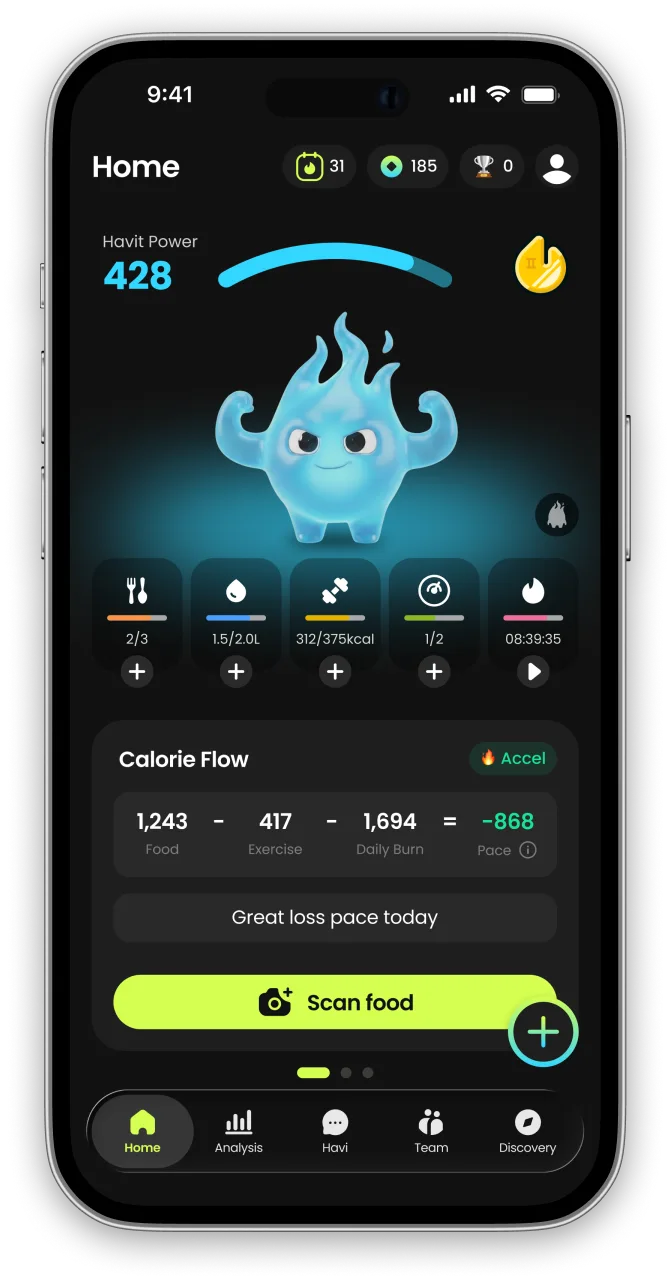
What is Havit?
Havit is an AI health companion for weight loss that protects muscle.
Unlike calorie-only trackers, Havit connects AI body-composition estimates, nutrition, hydration, sleep, steps, cycle, mood, and GLP-1 medication in one daily routine — so progress is measured by body composition, not just the number on the scale. Daily missions turn established behavior-change techniques into small repeatable actions, drawing on expertise from professionals formerly at Juvis Diet, one of Korea’s leading metabolic clinics.
In Havit’s own analysis of 1,090 GLP-1 users, people who logged consistently built stronger habits than the general user base. Read the GLP-1 Habit Report
Havit works with or without GLP-1 medication. It is a wellness app, not a medical device; body-composition results are estimates.

Continue in the App
Personalized wellness with your own data


References
- GLP-1 Receptor Agonist Effects on Gastrointestinal Motility: A Prospective Cohort Study — Gastroenterology, 2025
- Gastroparesis Signal Detection During Semaglutide Therapy: Analysis of Adverse Event Reports — JAMA, 2024
- American Gastroenterological Association Clinical Practice Update on Management of Gastroparesis — Gastroenterology, 2024
- Delayed Gastric Emptying and GLP-1 Based Therapies: Mechanisms and Clinical Implications — Diabetes Care, 2024


