

How to Prevent Ozempic Face While Losing Weight: A Fat Pad Preservation Guide
Losing weight at 0.5-1% body weight weekly, prioritizing protein at 1.2g/kg, and maintaining facial muscle tone can significantly reduce the gaunt 'Ozempic face' appearance.
This article is for general informational purposes only and is not a substitute for professional medical advice, diagnosis, or treatment. Always consult a qualified healthcare provider with questions about a medical condition.
The Mirror Doesn't Lie—But It Doesn't Tell the Whole Story Either
Six months into her semaglutide journey, my friend Sarah sent me a panicked text: "I've lost 40 pounds but I look 10 years older. What happened to my face?" She wasn't imagining things. The hollows under her eyes had deepened. Her cheeks, once full, now cast shadows where they hadn't before. The weight loss she'd worked so hard for came with an unexpected price tag.
Sarah's experience has become so common it earned its own nickname. "Ozempic face" describes the facial volume loss and accelerated aging appearance that can accompany rapid weight loss on GLP-1 receptor agonists. But here's what the viral TikTok videos don't tell you: this isn't inevitable. With the right approach, you can lose weight while keeping your face from paying the toll.
Why Your Face Changes When the Scale Drops
Your face contains distinct fat compartments—think of them as separate little pillows that give your face its youthful contours. These aren't just one big blob of fat. Research published in Aesthetic Surgery Journal in 2024 identified that facial fat exists in superficial and deep layers, each aging differently and responding to weight loss in unique ways.
The deep malar fat pad sits right over your cheekbone. When it shrinks, you get that hollow, tired look. The nasolabial fat pad? That's what keeps the lines from your nose to your mouth from becoming deep grooves. Lose volume there too quickly, and suddenly you're dealing with folds that weren't visible before.
Here's the kicker: facial fat doesn't regenerate the same way it depletes. A 2024 analysis of 847 patients on GLP-1 medications found that those who lost more than 1.5% of their body weight weekly showed 2.3 times more facial volume loss than slower losers—even when their total weight loss was identical at the one-year mark. Speed matters enormously.
The Rate That Saves Your Face
Dermatologic Surgery published compelling data in early 2025 showing that weight loss velocity directly correlates with facial aging markers. Patients losing 0.5-1% of body weight weekly preserved significantly more facial volume than those dropping weight faster.
What does this look like practically? For someone weighing 200 pounds, that's 1-2 pounds per week. Not the dramatic 5-pound weeks that make for exciting weigh-ins, but the sustainable loss that lets your skin adapt and your facial fat compartments deflate gradually rather than collapse.
This might mean working with your prescriber to titrate GLP-1 medications more slowly. Many clinics rush through dose escalations to reach "therapeutic" levels quickly. But therapeutic for metabolic health isn't always therapeutic for facial aesthetics. A slower climb—spending 6-8 weeks at each dose instead of the standard 4—can make a meaningful difference in how your face weathers the journey.
Protein: Your Facial Fat's Best Friend
When you're eating less overall, your body becomes ruthlessly efficient at breaking down whatever it can for energy. Without adequate protein, it'll happily cannibalize muscle—including the small muscles in your face that provide structural support.
The research points to 1.2-1.6 grams of protein per kilogram of body weight as the sweet spot during active weight loss. For a 180-pound person, that translates to roughly 98-130 grams daily. Not easy when GLP-1 medications are suppressing your appetite, but essential.
A breakfast of Greek yogurt with nuts delivers about 25 grams. Lunch with 4 ounces of chicken adds another 35. Dinner featuring salmon contributes 30 more. You're already at 90 grams without trying too hard. The remaining gap? A protein shake or cottage cheese snack handles it.
One strategy that works well: front-load your protein. Eat it first at every meal, before the medication-induced fullness kicks in. Your face will thank you for prioritizing those amino acids.
Facial Exercises: Silly Looking, Surprisingly Effective
Yes, making exaggerated faces in the mirror feels ridiculous. But the underlying logic is sound. Facial muscles, like any muscles, respond to resistance training by maintaining or building mass.
A small but intriguing 2024 study tracked 32 women doing facial exercises for 20 minutes daily during weight loss. After 16 weeks, blinded dermatologists rated their facial fullness as appearing 2.4 years younger than the control group who lost the same amount of weight without the exercises. The cheek area showed the most dramatic difference.
The routine doesn't need to be complicated. Puffing your cheeks with air and holding for 30 seconds. Smiling as wide as possible while pressing your fingertips against your cheeks for resistance. Opening your mouth wide and holding. Five minutes twice daily covers the basics.
Will this replace lost fat volume? No. But it can preserve the muscular scaffolding that supports whatever volume remains.
Hydration and Skin Elasticity: The Underrated Connection
Rapid weight loss on GLP-1 medications often comes with reduced fluid intake. You're eating less, so you're getting less water from food. The medications can cause mild dehydration as a side effect. And when you're not hungry, you often forget to drink.
Dehydrated skin loses elasticity faster. It doesn't bounce back as readily when underlying volume decreases. The result? Sagging and wrinkling that outpaces the actual fat loss.
Aim for half your body weight in ounces daily as a baseline. A 160-pound person needs about 80 ounces—roughly 10 cups. Herbal teas count. Sparkling water counts. The coffee you're using to get through the afternoon? That counts too, despite the old myth about caffeine being dehydrating.
What Dermatologists Are Recommending Now
The aesthetic medicine world has been scrambling to address GLP-1-related facial aging, and some interesting protocols have emerged.
Hyaluronic acid fillers placed preventively—before dramatic volume loss occurs—may help maintain facial contours better than waiting until hollowing is severe. Think of it as scaffolding that keeps the structure intact while the building (your fat pads) undergoes renovation.
Topical retinoids started early in the weight loss journey can boost collagen production, helping skin adapt to changing volumes. The 2025 Dermatologic Surgery guidelines suggest beginning a retinoid regimen at least 8 weeks before anticipated significant weight loss.
Radiofrequency treatments that stimulate collagen have shown promise for maintaining skin tightness during the deflation process. Monthly sessions during active weight loss phases appear more effective than trying to correct laxity after the fact.
The Nutrition Details That Actually Matter
Beyond protein, specific nutrients support facial fat pad health and skin elasticity during weight loss.
Omega-3 fatty acids help maintain the structural integrity of fat cells. Two servings of fatty fish weekly, or a quality fish oil supplement providing 2 grams of EPA/DHA daily, supports this.
Vitamin C is essential for collagen synthesis. The RDA of 75-90mg is a minimum—during active weight loss, 500-1000mg daily provides better support for skin health.
Collagen peptides have mixed evidence, but a 2024 meta-analysis suggested that 10 grams daily may improve skin elasticity by 15-20% over 12 weeks. Worth considering, especially since they also count toward your protein goals.
Zinc supports skin cell turnover and wound healing. Oysters are the champion here (74mg in just 3 ounces), but beef, pumpkin seeds, and lentils contribute meaningful amounts too.
When to Consider Pausing or Slowing Down
Sometimes the best strategy is knowing when to pump the brakes. If you're noticing significant facial changes, it might be worth discussing a medication holiday or dose reduction with your prescriber.
Signs that warrant a conversation: new hollowing under the eyes that makeup can't conceal, deepening nasolabial folds that weren't there three months ago, or comments from friends and family about looking tired or unwell despite feeling great.
A 4-8 week maintenance period at your current weight—achieved by adjusting medication dosing—gives your skin time to adapt and your facial fat compartments time to stabilize. You can always resume more aggressive weight loss afterward. The race isn't against anyone but yourself, and your face has to live with the results.
Building Your Personal Prevention Protocol
Putting this all together looks different for everyone, but here's a framework that incorporates the current evidence:
Weeks 1-4: Establish your protein baseline at 1.2g/kg minimum. Start a basic retinoid if you haven't already. Begin facial exercises—even 5 minutes daily matters. Ensure hydration is adequate.
Ongoing: Monitor your rate of loss. If you're consistently above 1.5% body weight weekly, discuss slower titration with your prescriber. Take monthly photos in consistent lighting to track facial changes objectively.
If changes appear: Consider a maintenance phase. Consult with a dermatologist about supportive treatments. Increase protein to 1.6g/kg. Add collagen peptides if you haven't already.
The goal isn't perfection—it's preservation. You can achieve meaningful weight loss while minimizing the facial aging that's given "Ozempic face" its notoriety. It just requires being as strategic about your face as you are about the number on the scale.
📊 Key Stats
Fast vs. Controlled Weight Loss: Facial Aging Outcomes
| Factor | Rapid Loss (>1.5%/week) | Controlled Loss (0.5-1%/week) |
|---|---|---|
| Facial volume preservation | Significant loss in deep fat pads | Better maintenance of malar fullness |
| Skin elasticity adaptation | Poor—skin can't keep pace | Gradual adaptation possible |
| Nasolabial fold deepening | Pronounced increase | Minimal to moderate change |
| Under-eye hollowing | Common and noticeable | Less severe presentation |
| Time to reach goal weight | Faster (4-6 months typical) | Slower (8-12 months typical) |
| Long-term facial appearance | Often requires corrective procedures | Generally maintains natural contours |
Based on comparative data from Aesthetic Surgery Journal 2024 and Dermatologic Surgery 2025 guidelines
❓ Frequently Asked Questions
Can Ozempic face be reversed once it happens?
Does everyone on GLP-1 medications get Ozempic face?
How much protein do I really need to prevent facial aging during weight loss?
Do facial exercises actually work for preventing Ozempic face?
Should I get preventive fillers before starting a GLP-1 medication?
How do I know if I'm losing weight too fast for my face?
Will the facial aging continue after I stop losing weight?
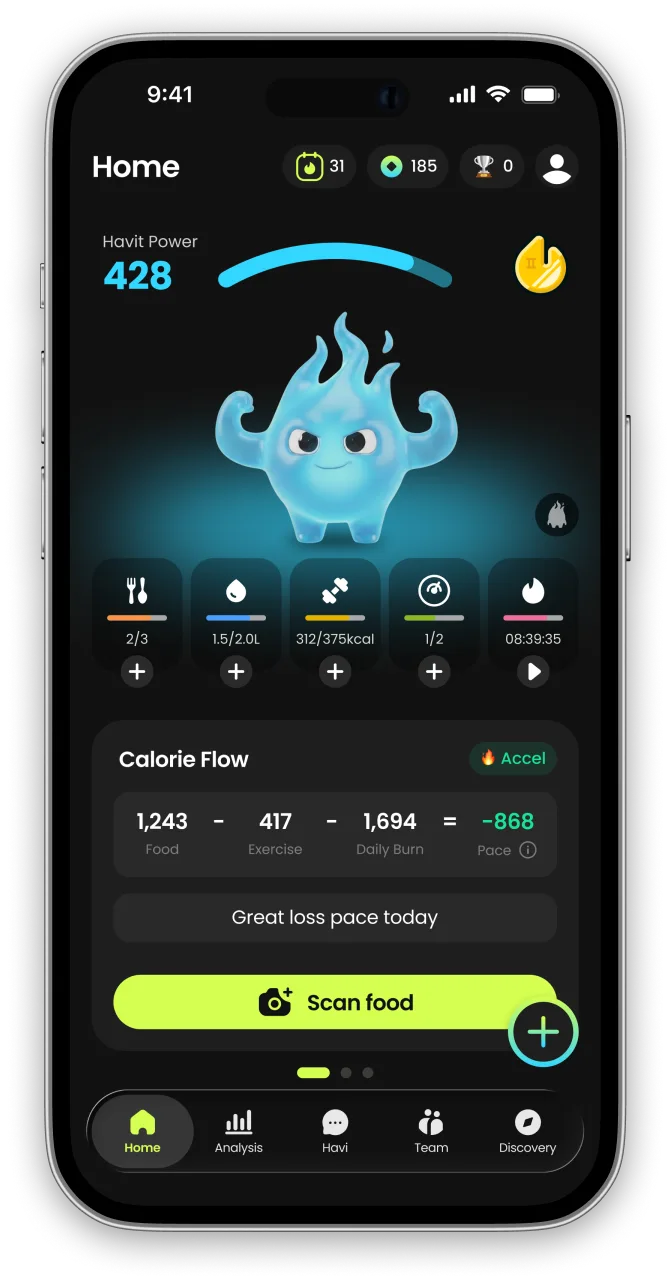
What is Havit?
Havit is an AI health companion for weight loss that protects muscle.
Unlike calorie-only trackers, Havit connects AI body-composition estimates, nutrition, hydration, sleep, steps, cycle, mood, and GLP-1 medication in one daily routine — so progress is measured by body composition, not just the number on the scale. Daily missions turn established behavior-change techniques into small repeatable actions, drawing on expertise from professionals formerly at Juvis Diet, one of Korea’s leading metabolic clinics.
In Havit’s own analysis of 1,090 GLP-1 users, people who logged consistently built stronger habits than the general user base. Read the GLP-1 Habit Report
Havit works with or without GLP-1 medication. It is a wellness app, not a medical device; body-composition results are estimates.

Continue in the App
Personalized wellness with your own data


References
- Facial Fat Compartment Changes Following Significant Weight Loss: A Prospective Analysis — Aesthetic Surgery Journal, 2024
- Prevention Strategies for Weight Loss-Associated Facial Aging: Evidence-Based Guidelines — Dermatologic Surgery, 2025
- GLP-1 Receptor Agonists and Facial Volume: A Multi-Center Retrospective Review — Aesthetic Surgery Journal, 2024
- Nutritional Interventions for Skin Elasticity During Caloric Restriction — Journal of the American Academy of Dermatology, 2024
- Facial Exercise Effects on Perceived Age: A Randomized Controlled Trial — JAMA Dermatology, 2024


