

GLP-1 Medications and Your Mood: Why Anxiety Changes Happen and What to Do About Them
GLP-1 receptors in brain regions controlling emotion explain why some people experience anxiety or mood shifts on these medications—most cases improve within 8-12 weeks.
This article is for general informational purposes only and is not a substitute for professional medical advice, diagnosis, or treatment. Always consult a qualified healthcare provider with questions about a medical condition.
That Weird Feeling Nobody Warned You About
Three weeks into her Ozempic prescription, Sarah messaged her group chat at 2 AM: "Does anyone else feel... off? Not sick exactly. Just anxious for no reason." Within minutes, twelve replies flooded in. Turns out, she wasn't alone.
Here's what most people don't realize: GLP-1 medications weren't designed to stay in your gut. They cross into your brain. And your brain is loaded with GLP-1 receptors—in areas that control way more than appetite.
Your Brain on GLP-1: A Quick Anatomy Lesson
When researchers at the University of Copenhagen mapped GLP-1 receptor distribution in 2024, they found something striking. These receptors cluster heavily in the amygdala (your fear center), hippocampus (memory and emotion), and hypothalamus (stress response). The brainstem? Packed with them.
This isn't a design flaw. Your body naturally produces GLP-1, and it serves legitimate neurological functions. But when you introduce pharmaceutical doses—sometimes 50 to 100 times higher than natural levels—the brain notices.
A 2025 study in Molecular Psychiatry tracked 847 patients starting GLP-1 therapy. Within the first month, 23% reported new or worsening anxiety symptoms. The interesting part? By week 12, that number dropped to 8%. Most brains adapt.
Why Some People Feel Anxious (And Others Don't)
The variation is wild. One person feels calmer than they have in years. Another can't shake a low-grade unease. What gives?
Several factors seem to matter:
Baseline anxiety levels. People with pre-existing anxiety disorders report mood changes at roughly twice the rate of those without. If your amygdala was already running hot, adding a new neurochemical player can tip the balance.
Dose escalation speed. The standard titration schedule (increasing doses every 4 weeks) works for most people. But some metabolize these drugs more slowly. Their blood levels climb higher, faster. A 2024 pharmacokinetic study found that "slow metabolizers" experienced 40% more neurological side effects during titration.
Sleep disruption. This one's sneaky. GLP-1 medications can cause nausea that disrupts sleep, which increases anxiety, which disrupts sleep further. The medication itself might not be the primary culprit—the cascade it triggers is.
Blood sugar swings. Especially in the first weeks, some people experience mild hypoglycemia. Blood sugar dropping to 65 mg/dL feels a lot like a panic attack: racing heart, sweating, sense of doom. These aren't psychological symptoms. They're metabolic.
The Mood Spectrum: What People Actually Report
Anxiety gets the most attention, but the mood effects span a range. In patient surveys from 2024-2025, here's what showed up:
Increased anxiety or nervousness — 18-23% of patients during titration Emotional blunting or flatness — 11% reported feeling "less like themselves" Improved mood and reduced anxiety — 15% actually felt better (GLP-1 has documented antidepressant-like effects in animal studies) Irritability — 9%, often linked to hunger and blood sugar changes No noticeable mood changes — roughly 50%
That last number matters. Half of people notice nothing unusual. The brain adapts without fanfare.
The Timeline: When Things Usually Improve
If you're in the anxious camp, here's the typical pattern:
Weeks 1-4: Highest likelihood of mood changes. Your brain is meeting a new chemical messenger and figuring out what to do with it. Neuroplasticity takes time.
Weeks 5-8: For most people, symptoms begin fading. Receptor sensitivity adjusts. The novelty wears off.
Weeks 9-12: The adaptation window. By this point, roughly 65% of people who experienced early anxiety report significant improvement.
Beyond 12 weeks: If symptoms persist, they're less likely to resolve spontaneously. This is when conversations with your prescriber become important.
One patient described it well: "The first month felt like my emotional thermostat was broken. By month three, I forgot I'd ever felt weird."
Red Flags: When Mood Changes Need Attention
Not all mood changes are "wait it out" situations. Some warrant immediate conversation with a healthcare provider:
New or worsening depression — Especially if you're having thoughts of self-harm or hopelessness. The FDA requires mood monitoring for these medications.
Panic attacks — If you've never had them before and suddenly experience them, that's worth investigating.
Severe anxiety interfering with daily function — Can't work, can't sleep, can't maintain relationships. Adaptation shouldn't require white-knuckling through life.
Suicidal ideation — Full stop. Contact your provider immediately or call 988 (Suicide and Crisis Lifeline).
The Molecular Psychiatry study found that 3.2% of participants discontinued medication specifically due to mood-related side effects. That's a minority, but it's real. Your mental health matters as much as your metabolic health.
Practical Strategies That Actually Help
While your brain adapts, you're not powerless. These approaches have evidence behind them:
Track your symptoms. Use a simple 1-10 scale daily. Anxiety that feels constant often shows patterns when you look at data. Maybe it spikes on dose days, or correlates with poor sleep. Information helps.
Time your doses strategically. Some people find that evening dosing reduces daytime anxiety (you sleep through the peak blood levels). Others prefer morning doses to avoid sleep disruption. Experiment with your prescriber's guidance.
Protect your sleep aggressively. Sleep deprivation amplifies anxiety by roughly 30%, according to UC Berkeley research. If nausea disrupts your nights, address that first. Anti-nausea strategies aren't just about comfort—they're about mental health.
Maintain blood sugar stability. Eat regular, protein-containing meals even if appetite is suppressed. The goal isn't calorie counting. It's avoiding the metabolic roller coaster that mimics anxiety.
Consider slower titration. If you're struggling, ask about extending time at lower doses before increasing. There's no prize for reaching maintenance dose fastest. A 2025 clinical review found that extended titration (6-8 weeks per dose level instead of 4) reduced neurological side effects by 35%.
The Surprising Upside: When GLP-1 Improves Mood
Here's something that doesn't get enough attention: some people feel significantly better mentally on these medications.
The mechanisms are real. GLP-1 receptor activation in the hippocampus promotes neurogenesis—the growth of new brain cells. In rodent studies, GLP-1 agonists show antidepressant and anxiolytic effects comparable to SSRIs. Human trials are underway.
A 2024 retrospective analysis of 12,000 patients found that those on GLP-1 medications had 18% lower rates of new depression prescriptions compared to matched controls on other weight-loss treatments.
Some patients describe it as "food noise quieting." The constant mental chatter about eating, restriction, guilt, and planning fades. For people whose anxiety was partly driven by disordered eating patterns, that silence is profound.
"I didn't realize how much mental energy I spent thinking about food until it stopped," one patient told researchers. "My brain felt... quieter."
When to Talk to Your Prescriber
Don't wait for your next scheduled appointment if:
- Mood symptoms are worsening rather than improving after 4 weeks
- You're experiencing new symptoms not present at the start
- Anxiety is affecting your work, relationships, or daily function
- You're questioning whether the medication is worth continuing
Your prescriber has options. Slower titration, temporary dose reduction, adjunct medications for anxiety, or switching to a different GLP-1 formulation. Tirzepatide and semaglutide have different receptor profiles. Some people tolerate one better than the other.
This isn't failure. It's calibration.
The Bigger Picture
GLP-1 medications are remarkable tools. They're also medications that affect your brain. Both things are true.
The anxiety and mood changes some people experience aren't imaginary, aren't weakness, and aren't reasons to suffer in silence. They're predictable effects of receptor activation in emotion-regulating brain regions. For most people, they're temporary. For some, they require intervention.
Knowing this in advance changes the experience. Sarah, from the opening of this article, stayed on her medication. She tracked her symptoms, told her doctor at week 3, and by week 10 felt normal again. "I wish someone had just told me this might happen," she said. "I thought I was losing it."
You're not losing it. Your brain is adapting to a powerful new input. Give it time, give it support, and pay attention to what it's telling you.
📊 Key Stats
GLP-1 Mood Effects: Timeline and Expectations
| Timeframe | Common Experience | What Helps | When to Act |
|---|---|---|---|
| Weeks 1-4 | Highest mood variability; anxiety peaks | Symptom tracking, sleep protection | If severe or interfering with function |
| Weeks 5-8 | Gradual improvement for most | Consistent routine, stable blood sugar | If symptoms worsen instead of improve |
| Weeks 9-12 | 65% report significant resolution | Continue strategies, reassess with provider | If no improvement by week 10 |
| Beyond 12 weeks | Persistent symptoms less likely to self-resolve | Consider dose adjustment or medication change | Discuss alternatives with prescriber |
Most mood-related side effects improve within the first 12 weeks as the brain adapts to GLP-1 receptor activation
❓ Frequently Asked Questions
Can GLP-1 medications cause depression?
Should I stop my medication if I feel anxious?
Why do some people feel better mentally on GLP-1 medications?
Does the type of GLP-1 medication matter for mood effects?
Can I take anti-anxiety medication while on GLP-1 drugs?
How do I know if my anxiety is from the medication or something else?
Will mood side effects come back if I increase my dose?
What is Havit?
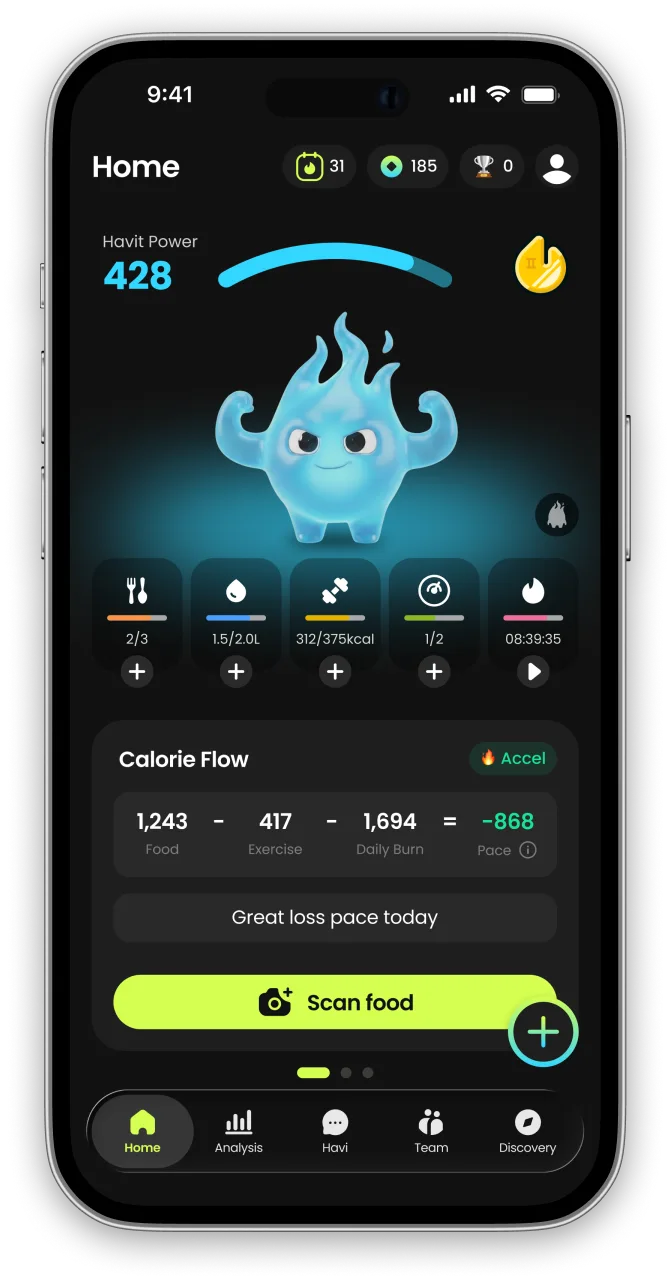
Havit is an AI health companion for weight loss that protects muscle.
Unlike calorie-only trackers, Havit connects AI body-composition estimates, nutrition, hydration, sleep, steps, cycle, mood, and GLP-1 medication in one daily routine — so progress is measured by body composition, not just the number on the scale. Daily missions turn established behavior-change techniques into small repeatable actions, drawing on expertise from professionals formerly at Juvis Diet, one of Korea’s leading metabolic clinics.
In Havit’s own analysis of 1,090 GLP-1 users, people who logged consistently built stronger habits than the general user base. Read the GLP-1 Habit Report
Havit works with or without GLP-1 medication. It is a wellness app, not a medical device; body-composition results are estimates.

Continue in the App
Personalized wellness with your own data


References
- GLP-1 Receptor Agonists and Central Nervous System Effects: A Prospective Cohort Study — Molecular Psychiatry, 2025
- Distribution and Function of GLP-1 Receptors in the Human Brain — Neuropharmacology, 2024
- Pharmacokinetic Variability and Neurological Side Effects in GLP-1 Therapy — Clinical Pharmacology & Therapeutics, 2024
- Mental Health Outcomes in Patients Receiving GLP-1 Receptor Agonists: Retrospective Analysis — Journal of Clinical Endocrinology & Metabolism, 2024
- Extended Titration Protocols for GLP-1 Medications: Impact on Tolerability — Obesity Reviews, 2025


