

Future Self Continuity: Why Your Brain Treats 70-Year-Old You Like a Stranger
Feeling emotionally connected to your future self predicts better health decisions today, and simple visualization techniques can strengthen that bond.
This article is for general informational purposes only and is not a substitute for professional medical advice, diagnosis, or treatment. Always consult a qualified healthcare provider with questions about a medical condition.
The Stranger in Your Brain
Here's something unsettling: when researchers put people in fMRI machines and asked them to think about themselves in 30 years, their brain activity looked remarkably similar to when they thought about a complete stranger. Not a friend. Not a family member. A stranger.
UCLA psychologist Hal Hershfield discovered this pattern back in 2009, and it's been reshaping how we understand long-term decision making ever since. The technical term is "future self continuity"—the degree to which you feel connected to the person you'll become. And it turns out this feeling, or lack of it, explains a lot about why smart people make decisions that hurt them down the road.
Think about the last time you chose the burger over the salad, skipped the gym, or put off that health screening. In that moment, you weren't being irrational. You were being perfectly logical—if the person dealing with the consequences feels like someone else entirely.
What the Research Actually Shows
Hershfield's team has spent over fifteen years tracking how future self continuity affects real-world behavior. The findings are consistent and a little uncomfortable.
People who score low on future self continuity measures save 30% less for retirement than those who score high. They're more likely to choose immediate rewards over larger delayed ones. They exercise less frequently. They're more prone to what researchers call "temporal discounting"—treating future benefits as worth dramatically less than present ones.
A 2024 study in the Journal of Consumer Research followed 847 participants over eighteen months. Those with strong future self connection were 2.3 times more likely to maintain health-related behavior changes—things like dietary modifications, exercise routines, and medication adherence. The effect held even after controlling for personality traits, income, and baseline health status.
What makes this different from generic "think about the future" advice? Specificity. The brain doesn't respond to abstract concepts like "your health in 20 years." It responds to vivid, emotionally resonant images of a particular person doing particular things.
The Aging App Experiment
One of Hershfield's most clever studies used age-progression software. Participants saw digitally aged versions of their own faces—wrinkles, gray hair, the whole thing. Then they made decisions about how much money to allocate to a retirement account.
The results? People who viewed their aged selves allocated 30% more to savings than those who saw their current faces. Thirty percent. From looking at a picture for a few minutes.
This wasn't about scaring people with mortality. Follow-up research showed the effect worked best when the aged face looked healthy and happy, not frail or sad. The mechanism seems to be connection, not fear. Participants reported feeling like they "knew" their future self better, like that person was someone worth taking care of.
Since then, variations of this technique have been tested on health behaviors. A 2025 study in Psychological Science had 312 participants write letters to their future selves before making dietary choices over a two-week period. The letter-writing group consumed 19% fewer calories from processed foods compared to controls. They also reported finding the healthier choices less difficult—as if the psychological barrier had lowered.
Why Disconnection Happens
So why does the brain treat future-you like a stranger in the first place? A few factors seem to matter.
Temporal distance is the obvious one. The further away something is, the less real it feels. But the relationship isn't linear. There's something called the "end of history illusion"—people consistently believe they've changed a lot in the past but won't change much in the future. We see our current selves as somehow final, complete. Future-me is just present-me with more wrinkles.
Abstract thinking compounds the problem. When you imagine "being healthy at 65," what does that actually look like? Most people draw a blank or conjure vague images. Vague images don't motivate. They don't feel like real people with real lives.
There's also a self-protection element. Thinking seriously about your future self means acknowledging aging, vulnerability, and mortality. The brain has clever ways of avoiding uncomfortable thoughts, and one of them is simply not forming strong connections to the person who'll face those realities.
Practical Techniques That Actually Work
The good news is that future self continuity isn't fixed. It's malleable. And the interventions that strengthen it are surprisingly simple.
Vivid visualization is the most studied approach. But "vivid" means specific. Not "imagine being healthy"—instead, "imagine waking up at 68, walking your dog through the park near your house, feeling your knees work smoothly, noticing the morning air." The more sensory detail, the stronger the connection.
Letter writing works through a different mechanism. Writing to your future self forces you to acknowledge that person as real, as someone who will read these words and have reactions to them. Apps like FutureMe let you send emails to yourself years in advance. The act of composing the message matters more than receiving it.
Photo manipulation remains powerful, though less accessible. Some financial planning services now offer age-progression features. Even finding photos of older relatives who resemble you can activate similar neural pathways.
Temporal landmarks help too. Birthdays, New Year's, the start of a new decade—these moments naturally prompt future thinking. Research shows people are more likely to search for information about retirement planning and health screenings around these dates. Leveraging that existing tendency by adding visualization exercises amplifies the effect.
The Health Decision Connection
Let's get specific about how this applies to health choices, because that's where the rubber meets the road.
Exercise is a classic future-self problem. The benefits are delayed; the discomfort is immediate. A 2024 analysis of 23 studies found that interventions targeting future self continuity increased exercise adherence by an average of 27% compared to standard motivational approaches. The effect was strongest for people starting new exercise routines—exactly when dropout risk is highest.
Dietary choices show similar patterns. When people feel connected to their future selves, they're more likely to choose foods with delayed benefits (fiber, vegetables, whole grains) over those with immediate pleasure but long-term costs. One study found that a five-minute future self visualization before grocery shopping reduced purchases of ultra-processed foods by 23%.
Preventive health behaviors might be the most important application. Screenings, vaccinations, dental checkups—these all require present-day effort for future-day benefit. People with high future self continuity are significantly more likely to schedule and attend preventive appointments. They're also more likely to follow through on treatment recommendations that require sustained effort.
What Doesn't Work
Not every approach to future thinking helps. Some backfire.
Fear-based messaging often fails. Showing people images of diseased lungs or clogged arteries can trigger avoidance rather than action. The brain's response to threat is often to look away, not engage. Future self continuity works through connection and care, not terror.
Generic advice falls flat too. Telling someone to "think about their future" without structure or specificity does almost nothing. The brain needs concrete material to work with.
Overly distant time horizons can actually reduce motivation. Thinking about yourself at 90 when you're 25 is so abstract it barely registers. Shorter jumps—five years, ten years—tend to produce stronger effects while still engaging future-oriented thinking.
And forced optimism doesn't help. Imagining an unrealistically perfect future self creates a target that feels unattainable. The most effective visualizations include realistic challenges alongside positive outcomes.
Building the Practice
If you want to strengthen your future self connection, consistency matters more than intensity. A few minutes of vivid visualization daily beats an hour-long session once a month.
Start with a specific age. Pick something far enough away to feel meaningfully different but close enough to feel real—usually 10 to 20 years out works well. Give that person a detailed life. Where do they live? What does their morning routine look like? Who do they spend time with? What do they care about?
Then connect today's choices to that person's experience. Not in a guilt-inducing way. More like: "This workout is a gift to 55-year-old me, who wants to play with grandkids without getting winded." The framing matters. You're not sacrificing for a stranger. You're taking care of someone you know.
Some people find it helpful to create physical reminders. A photo of an older relative on the fridge. A note from your future self on the bathroom mirror. These environmental cues prompt the mental connection without requiring deliberate effort each time.
The Bigger Picture
Future self continuity research sits at the intersection of psychology, neuroscience, and behavioral economics. It helps explain why humans are so consistently bad at long-term planning despite being intelligent enough to understand the stakes.
We're not irrational. We're just wired for a world where the future was uncertain and immediate survival mattered most. In that world, discounting future rewards made sense. In our current world, where most of us will live into our 70s, 80s, or beyond, that wiring creates problems.
The encouraging part is that awareness helps. Simply knowing about future self continuity makes people more likely to catch themselves in disconnected thinking. And the techniques for building connection are accessible, free, and surprisingly effective.
Your future self isn't a stranger. They're you, with more experience, different challenges, and a deep interest in the choices you make today. Getting to know them might be one of the most practical things you can do for your long-term wellbeing.
📊 Key Stats
Future Self Continuity Interventions: Effectiveness Comparison
| Technique | Time Required | Effect Size | Best For |
|---|---|---|---|
| Vivid visualization | 5-10 min daily | High | Exercise and dietary choices |
| Letter writing to future self | 15-20 min weekly | Moderate-High | Long-term goal commitment |
| Age-progression photos | One-time + periodic | High | Financial and health planning |
| Temporal landmark leverage | Variable | Moderate | Starting new habits |
| Environmental cues | Setup only | Low-Moderate | Daily decision reminders |
Effectiveness varies by individual; combining techniques typically produces stronger results than any single approach.
❓ Frequently Asked Questions
How long does it take for future self visualization to affect behavior?
Does future self continuity decrease with age?
Can future self continuity be too strong?
What's the difference between future self continuity and just setting goals?
Do these techniques work for people with depression or anxiety?
Is there a genetic component to future self continuity?
How does future self continuity relate to mindfulness, which emphasizes present focus?
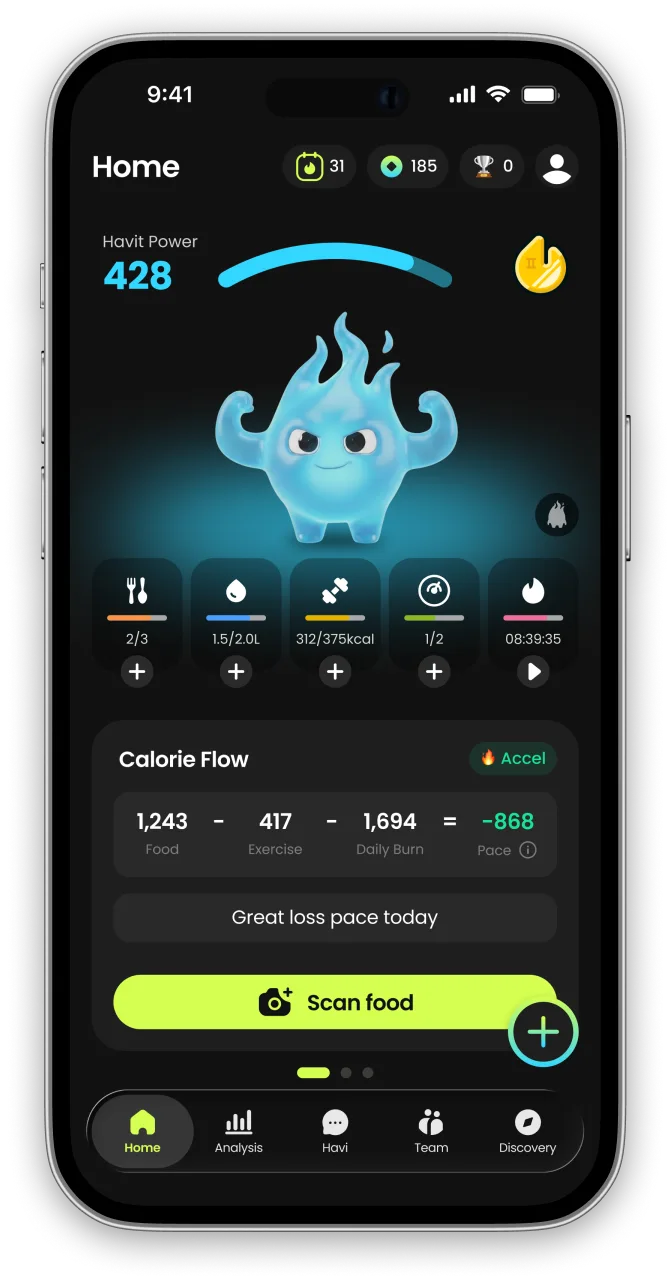
What is Havit?
Havit is an AI health companion for weight loss that protects muscle.
Unlike calorie-only trackers, Havit connects AI body-composition estimates, nutrition, hydration, sleep, steps, cycle, mood, and GLP-1 medication in one daily routine — so progress is measured by body composition, not just the number on the scale. Daily missions turn established behavior-change techniques into small repeatable actions, drawing on expertise from professionals formerly at Juvis Diet, one of Korea’s leading metabolic clinics.
In Havit’s own analysis of 1,090 GLP-1 users, people who logged consistently built stronger habits than the general user base. Read the GLP-1 Habit Report
Havit works with or without GLP-1 medication. It is a wellness app, not a medical device; body-composition results are estimates.
Continue in the App
Personalized wellness with your own data


References
- Future Self-Continuity and Health Behavior Maintenance: An 18-Month Longitudinal Study — Journal of Consumer Research, 2024
- Episodic Future Thinking and Dietary Decision-Making: A Randomized Controlled Trial — Psychological Science, 2025
- Increasing Saving Behavior Through Age-Progressed Renderings of the Future Self — Hershfield et al., Journal of Marketing Research
- Your Future Self: How Mental Time Travel Shapes Decision Making — Hal Hershfield, 2023 (book)
- Meta-Analysis of Future Self Interventions on Exercise Adherence — Health Psychology Review, 2024


