

FODMAP Stacking: Why Your 'Safe' Foods Might Be Triggering Symptoms
Eating several low-FODMAP foods together can push total FODMAP intake past your tolerance threshold, causing symptoms even when each food alone seems safe.
This article is for general informational purposes only and is not a substitute for professional medical advice, diagnosis, or treatment. Always consult a qualified healthcare provider with questions about a medical condition.
The Mystery of the "Safe" Lunch That Wrecked Your Afternoon
You checked every ingredient. Grilled chicken, check. Half an avocado, green-lit. A handful of almonds, approved. Small portion of butternut squash, supposedly fine. So why are you bloated and miserable two hours later?
Welcome to FODMAP stacking—the phenomenon that catches even experienced low-FODMAP dieters off guard. Each food on your plate might be perfectly safe in isolation. But your gut doesn't process them in isolation. It processes them together, all at once, and the math gets ugly fast.
What Exactly Happens When FODMAPs Stack
Think of your gut like a bucket with a drain. Small amounts of FODMAPs trickle through without issue. But pour in multiple streams simultaneously? The bucket overflows before the drain can keep up.
Here's the science: FODMAPs are osmotically active, meaning they pull water into your intestines. They're also rapidly fermented by gut bacteria. A 2024 study in Alimentary Pharmacology & Therapeutics found that FODMAP effects aren't linear—they follow a dose-response curve where symptoms spike dramatically once you cross your personal threshold.
The tricky part? That threshold varies wildly between individuals. Some people tolerate 0.5g of excess fructose without blinking. Others hit symptoms at 0.2g. And when you combine fructans from wheat with polyols from stone fruit with GOS from legumes? Each FODMAP type draws from the same tolerance budget.
The Portion Sizes That Trip People Up
Let's break down a real scenario. According to Monash University's app data, these portions are considered low-FODMAP:
- 10 almonds (polyols: sorbitol)
- 1/4 avocado (polyols: sorbitol)
- 1/3 cup butternut squash (GOS)
- 2 dried apricots (polyols: sorbitol)
Each food alone? Green light. But eat them all in one sitting and you've consumed three separate sorbitol sources plus GOS. A 2025 paper in the Journal of Gastroenterology and Hepatology documented that 67% of IBS patients who reported "breakthrough symptoms" on the low-FODMAP diet were unknowingly stacking within the same FODMAP category.
The sorbitol from those almonds doesn't know it should wait politely while your gut handles the avocado's sorbitol. They arrive together, competing for the same limited absorption capacity.
The Five FODMAP Categories and Their Sneaky Sources
Stacking happens most often when people don't realize which category their foods belong to. Here's where the overlap catches people:
Fructans hide in garlic, onion, wheat, and rye—but also in smaller amounts in broccoli, cabbage, and fennel. That "safe" portion of each vegetable adds up when they're all on the same plate.
GOS (galacto-oligosaccharides) concentrate in legumes and nuts. A tablespoon of hummus plus a handful of cashews plus some edamame? You've triple-dipped into the same category.
Lactose seems obvious until you forget about the cream in your coffee, the butter on your toast, and the milk chocolate after dinner.
Fructose becomes problematic only in excess of glucose. Honey, apples, pears, and mango all tip that balance. Combine them in a smoothie and you've created a fructose bomb.
Polyols (sorbitol and mannitol) lurk in stone fruits, mushrooms, cauliflower, and artificial sweeteners. That sugar-free gum you chew while snacking on snow peas? Both contain mannitol.
How to Calculate Your Stacking Risk
The Monash team developed a traffic light system, but it assumes you're eating foods in isolation. For stacking, you need a different approach.
Start by identifying the dominant FODMAP in each food you're planning to eat. If three or more foods share the same dominant FODMAP type, you're at high stacking risk. Even two foods from the same category can cause problems if you're eating full "green" portions of each.
A practical rule: choose foods from no more than two FODMAP categories per meal, and reduce portions by 25-30% when combining. That half avocado becomes a quarter. Those 10 almonds become 6.
The 2024 Alimentary Pharmacology & Therapeutics research showed that reducing combined portions by just 30% prevented symptoms in 73% of study participants who had previously experienced stacking issues.
Timing Matters More Than You Think
Your gut doesn't reset instantly between meals. FODMAPs from breakfast can still be fermenting when lunch arrives. The Journal of Gastroenterology and Hepatology's 2025 reintroduction protocol recommends spacing FODMAP-containing meals at least 4-6 hours apart during the challenge phase.
But here's what they also found: snacking creates the biggest stacking problems. That mid-morning handful of dried mango, followed by an afternoon protein bar with chicory root fiber, followed by a pre-dinner portion of hummus? You've been drip-feeding FODMAPs all day without any recovery time.
One study participant described it perfectly: "I was eating tiny amounts of 'safe' foods constantly. Turns out constant tiny amounts equal one big amount."
Building a Stacking-Proof Meal Plan
The goal isn't to eat fewer foods—it's to eat them smarter. Here's a framework that works:
Breakfast: Choose one FODMAP category maximum. If you're having lactose-free yogurt with a sprinkle of granola (potential fructans from wheat), skip the honey (excess fructose) and mango (fructose again). Add blueberries instead—they're FODMAP-free.
Lunch: Pick a different category than breakfast. Had fructans in the morning? Build lunch around protein and vegetables low in fructans. Grilled fish, rice, cucumber, and bell peppers. Simple. Safe.
Dinner: You've got more flexibility here because you've spaced things out. But still limit to two categories maximum.
Snacks: This is where most people fail. Make snacks FODMAP-free or very low. Rice cakes, hard cheese (lactose-free), small portions of seeds, or simply skip snacking on FODMAP days.
The Reintroduction Phase Stacking Trap
Reintroduction is supposed to identify your personal tolerances. But many people accidentally test stacking instead of individual foods.
The proper protocol—as outlined in the 2025 Journal of Gastroenterology and Hepatology paper—requires eating test foods in isolation. That means your challenge day for fructans shouldn't include any other FODMAP categories. No polyol-containing fruits. No GOS-heavy snacks. Just the fructan challenge food plus genuinely FODMAP-free items.
Of 234 patients studied, 41% had initially concluded they "couldn't tolerate" a food that later proved fine when tested without stacking. They weren't intolerant to fructans—they were intolerant to fructans plus polyols plus GOS consumed within a 6-hour window.
When Stacking Tolerance Changes
Your threshold isn't fixed. Stress, sleep deprivation, hormonal fluctuations, and gut infections all temporarily lower tolerance. A meal that worked fine last month might cause problems during a high-stress week.
The research suggests building in a "buffer zone." If you know your fructan threshold is around 4g per meal, aim for 2.5-3g during normal times. That leaves room for the days when your threshold dips.
Women often report cyclical changes in FODMAP tolerance. One study noted that 58% of female IBS patients experienced worse symptoms during the luteal phase of their menstrual cycle, even with identical food intake. Stacking that would normally be fine became problematic during specific weeks.
Practical Tools for Tracking
The Monash FODMAP app remains the gold standard for individual food data, but it doesn't calculate stacking automatically. You'll need to do that yourself—at least initially.
Keep a simple log for two weeks. Note not just what you ate, but the FODMAP categories present in each meal and the approximate portions. When symptoms appear, look back at the previous 6-8 hours. Pattern recognition usually reveals the stacking culprits within days.
Some people find it helpful to assign each FODMAP category a color and literally color-code their meal plan. Too many of the same color clustered together? Spread them out.
The Bigger Picture
FODMAP stacking isn't a design flaw in the diet—it's actually useful information. Once you understand your stacking limits, you gain flexibility. Maybe you can't eat a full portion of hummus AND cashews AND butternut squash at dinner. But you can have any one of them in full portions, or smaller amounts of two.
The low-FODMAP diet was never meant to be permanent or maximally restrictive. It's a diagnostic tool that becomes a personalized eating pattern. Understanding stacking is part of that personalization. You're not just learning which foods you tolerate—you're learning how much of which combinations your particular gut can handle.
That lunch that wrecked your afternoon? It might become perfectly manageable once you swap the almonds for pumpkin seeds and save the avocado for dinner. Small adjustments, big differences. That's the real promise of understanding how FODMAPs actually work in your body.
📊 Key Stats
FODMAP Categories and Common Stacking Sources
| FODMAP Type | High-Risk Foods | Sneaky Sources | Stacking Alert |
|---|---|---|---|
| Fructans | Garlic, onion, wheat, rye | Broccoli, cabbage, artichoke | Multiple vegetables in one meal |
| GOS | Chickpeas, lentils, kidney beans | Cashews, pistachios, soy milk | Hummus + nuts + edamame combo |
| Lactose | Milk, soft cheese, ice cream | Cream in coffee, butter, milk chocolate | Multiple dairy touches throughout day |
| Excess Fructose | Honey, apples, pears, mango | Agave, high-fructose corn syrup | Fruit smoothies with multiple sources |
| Polyols | Stone fruits, mushrooms, cauliflower | Sugar-free gum, snow peas, avocado | "Healthy" snack combinations |
Identifying overlap within FODMAP categories helps prevent unintentional stacking
❓ Frequently Asked Questions
Can I eat multiple low-FODMAP foods from the same category in one day?
How do I know if my symptoms are from stacking or true intolerance?
Does the Monash app account for FODMAP stacking?
Why do my symptoms vary even when eating the same foods?
Is snacking bad on a low-FODMAP diet?
How long do FODMAPs stay in the gut affecting tolerance?
Should I avoid all high-FODMAP foods forever?
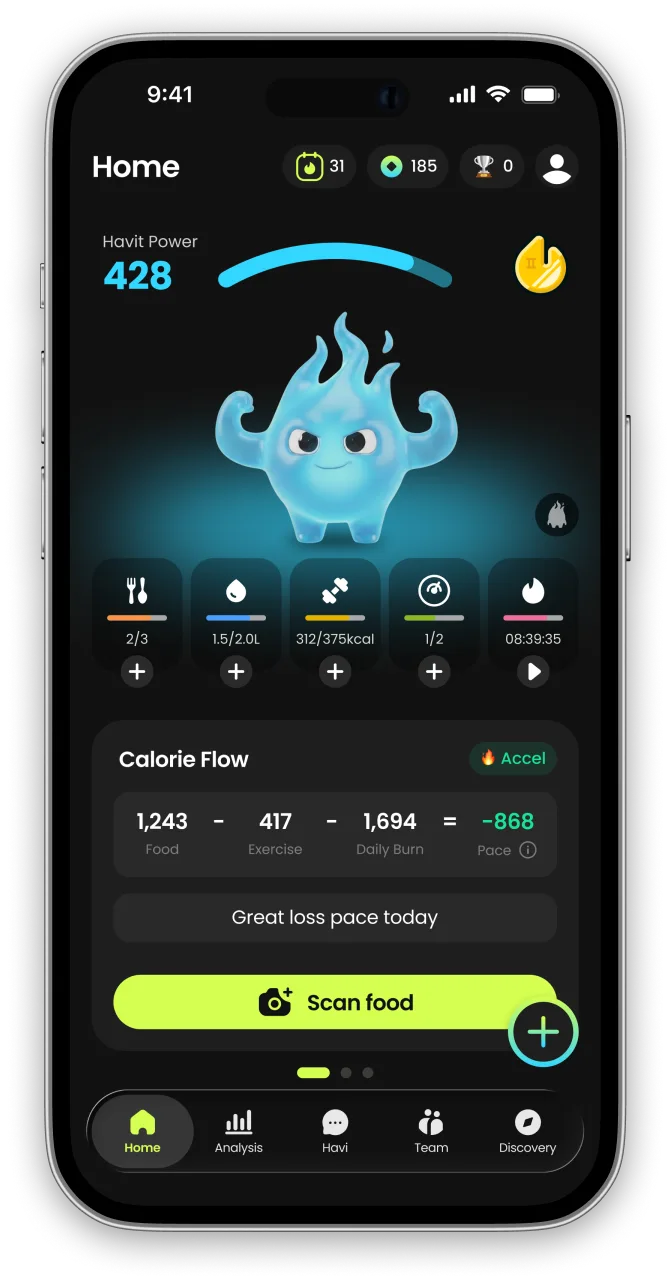
What is Havit?
Havit is an AI health companion for weight loss that protects muscle.
Unlike calorie-only trackers, Havit connects AI body-composition estimates, nutrition, hydration, sleep, steps, cycle, mood, and GLP-1 medication in one daily routine — so progress is measured by body composition, not just the number on the scale. Daily missions turn established behavior-change techniques into small repeatable actions, drawing on expertise from professionals formerly at Juvis Diet, one of Korea’s leading metabolic clinics.
In Havit’s own analysis of 1,090 GLP-1 users, people who logged consistently built stronger habits than the general user base. Read the GLP-1 Habit Report
Havit works with or without GLP-1 medication. It is a wellness app, not a medical device; body-composition results are estimates.

Continue in the App
Personalized wellness with your own data


References
- Dose-response effects of FODMAPs on gastrointestinal symptoms in IBS — Alimentary Pharmacology & Therapeutics, 2024
- Optimized FODMAP reintroduction protocol for irritable bowel syndrome — Journal of Gastroenterology and Hepatology, 2025
- The Monash University Low FODMAP Diet App and Database — Monash University, ongoing updates
- Hormonal influences on visceral sensitivity and FODMAP tolerance — Alimentary Pharmacology & Therapeutics, 2024


