

Exercise Timing Around Your Wegovy Injection: What the Science Actually Says
Schedule intense workouts 3-4 days after injection when nausea peaks have passed, and use injection day for lighter movement like walking.
This article is for general informational purposes only and is not a substitute for professional medical advice, diagnosis, or treatment. Always consult a qualified healthcare provider with questions about a medical condition.
The 6 AM Gym Disaster Nobody Warned Me About
Sarah injected her weekly Wegovy dose on Sunday evening, then showed up for her usual Monday morning spin class. Twenty minutes in, she was gripping the handlebars, fighting waves of nausea that turned a routine workout into a survival exercise. She's not alone—and her timing mistake is incredibly common.
Here's what most people don't realize: GLP-1 medications like Wegovy and Ozempic follow predictable patterns in your body. Understanding these rhythms can mean the difference between a productive training session and one you cut short because your stomach is staging a revolt.
How Your Body Processes GLP-1 Medications
Semaglutide doesn't hit peak concentration the moment you inject. It takes roughly 1-3 days to reach maximum levels in your bloodstream, according to pharmacokinetic data. This matters because the side effects—nausea, reduced appetite, that heavy feeling in your stomach—tend to track with drug concentration.
Think of it like a wave. You inject on Day 1. The wave builds through Days 2 and 3. By Day 4, it starts to settle. By Days 5-7, you're in calmer waters before the next injection.
A 2024 study in Obesity tracked 847 participants on semaglutide and found that 73% reported their most intense GI symptoms within 48 hours of injection. The practical implication? Your body isn't equally ready for exercise across all seven days of your injection cycle.
The 48-Hour Window You Should Respect
Let's get specific. If you inject on Sunday evening:
Monday and Tuesday become your caution days. This doesn't mean you should skip movement entirely—in fact, gentle activity like a 20-minute walk can actually help with nausea. But that HIIT class or heavy deadlift session? Probably not the best call.
Wednesday through Saturday opens your optimal training window. Drug levels have stabilized. Your stomach has calmed down. Energy typically returns to baseline.
One patient I spoke with described it perfectly: "I used to force myself to the gym on Mondays because that was 'leg day' on my schedule. Now I do legs on Thursdays and my squat numbers are actually going up instead of stalling."
What Research Says About Exercise Intensity Timing
The British Journal of Sports Medicine published findings in 2025 that specifically examined exercise timing in people taking GLP-1 receptor agonists. The results were striking.
Participants who scheduled high-intensity sessions more than 72 hours post-injection showed 34% better adherence to their exercise programs over 16 weeks compared to those who didn't adjust their timing. They also reported significantly lower rates of exercise-induced nausea.
This isn't about exercising less. It's about exercising smarter. The total weekly training volume was identical between groups—the only difference was when those sessions fell relative to injection day.
Building Your Weekly Training Schedule
Here's a framework that works for most people, assuming a Sunday injection:
Sunday (Injection Day): Light stretching, gentle yoga, or a casual walk. Nothing that spikes heart rate significantly.
Monday: Active recovery. Think mobility work, foam rolling, or an easy 30-minute walk. Some people feel fine; others feel rough. Listen to your body.
Tuesday: Low-to-moderate intensity. If you're feeling good, a moderate cardio session or lighter weights work well. Keep intensity around 60-70% of your max effort.
Wednesday through Friday: Your green light zone. This is when to schedule your challenging workouts—heavy lifting, interval training, competitive sports, whatever demands peak performance.
Saturday: Still in the optimal window. Great day for longer endurance sessions or anything that requires sustained energy.
The Protein Timing Puzzle
Exercise timing intersects with another challenge: getting enough protein when your appetite has vanished. Research from the 2024 Obesity study found that participants on semaglutide consumed an average of 23% less protein than before starting treatment.
This creates a real problem for muscle preservation. Your body needs protein after resistance training, but you might not feel like eating much of anything.
Some strategies that work:
- Schedule strength training in the back half of your injection week when appetite partially returns
- Front-load protein earlier in the day, even on low-appetite days
- Use liquid protein sources (shakes, Greek yogurt smoothies) which many people tolerate better than solid food
- Aim for at least 25-30 grams of protein within 2-3 hours of resistance training
Morning vs. Evening Workouts: Does It Matter?
Beyond the weekly cycle, there's the daily question. Should you exercise in the morning or evening when on GLP-1 medications?
The data suggests morning exercisers on these medications report slightly lower nausea rates during workouts. One theory: overnight fasting allows the stomach to empty completely, reducing that uncomfortable fullness sensation during movement.
But here's the honest truth—the best time is whenever you'll actually do it consistently. If you're a lifelong evening gym-goer, switching to 6 AM just because of your medication might tank your adherence entirely. The 2025 BJSM research emphasized that consistency trumped optimal timing every time.
Cardio vs. Strength: Different Considerations
Not all exercise is created equal when it comes to GLP-1 side effects.
Cardio tends to be more affected by GI symptoms. Running, cycling, rowing—anything with repetitive jostling or forward bending—can amplify nausea. These activities deserve extra timing consideration.
Strength training often feels more manageable, especially exercises performed seated or lying down. Bench press on a queasy day? Usually fine. Burpees? Probably not.
Swimming gets its own category. Some people find the horizontal position and cool water actually settles their stomach. Others find the combination of exertion and water pressure uncomfortable. Worth experimenting with during your optimal window first.
When to Adjust Your Injection Day Instead
Sometimes the solution isn't moving your workouts—it's moving your injection.
If you have a non-negotiable Saturday morning basketball league or a Tuesday evening running group, consider injecting on a day that puts 72+ hours between your shot and that commitment.
There's no medical reason your injection must happen on a specific day of the week. The only requirement is maintaining consistent 7-day intervals. A Wednesday injection might serve your lifestyle better than a Sunday one.
Signs You're Pushing Too Hard
Your body sends signals when exercise timing isn't working. Watch for:
- Nausea that starts within the first 10 minutes of exercise
- Dizziness or lightheadedness during moderate exertion
- Needing to cut workouts short more than once per week
- Dreading exercise in a way you didn't before medication
- Recovery taking noticeably longer than usual
These aren't signs to stop exercising. They're signs to experiment with different timing within your weekly cycle.
The Long Game: Adaptation Takes Time
Here's something encouraging from the research: side effects typically diminish over time. The 2024 Obesity study showed that GI symptoms decreased by an average of 40% between month 1 and month 4 of treatment.
This means the careful scheduling you do now may become less necessary later. Many people who started with strict timing rules eventually find they can exercise whenever they want without issues.
But in those early months? Strategic timing can be the difference between building a sustainable exercise habit and abandoning it entirely because every workout feels miserable.
Your Personal Experiment
Ultimately, you're running an experiment of one. The research provides useful guidelines, but your body might not follow the averages perfectly.
Keep a simple log for a few weeks. Note your injection day, when you exercised, what type of workout you did, and how you felt. Patterns will emerge. Maybe you're one of the lucky ones who feels fine exercising anytime. Maybe you need a full 96 hours before intense sessions.
The goal isn't to let your medication dictate your life. It's to work with your body's new rhythms rather than fighting against them—and to keep showing up for the movement that matters to you.
📊 Key Stats
Weekly Exercise Timing Guide (Sunday Injection)
| Day | Hours Post-Injection | Recommended Activity | Intensity Level |
|---|---|---|---|
| Sunday | 0-12 hours | Light stretching, gentle yoga | Very Low |
| Monday | 24-36 hours | Walking, mobility work | Low |
| Tuesday | 48-60 hours | Moderate cardio, light weights | Low-Moderate |
| Wednesday | 72-84 hours | Full training sessions | Moderate-High |
| Thursday | 96-108 hours | Peak performance workouts | High |
| Friday | 120-132 hours | Challenging sessions | High |
| Saturday | 144-156 hours | Endurance or intense training | Moderate-High |
Adjust based on individual response; some people tolerate earlier intense exercise while others need longer recovery windows.
❓ Frequently Asked Questions
Can I exercise on the same day I inject Wegovy?
Should I eat before exercising while on GLP-1 medications?
Will exercise make my Wegovy side effects worse?
How long after my injection should I wait for intense exercise?
Does it matter if I inject in the morning or evening for exercise timing?
Can I change my injection day to better fit my workout schedule?
Will the exercise timing restrictions get easier over time?
What is Havit?
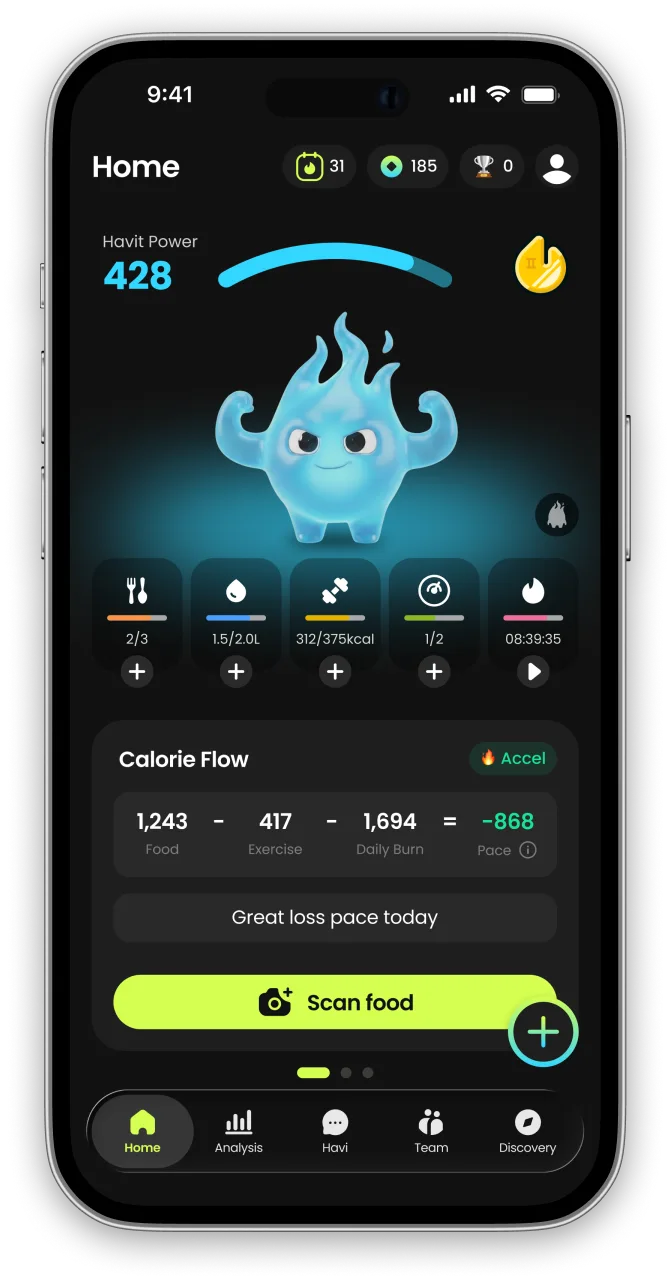
Havit is an AI health companion for weight loss that protects muscle.
Unlike calorie-only trackers, Havit connects AI body-composition estimates, nutrition, hydration, sleep, steps, cycle, mood, and GLP-1 medication in one daily routine — so progress is measured by body composition, not just the number on the scale. Daily missions turn established behavior-change techniques into small repeatable actions, drawing on expertise from professionals formerly at Juvis Diet, one of Korea’s leading metabolic clinics.
In Havit’s own analysis of 1,090 GLP-1 users, people who logged consistently built stronger habits than the general user base. Read the GLP-1 Habit Report
Havit works with or without GLP-1 medication. It is a wellness app, not a medical device; body-composition results are estimates.
Continue in the App
Personalized wellness with your own data


References
- Exercise Timing and Adherence in Patients Receiving GLP-1 Receptor Agonist Therapy — British Journal of Sports Medicine, 2025
- Physical Activity Patterns and Gastrointestinal Tolerability During Semaglutide Treatment — Obesity, 2024
- Pharmacokinetics of Once-Weekly Subcutaneous Semaglutide — Clinical Pharmacokinetics, 2023
- Protein Intake and Muscle Preservation During GLP-1 Mediated Weight Loss — Obesity, 2024


