

Living with Hypermobile EDS: 12 Daily Management Strategies That Actually Work
Managing hypermobile EDS daily life requires strategic pacing, joint protection during routine tasks, and building sustainable habits rather than pushing through pain.
This article is for general informational purposes only and is not a substitute for professional medical advice, diagnosis, or treatment. Always consult a qualified healthcare provider with questions about a medical condition.
The Spoon Theory Gets Real at 7 AM
Your alarm goes off. Before your feet hit the floor, you're already calculating: How many subluxations did I have in my sleep? Is my shoulder where it's supposed to be? Can I make it through today's meetings without my hip deciding to take a vacation from its socket?
If this sounds familiar, you're among the estimated 1 in 500 people living with hypermobile Ehlers-Danlos Syndrome. And here's what nobody tells you in the doctor's office—managing hEDS isn't about finding a cure. It's about becoming a strategic genius with your own body.
A 2025 study in Disability and Rehabilitation followed 847 people with hEDS through a 12-month self-management program. The participants who thrived weren't the ones who pushed hardest. They were the ones who learned to work with their connective tissue, not against it.
Understanding Your Personal Energy Budget
Think of your daily energy like a bank account with a frustratingly low balance. Most people start each day with, say, $100 in their energy account. Someone with hEDS might wake up with $40—and that's on a good day.
The 2024 American Journal of Medical Genetics guidelines introduced something called the "Energy Envelope Theory" for hEDS management. The concept is simple but revolutionary: stay within your energy envelope, and you'll have more energy tomorrow. Exceed it, and you're borrowing from next week.
What does this look like practically?
Monday, you feel great. You clean the entire house, run three errands, cook dinner from scratch. Tuesday through Thursday, you can barely function. Sound familiar? That's called boom-bust cycling, and 73% of people with hEDS report falling into this pattern before learning pacing strategies.
The alternative isn't doing less overall. It's doing less per day, more consistently.
The Art of Task Batching (hEDS Edition)
Regular productivity advice tells you to batch similar tasks together. hEDS productivity requires a different lens: batch by physical demand.
Category A tasks involve standing, walking, or holding positions. Cooking. Showering. Grocery shopping. Category B tasks can be done sitting with minimal joint stress. Computer work. Phone calls. Reading. Category C tasks are active rest. Gentle stretching. Heat therapy. Compression wear time.
The research-backed approach? Never stack more than two Category A tasks without a Category B or C buffer. One study participant described it this way: "I used to do all my errands Saturday morning and spend Sunday in bed. Now I do one errand per day, and I haven't had a crash day in three months."
Your schedule might look like: Morning shower (A) → Work emails sitting (B) → Quick grocery run (A) → Lunch with compression socks up (C) → Afternoon desk work (B). The rhythm matters more than the total output.
Joint Protection: The Invisible Skill Nobody Teaches You
Here's a number that stopped me cold: the average person performs approximately 1,500 grip movements per day. Opening doors. Turning faucets. Picking up phones. Carrying bags. For someone with hypermobile finger joints, that's 1,500 opportunities for micro-trauma.
Joint protection isn't about avoiding movement. It's about distributing force across larger, more stable joints and surfaces.
Opening jars? Use your palm against the lid, not your fingertips. Carrying groceries? Two lighter bags with forearm support beat one heavy bag in your hand. Typing? Keep wrists neutral, not hyperextended backward.
The 2024 guidelines specifically recommend what they call the "largest joint principle." Use your hip to push open a door instead of your wrist. Carry your bag on your shoulder rather than in your fingers. Sit down to put on pants rather than balancing on one hypermobile ankle.
Small changes, massive cumulative impact.
Building Your Morning Launch Sequence
The first 30 minutes of your day set the tone for everything that follows. People with hEDS who report higher quality of life share one common habit: they don't rush mornings.
A sustainable morning sequence might include: 5 minutes of gentle joint circles while still in bed. Sitting on the edge of the bed for 60 seconds before standing (this prevents the blood pressure drop that hits 40% of hEDS patients). Moving to standing with one hand on a stable surface. Walking slowly to the bathroom with deliberate, controlled steps.
One physical therapist specializing in hypermobility calls this "priming the system." Your joints need time to warm up. Your proprioception—your body's sense of where it is in space—needs calibration after sleep.
Rushing this process is like driving a car with a cold engine at full speed. You might get away with it sometimes. But the wear and tear accumulates.
The Sitting Paradox: Why Rest Isn't Always Restful
Here's something counterintuitive: sitting can be harder on hypermobile bodies than gentle movement. When you sit for extended periods, your muscles stop actively supporting your joints. Your ligaments—already too stretchy—take over. Pain follows.
The 2025 Disability and Rehabilitation study found that participants who changed positions every 20-30 minutes reported 34% less daily pain than those who sat for hours at a stretch.
This doesn't mean constant fidgeting. It means intentional position changes. Sit for 25 minutes. Stand for 5. Sit differently for another 25. Lie down briefly if possible. The variety matters more than any single "perfect" posture.
Invest in a timer. Set it for 25 minutes. When it goes off, shift something. Stand up. Adjust your seat. Move to a different chair. Your joints will thank you.
Kitchen Strategies That Save Your Hands
Cooking with hEDS can feel like navigating a minefield of grip challenges and standing endurance tests. But food is non-negotiable, and takeout budgets have limits.
Practical adaptations that work: A perching stool that lets you half-sit while chopping. Electric can openers and jar openers (non-negotiable investments). Pre-cut vegetables from the grocery store—yes, they cost more, but they cost less than a hand flare. Silicone grip aids for turning stove knobs. Lightweight pots and pans.
One occupational therapist recommends the "mise en place" approach borrowed from professional kitchens. Get everything out and prepped before you start cooking. This prevents repeated trips to the fridge and pantry, each one taxing your joints.
Batch cooking on better days means reheating on harder days. A slow cooker does the standing for you.
Sleep Positioning: Your Overnight Joint Protection Plan
You spend roughly a third of your life in bed. For someone with hEDS, that's a third of your life either supporting your joints properly or letting them drift into problematic positions.
The research supports specific positioning strategies. Side sleeping with a pillow between the knees prevents hip rotation. A thin pillow under the waist fills the gap between ribs and hips. Cervical pillows that support the neck's natural curve reduce morning neck pain by up to 45% in hypermobile patients.
Avoid sleeping on your stomach. This position forces your neck into rotation for hours and lets your lower back hyperextend. If you're a committed stomach sleeper, a thin pillow under your pelvis can reduce lumbar strain.
Some people with hEDS find that sleeping with light compression garments—knee sleeves, wrist braces—prevents overnight subluxations. Worth experimenting with if you wake up frequently with joints "out."
Exercise: The Complicated Relationship
Exercise is both essential and treacherous for hypermobile bodies. The 2024 guidelines are clear: muscle strength is your primary joint protection. Stronger muscles compensate for lax ligaments. But the wrong exercise, or the right exercise done wrong, causes flares.
The sweet spot? Low-impact, controlled movements with emphasis on stability over flexibility. Swimming and water aerobics top the recommendation list—water supports your joints while providing resistance. Pilates, especially reformer-based, builds core stability without high-impact stress. Walking on flat, even surfaces.
What to approach carefully: yoga (too much flexibility focus), running (high joint impact), HIIT (intensity spikes trigger crashes). This doesn't mean never—it means modified, careful, and ideally supervised by someone who understands hypermobility.
The 80% rule helps: exercise at 80% of what you think you can do. You'll recover faster and build strength more consistently than going all-out and spending three days recovering.
Social Energy: The Hidden Drain
Physical energy gets all the attention, but social energy drains the same limited battery. Standing at parties. Sitting in uncomfortable restaurant chairs. The cognitive load of appearing "fine" when you're managing pain.
Strategies that help: Arrive early to get the best seat. Bring a small cushion if chairs are hard. Have an exit plan that doesn't require explanation. "I have an early morning" works fine.
The 2025 study found that participants who communicated their needs to close friends and family reported higher social satisfaction despite attending fewer events. Quality connections beat quantity of appearances.
You don't owe anyone a detailed medical explanation. "I need to sit down" is a complete sentence.
Building Your Support Toolkit
Managing hEDS daily life works better with the right tools. Not everything requires a prescription or a specialist—some of the most useful items are surprisingly simple.
Compression garments provide proprioceptive feedback, helping your brain know where your joints are. KT tape can support specific joints during activities. Ergonomic keyboards and vertical mice reduce hand strain. Grabber tools extend your reach without bending. Shower chairs eliminate standing fatigue.
The key is matching tools to your specific problem joints. Someone with primarily knee and hip issues needs different support than someone whose hands and wrists are most affected.
Start with your most problematic joint. Find one tool that helps. Add gradually. A toolkit built over time beats an overwhelming all-at-once approach.
The Long Game: Sustainable Management Over Quick Fixes
Here's the truth nobody wants to hear: managing hEDS is a lifetime practice, not a problem to solve. The people who do best aren't looking for cures. They're building sustainable systems.
The 2025 research followed participants for a full year. Those who maintained improvements shared common traits: they accepted bad days as data, not failures. They adjusted their pacing based on patterns they tracked. They built flexibility into their systems rather than rigid rules.
One participant put it perfectly: "I stopped trying to be normal and started trying to be consistent. That changed everything."
Your body isn't broken. It's different. And different requires different strategies—ones built on understanding your specific patterns, protecting your specific vulnerable joints, and pacing your specific energy levels.
The goal isn't to do everything everyone else does. It's to do what matters to you, sustainably, for the long haul.
📊 Key Stats
Task Categories for Energy Pacing
| Category | Physical Demand | Examples | Recovery Need |
|---|---|---|---|
| Category A | High - standing/walking/holding | Cooking, showering, errands, cleaning | Requires buffer activity after |
| Category B | Low - seated, minimal joint stress | Computer work, phone calls, reading, desk tasks | Can follow Category A |
| Category C | Active rest | Gentle stretching, heat therapy, compression wear | Restores energy for next activity |
Never stack more than two Category A tasks without a Category B or C buffer between them
❓ Frequently Asked Questions
How do I explain hEDS pacing needs to my employer?
Should I use braces and supports all the time?
Why do I feel worse after resting all day?
How do I know if I'm exercising too much or too little?
Can diet affect hEDS symptoms?
What should I look for in a physical therapist?
How do I manage hEDS symptoms during travel?
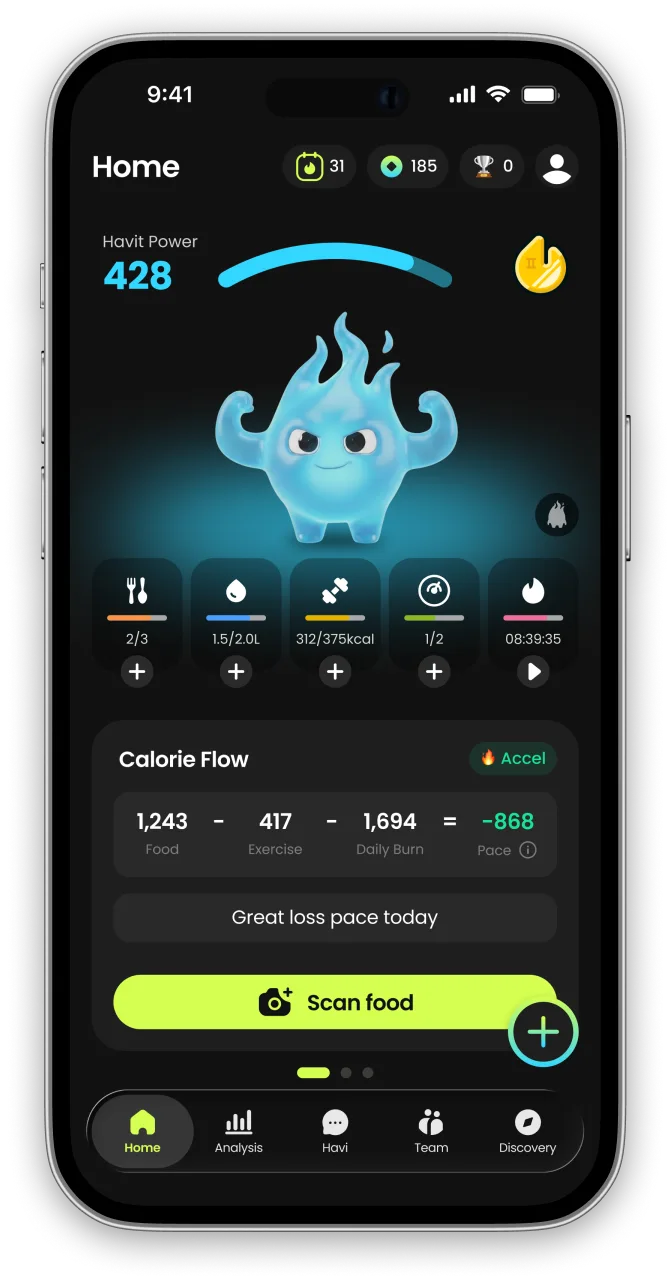
What is Havit?
Havit is an AI health companion for weight loss that protects muscle.
Unlike calorie-only trackers, Havit connects AI body-composition estimates, nutrition, hydration, sleep, steps, cycle, mood, and GLP-1 medication in one daily routine — so progress is measured by body composition, not just the number on the scale. Daily missions turn established behavior-change techniques into small repeatable actions, drawing on expertise from professionals formerly at Juvis Diet, one of Korea’s leading metabolic clinics.
In Havit’s own analysis of 1,090 GLP-1 users, people who logged consistently built stronger habits than the general user base. Read the GLP-1 Habit Report
Havit works with or without GLP-1 medication. It is a wellness app, not a medical device; body-composition results are estimates.

Continue in the App
Personalized wellness with your own data


References
- 2024 International Consortium Guidelines for Hypermobile Ehlers-Danlos Syndrome Management — American Journal of Medical Genetics Part C: Seminars in Medical Genetics, 2024
- Self-Management Interventions for Adults with Hypermobility Spectrum Disorders: A 12-Month Prospective Study — Disability and Rehabilitation, 2025
- Energy Management and Activity Pacing in Chronic Conditions: Application to Hypermobility Syndromes — British Journal of Occupational Therapy, 2024
- Joint Protection Principles in Connective Tissue Disorders: An Occupational Therapy Perspective — Journal of Hand Therapy, 2024


