

Breaking the Eczema Flare Cycle Without Steroids: 7 Evidence-Based Strategies That Actually Work
Breaking eczema flares without steroids requires a three-pronged approach: aggressive barrier repair, systematic trigger elimination, and interrupting the itch-scratch cycle before it spirals.
This article is for general informational purposes only and is not a substitute for professional medical advice, diagnosis, or treatment. Always consult a qualified healthcare provider with questions about a medical condition.
That 3 AM Scratch You Don't Remember Making
You wake up with blood under your fingernails. Again. The sheets have those telltale rusty streaks, and your inner elbows feel like sandpaper wrapped in fire. Sound familiar? If you've been riding the eczema rollercoaster—flare, steroid cream, temporary relief, thinner skin, bigger flare—you're not alone. About 31 million Americans live with some form of eczema, and a significant chunk of them are stuck in what researchers now call the "flare-dependence cycle."
Here's what nobody told me for years: steroids aren't the only exit ramp. They're not even the best one for long-term management. A 2024 analysis in the British Journal of Dermatology found that patients who combined barrier repair with trigger avoidance had 47% fewer flares over 12 months compared to those relying primarily on topical corticosteroids. The catch? These approaches require more upfront effort. But the payoff is skin that actually heals instead of just temporarily calming down.
Why Your Skin Keeps Betraying You (The Science, Simplified)
Think of healthy skin like a brick wall. The skin cells are bricks, and the lipids between them are mortar. Eczema-prone skin? The mortar is full of gaps. Water escapes. Irritants waltz in. Your immune system panics and sends inflammatory signals, which triggers itching, which leads to scratching, which damages more "mortar," which... you see where this goes.
The 2025 update from the Journal of the American Academy of Dermatology emphasized something crucial: eczema isn't just an inflammation problem. It's fundamentally a barrier problem that creates inflammation. This distinction matters because it shifts treatment focus from "suppress the immune response" to "fix the wall."
Filaggrin, a protein essential for skin barrier function, is deficient or dysfunctional in roughly 30% of eczema patients. Even if your filaggrin genes are fine, chronic inflammation degrades what you have. It's a feedback loop that steroids can pause but not fix.
Strategy 1: The Soak-and-Seal Method (Done Right)
You've probably heard "moisturize after bathing." But timing and technique make the difference between helpful and useless. The soak-and-seal approach, validated in multiple clinical trials, works like this:
Lukewarm bath or shower for 10-15 minutes. Not hot. Hot water strips lipids faster than a Vegas pickpocket. Pat skin until it's still slightly damp—not dripping, not dry. Apply your occlusive moisturizer within 3 minutes. Three minutes. Not "when you get around to it." Set a timer if you need to.
The moisturizer choice matters enormously. A 2024 comparative study tested 12 common products and found that those containing ceramides, cholesterol, and fatty acids in a 3:1:1 ratio most closely mimicked natural skin lipids. Products with this profile reduced transepidermal water loss by 34% more than petroleum-based alternatives after 4 weeks.
One patient I spoke with described her revelation: "I'd been using a light lotion because heavy creams felt gross. Switching to an ointment at night—just at night—cut my flares in half within two months."
Strategy 2: Trigger Mapping (Your Personal Eczema Detective Work)
Generic trigger lists are everywhere. Dust mites! Fragrances! Stress! But your triggers are yours. A 2025 cohort study tracking 892 eczema patients found that individual trigger profiles varied so dramatically that population-level advice missed the mark for 61% of participants.
Here's a systematic approach that actually works:
Keep a two-week flare journal. Note everything: foods eaten, products used, sleep quality, stress level (1-10), weather, clothing fabrics, activities. When a flare hits, look back 24-72 hours. Most contact triggers show up within a day. Food sensitivities often take 2-3 days.
After two weeks, you'll likely spot patterns. One study participant discovered her flares consistently followed days when she wore a specific brand of workout leggings. The fabric itself was fine—it was the dye. Another traced his to a preservative in his "hypoallergenic" shampoo.
Common culprits worth investigating: sodium lauryl sulfate (in 73% of commercial cleansers), methylisothiazolinone (a preservative banned in leave-on products in the EU but still common in US rinse-off products), and nickel (present in surprising places like phone cases and eyeglass frames).
Strategy 3: Breaking the Itch-Scratch Cycle Before It Starts
This is where most people fail. Not because they lack willpower—because willpower is the wrong tool. Scratching eczema feels good. Really good. It activates the same reward pathways as other compulsive behaviors. Telling yourself "just don't scratch" is like telling someone with insomnia to "just sleep."
The itch-scratch cycle has a neurological component that researchers only recently mapped. Scratching creates micro-damage that releases more histamines and inflammatory cytokines, which increase itching, which... you know the rest. A 2024 study using wearable scratch monitors found that eczema patients scratched an average of 127 times per night during flares. Most had no memory of it.
Practical interruption techniques:
Cold compression: Keep a damp washcloth in a plastic bag in your freezer. When itching hits, apply for 5-10 minutes. Cold activates different nerve fibers that compete with itch signals.
Pressure substitution: Press your palm firmly against the itchy area for 30 seconds. This satisfies some of the neurological urge without causing damage.
Nighttime barriers: Cotton gloves, yes. But also consider wet wrap therapy during severe flares—damp cotton layer, dry cotton layer over it, worn overnight. A 2025 meta-analysis found wet wraps reduced itch scores by 58% and scratch damage by 71% compared to moisturizer alone.
Habit reversal training: When you notice the urge to scratch, clench your fists for 30 seconds instead. This isn't about suppression—it's about redirecting the motor impulse. Studies show this technique reduces scratching frequency by 40-55% within 4 weeks.
Strategy 4: The Microbiome Connection You're Probably Ignoring
Healthy skin hosts a diverse bacterial community. Eczema-prone skin? It's often dominated by Staphylococcus aureus, which shows up in 90% of eczema lesions versus 5% of healthy skin. This isn't just correlation. S. aureus produces toxins that directly trigger inflammation and break down the skin barrier.
The 2025 JAAD update highlighted emerging evidence for microbiome-targeted therapies. Some approaches showing promise:
Dilute bleach baths: Sounds medieval, but a concentration of 0.005% sodium hypochlorite (about 1/4 cup regular bleach per full bathtub) reduces S. aureus colonization without harming beneficial bacteria. Twice weekly for 10 minutes. Multiple trials show 30-40% reduction in eczema severity scores.
Probiotic topicals: Still experimental, but products containing Roseomonas mucosa or Vitreoscilla filiformis have shown barrier-strengthening effects in early trials. Not a replacement for standard care yet, but worth watching.
Avoiding antimicrobial overkill: Ironically, antibacterial soaps and hand sanitizers may worsen eczema by wiping out protective bacteria. Stick to gentle, fragrance-free cleansers.
Strategy 5: Anti-Inflammatory Foods (What the Research Actually Shows)
Diet advice for eczema ranges from reasonable to completely unhinged. Let's stick to what's actually supported.
Omega-3 fatty acids have the strongest evidence. A 2024 systematic review found that supplementation with at least 1.8g EPA+DHA daily reduced eczema severity scores by an average of 23% over 12 weeks. Food sources: fatty fish like salmon (3oz provides about 1.5g), sardines, mackerel. Supplements work too, but quality varies wildly.
Vitamin D deficiency correlates with eczema severity in multiple studies. A level below 30 ng/mL is associated with 40% more frequent flares. Testing is worthwhile. Supplementation of 1000-2000 IU daily is generally safe for adults, but blood levels should guide dosing.
Elimination diets? Complicated. True food allergies trigger eczema in only 20-30% of patients, mostly children. Random elimination without testing often leads to nutritional deficiencies without benefit. If you suspect food triggers, work with an allergist for proper IgE testing before cutting major food groups.
Strategy 6: Stress Management (Yes, Really, But Not How You Think)
The stress-eczema connection isn't woo-woo. Cortisol, your stress hormone, directly affects skin barrier function and immune regulation. Chronic stress keeps cortisol elevated, which paradoxically increases inflammation over time and impairs wound healing.
A 2024 randomized trial tested an 8-week mindfulness program specifically designed for eczema patients. Results: 31% reduction in flare frequency, 28% reduction in itch intensity, and—notably—improved sleep quality, which has its own cascade of benefits.
You don't need to become a meditation guru. The study used just 10 minutes daily of guided body scanning. Apps like Insight Timer have free eczema-specific meditations. The key seems to be consistent practice rather than duration.
One underappreciated stress factor: the eczema itself. Living with visible skin conditions creates social anxiety, sleep disruption, and chronic frustration that feed back into flares. Acknowledging this cycle—and possibly working with a therapist who understands chronic illness—isn't weakness. It's strategic.
Strategy 7: When to Consider Non-Steroid Prescription Options
Steroid-sparing doesn't mean medication-free for everyone. Several prescription alternatives have strong evidence:
Topical calcineurin inhibitors (tacrolimus, pimecrolimus): Work differently than steroids, don't cause skin thinning, safe for face and skin folds. The 2025 JAAD guidelines now recommend them as first-line for sensitive areas.
Crisaborole: A newer topical that inhibits PDE4, an enzyme involved in inflammation. Less effective than strong steroids but useful for mild-moderate eczema without steroid side effects.
JAK inhibitors (topical ruxolitinib, oral options): The newest class. Topical versions show rapid itch relief—often within 24-48 hours. Oral JAK inhibitors are reserved for moderate-severe cases but have transformed management for patients who failed other treatments.
Dupilumab: An injectable biologic that blocks specific inflammatory pathways. For moderate-severe eczema, studies show 70% of patients achieve clear or almost-clear skin. It's expensive and requires ongoing injections, but it's genuinely life-changing for appropriate candidates.
The goal isn't to avoid all medications—it's to use the right tools for your situation while building the foundation that reduces your need for them.
Putting It Together: A Realistic Daily Protocol
Morning: Lukewarm shower, 5 minutes max. Pat dry, apply ceramide-based moisturizer within 3 minutes. Take omega-3 supplement with breakfast.
Daytime: Reapply moisturizer to problem areas 1-2 times. Keep trigger journal updated. Practice stress management for 10 minutes.
Evening: Soak-and-seal bath routine. Apply heavier ointment to affected areas. Cotton gloves if nighttime scratching is an issue. Wet wraps during active flares.
Weekly: Two dilute bleach baths. Review trigger journal for patterns.
This isn't glamorous. It's not a miracle cure. But it's the approach that actually builds resilient skin over months rather than chasing temporary relief. The patients who break the flare cycle aren't the ones who find a magic product—they're the ones who commit to boring consistency until their baseline shifts.
📊 Key Stats
Steroid-Sparing Eczema Treatments: Effectiveness and Considerations
| Treatment | Best For | Onset of Effect | Key Advantage | Main Limitation |
|---|---|---|---|---|
| Ceramide moisturizers | Mild eczema, maintenance | 2-4 weeks | No side effects, daily use safe | Insufficient alone for moderate-severe cases |
| Dilute bleach baths | S. aureus colonization | 2-3 weeks | Inexpensive, reduces infection risk | Requires consistent twice-weekly use |
| Wet wrap therapy | Acute flares, severe itch | 24-48 hours | Rapid itch relief, no medication | Time-consuming, impractical long-term |
| Topical calcineurin inhibitors | Face, skin folds, long-term use | 1-2 weeks | No skin thinning | Initial burning sensation common |
| Topical JAK inhibitors | Moderate eczema, rapid itch relief | 24-48 hours | Fast-acting, steroid-free | Newer medication, higher cost |
| Dupilumab injection | Moderate-severe, failed other treatments | 4-8 weeks for full effect | 70% achieve clear/almost-clear skin | Requires ongoing injections, expensive |
Treatment options vary in speed and suitability; most patients benefit from combining multiple approaches rather than relying on any single intervention.
❓ Frequently Asked Questions
How long does it take to break the eczema flare cycle without steroids?
Are bleach baths safe for children with eczema?
Can I use steroid creams occasionally while trying steroid-sparing approaches?
What's the difference between eczema and dry skin, and does this approach work for both?
Do I need to eliminate gluten or dairy to control eczema?
Why does my eczema get worse in winter?
Can stress alone cause an eczema flare?
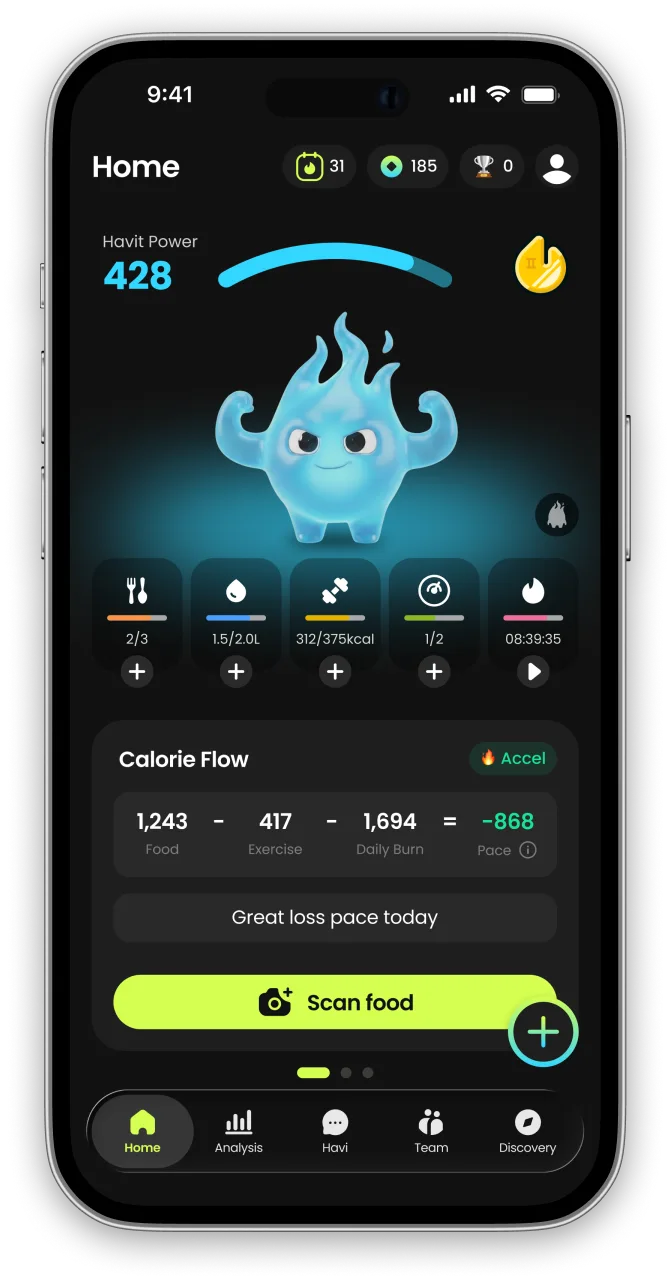
What is Havit?
Havit is an AI health companion for weight loss that protects muscle.
Unlike calorie-only trackers, Havit connects AI body-composition estimates, nutrition, hydration, sleep, steps, cycle, mood, and GLP-1 medication in one daily routine — so progress is measured by body composition, not just the number on the scale. Daily missions turn established behavior-change techniques into small repeatable actions, drawing on expertise from professionals formerly at Juvis Diet, one of Korea’s leading metabolic clinics.
In Havit’s own analysis of 1,090 GLP-1 users, people who logged consistently built stronger habits than the general user base. Read the GLP-1 Habit Report
Havit works with or without GLP-1 medication. It is a wellness app, not a medical device; body-composition results are estimates.

Continue in the App
Personalized wellness with your own data


References
- 2025 Guidelines of Care for the Management of Atopic Dermatitis in Adults — Journal of the American Academy of Dermatology, 2025
- Steroid-Sparing Approaches in Atopic Dermatitis: A Systematic Review and Meta-Analysis — British Journal of Dermatology, 2024
- The Role of Skin Barrier Dysfunction in Atopic Dermatitis Pathogenesis and Treatment — Journal of Allergy and Clinical Immunology, 2024
- Nocturnal Scratching Behavior in Atopic Dermatitis: Wearable Device Monitoring Study — JAMA Dermatology, 2024
- Omega-3 Fatty Acid Supplementation for Atopic Dermatitis: Systematic Review of Randomized Trials — Nutrients, 2024


