

Why Your Eating Window Consistency Beats Fasting Duration for Blood Sugar Control
Eating within the same 2-hour window daily improves glucose regulation more effectively than extended fasting with variable meal times.
This article is for general informational purposes only and is not a substitute for professional medical advice, diagnosis, or treatment. Always consult a qualified healthcare provider with questions about a medical condition.
The 47-Minute Difference That Changed Everything
Sarah ate her first meal at 7:15 AM on Monday. Tuesday it was 9:30 AM because of a meeting. Wednesday she skipped breakfast entirely. Her fasting windows ranged from 12 to 18 hours—impressive numbers on paper. Yet her continuous glucose monitor told a different story: wild spikes, sluggish recovery, and morning readings that made no sense. Then she tried something counterintuitive. She stopped focusing on fasting duration and started eating at nearly identical times each day. Within three weeks, her glucose variability dropped by 34%.
This isn't just one person's experience. A 2025 Cell Metabolism study tracking 1,847 participants found that meal timing consistency predicted metabolic outcomes better than fasting window length. The magic number? Keeping your first meal within 47 minutes of the same time daily.
What "Eating Window Consistency" Actually Means
Forget the complicated fasting protocols for a moment. Eating window consistency simply refers to how reliably you start and end your eating each day. Someone who eats from 8 AM to 6 PM every single day has high consistency. Someone who alternates between 6 AM breakfasts and 11 AM brunches has low consistency—even if they're technically fasting for 14+ hours.
Your body runs on anticipation. Digestive enzymes start flowing before food arrives. Insulin sensitivity peaks at predictable times. Gut bacteria operate on 24-hour cycles. When you eat erratically, you're essentially jet-lagging your metabolism without leaving your time zone.
The Diabetes Care 2024 analysis put numbers to this phenomenon. Researchers calculated "meal timing variability" by measuring the standard deviation of breakfast times across 90 days. Participants with variability under 30 minutes showed 23% better insulin sensitivity than those with variability over 90 minutes—regardless of total fasting hours.
The Circadian Clock You Didn't Know You Had (In Your Pancreas)
Your pancreas doesn't just respond to food. It prepares for it. Beta cells—the ones producing insulin—follow their own circadian rhythm, ramping up production in anticipation of meals. This preparation phase matters enormously.
Dr. Satchin Panda's lab at the Salk Institute demonstrated this beautifully. When mice ate at consistent times, their pancreatic cells showed synchronized clock gene expression. Erratic feeding disrupted these patterns within 72 hours. The result? Insulin released at the wrong times, in the wrong amounts, creating glucose chaos even with identical caloric intake.
Humans aren't mice, but the parallel research is striking. A 2024 study in Cell Reports Medicine found that people with irregular meal patterns showed 41% higher post-meal glucose peaks, even when eating the same foods. The timing inconsistency itself was metabolically expensive.
Why 16:8 Fasting Fails When Timing Floats
Intermittent fasting has genuine benefits. But here's what the popular protocols miss: a floating 8-hour window undermines the very mechanisms that make time-restricted eating work.
Consider two people both doing 16:8 fasting. Person A eats from 11 AM to 7 PM daily, never deviating more than 20 minutes. Person B also fasts 16 hours but shifts their window based on social plans—sometimes 10 AM to 6 PM, sometimes 1 PM to 9 PM. The Cell Metabolism 2025 study compared these patterns directly. Person A's profile showed significantly better fasting glucose, lower triglycerides, and improved HbA1c markers over 12 weeks. Person B? Minimal improvement despite identical fasting duration.
The researchers coined a term for this: "temporal metabolic anchoring." Your body needs reliable time cues to optimize nutrient processing. Without them, you're fasting without the full benefits.
The Breakfast Time Sweet Spot
Not all meals carry equal timing weight. Breakfast consistency appears to matter most. The Diabetes Care analysis found that breakfast timing variability alone explained 67% of the relationship between meal irregularity and insulin resistance. Dinner timing mattered too, but less dramatically.
Why breakfast? Morning cortisol and insulin sensitivity follow the steepest circadian curves. Eating during this transition period—when your body is shifting from fasting to fed mode—requires precise hormonal coordination. Miss the window, and the whole cascade stumbles.
Practical translation: if you can only control one meal's timing, make it your first one. Aim for the same time within 30 minutes, seven days a week. Yes, weekends too.
Building Your Consistent Eating Window: A Realistic Approach
Perfection isn't the goal. Improvement is. Here's how to increase your meal timing consistency without restructuring your entire life.
Start by tracking your current patterns for one week. Note when you take your first bite each day—not when you plan to eat, when you actually do. Calculate the range. If Monday's breakfast was 7 AM and Saturday's was 10:30 AM, your variability spans 3.5 hours. That's a metabolic earthquake happening weekly.
Next, identify your natural anchor point. What's the earliest you could realistically eat on your busiest day? That becomes your target. For most people, this falls between 7:30 and 9:00 AM. Set a phone alarm. Not for when to eat, but for when to start preparing food. The act of making breakfast at a consistent time often matters as much as eating it.
Weekend drift poses the biggest challenge. Sleeping in feels earned, but your pancreas doesn't care about your work schedule. A compromise: keep your eating window start time within 60 minutes of weekday timing. If you eat at 7:30 AM during the week, 8:30 AM on Saturday won't derail your progress. 11 AM will.
What the Research Says About Flexibility
Rigidity creates its own stress, which also harms metabolic health. The good news: the consistency threshold isn't as tight as you might fear.
The Cell Metabolism researchers identified a tolerance zone. Participants who kept their first meal within 47 minutes of their average time achieved 89% of the metabolic benefits seen in those with perfect consistency. Staying within 60 minutes still captured 76% of benefits. Beyond 90 minutes, benefits dropped sharply.
This gives you a practical target: aim for 30-minute consistency, accept 60-minute variations when life intervenes, and treat anything beyond 90 minutes as a metabolic reset day that shouldn't happen more than once or twice monthly.
The Social Meal Dilemma
Dinner invitations don't arrive on your metabolic schedule. Business lunches happen when clients are available. Birthday brunches start at 11 AM whether you like it or not.
Here's a framework that balances social life with metabolic consistency. Protect your first meal religiously—this is non-negotiable and rarely conflicts with social obligations anyway. For dinner, maintain your end-of-eating time even if the meal content shifts. If you normally stop eating by 7 PM, keep that boundary even when dinner plans push the meal itself later. You might eat less at the event, but you're preserving the signal that tells your body when the feeding window closes.
Some people find success with a "metabolic anchor meal"—a small, consistent first meal at their usual time, followed by flexibility for social eating later. A handful of nuts at 7:30 AM before a 10 AM brunch maintains the circadian signal while allowing schedule flexibility.
Tracking Consistency Without Obsession
You don't need continuous glucose monitors or elaborate spreadsheets. A simple note in your phone works. Each day, record two times: first bite and last bite. After two weeks, calculate your average and your range. Improvement means shrinking that range, not hitting a specific number.
Some wearables now include meal timing features. The Oura Ring's "meal timing" tag and various CGM apps can automate this tracking. But low-tech works fine. The act of noticing creates awareness, and awareness drives change.
When Consistency Matters Less
Not everyone needs to optimize meal timing. If you're already metabolically healthy—stable energy, healthy weight, no blood sugar concerns—the marginal benefit of precise meal timing is small. Enjoy your varied brunch schedule.
The research shows the strongest effects in people with existing metabolic dysfunction: prediabetes, insulin resistance, or significant glucose variability. If that describes you, meal timing consistency offers a surprisingly powerful lever. It costs nothing, requires no special foods, and works alongside whatever other dietary approach you prefer.
Athletes present another exception. Training schedules sometimes demand eating at odd hours. The metabolic cost of timing inconsistency may be worth paying for performance optimization. Context matters.
The Bigger Picture: Time as a Nutrient
We've spent decades obsessing over what to eat. Macros, calories, food quality—all important. But the emerging science suggests we've underweighted when we eat. Time itself functions as a nutrient, providing information that shapes how your body processes everything else.
Consistent meal timing won't fix a terrible diet. But it might explain why two people eating identical foods get different metabolic results. It might explain why your fasting protocol worked for your friend but not for you. And it offers a new optimization target that doesn't require willpower, restriction, or expensive supplements.
Your body is listening for time cues. It's been waiting for you to send consistent ones.
📊 Key Stats
Consistent vs. Variable Eating Windows: 12-Week Metabolic Outcomes
| Metric | Consistent Timing (±30 min) | Variable Timing (±90+ min) | Difference |
|---|---|---|---|
| Fasting Glucose | Improved 12% | Improved 3% | 4x greater improvement |
| Post-Meal Glucose Peak | Reduced 28% | Reduced 9% | 3x greater reduction |
| HbA1c Change | -0.3% | -0.1% | Triple the improvement |
| Triglycerides | Reduced 18% | Reduced 7% | 2.5x greater reduction |
| Reported Energy Stability | 78% improved | 34% improved | More than double |
Data from Cell Metabolism 2025 study comparing participants with identical fasting durations but different timing consistency
❓ Frequently Asked Questions
Does eating window consistency matter more than fasting duration?
How much timing variation is acceptable without losing benefits?
Should I keep the same eating schedule on weekends?
Which meal's timing matters most for metabolic health?
Can I still do intermittent fasting with consistent timing?
How long does it take to see benefits from consistent meal timing?
Do I need a continuous glucose monitor to track this?
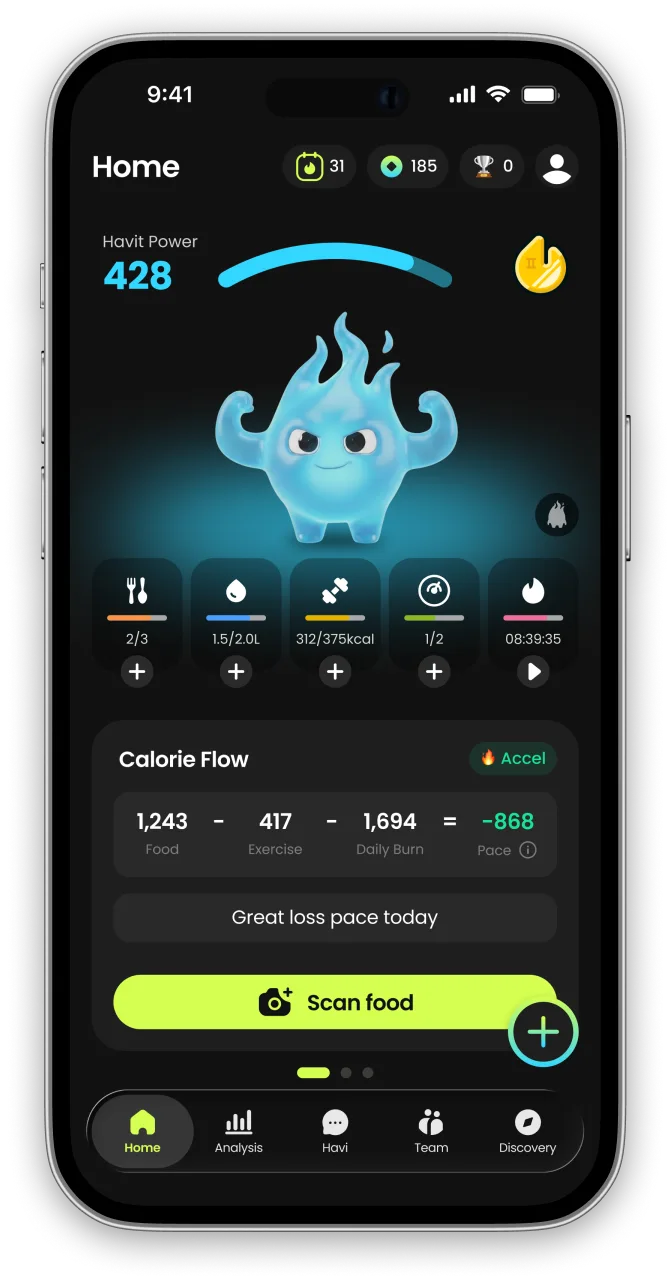
What is Havit?
Havit is an AI health companion for weight loss that protects muscle.
Unlike calorie-only trackers, Havit connects AI body-composition estimates, nutrition, hydration, sleep, steps, cycle, mood, and GLP-1 medication in one daily routine — so progress is measured by body composition, not just the number on the scale. Daily missions turn established behavior-change techniques into small repeatable actions, drawing on expertise from professionals formerly at Juvis Diet, one of Korea’s leading metabolic clinics.
In Havit’s own analysis of 1,090 GLP-1 users, people who logged consistently built stronger habits than the general user base. Read the GLP-1 Habit Report
Havit works with or without GLP-1 medication. It is a wellness app, not a medical device; body-composition results are estimates.

Continue in the App
Personalized wellness with your own data


References
- Eating Window Consistency and Metabolic Outcomes: A 12-Week Randomized Trial — Cell Metabolism, 2025
- Meal Timing Variability and Insulin Sensitivity: Analysis of 90-Day Patterns — Diabetes Care, 2024
- Circadian Regulation of Pancreatic Beta Cell Function — Cell Reports Medicine, 2024
- The Circadian Code: Lose Weight, Supercharge Your Energy, and Transform Your Health — Dr. Satchin Panda, Rodale Books, 2018


