

Bone Density Loss Prevention Beyond Calcium and Vitamin D: The 2026 Science-Backed Guide
Building stronger bones requires impact exercise, vitamin K2 to direct calcium properly, and collagen peptides—not just calcium and D supplements.
This article is for general informational purposes only and is not a substitute for professional medical advice, diagnosis, or treatment. Always consult a qualified healthcare provider with questions about a medical condition.
Your Bones Are Rebuilding Right Now (But Probably in the Wrong Direction)
Here's something that might unsettle you: every seven years, you get an essentially new skeleton. Your body breaks down old bone and builds new bone constantly—about 10% of your skeleton gets remodeled annually. The problem? After age 30, demolition starts outpacing construction.
Most people respond to this news by grabbing a calcium supplement and calling it a day. That's like trying to build a house by dumping bricks in your front yard. You need the materials, sure. But you also need workers, a blueprint, and someone actually laying those bricks in the right place.
A 2025 review in the Journal of Bone and Mineral Research found that non-pharmacological interventions—meaning lifestyle changes, not drugs—can reduce fracture risk by up to 40% when combined properly. The key word is "combined." Calcium and vitamin D are just two pieces of a much larger puzzle.
Why Calcium Supplements Alone Keep Disappointing Researchers
The calcium paradox has puzzled scientists for years. Countries with the highest dairy consumption often have the highest hip fracture rates. Meanwhile, populations eating far less calcium sometimes have stronger bones.
What gives?
Calcium is necessary but not sufficient. Taking 1,200mg daily won't help much if that calcium ends up in your arteries instead of your bones. A 2024 meta-analysis found that calcium supplementation alone, without other interventions, improved bone mineral density by only 1-2% over two years. That's barely enough to matter clinically.
The real issue is calcium trafficking—getting calcium where it needs to go. Swallowing a pill is step one of a ten-step process. Without the right cofactors and physical signals, much of that calcium just... wanders.
Vitamin K2: The Traffic Controller Your Bones Desperately Need
Imagine calcium as delivery trucks full of building materials. Vitamin K2 is the traffic controller directing those trucks to the construction site (your bones) instead of letting them pile up on the highway (your arteries).
K2 activates two crucial proteins. Osteocalcin pulls calcium into bone tissue. Matrix GLA protein keeps calcium out of soft tissues where it causes damage. Without adequate K2, both proteins sit around inactive, and calcium goes wherever it pleases.
The numbers are striking. A Rotterdam Study analysis showed that people in the highest third of K2 intake had 52% lower risk of severe arterial calcification and 57% lower risk of dying from heart disease. Japanese research on natto—fermented soybeans absolutely loaded with K2—found that women eating it regularly had significantly better bone density than those who avoided it.
You'll find K2 in two main forms. MK-4 comes from animal products and disappears from your bloodstream within hours. MK-7, from fermented foods, sticks around for days. Most researchers now recommend MK-7 at doses between 100-200 micrograms daily.
Good food sources include natto (the undisputed champion at 1,000+ mcg per serving), hard cheeses like Gouda, egg yolks from pasture-raised chickens, and grass-fed butter. If those don't appeal, supplements work fine.
Impact Loading: The Exercise Your Bones Actually Respond To
Your skeleton is remarkably lazy. It won't build more bone unless you convince it that more bone is necessary. Swimming? Your bones couldn't care less. Cycling? Nice for your heart, useless for your femur.
Bones respond to impact and mechanical loading. They need to feel stress, compression, and the jarring forces that signal "hey, we might break if we don't get stronger."
The Osteoporosis International exercise study from 2024 tracked postmenopausal women doing different exercise protocols. The group doing impact loading—jumping, hopping, and resistance training—gained 2.1% hip bone density over 12 months. The walking-only group? They lost 0.8%.
That 3% difference might sound small until you realize it represents the difference between bones getting stronger and bones getting weaker. Over five years, that gap becomes a canyon.
What counts as impact loading? Jumping rope. Box jumps. Running and jogging. Tennis and basketball. Even just jumping in place 50 times daily showed benefits in one study. Resistance training—especially squats, deadlifts, and lunges—creates the compressive forces bones need.
Start conservatively if you're new to this. Ten small jumps daily, gradually increasing. Your bones adapt over months, not days.
Collagen Peptides: Rebuilding the Scaffolding
Bone isn't just calcium crystite packed together. About 30% of bone mass is organic material—mostly type I collagen. This protein matrix provides flexibility and acts as scaffolding for mineral deposition.
Think of collagen as rebar in concrete. The minerals provide hardness, but the collagen provides resilience. Bones without adequate collagen become brittle, like chalk. They might be dense but they snap under stress.
Collagen production drops approximately 1% per year after age 25. By 50, you're making half what you did at peak production. Supplementing with collagen peptides—broken-down collagen that your gut can actually absorb—has shown promising results.
A 2023 study gave postmenopausal women 5 grams of specific collagen peptides daily for 12 months. Their femoral neck bone density increased by 3.0% compared to placebo. Another trial found that collagen combined with calcium and vitamin D outperformed calcium and D alone by a significant margin.
The mechanism seems to involve stimulating osteoblasts—your bone-building cells—to produce more collagen matrix. More matrix means more places for calcium to deposit properly.
Look for hydrolyzed collagen peptides, specifically types I and III. Doses in successful studies ranged from 5-15 grams daily. Marine collagen and bovine collagen both work; choose based on dietary preferences.
The Synergy Effect: Why Combining Interventions Multiplies Results
Here's where things get interesting. These interventions don't just add together—they multiply.
Impact loading tells your bones to build. Collagen provides the scaffolding. Vitamin K2 directs calcium to the construction site. Calcium and vitamin D supply the raw materials. Remove any piece and the whole system underperforms.
The JBMR 2025 review emphasized this synergistic approach. Studies combining exercise with nutritional interventions consistently outperformed either alone. One trial found that exercise plus collagen supplementation improved bone formation markers by 66% compared to 27% with exercise alone.
Practically, this means stacking your interventions:
- Morning: Collagen peptides with breakfast (5-10g)
- With meals: Vitamin D3 (1,000-2,000 IU) and K2 (100-200 mcg MK-7)
- Afternoon: Impact loading exercise (20-30 minutes, 3-4x weekly)
- Throughout day: Calcium from food sources (aim for 1,000-1,200mg total)
The order matters less than the consistency. Bones remodel slowly. You need months of sustained effort before changes appear.
What Most People Get Wrong About Bone Health
Mistake one: assuming bone loss is inevitable. It's not. Astronauts lose bone rapidly in space, but they rebuild it when they return to gravity and resume normal activity. Your body responds to the signals you give it.
Mistake two: relying solely on supplements. No pill replaces mechanical loading. Your bones need physical stress to trigger remodeling. Period.
Mistake three: starting too late. The best time to build bone was in your 20s. The second best time is now. Even people in their 70s can improve bone density with the right protocol.
Mistake four: ignoring protein intake. Bone is living tissue that needs protein to maintain and repair. Low protein diets accelerate bone loss regardless of calcium intake. Aim for at least 1.0-1.2 grams per kilogram of body weight daily.
Mistake five: excessive alcohol and smoking. Both directly poison osteoblasts. Two drinks daily can reduce bone formation by 30%. Smoking roughly doubles fracture risk. These aren't minor factors.
Building Your Personal Bone Protocol
Start with an honest assessment of your current habits. How much impact exercise do you actually do? What's your protein intake? Are you getting K2 from food or supplements?
Week one through four: Focus on movement. Add 50 small jumps daily—just hopping in place counts. Begin basic resistance training twice weekly. Squats, lunges, and step-ups work well.
Month two: Layer in nutrition. Add collagen peptides to your morning routine. Ensure adequate vitamin D and start K2 supplementation if your diet lacks fermented foods or grass-fed dairy.
Month three onward: Increase intensity gradually. Progress to higher jumps, heavier weights, more challenging movements. Your bones adapt to whatever load you give them, then plateau. Keep challenging them.
Track consistency, not perfection. Missing a day matters less than missing a month. The people who maintain bone density long-term are the ones who make these habits automatic.
The Bottom Line on Building Bones That Last
Your skeleton isn't a static structure you're stuck with. It's a dynamic organ constantly responding to your choices. Feed it the right materials, give it the right signals, and it builds itself stronger.
Calcium and vitamin D remain important—they're just not enough. Impact loading triggers the remodeling process. Vitamin K2 ensures calcium reaches bone tissue. Collagen peptides rebuild the organic matrix. Together, they create an environment where bone formation can actually exceed bone breakdown.
The research is clear. The interventions are accessible. The only question is whether you'll stack the deck in your favor or keep hoping a calcium pill will handle everything.
Your future self—the one who wants to stay active, independent, and fracture-free—is counting on the choices you make now.
📊 Key Stats
Bone-Building Interventions Compared
| Intervention | Primary Mechanism | Effective Dose | Time to See Results | Evidence Strength |
|---|---|---|---|---|
| Impact Loading Exercise | Mechanical stress triggers remodeling | 3-4x weekly, 20-30 min | 6-12 months | Strong |
| Vitamin K2 (MK-7) | Activates osteocalcin, directs calcium to bone | 100-200 mcg daily | 12+ months | Moderate-Strong |
| Collagen Peptides | Provides scaffolding matrix for mineralization | 5-15g daily | 6-12 months | Moderate |
| Calcium + Vitamin D | Raw materials for bone mineral | 1000-1200mg Ca + 1000-2000 IU D3 | 12-24 months | Moderate (alone) |
| Resistance Training | Compressive loading on bone | 2-3x weekly | 6-12 months | Strong |
Combining multiple interventions produces synergistic effects superior to any single approach
❓ Frequently Asked Questions
Can I rebuild bone density after menopause?
How much vitamin K2 should I take daily?
Is walking enough exercise for bone health?
What type of collagen is best for bones?
Can too much calcium be harmful?
How long until I see improvements in bone density?
Should I take vitamin D with vitamin K2?
What is Havit?
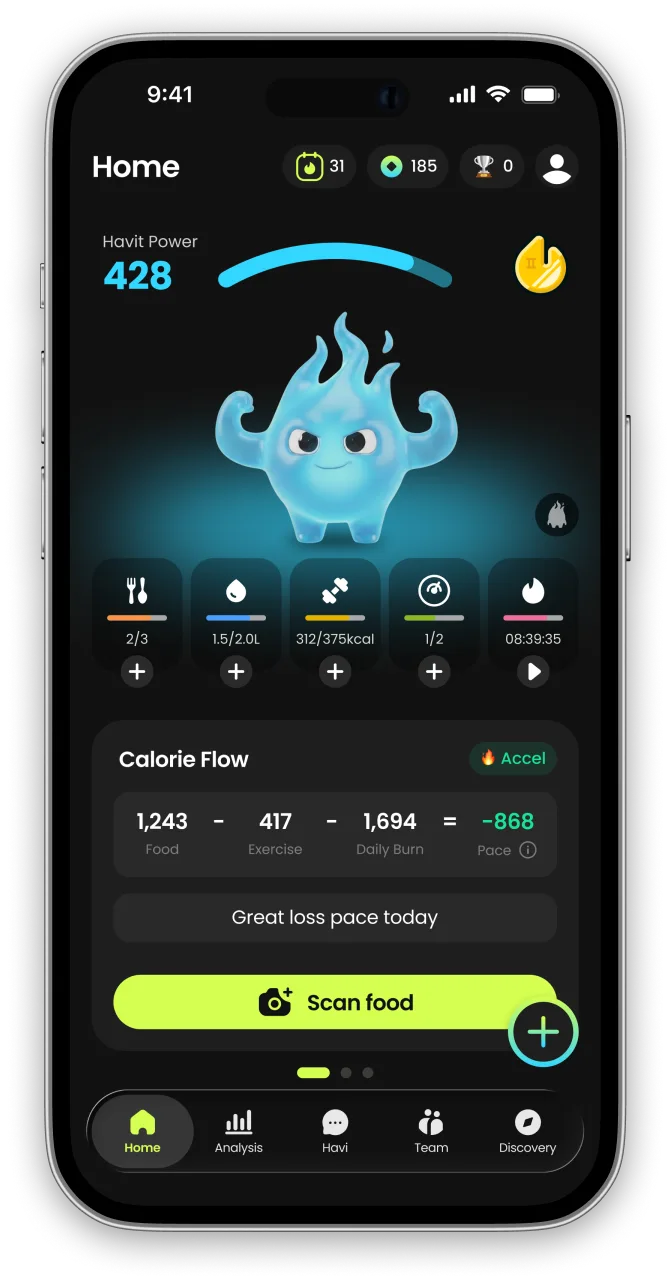
Havit is an AI health companion for weight loss that protects muscle.
Unlike calorie-only trackers, Havit connects AI body-composition estimates, nutrition, hydration, sleep, steps, cycle, mood, and GLP-1 medication in one daily routine — so progress is measured by body composition, not just the number on the scale. Daily missions turn established behavior-change techniques into small repeatable actions, drawing on expertise from professionals formerly at Juvis Diet, one of Korea’s leading metabolic clinics.
In Havit’s own analysis of 1,090 GLP-1 users, people who logged consistently built stronger habits than the general user base. Read the GLP-1 Habit Report
Havit works with or without GLP-1 medication. It is a wellness app, not a medical device; body-composition results are estimates.

Continue in the App
Personalized wellness with your own data


References
- Non-pharmacological interventions for fracture prevention: A systematic review and meta-analysis — Journal of Bone and Mineral Research, 2025
- Impact loading exercise and bone mineral density in postmenopausal women: A 12-month randomized controlled trial — Osteoporosis International, 2024
- Dietary intake of menaquinone is associated with a reduced risk of coronary heart disease: The Rotterdam Study — Journal of Nutrition, Rotterdam Study analysis
- Specific collagen peptides improve bone mineral density and bone markers in postmenopausal women—A randomized controlled study — Nutrients, 2023


