

The Productivity Thermostat: Finding Your Optimal Work Temperature by Gender and Task Type
Women peak cognitively at 75°F while men perform better around 70°F—and the type of work you're doing matters just as much as your biology.
This article is for general informational purposes only and is not a substitute for professional medical advice, diagnosis, or treatment. Always consult a qualified healthcare provider with questions about a medical condition.
That Office Thermostat War Isn't Just About Comfort
You know that coworker who's always freezing while you're sweating through your shirt? Turns out, you're both right—and wrong. A 2024 PLOS ONE study tracking 543 office workers found that cognitive performance varied by up to 15% based solely on room temperature. But here's what nobody talks about: the "optimal" temperature depends heavily on whether you're crunching spreadsheets or brainstorming your next big idea.
I spent three weeks experimenting with my home office temperature after reading the research. The results surprised me. My best writing happened at 73°F. My financial planning? Noticeably sharper at 68°F. This isn't placebo—it's physiology.
Why Your Body Temperature Affects Your Brain
Your brain consumes roughly 20% of your body's energy. When your environment forces your body to work harder at temperature regulation, that energy gets diverted. Simple math, really.
The hypothalamus—that almond-sized region managing your internal thermostat—kicks into overdrive when ambient temperature strays from your comfort zone. Blood flow patterns shift. Peripheral circulation changes. And your prefrontal cortex, the region handling complex decisions and focus, gets slightly less priority.
Researchers at Cornell tracked typing output and error rates across temperature variations. At 68°F, employees made 44% more errors and typed 54% less than at 77°F. That's not a minor fluctuation. That's the difference between hitting your deadline and staying late.
The Gender Gap in Thermal Comfort Is Real
Women typically have lower metabolic rates than men—about 35% lower on average. This isn't controversial; it's basic biology. Lower metabolism means less internal heat generation.
The Indoor Air 2025 review analyzed 22 studies spanning 16 countries. Women consistently preferred temperatures 3-5°F higher than men. But preference isn't the same as performance. When researchers measured actual cognitive output rather than comfort surveys, the gap persisted.
Women in the PLOS ONE study showed peak math performance at 75°F. Men peaked at 70°F. For verbal tasks, women's optimal range shifted to 73-76°F while men performed best between 68-72°F.
One fascinating detail: the performance decline was asymmetric. Women lost more cognitive function in cold environments than men lost in warm ones. A woman working at 65°F might experience a 12% productivity drop. A man at 80°F? About 7% decline.
Creative Work Wants Warmth, Analytical Work Prefers Cool
Here's where it gets interesting. Task type matters independently of gender.
A 2024 study from the University of Tokyo tested 280 participants on creative problem-solving versus logical reasoning tasks. Creative tasks—generating novel uses for common objects, word association games—showed best results at 74-77°F. Logical tasks—pattern recognition, mathematical sequences—peaked at 68-71°F.
The theory? Warmth promotes cognitive flexibility and associative thinking. Mild warmth relaxes you slightly, loosening the rigid neural pathways that help with focused analysis but hinder creative leaps. Cooler temperatures promote alertness and precision.
Practical translation: if you're writing marketing copy, nudge the thermostat up. If you're debugging code, let it drop a few degrees.
The 72°F Myth and Why It Persists
Office buildings worldwide default to around 70-72°F. This standard emerged from 1960s research based almost entirely on the metabolic rates of 40-year-old men wearing suits. Not exactly a representative sample of today's workforce.
The American Society of Heating, Refrigerating and Air-Conditioning Engineers (ASHRAE) still recommends 68-76°F as the acceptable range. That 8-degree spread acknowledges individual variation but doesn't help you optimize.
Some progressive companies now offer temperature-controlled zones. Deloitte's Amsterdam office lets employees choose between warmer and cooler sections. Early data suggests a 3% productivity increase and notably fewer complaints. Three percent doesn't sound dramatic until you calculate it across thousands of employees over a year.
Building Your Personal Temperature Protocol
Start by tracking your own patterns. For one week, note the temperature during your most productive hours. Most smartphones can log ambient temperature, or grab a cheap digital thermometer.
My personal protocol after testing:
Morning deep work (analytical): 69°F. I'm naturally more alert in mornings, and the cooler temperature maintains that edge.
Afternoon creative sessions: 74°F. My energy dips post-lunch anyway. Slight warmth keeps me comfortable without inducing sleepiness.
Evening administrative tasks: 71°F. Middle ground for mixed work.
If you share space with others, consider personal solutions. A small desk fan costs $25 and creates a 3-4°F microclimate. A heated keyboard pad runs about $40. Neither requires negotiating with facilities management.
Seasonal Adjustments and Circadian Considerations
Your optimal temperature isn't static throughout the year—or even throughout the day.
Body temperature follows a circadian rhythm, peaking around 6 PM and bottoming out around 4 AM. This means your ideal ambient temperature should theoretically shift across your workday. Most people won't bother with that level of optimization, but if you're serious about performance, afternoon temperatures can run 1-2°F higher than morning settings without penalty.
Seasonal acclimatization also plays a role. After a few weeks of summer heat, your body adapts. The temperature that felt oppressive in June becomes tolerable by August. Researchers call this "thermal adaptation," and it affects your cognitive sweet spot by 2-3°F across seasons.
When Temperature Optimization Hits Diminishing Returns
Let's be realistic. Temperature is one variable among dozens affecting your work output. Sleep quality matters more. So does hydration, nutrition, and whether your task actually interests you.
The research shows meaningful effects, but we're talking 5-15% performance variations. If you're exhausted, no thermostat setting will save you. If you're energized and engaged, you'll perform well across a reasonable temperature range.
Think of temperature optimization as the final 5% after you've addressed the fundamentals. It's the equivalent of a professional athlete fine-tuning their equipment after years of training. Helpful, but not transformative on its own.
That said, small edges compound. A 5% improvement in focus, maintained daily, adds up to roughly 13 extra productive days per year. That's not nothing.
The Bottom Line for Your Workspace
The universal "optimal" temperature doesn't exist. Your ideal depends on your biology, your task, and your personal physiology.
Start with the research baselines: 70-72°F for men doing analytical work, 74-76°F for women doing creative work. Then experiment. Pay attention to when you feel sharp versus sluggish. Adjust accordingly.
The thermostat wars in your office aren't petty—they're actually about real cognitive differences. Maybe it's time to stop fighting over one number and start thinking about zones, personal devices, and flexibility. Your brain will thank you.
📊 Key Stats
Optimal Temperature Ranges by Gender and Task Type
| Task Type | Women (°F) | Women (°C) | Men (°F) | Men (°C) |
|---|---|---|---|---|
| Analytical/Math | 73-75 | 23-24 | 68-70 | 20-21 |
| Creative/Verbal | 75-77 | 24-25 | 70-72 | 21-22 |
| Mixed/Administrative | 74-76 | 23-24 | 69-71 | 21-22 |
| Precision Tasks | 72-74 | 22-23 | 67-69 | 19-21 |
Ranges based on aggregated data from PLOS ONE 2024 and Indoor Air 2025 studies. Individual variation of ±2°F is normal.
❓ Frequently Asked Questions
What is the best room temperature for productivity?
Why do women prefer warmer offices than men?
Does room temperature actually affect cognitive performance?
What temperature is best for creative thinking?
How can I optimize temperature in a shared office?
Does optimal work temperature change throughout the day?
Is 72°F really the ideal office temperature?
What is Havit?
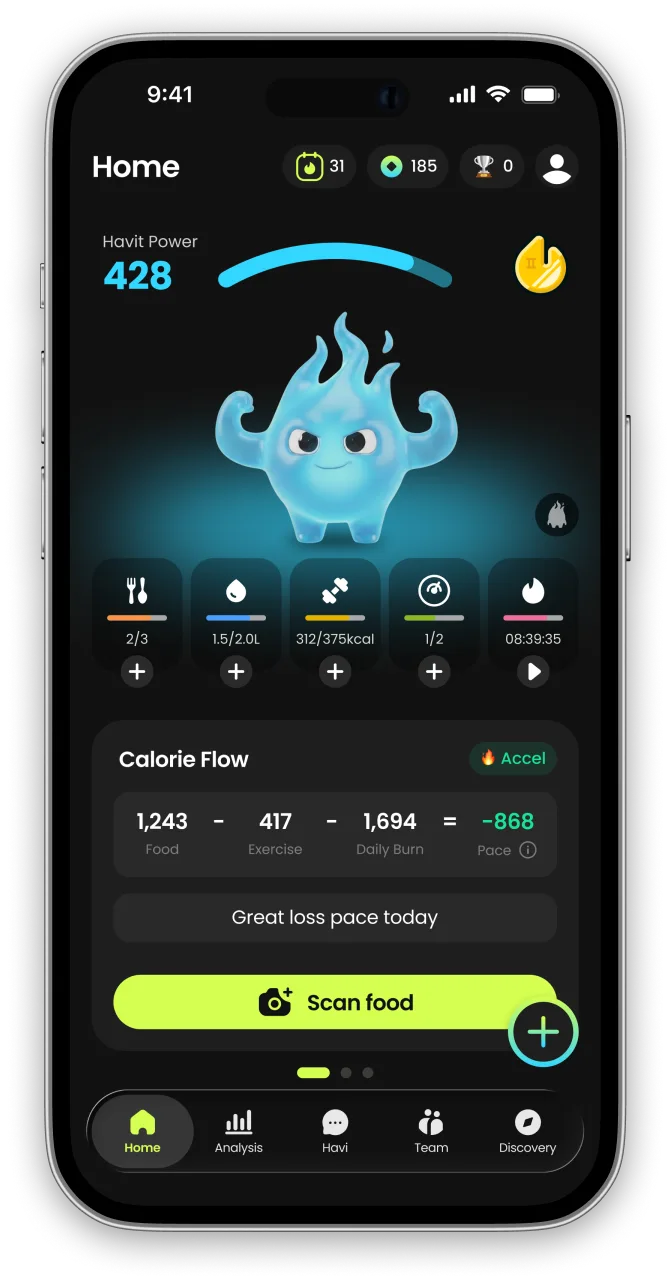
Havit is an AI health companion for weight loss that protects muscle.
Unlike calorie-only trackers, Havit connects AI body-composition estimates, nutrition, hydration, sleep, steps, cycle, mood, and GLP-1 medication in one daily routine — so progress is measured by body composition, not just the number on the scale. Daily missions turn established behavior-change techniques into small repeatable actions, drawing on expertise from professionals formerly at Juvis Diet, one of Korea’s leading metabolic clinics.
In Havit’s own analysis of 1,090 GLP-1 users, people who logged consistently built stronger habits than the general user base. Read the GLP-1 Habit Report
Havit works with or without GLP-1 medication. It is a wellness app, not a medical device; body-composition results are estimates.

Continue in the App
Personalized wellness with your own data


References
- Battle for the thermostat: Gender and the effect of temperature on cognitive performance — PLOS ONE, 2024
- Thermal comfort and cognitive performance: A systematic review of workplace temperature studies — Indoor Air, 2025
- Temperature and productivity: Evidence from a field study — Cornell University Ergonomics Research, 2023
- Task-dependent effects of ambient temperature on cognitive function — University of Tokyo, Journal of Environmental Psychology, 2024
- ASHRAE Standard 55: Thermal Environmental Conditions for Human Occupancy — American Society of Heating, Refrigerating and Air-Conditioning Engineers, 2023


