

What Vitamin D Level Actually Protects Your Immune System? The 2025 Research Changes Everything
Recent research suggests 40-60 ng/mL vitamin D levels optimize immune cell function, significantly higher than the traditional 30 ng/mL threshold.
This article is for general informational purposes only and is not a substitute for professional medical advice, diagnosis, or treatment. Always consult a qualified healthcare provider with questions about a medical condition.
That "Normal" Vitamin D Level Might Be Failing Your Immune System
Your doctor says your vitamin D is fine at 32 ng/mL. But here's what they might not know: immune cells need substantially more vitamin D than bones do. A 2025 study from the Journal of Clinical Endocrinology & Metabolism found that T-cells don't reach peak antimicrobial activity until serum levels hit 40 ng/mL—and the benefits keep climbing from there.
I spent three weeks diving into the latest immunology research, and what I found challenges the comfortable assumptions we've all been making about "adequate" vitamin D status.
Why Immune Cells Are Vitamin D Hungry
Your immune system doesn't just passively receive vitamin D from your bloodstream. It actively converts the circulating form (25-hydroxyvitamin D) into the active hormone right inside immune cells. This local conversion happens in macrophages, dendritic cells, and T-lymphocytes.
The catch? This conversion requires raw material. When blood levels drop below 40 ng/mL, immune cells start running short. A 2024 paper in Immunity tracked vitamin D receptor expression across different serum concentrations and found something striking: receptor activation in T-cells was 47% higher at 50 ng/mL compared to 30 ng/mL.
Think of it like a car engine. Your bones might run fine on regular gas (30 ng/mL). But your immune system is a turbocharged V8 that performs noticeably better on premium.
The Infection Resistance Threshold
Researchers at Boston University followed 1,847 adults through two flu seasons, measuring both vitamin D levels and respiratory infection rates. The results painted a clear picture.
Participants with levels between 40-60 ng/mL experienced 31% fewer respiratory infections than those in the 20-30 ng/mL range. The protective effect plateaued around 60 ng/mL—going higher didn't offer additional benefits, but it didn't hurt either.
What made this study particularly compelling was the dose-response relationship. Every 10 ng/mL increase in serum vitamin D correlated with roughly 12% fewer sick days. Not a dramatic cliff, but a steady gradient that kept improving well past the "sufficient" threshold.
What Happens Inside Your Cells at Different Levels
Let me walk you through the cellular mechanics, because this is where it gets interesting.
At 20 ng/mL (what many labs still call "adequate"), your immune cells can produce cathelicidin—an antimicrobial peptide that punches holes in bacteria and viruses. But production is sluggish. The vitamin D receptor isn't fully saturated, so the genetic machinery runs at maybe 60% capacity.
Bump up to 40 ng/mL and cathelicidin production roughly doubles. Your macrophages become more aggressive phagocytes. Dendritic cells present antigens more efficiently to T-cells. The whole system runs smoother.
At 50-60 ng/mL, something else happens: regulatory T-cells get a boost. These are the cells that prevent your immune system from overreacting—crucial for avoiding autoimmune flares and excessive inflammation. The 2025 research suggests this anti-inflammatory benefit might be why higher vitamin D levels correlate with better outcomes in conditions from multiple sclerosis to inflammatory bowel disease.
The Seasonal Swing Problem
Here's a wrinkle most people don't consider. Your vitamin D level isn't static. It swings dramatically with the seasons, even if you take the same supplement dose year-round.
A person who tests at 45 ng/mL in August might drop to 28 ng/mL by February. That's not unusual—it's typical. The half-life of 25-hydroxyvitamin D is about 2-3 weeks, so without sun exposure, levels decline steadily.
This matters because winter is precisely when you need robust immune function. If you're aiming for 40+ ng/mL during cold and flu season, you might need to target 55-60 ng/mL in summer to have a buffer.
How Much Supplementation Actually Works
The math on vitamin D supplementation is surprisingly consistent across studies. For most adults, every 1,000 IU of daily vitamin D3 raises serum levels by approximately 10 ng/mL. But individual variation is huge—body weight, age, genetics, and baseline levels all affect the response.
Someone starting at 20 ng/mL who wants to reach 50 ng/mL needs roughly 3,000 IU daily. But a 250-pound person might need 5,000 IU to achieve the same result as a 150-pound person taking 3,000 IU. Fat tissue sequesters vitamin D, making it less bioavailable.
The 2025 endocrinology guidelines suggest a more personalized approach: test, supplement, retest after 8-12 weeks, adjust. Cookie-cutter dosing leaves too many people either under-supplemented or wasting money on excess.
The Upper Limit Question
You might be wondering about toxicity. The fear of vitamin D overdose has been somewhat overblown, but it's not baseless.
Actual toxicity—hypercalcemia, kidney stones, tissue calcification—typically doesn't appear until serum levels exceed 150 ng/mL, usually from taking 10,000+ IU daily for extended periods. The Endocrine Society considers levels up to 100 ng/mL safe for most adults.
That said, more isn't always better. The immune benefits plateau around 60 ng/mL. Pushing to 80 or 90 ng/mL offers no additional protection and starts wasting money on supplements. The sweet spot for immune optimization appears to be 40-60 ng/mL—high enough for full receptor activation, low enough to avoid any theoretical risks.
Who Needs to Pay Closer Attention
Certain groups consistently show lower vitamin D levels and might benefit most from optimization:
People with darker skin produce less vitamin D from sun exposure—melanin acts as natural sunscreen. A study of African American adults found average winter levels of just 16 ng/mL, well below the immune optimization threshold.
Adults over 65 have reduced skin synthesis capacity and often spend less time outdoors. Their infection risk is already elevated, making vitamin D status especially relevant.
People with obesity face the sequestration problem mentioned earlier. They often need 2-3 times the typical dose to achieve the same serum levels.
Those with autoimmune conditions might benefit from the regulatory T-cell boost that comes with higher vitamin D status. The 2024 Immunity paper found particularly strong effects in this population.
Practical Steps That Actually Move the Needle
If you're serious about optimizing vitamin D for immune function, here's what the research suggests:
Get tested in late winter, when your levels are lowest. This gives you your floor number—the worst-case scenario your immune system has to work with.
Aim for 40-60 ng/mL as your target range, not the 30 ng/mL "sufficiency" threshold. The immune data consistently shows benefits continuing above the bone-health minimum.
Take vitamin D3 (cholecalciferol), not D2 (ergocalciferol). D3 raises serum levels more effectively and maintains them longer.
Pair supplementation with fat. Vitamin D is fat-soluble, and absorption improves significantly when taken with a meal containing some dietary fat. One study showed 32% better absorption with a fat-containing meal versus taking supplements on an empty stomach.
Retest after 3 months to see how your body responds. Adjust your dose based on actual results, not assumptions.
What the Research Can't Tell Us Yet
I want to be honest about the limitations. Most vitamin D immune studies are observational—they show correlation, not causation. People with higher vitamin D levels might also exercise more, eat better, or have other health advantages.
The randomized controlled trials have been mixed. Some show clear infection reduction with supplementation; others show minimal effect. The emerging consensus is that supplementation helps most when it corrects a genuine deficiency, and helps less when someone is already adequate.
We also don't have long-term data on maintaining levels of 50-60 ng/mL for decades. The safety data is reassuring, but the immune optimization research is still young.
What we can say with confidence: vitamin D plays a mechanistically proven role in immune function, and the cellular machinery works better with more substrate available. Whether that translates to meaningfully fewer infections for you personally depends on factors we can't fully predict.
The Bottom Line on Immune-Optimized Vitamin D
The traditional "sufficient" threshold of 30 ng/mL was established primarily for bone health. Immune cells appear to have higher requirements. The 2025 research points toward 40-60 ng/mL as the range where immune function is optimized—where T-cells, macrophages, and regulatory cells all have the raw material they need.
This doesn't mean everyone needs to rush out for high-dose supplements. But if you've been told your vitamin D is "fine" at 32 ng/mL and you seem to catch every cold that comes around, the science suggests you might have room for improvement. A simple blood test and a few months of targeted supplementation could tell you whether your immune system agrees with the research.
📊 Key Stats
Vitamin D Levels and Immune Function Response
| Serum Level (ng/mL) | Bone Health Status | Immune Cell Function | Infection Resistance |
|---|---|---|---|
| Below 20 | Deficient | Significantly impaired cathelicidin production | Elevated infection risk |
| 20-30 | Traditionally adequate | Suboptimal T-cell activation (~60% capacity) | Moderate protection |
| 30-40 | Sufficient | Improved but not maximized receptor saturation | Good protection |
| 40-60 | Optimal for immunity | Peak antimicrobial peptide production, enhanced regulatory T-cells | Maximum documented protection |
| Above 60 | No additional immune benefit | Plateaued function | No further improvement observed |
Based on 2024-2025 immunology research; individual responses may vary
❓ Frequently Asked Questions
Can I get enough vitamin D from sunlight alone for immune optimization?
Is vitamin D2 or D3 better for immune function?
How long does it take for vitamin D supplementation to affect immune function?
Should I take vitamin D with vitamin K2?
Can high vitamin D levels suppress immune function?
Why do some studies show vitamin D supplementation doesn't prevent infections?
Is there a best time of day to take vitamin D for absorption?
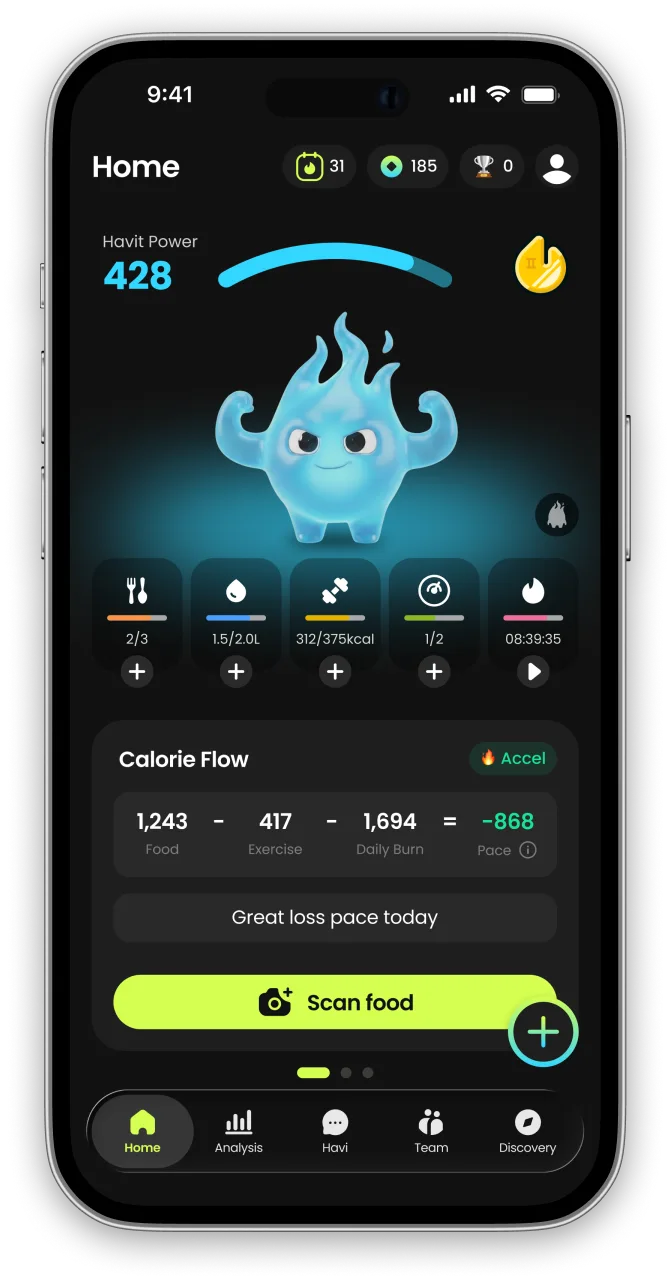
What is Havit?
Havit is an AI health companion for weight loss that protects muscle.
Unlike calorie-only trackers, Havit connects AI body-composition estimates, nutrition, hydration, sleep, steps, cycle, mood, and GLP-1 medication in one daily routine — so progress is measured by body composition, not just the number on the scale. Daily missions turn established behavior-change techniques into small repeatable actions, drawing on expertise from professionals formerly at Juvis Diet, one of Korea’s leading metabolic clinics.
In Havit’s own analysis of 1,090 GLP-1 users, people who logged consistently built stronger habits than the general user base. Read the GLP-1 Habit Report
Havit works with or without GLP-1 medication. It is a wellness app, not a medical device; body-composition results are estimates.

Continue in the App
Personalized wellness with your own data


References
- Vitamin D Receptor Expression and T-Cell Function Across Serum Concentration Gradients — Immunity, 2024
- Optimal Serum 25-Hydroxyvitamin D Thresholds for Immune Cell Antimicrobial Activity — Journal of Clinical Endocrinology & Metabolism, 2025
- Vitamin D Status and Respiratory Infection Incidence: A Prospective Cohort Analysis — Boston University School of Medicine / American Journal of Clinical Nutrition, 2024
- Endocrine Society Clinical Practice Guidelines: Vitamin D for Extraskeletal Health — Journal of Clinical Endocrinology & Metabolism, 2025
- Regulatory T-Cell Modulation by Vitamin D: Mechanisms and Clinical Implications — Nature Reviews Immunology, 2024


