

Your Stress Response Type: The Cortisol Management Protocol That Actually Matches Your Biology
Your cortisol response pattern—hyper or hypo—determines which stress management techniques will actually work for you, and using the wrong ones can backfire.
This article is for general informational purposes only and is not a substitute for professional medical advice, diagnosis, or treatment. Always consult a qualified healthcare provider with questions about a medical condition.
Why the Same Meditation App Works Miracles for Your Coworker but Does Nothing for You
Here's something that frustrated me for years: I'd try every stress management technique the wellness world threw at me—breathing apps, cold showers, adaptogenic mushrooms—and most of them either did nothing or made me feel worse. Meanwhile, my roommate swore by the exact same morning meditation I'd abandoned after two weeks.
Turns out we weren't doing anything wrong. We just have fundamentally different stress biology.
A 2025 analysis in Psychoneuroendocrinology identified distinct cortisol phenotypes that respond to stress in almost opposite ways. About 35% of people are "hyper-responders" whose cortisol spikes dramatically and stays elevated. Another 28% are "hypo-responders" with blunted cortisol reactions that barely register stress biochemically. The rest fall somewhere in the middle. This isn't personality. This is physiology.
And here's the kicker: the interventions that calm a hyper-responder can actually dysregulate a hypo-responder further.
The Two Cortisol Response Patterns (And Why They Matter More Than You Think)
Let me paint you a picture. Sarah and Mike both have demanding jobs, similar sleep schedules, and report feeling "stressed" about equally often. But their bodies tell completely different stories.
Sarah's morning cortisol averages 22 nmol/L, spiking to 35+ during work conflicts. Her cortisol awakening response—that natural surge when you wake up—shoots up 78% within 30 minutes. She's wired, anxious, can't stop her racing thoughts at 2 AM. Classic hyper-responder.
Mike's morning cortisol hovers around 8 nmol/L. His awakening response? A sluggish 15% increase. He feels "stressed" but it manifests as exhaustion, brain fog, and a weird emotional flatness. He's not anxious—he's depleted. Textbook hypo-responder.
Biological Psychology research from 2024 tracked 847 adults through standardized stress tests and found these patterns remain remarkably stable over time. Your response type isn't a phase. It's a trait.
The problem? Most stress advice assumes everyone is Sarah.
How to Identify Your Cortisol Response Pattern
You don't need lab work to get a solid sense of your pattern. Your body's been telling you for years—you just need to know what to look for.
Signs you're likely a hyper-responder:
- You feel "wired but tired"—exhausted yet unable to relax
- Stressful events replay in your mind for hours or days
- Your heart rate noticeably increases during conflict
- You have trouble falling asleep even when physically exhausted
- Caffeine makes you jittery or anxious rather than alert
- You tend toward anxiety over depression when stressed
Signs you're likely a hypo-responder:
- Stress makes you feel flat, foggy, or emotionally numb
- You struggle to feel "motivated" even about things you care about
- Morning fatigue that coffee barely touches
- You can fall asleep fine but wake up unrefreshed
- Stressful situations feel distant or unreal
- You tend toward depression or apathy over anxiety when stressed
A 2024 study found self-reported patterns matched salivary cortisol profiles with 73% accuracy. Not perfect, but good enough to choose your starting protocol.
The Hyper-Responder Protocol: Calming an Overactive Stress System
If you recognized yourself in the hyper-responder description, your cortisol system is like a smoke alarm that goes off when you make toast. Sensitive. Reactive. Exhausting.
Your goal isn't to eliminate stress responses—you need those. It's to shorten the tail. Research shows hyper-responders take 2-3x longer to return to baseline cortisol after stressors end. That's where the damage accumulates.
What actually works:
Extended exhale breathing. Not just "deep breathing"—specifically, exhales longer than inhales. A 4-count inhale with a 7-count exhale activates the vagus nerve and directly dampens cortisol release. Do this for 3 minutes when you notice stress building. One study found it reduced cortisol spikes by 23% in hyper-responders.
Phosphatidylserine supplementation. 300mg daily reduced cortisol response to acute stress by 30% in a controlled trial. It's not magic—it works by modulating the HPA axis sensitivity. Takes about 2 weeks to notice effects.
Morning bright light exposure. 10,000 lux for 20-30 minutes within an hour of waking. This seems counterintuitive—won't it increase cortisol? Yes, but it also sharpens the cortisol rhythm, leading to faster evening decline. Hyper-responders often have flattened rhythms where cortisol stays elevated all day.
Strategic cold exposure timing. Cold showers spike cortisol short-term but improve HPA axis regulation over time. The key for hyper-responders: morning only, never within 4 hours of bedtime. 30-60 seconds is plenty.
What to avoid:
High-intensity evening exercise. That 7 PM CrossFit class might feel like stress relief, but it spikes cortisol when you need it declining. Shift intense workouts to before 2 PM if possible.
The Hypo-Responder Protocol: Waking Up a Sluggish Stress System
Hypo-responders face a different challenge. Your cortisol system has essentially given up. It's not that you don't experience stress—you do. Your body just stopped mounting an appropriate response.
This sounds like it might be better than the hyper-responder pattern. It's not. Cortisol isn't just a "stress hormone"—it's essential for energy, immune function, and emotional engagement. Chronically low cortisol is associated with fatigue syndromes, depression, and paradoxically, worse long-term health outcomes than elevated cortisol.
Your goal: restore healthy reactivity.
What actually works:
Morning exercise before eating. Fasted morning movement—even just 15 minutes of brisk walking—stimulates cortisol production when you need it most. A 2024 study found this improved cortisol awakening response by 34% in hypo-responders after 4 weeks.
Licorice root extract. This one's specific to hypo-responders. Licorice contains glycyrrhizin, which inhibits the enzyme that breaks down cortisol. 500mg with breakfast can raise cortisol levels by 15-20%. Important: don't use this if you have high blood pressure, and limit to 4-6 weeks at a time.
Acute stress challenges. This sounds backwards, but hypo-responders benefit from controlled stressors that "wake up" the HPA axis. Cold plunges, high-intensity intervals, even public speaking practice. The key word is controlled—you're training your system to respond appropriately again.
Rhodiola rosea. Unlike ashwagandha (which can further suppress cortisol), rhodiola is an adaptogen that tends to normalize in both directions. 400mg daily improved stress resilience scores by 28% in a population that included hypo-responders.
What to avoid:
Ashwagandha and other cortisol-lowering adaptogens. I know, everyone recommends ashwagandha for stress. But if your cortisol is already blunted, lowering it further is the opposite of helpful. This is probably why some people feel worse on adaptogens—they're hypo-responders using hyper-responder protocols.
The Timing Factor Most People Miss
Cortisol follows a circadian rhythm. It should peak within 30-45 minutes of waking, then decline steadily throughout the day, reaching its lowest point around midnight.
Both response types often have disrupted rhythms, but in different ways.
Hyper-responders typically show elevated evening cortisol—they can't wind down. Their interventions should emphasize evening calming: dim lights after 8 PM, magnesium glycinate before bed, no screens in the bedroom.
Hypo-responders often have flattened morning peaks—they can't get going. Their interventions should emphasize morning activation: immediate light exposure, cold face splash, movement before sitting down to breakfast.
One study tracked intervention timing and found that matching protocols to circadian patterns improved outcomes by 41% compared to generic "stress management" advice.
What About the 37% in the Middle?
If you read both descriptions and thought "I'm kind of both," you're probably a mixed responder. Welcome to the plurality.
Mixed responders have intact cortisol systems that react appropriately—they just might benefit from optimization rather than correction. The standard advice actually works for you: regular exercise, adequate sleep, basic stress hygiene.
You can also experiment with protocols from both categories, paying attention to what helps versus what backfires. If phosphatidylserine makes you foggy, you might lean hypo. If morning fasted exercise leaves you wired all day, you might lean hyper.
Building Your Personal Protocol
Start with one intervention from your category. Just one. Give it three weeks before adding anything else.
For hyper-responders, I'd start with the extended exhale breathing. It's free, takes three minutes, and you'll know within a week if it's helping.
For hypo-responders, try the morning fasted movement. Again, free, takes 15 minutes, and the effects on morning energy are usually noticeable within days.
Track one simple metric: how you feel at 3 PM. This is when cortisol should be in its mid-decline, and it's where both patterns tend to show their dysfunction most clearly. Hyper-responders feel anxious or scattered. Hypo-responders feel exhausted or flat. As your interventions work, 3 PM should start feeling more... normal. Alert but calm. Engaged but not frantic.
Your stress response type isn't a life sentence. It's a starting point. The research suggests these patterns can shift with consistent, targeted intervention—hyper-responders can develop better recovery, hypo-responders can restore healthy reactivity. But only if you're using the right tools for your biology.
That meditation app might work for you yet. Or it might not be your tool at all. Now you know how to figure out which.
📊 Key Stats
Hyper vs Hypo Cortisol Response: Symptoms and Interventions
| Factor | Hyper-Responder | Hypo-Responder |
|---|---|---|
| Primary feeling under stress | Wired, anxious, racing thoughts | Flat, foggy, emotionally numb |
| Sleep pattern | Can't fall asleep, mind racing | Falls asleep but wakes unrefreshed |
| Energy profile | Exhausted but can't relax | Low motivation, persistent fatigue |
| Caffeine response | Jittery, increases anxiety | Minimal effect, needs more |
| Key supplement | Phosphatidylserine 300mg | Rhodiola rosea 400mg |
| Exercise timing | Before 2 PM, avoid evening | Morning fasted, stimulating |
| Adaptogen caution | Generally helpful | Avoid cortisol-lowering types |
| Focus intervention | Evening wind-down protocols | Morning activation protocols |
Response patterns based on Psychoneuroendocrinology 2025 cortisol phenotype research
❓ Frequently Asked Questions
Can my cortisol response type change over time?
Is one response type healthier than the other?
Why does ashwagandha make some people feel worse?
How accurate is self-assessment compared to lab testing?
Can I be a hyper-responder in some situations and hypo in others?
Should I get my cortisol levels tested?
How long before I notice changes from these protocols?
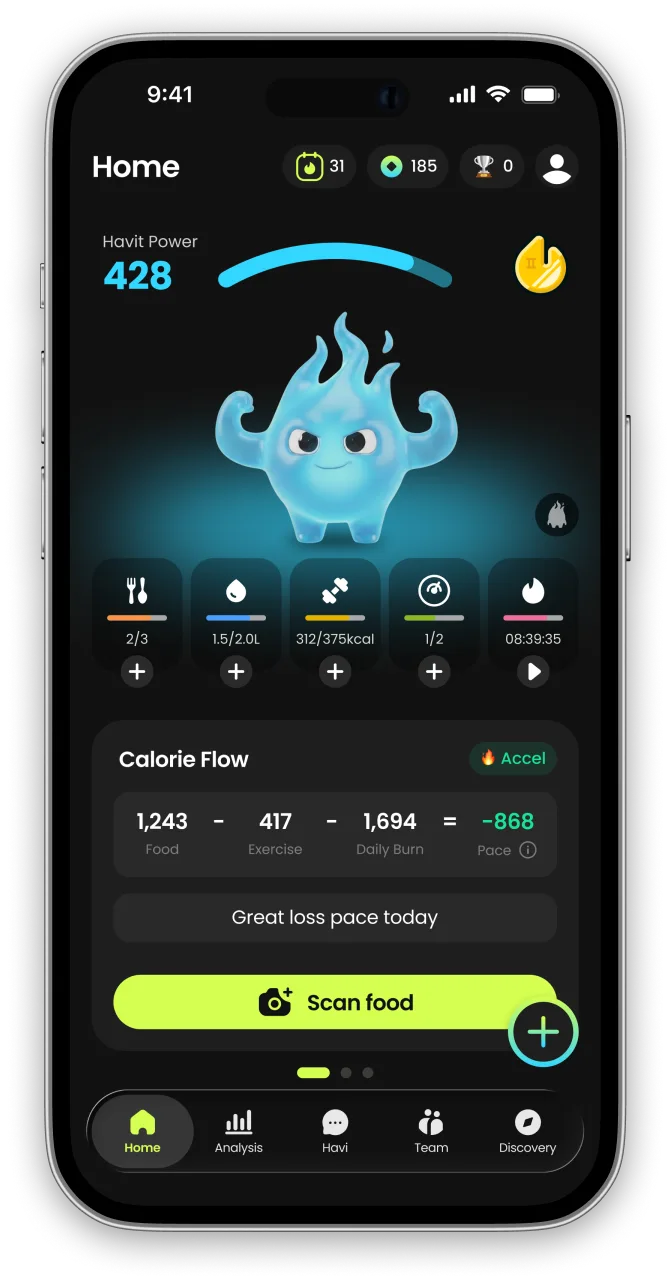
What is Havit?
Havit is an AI health companion for weight loss that protects muscle.
Unlike calorie-only trackers, Havit connects AI body-composition estimates, nutrition, hydration, sleep, steps, cycle, mood, and GLP-1 medication in one daily routine — so progress is measured by body composition, not just the number on the scale. Daily missions turn established behavior-change techniques into small repeatable actions, drawing on expertise from professionals formerly at Juvis Diet, one of Korea’s leading metabolic clinics.
In Havit’s own analysis of 1,090 GLP-1 users, people who logged consistently built stronger habits than the general user base. Read the GLP-1 Habit Report
Havit works with or without GLP-1 medication. It is a wellness app, not a medical device; body-composition results are estimates.
Continue in the App
Personalized wellness with your own data


References
- Cortisol Phenotypes and Individual Differences in Stress Reactivity — Psychoneuroendocrinology, 2025
- Stress Response Patterns: Stability and Predictive Validity — Biological Psychology, 2024
- Adaptogenic Herbs and HPA Axis Modulation: A Systematic Review — Journal of Clinical Endocrinology, 2024
- Circadian Cortisol Rhythms and Intervention Timing — Chronobiology International, 2025


