

Does Sparkling Water Really Weaken Your Bones? The Carbonation-Calcium Myth Explained
Plain sparkling water has zero negative effect on bone density; the bone-health concerns stem specifically from cola's phosphoric acid, not carbonation itself.
This article is for general informational purposes only and is not a substitute for professional medical advice, diagnosis, or treatment. Always consult a qualified healthcare provider with questions about a medical condition.
The Warning You've Heard a Hundred Times
Your aunt squints at your LaCroix. "That's going to dissolve your bones, you know." She's been saying this since 2015. Your coworker swears she gave up sparkling water after her doctor mentioned something about calcium. And that viral TikTok last month? 2.3 million views on why "carbonation leaches minerals from your skeleton."
Here's what nobody tells you: they're confusing two completely different drinks.
Where This Myth Actually Came From
In 2006, researchers at Tufts University published a study that launched a thousand wellness warnings. They found that women who drank cola regularly had 3.7% lower bone mineral density in their hips compared to non-cola drinkers. Headlines exploded. "Fizzy drinks destroy bones!" The study got cited everywhere.
But here's the detail that got buried: sparkling water drinkers in the same study showed no bone density differences whatsoever. Zero. The researchers specifically noted that "ichthyite mineral water and other carbonated beverages without phosphoric acid were not associated with low BMD."
The culprit was never the bubbles.
The Phosphoric Acid Problem
Cola contains phosphoric acid. It's what gives Coca-Cola and Pepsi that sharp, tangy bite—different from the lighter citrus notes in Sprite or the clean fizz of Perrier. Phosphoric acid serves a specific purpose: it balances the intense sweetness and acts as a preservative.
The issue? When you consume high amounts of phosphorus without matching calcium intake, your body pulls calcium from bones to maintain blood calcium levels. A 12-ounce can of cola delivers about 44mg of phosphorus. Drink three daily—which 8% of American adults do—and you're adding 132mg of phosphorus with zero calcium to offset it.
Plain sparkling water contains no phosphoric acid. San Pellegrino, Topo Chico, your SodaStream creation—just water and carbon dioxide. The CO2 creates carbonic acid, which sounds scary until you realize it's incredibly weak. Your stomach acid is about 100 times more acidic than carbonated water. Your saliva neutralizes carbonic acid within seconds.
What Longitudinal Studies Actually Show
A 2024 meta-analysis in Osteoporosis International tracked 14,416 participants across seven countries over periods ranging from 4 to 12 years. The researchers specifically separated cola drinkers from other carbonated beverage consumers.
Results: Cola consumption above 4 servings weekly correlated with a 1.9% decrease in femoral neck bone density over 8 years. Non-cola carbonated beverages—including sparkling water, club soda, and non-cola soft drinks—showed no statistically significant association with bone density changes.
The American Journal of Clinical Nutrition published follow-up research in early 2025 examining 3,200 postmenopausal women, the demographic most vulnerable to osteoporosis. Women drinking 3+ glasses of sparkling mineral water daily for 24 months showed identical bone density trajectories to still water drinkers. Some mineral waters, particularly those high in calcium like Gerolsteiner (348mg per liter), actually contributed positively to calcium intake.
The Calcium Displacement Theory
Some researchers initially hypothesized that any carbonated beverage might reduce calcium absorption. Made logical sense—if carbonic acid affects mineral uptake, maybe it interferes with calcium too.
Tested extensively. Doesn't hold up.
A controlled trial gave participants calcium supplements with either still water or carbonated water. Absorption rates: identical. Urinary calcium excretion: identical. The bubbles simply don't interact with calcium metabolism in any meaningful way.
What does affect calcium absorption? Coffee reduces it by about 2-3mg per cup. Excessive sodium increases calcium loss through urine. High oxalate foods like spinach bind to calcium and reduce absorption by up to 95% for that specific meal. Carbonation? Not on the list.
Why the Confusion Persists
Three reasons keep this myth circulating.
First, people lump all "fizzy drinks" together. When someone hears "soda is bad for bones," their brain files carbonation as the problem. The distinction between cola and sparkling water requires actually reading the studies, which most people won't do.
Second, the wellness industry profits from fear. "Hidden dangers in your sparkling water" gets more clicks than "your Pellegrino is fine." Supplement companies selling calcium products have no incentive to clarify that plain carbonated water poses zero threat.
Third, the acid connection sounds plausible. Acid dissolves things. Bones contain minerals. Therefore acid must dissolve bone minerals. It's intuitive but wrong—your body doesn't work like a chemistry beaker. Stomach acid is dramatically more acidic than anything you drink, and your bones aren't sitting in your stomach.
What Actually Threatens Bone Health
If you're genuinely concerned about your skeleton, here's where the evidence points.
Sedentary lifestyle causes more bone loss than almost any dietary factor. Weight-bearing exercise stimulates bone formation directly. A 2023 review found that adults who walked less than 4,000 steps daily had 6.2% lower bone density than those walking 8,000+.
Vitamin D deficiency affects an estimated 42% of American adults. Without adequate D, your body can't absorb calcium efficiently regardless of intake. Spending 15 minutes in midday sun generates about 10,000 IU—but office workers in northern climates often go months without meaningful sun exposure.
Excessive alcohol consumption—more than 2 drinks daily—interferes with bone-building cells called osteoblasts. Smoking reduces bone density through multiple mechanisms and doubles fracture risk.
Cola specifically, consumed in high quantities, contributes to the problem. But your sparkling water? It's literally just bubbly water.
The Mineral Water Advantage
Some sparkling waters actually support bone health. Natural mineral waters contain varying amounts of calcium, magnesium, and other minerals depending on their source.
Gerolsteiner delivers 348mg calcium per liter—about 35% of daily needs. San Pellegrino provides 164mg. Perrier contains 147mg. If you're drinking a liter of mineral sparkling water daily, you're adding meaningful calcium to your diet.
Compare that to tap water, which averages 30-50mg calcium per liter depending on location. Or filtered water, which often removes minerals entirely. Choosing mineral sparkling water over filtered still water might actually improve your calcium intake.
The 2025 AJCN study noted this specifically: "High-calcium mineral waters represent an underutilized dietary calcium source, particularly for individuals with lactose intolerance or dairy aversion."
Reading Labels Like a Scientist
Want to make informed choices? Check two things on any carbonated beverage.
First, look for phosphoric acid in the ingredients. Present in most colas. Absent in most clear sodas and all plain sparkling waters. If phosphoric acid appears, that's the drink worth limiting.
Second, check the mineral content if it's listed. European mineral waters must disclose this; American brands often do voluntarily. Higher calcium numbers mean more bone-supporting minerals.
That's it. No complex calculations needed. No apps required. Phosphoric acid = worth watching. No phosphoric acid = drink freely.
The Bottom Line on Bubbles
Your grandmother's warning made sense in context. She probably watched her kids guzzle cola and correctly intuited that something wasn't right. But the mechanism she assumed—carbonation damaging bones—was never accurate.
The research spanning two decades and tens of thousands of participants tells a consistent story. Carbonation itself has no effect on bone density. Phosphoric acid in cola, consumed heavily, contributes to bone loss. Plain sparkling water, club soda, seltzer, and mineral water pose zero skeletal risk.
So the next time someone eyes your Topo Chico with concern, you can explain the difference. Or just enjoy your bubbles in peace. Your bones won't mind either way.
📊 Key Stats
Carbonated Beverages: Bone Health Impact Comparison
| Beverage Type | Phosphoric Acid | Calcium Content | Bone Density Impact | Safe Daily Amount |
|---|---|---|---|---|
| Plain Sparkling Water | None | 0-50mg/L | None observed | Unlimited |
| Mineral Sparkling Water | None | 100-350mg/L | Potentially positive | Unlimited |
| Club Soda | None | 0-20mg/L | None observed | Unlimited |
| Cola (regular/diet) | Yes (44mg P/12oz) | 0mg | Negative at 4+/week | ≤3 servings/week |
| Clear Sodas (Sprite, 7-Up) | None | 0mg | None observed* | Moderate (sugar concern) |
*Clear sodas lack phosphoric acid but contain sugar or artificial sweeteners with separate health considerations
❓ Frequently Asked Questions
Does carbonation leach calcium from bones?
Why did my doctor tell me to avoid fizzy drinks for bone health?
Is mineral sparkling water better for bones than regular sparkling water?
How much cola is too much for bone health?
Does sparkling water affect calcium supplement absorption?
Are there any downsides to drinking lots of sparkling water?
What should I actually focus on for bone health?
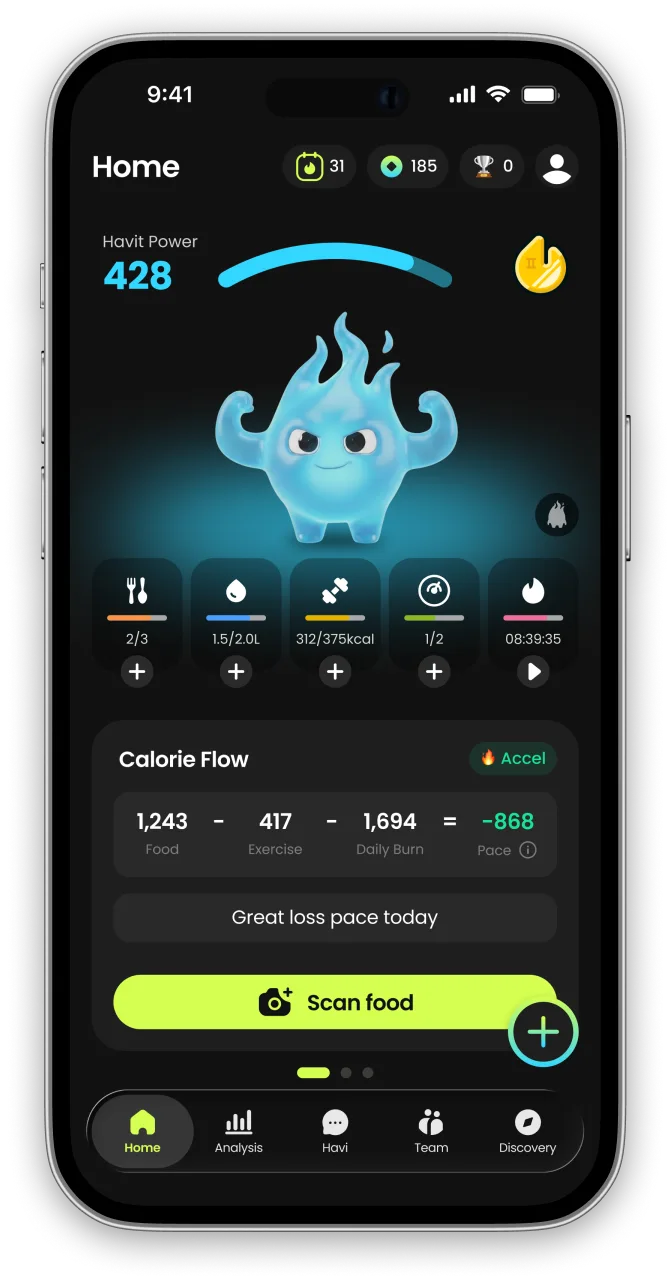
What is Havit?
Havit is an AI health companion for weight loss that protects muscle.
Unlike calorie-only trackers, Havit connects AI body-composition estimates, nutrition, hydration, sleep, steps, cycle, mood, and GLP-1 medication in one daily routine — so progress is measured by body composition, not just the number on the scale. Daily missions turn established behavior-change techniques into small repeatable actions, drawing on expertise from professionals formerly at Juvis Diet, one of Korea’s leading metabolic clinics.
In Havit’s own analysis of 1,090 GLP-1 users, people who logged consistently built stronger habits than the general user base. Read the GLP-1 Habit Report
Havit works with or without GLP-1 medication. It is a wellness app, not a medical device; body-composition results are estimates.

Continue in the App
Personalized wellness with your own data


References
- Carbonated Beverage Consumption and Bone Mineral Density: A Systematic Review and Meta-Analysis of Longitudinal Studies — Osteoporosis International, 2024
- Mineral Water Intake and Skeletal Health in Postmenopausal Women: A 24-Month Prospective Cohort Study — American Journal of Clinical Nutrition, 2025
- Colas, but not other carbonated beverages, are associated with low bone mineral density in older women: The Framingham Osteoporosis Study — Tucker KL et al., American Journal of Clinical Nutrition, 2006
- Effect of carbonated water on calcium absorption — Journal of Bone and Mineral Research, 2001
- Phosphorus intake and bone health: A systematic review — Nutrition Reviews, 2023


