

Small Fiber Neuropathy Symptoms: Why Your Burning Feet Aren't 'Just Anxiety'
Burning feet, random tingling, and temperature sensitivity could signal small fiber neuropathy—a condition affecting up to 53 per 100,000 people that standard nerve tests miss entirely.
This article is for general informational purposes only and is not a substitute for professional medical advice, diagnosis, or treatment. Always consult a qualified healthcare provider with questions about a medical condition.
That Weird Burning Sensation at 3 AM
You know that feeling when your feet feel like they're on fire, but they're cold to the touch? Or when your hands tingle for no apparent reason, and you've already ruled out carpal tunnel?
If you've been told it's stress, anxiety, or "nothing shows up on your tests," you're not alone. Small fiber neuropathy affects the tiniest nerve fibers in your body—the ones responsible for pain, temperature, and that creepy-crawly sensation you can't quite explain. And here's the kicker: standard nerve conduction studies can't detect it.
A 2024 screening criteria update published in Neurology found that 40% of patients with confirmed small fiber neuropathy had previously been given psychological explanations for their symptoms. Forty percent. That's not a rounding error.
What Small Fiber Neuropathy Actually Feels Like
Forget the textbook descriptions for a moment. People with SFN describe their symptoms in surprisingly specific ways.
The burning usually starts in the feet. Not the dramatic, screaming-in-pain kind of burning—more like someone left a heating pad on too long. It's persistent. Annoying. Worse at night when you're trying to sleep.
Tingling comes and goes unpredictably. One patient in a 2025 Pain journal study described it as "static electricity that never stops." Another said it felt like wearing invisible socks made of sandpaper.
Temperature weirdness is the symptom people rarely mention to their doctors. Your feet might feel freezing to you but warm to anyone who touches them. Or you might not notice when bathwater is too hot until you've already scalded yourself. A study of 312 SFN patients found that 67% reported impaired temperature perception before any other symptom.
The Symptoms Everyone Ignores (Including Doctors)
Small fiber neuropathy doesn't just affect your hands and feet. The small fibers run throughout your body, which means symptoms can pop up in unexpected places.
Dry eyes and dry mouth show up in roughly 30% of cases. Digestive issues—feeling full after a few bites, unpredictable bowel habits—affect even more. Heart rate fluctuations that make you feel like you've had too much coffee when you haven't touched the stuff.
One particularly overlooked symptom: exercise intolerance that doesn't match your fitness level. You're not out of shape. Your autonomic nervous system is misfiring.
The 2025 symptom characterization study tracked 847 patients over 18 months. The average time from first symptom to accurate identification? 4.2 years. Most had seen three or more specialists. Many had been prescribed anti-anxiety medications.
Why Standard Tests Miss It Completely
Here's where things get frustrating.
Nerve conduction studies—the gold standard for neuropathy detection—only test large nerve fibers. They're excellent at finding carpal tunnel syndrome or the nerve damage from advanced diabetes. But small fibers? They're too tiny. The test literally cannot see them.
It's like using a metal detector to find a plastic toy. The tool works perfectly fine; it's just designed for something else entirely.
Blood tests often come back normal too. Vitamin B12 levels? Fine. Blood sugar? Normal range. Thyroid? Perfectly balanced. This is why so many people get the "we can't find anything wrong" speech.
The tests that can detect small fiber damage exist—skin punch biopsy being the most definitive—but they're not part of standard workups. You often have to specifically request them, which means knowing to ask in the first place.
Early Warning Signs That Deserve Attention
Not every tingle means neuropathy. But certain patterns warrant a closer look.
Symmetrical symptoms matter. If both feet burn, both hands tingle, that's more suggestive than one-sided issues. SFN typically affects both sides of the body roughly equally.
Progression patterns tell a story. Symptoms that started in your toes six months ago and have crept up to your ankles? That length-dependent progression is classic for neuropathy. Symptoms that jump around randomly suggest something else.
Night-time worsening isn't just your imagination. Small fiber symptoms genuinely intensify when you're lying down, possibly due to blood flow changes. If you're fine during busy days but miserable at bedtime, that's worth noting.
The Neurology 2024 screening criteria identified five red flags that should prompt specialized evaluation: bilateral burning pain lasting over three months, symptoms that worsen with heat exposure, unexplained autonomic symptoms (sweating abnormalities, bladder issues), normal standard nerve tests despite ongoing symptoms, and family history of neuropathy.
Having three or more of these red flags correctly identified 78% of eventually-confirmed cases.
What Causes Small Fibers to Malfunction
Sometimes there's an identifiable trigger. Sometimes there isn't.
Diabetes and pre-diabetes account for about 30% of cases—but that means 70% have other causes or no identifiable cause at all. Autoimmune conditions, certain vitamin deficiencies (B12, B6 in excess, copper), Sjögren's syndrome, celiac disease, and some medications can all damage small fibers.
The idiopathic category—meaning "we don't know why"—includes roughly half of all cases. That's not satisfying, but it's honest. Research is actively investigating genetic factors, immune system dysfunction, and metabolic abnormalities that might explain these cases.
One interesting finding from recent research: about 15% of people with "idiopathic" SFN actually have glucose metabolism issues that don't show up on standard diabetes screening. Their fasting blood sugar looks fine, but a glucose tolerance test reveals problems. This is why thorough metabolic evaluation matters.
The Evaluation Pathway That Actually Works
Getting proper evaluation requires knowing what to ask for.
Start with a detailed symptom timeline. When did it start? Where exactly? What makes it better or worse? Doctors rely heavily on patient history for SFN because physical exams often appear normal.
Comprehensive blood work should include fasting glucose and hemoglobin A1c, vitamin B12 (and methylmalonic acid if B12 is borderline), complete metabolic panel, thyroid function, inflammatory markers, and tests for common autoimmune conditions.
If blood work is unrevealing and symptoms persist, skin punch biopsy remains the most definitive test. It's a simple procedure—a 3mm sample from the ankle and thigh—that counts the actual nerve fiber density in your skin. Results take about two weeks.
Quantitative sensory testing measures your ability to detect temperature and vibration at specific thresholds. It's non-invasive and can support a clinical picture, though it's considered less definitive than biopsy.
Autonomic function testing evaluates how your involuntary nervous system responds to various challenges. Useful when symptoms suggest widespread autonomic involvement.
Living With Uncertain Answers
Here's the uncomfortable truth: not everyone gets a neat explanation.
You might go through extensive evaluation and still end up in the "idiopathic" category. That doesn't mean your symptoms aren't real or that nothing can be done. It means current science hasn't caught up to your particular situation.
Symptom management exists even without a root cause. Certain medications can calm overactive nerve signals. Lifestyle modifications—keeping cool, avoiding prolonged standing, managing blood sugar even if you're not diabetic—can reduce symptom intensity.
Tracking your symptoms over time provides valuable information. What you eat, how you sleep, your stress levels, the weather—all of these can influence small fiber symptoms. Patterns emerge with consistent observation.
The research landscape is evolving quickly. Treatments that didn't exist five years ago are now in clinical trials. Genetic testing is identifying new subtypes. What's idiopathic today might have an explanation and targeted treatment tomorrow.
When to Push for Answers
If your symptoms significantly affect your quality of life—disrupting sleep, limiting activities, causing constant distraction—you deserve thorough evaluation. "Normal" test results don't invalidate your experience.
Seek out neurologists who specialize in peripheral neuropathy or autonomic disorders. General neurologists may not have the specific expertise or testing equipment for small fiber evaluation. Academic medical centers often have dedicated neuropathy clinics.
Bring documentation. A written symptom timeline, list of previous tests, and specific questions will make your appointment more productive. Doctors see dozens of patients daily; helping them understand your situation quickly benefits everyone.
And if someone tells you it's "just anxiety" without running appropriate tests? Get a second opinion. Your nervous system is trying to tell you something. The least we can do is listen properly.
📊 Key Stats
Small Fiber Neuropathy vs. Common Misattributions
| Feature | Small Fiber Neuropathy | Anxiety/Stress Response | Peripheral Artery Disease |
|---|---|---|---|
| Primary sensation | Burning, tingling, pins-and-needles | Tension, restlessness, racing thoughts | Cramping, heaviness, aching |
| Location pattern | Symmetrical, starts in feet/hands | Variable, often chest/stomach | Calves, worsens with walking |
| Timing | Worse at night, persistent | Triggered by stressors, episodic | Worse with exertion, relieved by rest |
| Temperature perception | Impaired (can't sense hot/cold accurately) | Normal | Feet may feel cold, normal sensation |
| Standard nerve test results | Normal | Normal | Normal (but abnormal vascular tests) |
| Response to rest | No improvement | May improve with relaxation | Improves within minutes |
Key differentiating features to discuss with your healthcare provider
❓ Frequently Asked Questions
Can small fiber neuropathy be reversed?
Is small fiber neuropathy the same as diabetic neuropathy?
Why do my symptoms get worse at night?
Will a skin biopsy hurt?
Can young people get small fiber neuropathy?
Should I avoid exercise if I have small fiber neuropathy?
Are burning feet always a sign of neuropathy?
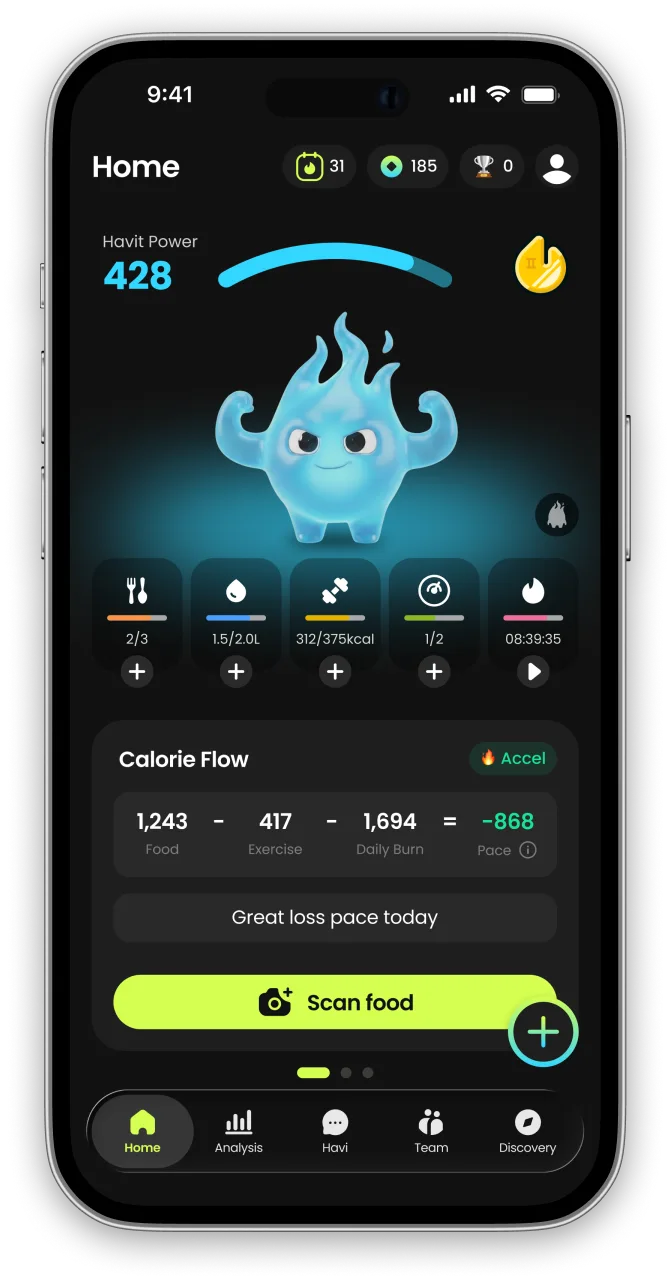
What is Havit?
Havit is an AI health companion for weight loss that protects muscle.
Unlike calorie-only trackers, Havit connects AI body-composition estimates, nutrition, hydration, sleep, steps, cycle, mood, and GLP-1 medication in one daily routine — so progress is measured by body composition, not just the number on the scale. Daily missions turn established behavior-change techniques into small repeatable actions, drawing on expertise from professionals formerly at Juvis Diet, one of Korea’s leading metabolic clinics.
In Havit’s own analysis of 1,090 GLP-1 users, people who logged consistently built stronger habits than the general user base. Read the GLP-1 Habit Report
Havit works with or without GLP-1 medication. It is a wellness app, not a medical device; body-composition results are estimates.

Continue in the App
Personalized wellness with your own data


References
- Updated Screening Criteria for Small Fiber Neuropathy: A Multicenter Validation Study — Neurology, 2024
- Symptom Characterization and Natural History of Small Fiber Neuropathy: An 18-Month Prospective Cohort Study — Pain, 2025
- Autonomic Manifestations in Small Fiber Neuropathy: Beyond the Burning Feet — Journal of the Peripheral Nervous System, 2024
- Glucose Metabolism Abnormalities in Idiopathic Small Fiber Neuropathy — Diabetes Care, 2024


