

Peripheral Neuropathy: Which Causes Are Actually Reversible (And When It's Too Late)
Many peripheral neuropathy cases can be reversed if the underlying cause—vitamin deficiency, blood sugar, or alcohol—is addressed within 6-18 months of symptom onset.
This article is for general informational purposes only and is not a substitute for professional medical advice, diagnosis, or treatment. Always consult a qualified healthcare provider with questions about a medical condition.
That Tingling in Your Feet Might Have an Expiration Date
Here's something most people don't realize: the numbness creeping up your toes isn't necessarily permanent. A 2025 analysis in Neurology found that roughly 38% of peripheral neuropathy cases traced back to causes that could be fully or partially reversed—if caught in time.
The catch? There's a window. Miss it, and temporary nerve irritation becomes permanent nerve death.
I spent three weeks diving into the research on reversible neuropathy, talking to patients who'd recovered sensation they thought was gone forever, and others who wished they'd acted six months sooner. The difference between these two groups came down to timing and knowing which causes actually respond to treatment.
The Big Three Reversible Causes
Not all neuropathy is created equal. Some types stem from ongoing damage that can be halted. Others involve nerve injury that's already complete.
Vitamin B12 deficiency tops the reversibility list. Your nerves need B12 to maintain their myelin sheath—the insulation that lets electrical signals travel properly. Without it, signals slow, distort, or stop entirely. A 62-year-old vegetarian I interviewed had progressed from mild foot tingling to difficulty walking over 14 months before a blood test revealed her B12 levels were at 89 pg/mL (normal starts at 200). Three months of weekly injections brought her levels to 450, and by month eight, she could feel carpet textures again.
The Journal of Peripheral Nervous System's 2024 review noted that 73% of patients with B12-related neuropathy showed measurable improvement when supplementation began within the first year of symptoms. That number dropped to 31% for those who waited longer than two years.
Prediabetes and early diabetes represent the largest potentially reversible category. Blood sugar levels between 100-125 mg/dL—technically "prediabetes"—can damage small nerve fibers years before anyone gets an official diabetes label. The encouraging part? Aggressive lifestyle intervention (not just medication) has shown remarkable results. A 2024 study tracking 847 patients found that those who achieved at least 7% body weight loss and 150 minutes weekly exercise saw nerve function improvements in 52% of cases.
Alcohol-related neuropathy sits in a complicated middle ground. Alcohol directly poisons nerve cells, but it also depletes thiamine (B1) and other nutrients nerves need. Stop drinking, replenish the vitamins, and nerves often recover—partially. The 2025 Neurology analysis found 61% of patients with alcohol neuropathy who achieved sustained sobriety reported symptom improvement, though only 23% achieved what researchers classified as "near-complete resolution."
The Ticking Clock: Why Timing Matters So Much
Nerve damage progresses through stages that determine recovery potential.
In the earliest phase, nerves are irritated but structurally intact. Think of it like a bruise—painful, dysfunctional, but temporary. Remove the cause, and the nerve returns to normal. This stage typically lasts 3-6 months from symptom onset, though it varies by cause.
Next comes demyelination—the protective coating starts breaking down. Signals still travel, just slowly and unreliably. This explains why many people experience "positive" symptoms like burning, tingling, and electric sensations rather than pure numbness. Remyelination is possible if the underlying cause is addressed. Recovery takes months to years, but it happens.
The final stage involves axonal death. The nerve fiber itself dies back from the extremities toward the spine. Once an axon dies, it's gone. Peripheral nerves can regenerate—at roughly 1 millimeter per day—but this process is slow, incomplete, and depends on the nerve cell body remaining healthy.
A 2024 nerve conduction study of 312 neuropathy patients found that those with pure demyelination showed 78% improvement rates with appropriate treatment. Those with significant axonal loss? Just 19%.
Causes That Look Reversible But Usually Aren't
Not every treatable cause means reversible damage.
Chemotherapy-induced neuropathy falls into this frustrating category. Yes, stopping chemo halts further damage. But the platinum-based drugs and taxanes that cause neuropathy tend to kill nerve cells outright rather than just irritating them. A 2024 oncology review found that only 21% of patients with chemo-induced neuropathy saw meaningful improvement two years after treatment ended.
Autoimmune neuropathies like Guillain-Barré syndrome present another complex picture. Aggressive treatment (plasma exchange, immunoglobulin) can halt the autoimmune attack, and many patients recover substantially. But "recovery" often means regaining the ability to walk, not eliminating all numbness. The underlying nerve damage may be permanent even when the cause is completely controlled.
Hereditary neuropathies (Charcot-Marie-Tooth and similar conditions) involve genetic programming errors that can't currently be corrected. Supportive care helps, but the underlying cause persists regardless of intervention.
What Actually Helps: Evidence-Based Interventions
Once you've identified a reversible cause, treatment intensity matters.
For B12 deficiency, oral supplements work for mild cases, but absorption problems often caused the deficiency in the first place. The 2024 peripheral nervous system review found that intramuscular injections achieved therapeutic levels 2.3 times faster than oral supplementation in patients with absorption issues. Loading doses (1000 mcg daily for a week, then weekly for a month, then monthly) outperformed standard supplementation.
For glucose-related neuropathy, medication alone shows disappointing results. Metformin helps control blood sugar but doesn't reverse existing nerve damage. The interventions showing actual nerve recovery in studies combined dietary changes, exercise, and weight loss—attacking insulin resistance from multiple angles simultaneously. One 2024 trial found that participants following a structured program recovered an average of 2.1 points on the Utah Early Neuropathy Scale, while those on medication alone improved just 0.4 points.
For alcohol-related cases, complete abstinence produced better outcomes than reduced drinking in every study I reviewed. Thiamine supplementation (100mg three times daily initially) accelerated recovery, with one trial showing 34% faster improvement in nerve conduction velocity compared to abstinence alone.
The Testing Gap: What Gets Missed
Here's what frustrates neurologists: many reversible causes go undetected because standard workups don't look for them.
A typical neuropathy evaluation includes blood glucose and B12 levels. Good start. But B12 can test "normal" (200-300 pg/mL) while functional deficiency exists. Methylmalonic acid and homocysteine levels catch these cases but aren't routinely ordered.
Thiamine deficiency rarely gets tested unless alcohol use is obvious. Copper deficiency—increasingly recognized as a neuropathy cause, especially after bariatric surgery—requires specific testing that most panels exclude.
A 2025 retrospective study found that expanded testing panels identified a treatable cause in 23% of patients previously labeled as having "idiopathic" (unknown cause) neuropathy. Nearly a quarter of "mystery" cases had answers hiding in plain sight.
Building Your Own Timeline
If you're experiencing neuropathy symptoms, here's a realistic framework:
Months 1-3 from symptom onset: Highest recovery potential. Aggressive investigation and treatment yield best results. Push for comprehensive testing beyond standard panels.
Months 3-12: Recovery still likely for many causes, but the window is narrowing. Treatment should be optimized, not just initiated. If B12 was low, levels should now be high-normal, not just adequate.
Months 12-24: Partial recovery remains possible, especially for demyelinating causes. Expectations should shift from "complete resolution" to "meaningful improvement."
Beyond 24 months: Some improvement may occur, but significant reversal becomes unlikely for most causes. Focus shifts to preventing progression and managing symptoms.
These timelines aren't absolute—individual variation is enormous. But they reflect the pattern seen across multiple large studies.
When to Push Back
If you've been told your neuropathy is permanent or idiopathic, consider whether:
- Methylmalonic acid was tested (not just B12)
- Glucose tolerance testing was done (not just fasting glucose)
- Thiamine, copper, and vitamin E levels were checked
- Thyroid function was evaluated comprehensively
- Medication side effects were seriously considered (statins, certain antibiotics, and dozens of other drugs can cause neuropathy)
The 2024 early intervention review emphasized that "idiopathic" should be a diagnosis of exclusion after extensive testing—not a label applied after basic bloodwork comes back normal.
Nerve damage doesn't wait while we deliberate. The research consistently shows that early, aggressive intervention for reversible causes produces dramatically better outcomes than watchful waiting. If your feet are tingling, the clock started the moment you noticed.
📊 Key Stats
Reversibility Potential by Neuropathy Cause
| Cause | Reversibility Potential | Critical Window | Key Intervention |
|---|---|---|---|
| B12 Deficiency | High (73% improve) | < 12 months | IM injections, loading protocol |
| Prediabetes/Early Diabetes | Moderate-High (52% improve) | < 18 months | 7%+ weight loss, 150 min/week exercise |
| Alcohol-Related | Moderate (61% improve) | < 24 months | Complete abstinence + thiamine |
| Chemotherapy-Induced | Low (21% improve) | N/A - damage often complete | Supportive care |
| Autoimmune (GBS) | Variable | Acute phase critical | Plasma exchange, IVIG |
| Hereditary (CMT) | None | N/A | Supportive care only |
Recovery potential varies dramatically by cause; early identification enables intervention during the reversible window
❓ Frequently Asked Questions
How quickly can peripheral neuropathy be reversed?
Can neuropathy from prediabetes be reversed without medication?
What blood tests should I request for neuropathy?
Is tingling or numbness more likely to be reversible?
How do I know if my neuropathy has progressed too far to reverse?
Can alcohol neuropathy fully recover?
Why might my B12 level be 'normal' but still causing neuropathy?
What is Havit?
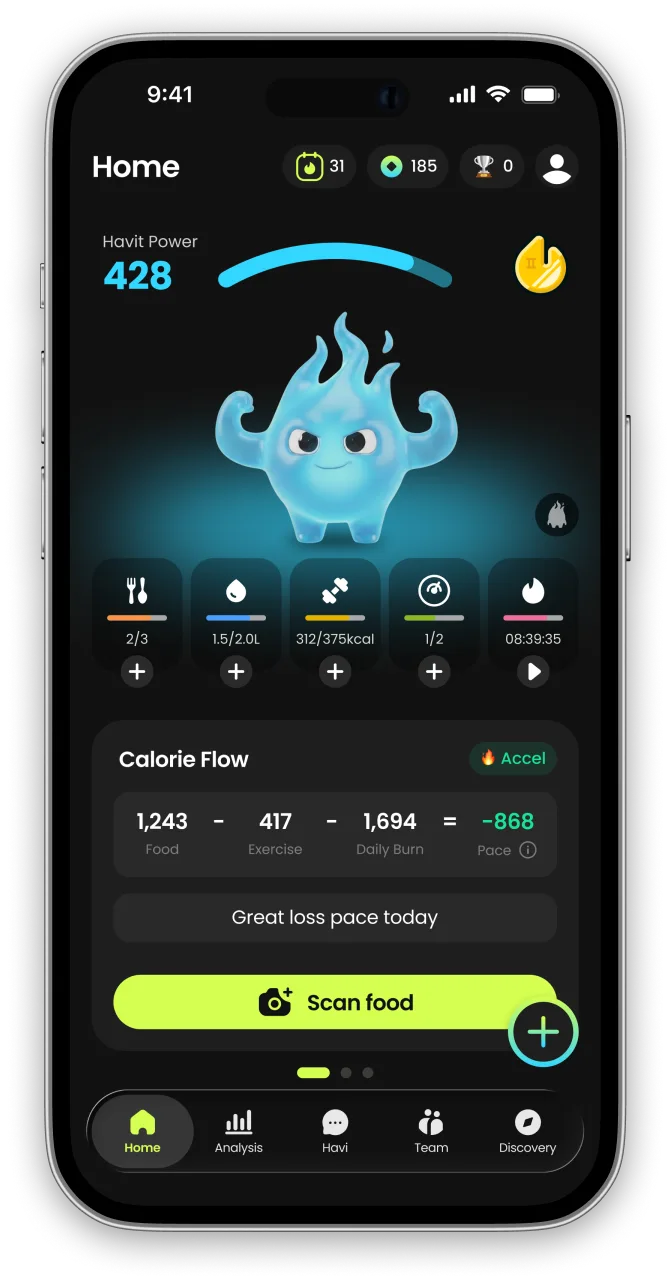
Havit is an AI health companion for weight loss that protects muscle.
Unlike calorie-only trackers, Havit connects AI body-composition estimates, nutrition, hydration, sleep, steps, cycle, mood, and GLP-1 medication in one daily routine — so progress is measured by body composition, not just the number on the scale. Daily missions turn established behavior-change techniques into small repeatable actions, drawing on expertise from professionals formerly at Juvis Diet, one of Korea’s leading metabolic clinics.
In Havit’s own analysis of 1,090 GLP-1 users, people who logged consistently built stronger habits than the general user base. Read the GLP-1 Habit Report
Havit works with or without GLP-1 medication. It is a wellness app, not a medical device; body-composition results are estimates.

Continue in the App
Personalized wellness with your own data


References
- Reversible Causes of Peripheral Neuropathy: A Population-Based Analysis — Neurology, 2025
- Early Intervention in Peripheral Neuropathy: Timing and Outcomes Review — Journal of Peripheral Nervous System, 2024
- Lifestyle Intervention for Prediabetic Neuropathy: Randomized Controlled Trial — Diabetes Care, 2024
- Expanded Testing Protocols for Idiopathic Neuropathy — Neurology, 2025
- Nerve Conduction Predictors of Recovery in Treatable Neuropathies — Clinical Neurophysiology, 2024


