

Celiac Disease Without Digestive Problems: 12 Atypical Symptoms Most Doctors Miss
Up to 50% of celiac patients present without classic GI symptoms—watch for fatigue, anemia, brain fog, skin rashes, and joint pain instead.
This article is for general informational purposes only and is not a substitute for professional medical advice, diagnosis, or treatment. Always consult a qualified healthcare provider with questions about a medical condition.
The Patient Who Stumped Seven Specialists
Sarah, 34, spent three years bouncing between doctors for her chronic fatigue, tingling hands, and a stubborn rash on her elbows. She'd seen a neurologist, dermatologist, rheumatologist, and even a psychiatrist who suggested her symptoms might be stress-related. Not once did anyone ask about her diet. Her stomach? Perfectly fine. No bloating, no diarrhea, nothing that screamed "gut problem."
Then a new primary care physician ran a routine celiac panel during her annual bloodwork. Her tissue transglutaminase antibodies came back at 127 U/mL—the upper limit of normal is 4. A biopsy confirmed it: celiac disease had been silently damaging her body for years.
Sarah's story isn't unusual. According to a 2024 analysis published in The Lancet, approximately 83% of people with celiac disease remain undiagnosed, many because their symptoms look nothing like the textbook description.
Why "Silent" Celiac Flies Under the Radar
Medical school teaches celiac disease as a gastrointestinal condition. The classic triad—diarrhea, weight loss, malabsorption—gets drilled into every medical student's head. But here's what's changed: research from Gastroenterology in 2025 found that only 35% of newly diagnosed celiac patients present with diarrhea as their primary symptom. The majority walk through clinic doors complaining about things that seem completely unrelated to their intestines.
The disconnect happens because celiac disease is fundamentally an autoimmune condition, not just a digestive one. When someone with the genetic predisposition eats gluten, their immune system attacks the small intestine's villi—those tiny finger-like projections that absorb nutrients. But the immune response doesn't stop there. It can trigger inflammation throughout the body, affecting the brain, skin, bones, blood, and joints.
Dr. Alessio Fasano, a leading celiac researcher, describes it as "an iceberg disease." The GI symptoms are just the visible tip. Beneath the surface lies a vast array of extraintestinal manifestations that can precede digestive complaints by years or exist entirely on their own.
Neurological Symptoms: When Gluten Attacks the Brain
The connection between celiac disease and neurological problems is stronger than most people realize. A 2025 systematic review in Gastroenterology reported that up to 22% of celiac patients experience significant neurological symptoms, sometimes as their only manifestation.
Peripheral neuropathy tops the list. That pins-and-needles sensation in your hands and feet? The numbness that comes and goes? In celiac patients, it often results from nutrient deficiencies (B12, copper, vitamin E) or direct autoimmune damage to nerve tissue. One study found celiac-related antibodies attacking nerve cells in patients who had zero digestive complaints.
Gluten ataxia presents differently—it affects coordination and balance. People describe feeling clumsy, having trouble walking in a straight line, or experiencing a persistent sense of unsteadiness. Brain MRI scans in these patients often show cerebellar atrophy, shrinkage of the brain region controlling movement.
Then there's the cognitive fog. Patients call it "gluten brain"—difficulty concentrating, word-finding problems, feeling mentally sluggish. A 2024 study tracked 78 newly diagnosed celiac patients and found that 67% reported significant improvement in cognitive function after six months on a strict gluten-free diet.
Dermatological Red Flags Beyond the Gut
Skin manifestations offer some of the most visible clues to hidden celiac disease. Dermatitis herpetiformis (DH) is the poster child—an intensely itchy, blistering rash that typically appears on the elbows, knees, buttocks, and scalp. Here's the kicker: only about 20% of DH patients have noticeable GI symptoms at the time of their skin diagnosis.
The rash looks like clusters of small blisters on reddened skin. It's often misdiagnosed as eczema, psoriasis, or even scabies. The itching can be so severe that patients scratch until they bleed, leaving scars. A skin biopsy showing IgA deposits in the dermal papillae confirms the diagnosis.
But DH isn't the only skin sign. Alopecia areata (patchy hair loss) occurs at 3-4 times the rate in celiac patients compared to the general population. Chronic urticaria, those persistent hives that come and go without clear triggers, has been linked to undiagnosed celiac disease in multiple case series. Even seemingly minor issues like angular cheilitis (cracked corners of the mouth) or recurrent aphthous ulcers (canker sores) can signal underlying gluten sensitivity.
Blood Abnormalities That Point to Hidden Celiac
Iron-deficiency anemia that doesn't respond to supplements is one of the most common presentations of celiac disease in adults. You take iron pills for months, your levels barely budge, and your doctor is puzzled. The problem isn't absorption of the supplement—it's that damaged intestinal villi can't properly absorb iron from any source.
A 2024 screening study of 1,847 patients with unexplained iron-deficiency anemia found celiac disease in 4.8% of them—roughly ten times the prevalence in the general population. The Lancet's updated screening guidelines now recommend celiac testing for anyone with persistent anemia unresponsive to standard treatment.
Other hematological clues include folate deficiency (the villi also absorb folate), vitamin B12 deficiency (though this is less common since B12 absorption occurs lower in the intestine), and even unexplained elevated liver enzymes. In fact, cryptogenic hypertransaminasemia—elevated ALT and AST without clear cause—resolves with a gluten-free diet in many celiac patients.
Bone and Joint Manifestations
Osteoporosis in a 35-year-old should raise eyebrows. When someone develops significant bone loss decades before it's expected, celiac disease belongs on the differential. Poor calcium and vitamin D absorption, combined with chronic inflammation, creates a perfect storm for bone deterioration.
One study followed 840 premenopausal women with unexplained osteoporosis and found celiac disease in 3.4%—again, far higher than the 1% population prevalence. The good news: bone density often improves significantly after 1-2 years on a strict gluten-free diet, especially in younger patients.
Joint pain without clear arthritis is another overlooked symptom. Patients describe migratory aches, morning stiffness, and pain that doesn't quite fit the pattern of rheumatoid arthritis or osteoarthritis. Some develop actual inflammatory arthritis that improves with gluten elimination. The mechanism likely involves immune complexes and cross-reactive antibodies.
Reproductive and Hormonal Connections
Unexplained infertility affects roughly 4-8% of celiac patients, and many don't receive a celiac diagnosis until they're already deep into fertility treatment. The connection works through multiple pathways: nutrient deficiencies affect hormone production, chronic inflammation disrupts implantation, and autoimmune activity may directly impact reproductive tissues.
A striking Italian study screened 99 women with unexplained infertility and found celiac disease in 5 of them. After adopting a gluten-free diet, 4 conceived within a year without any other intervention.
Recurrent miscarriage shows similar patterns. Women with undiagnosed celiac have higher rates of pregnancy loss, and the risk normalizes after diagnosis and dietary treatment. Late menarche, early menopause, and irregular periods also occur more frequently in celiac patients.
Who Should Get Screened?
The Lancet's 2024 guidelines expanded screening recommendations significantly. Beyond the obvious GI symptoms, testing is now recommended for:
- Unexplained iron, folate, or B12 deficiency
- Premature osteoporosis or osteopenia
- Persistently elevated liver enzymes without explanation
- Type 1 diabetes (celiac occurs in 5-10% of T1D patients)
- First-degree relatives of celiac patients (10-15% prevalence)
- Autoimmune thyroid disease
- Down syndrome, Turner syndrome, or Williams syndrome
- Peripheral neuropathy of unknown cause
- Dermatitis herpetiformis or unexplained chronic rash
- Recurrent miscarriage or unexplained infertility
Screening starts with serology—specifically, tissue transglutaminase IgA (tTG-IgA) plus total IgA level. The total IgA matters because about 2-3% of celiac patients have IgA deficiency, which causes false-negative results on standard testing. If IgA is low, IgG-based tests should be used instead.
The Diagnostic Journey
Positive serology leads to small bowel biopsy, still considered the gold standard. Endoscopy allows direct visualization and tissue sampling from the duodenum. Pathologists look for villous atrophy, crypt hyperplasia, and increased intraepithelial lymphocytes—the hallmarks of celiac damage.
Here's a crucial point: you must be eating gluten for testing to work. Going gluten-free before testing can normalize antibodies and heal intestinal damage, leading to false-negative results. If you've already eliminated gluten, most gastroenterologists recommend a "gluten challenge"—eating the equivalent of 2-3 slices of bread daily for at least 2 weeks before biopsy, though 6-8 weeks is preferred.
Genetic testing for HLA-DQ2 and HLA-DQ8 has a specific role. About 95% of celiac patients carry DQ2, and most of the remainder carry DQ8. However, 30-40% of the general population also carries these genes without ever developing celiac disease. So genetic testing can rule out celiac (negative predictive value near 100%) but can't confirm it.
What Happens After Diagnosis
The treatment is deceptively simple: strict, lifelong gluten avoidance. No wheat, barley, rye, or their derivatives. Cross-contamination matters—even trace amounts can perpetuate intestinal damage and symptoms in sensitive individuals.
Most patients see symptom improvement within weeks to months. Intestinal healing takes longer—typically 6-24 months for complete villous recovery, though some adults never fully normalize their biopsy findings despite strict adherence.
Follow-up includes repeat serology at 6-12 months (antibodies should decline), bone density screening, and monitoring for associated conditions. Refractory celiac disease—persistent symptoms and villous atrophy despite confirmed dietary compliance—affects about 1-2% of patients and requires specialized management.
The atypical symptoms that led to diagnosis often improve dramatically. That persistent fatigue lifts. The neuropathy stabilizes or reverses. The rash clears. For many patients, the relief of finally having an answer—and a treatment—outweighs the challenge of dietary restriction.
📊 Key Stats
Classic vs. Atypical Celiac Disease Presentations
| Category | Classic Symptoms | Atypical/Silent Symptoms |
|---|---|---|
| Gastrointestinal | Chronic diarrhea, bloating, weight loss, malabsorption | Constipation, mild bloating, or no GI symptoms at all |
| Neurological | Rarely emphasized | Peripheral neuropathy, ataxia, cognitive fog, migraines |
| Dermatological | Not typically associated | Dermatitis herpetiformis, alopecia, chronic urticaria, mouth ulcers |
| Hematological | Mentioned as secondary | Iron-deficiency anemia (primary), folate/B12 deficiency, elevated liver enzymes |
| Musculoskeletal | Not emphasized | Premature osteoporosis, joint pain, dental enamel defects |
| Reproductive | Rarely discussed | Infertility, recurrent miscarriage, irregular periods |
Many celiac patients present exclusively with atypical symptoms, delaying diagnosis by years
❓ Frequently Asked Questions
Can you have celiac disease with completely normal digestion?
How long can celiac disease go undetected?
Will a gluten-free diet reverse neurological symptoms?
Should I stop eating gluten before getting tested?
Is celiac disease the same as gluten sensitivity?
Can celiac disease develop later in life?
How accurate are at-home celiac tests?
What is Havit?
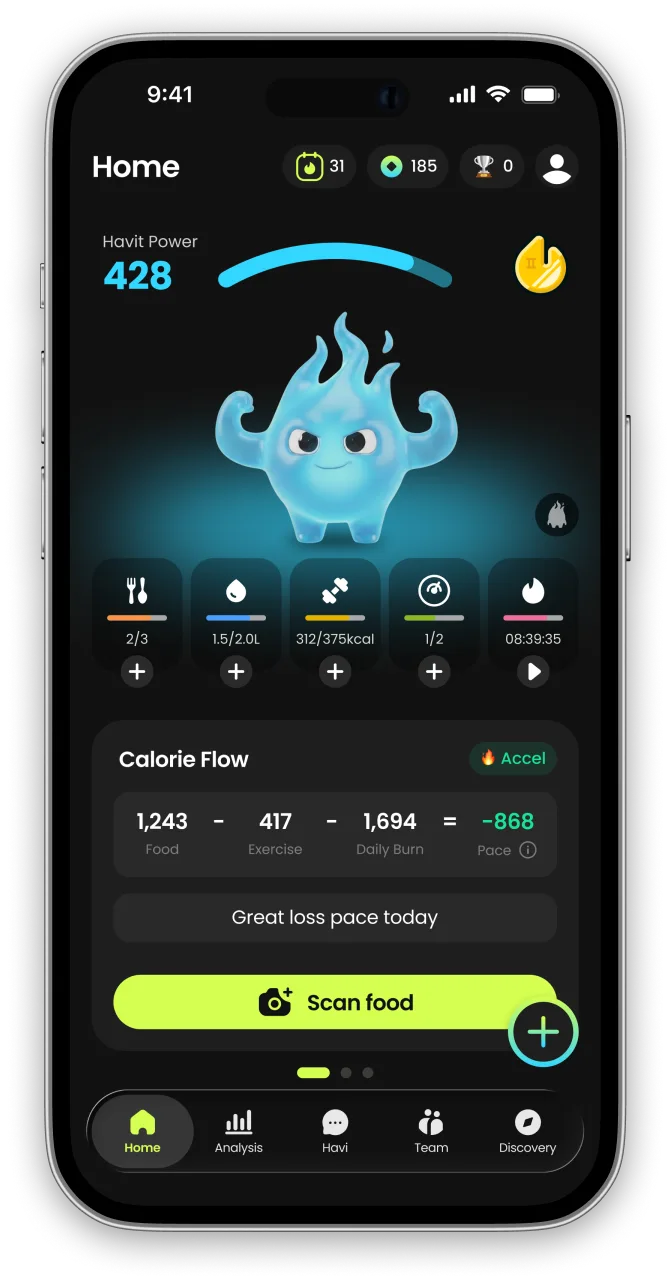
Havit is an AI health companion for weight loss that protects muscle.
Unlike calorie-only trackers, Havit connects AI body-composition estimates, nutrition, hydration, sleep, steps, cycle, mood, and GLP-1 medication in one daily routine — so progress is measured by body composition, not just the number on the scale. Daily missions turn established behavior-change techniques into small repeatable actions, drawing on expertise from professionals formerly at Juvis Diet, one of Korea’s leading metabolic clinics.
In Havit’s own analysis of 1,090 GLP-1 users, people who logged consistently built stronger habits than the general user base. Read the GLP-1 Habit Report
Havit works with or without GLP-1 medication. It is a wellness app, not a medical device; body-composition results are estimates.

Continue in the App
Personalized wellness with your own data


References
- Extraintestinal Manifestations of Celiac Disease: A Comprehensive Review — Gastroenterology, 2025
- Updated Guidelines for Celiac Disease Screening in At-Risk Populations — The Lancet, 2024
- Neurological Complications of Celiac Disease: Mechanisms and Management — Neurology Clinical Practice, 2024
- Celiac Disease in Adults: Changing Presentation Patterns Over Three Decades — American Journal of Gastroenterology, 2024


