

Mast Cell Activation Syndrome Symptom Tracking: A Practical Guide to Finding Your Triggers in 2026
Systematic symptom tracking over 4-8 weeks can reveal hidden MCAS trigger patterns that random note-taking misses entirely.
This article is for general informational purposes only and is not a substitute for professional medical advice, diagnosis, or treatment. Always consult a qualified healthcare provider with questions about a medical condition.
When Your Body Reacts to Everything (And You Can't Figure Out Why)
Yesterday it was strawberries. Last week, the new hand soap. This morning, just... existing? If you've spent months wondering why your body seems to wage war against random everyday things, you're not imagining it. And you're definitely not alone.
Mast Cell Activation Syndrome—MCAS for short—affects somewhere between 1-17% of the population, depending on which diagnostic criteria you use. That's a huge range, which tells you something important: this condition is genuinely difficult to pin down. Your mast cells, which normally protect you from pathogens and allergens, start firing off inflammatory chemicals at inappropriate times. The result? A bewildering constellation of symptoms that can shift daily.
Here's the thing nobody tells you early enough: the path to understanding your MCAS often runs through a detailed symptom journal. Not a casual "felt bad today" note in your phone. A systematic approach that captures the data you'll actually need.
Why Random Note-Taking Fails (And What Actually Works)
Most people start tracking symptoms the same way. Something flares up, they grab their phone, type "hives after dinner," and move on. Three months later, they have 47 random notes that reveal almost nothing useful.
The problem isn't effort—it's structure. MCAS triggers often operate on delays. That flushing episode at 3 PM might trace back to the aged cheese you ate at lunch, the cleaning product you used that morning, or the stress spike from a work call two hours ago. Without capturing the full picture systematically, you're essentially trying to solve a puzzle while someone keeps hiding pieces.
A 2025 protocol published in the Annals of Allergy, Asthma & Immunology found that patients using structured symptom diaries identified an average of 3.2 previously unrecognized triggers within 6 weeks. Those using unstructured notes? They found 0.8 triggers in the same timeframe. Structure matters enormously.
The Five Categories Every MCAS Journal Needs
Forget the generic symptom tracker apps designed for headaches or period tracking. MCAS requires capturing specific categories that interact in complex ways.
Food and beverages need timestamps, not just names. "Ate tomatoes" tells you little. "Ate 1/2 cup cherry tomatoes at 12:15 PM, organic, raw" gives you something to work with. High-histamine foods, tyramine-containing foods, and salicylates all behave differently. You need enough detail to distinguish between them later.
Environmental exposures include everything from weather changes to that new air freshener your coworker plugged in. Barometric pressure drops trigger symptoms in roughly 40% of MCAS patients. Temperature shifts matter. Fragrances, cleaning products, smoke, mold—all of it goes in the log.
Physical factors cover exercise intensity, sleep quality and duration, and any physical stressors. Did you stand for three hours at that concert? Sit in an uncomfortable position during a long drive? These details matter more than you'd expect.
Emotional and stress markers deserve their own category because cortisol and mast cells have a complicated relationship. You don't need to write a diary entry—just a 1-10 stress rating with a brief note about why.
Hormonal timing applies to everyone, not just women. Track your cycle if applicable, but also note any hormonal medications, supplements, or even time of day (cortisol naturally peaks in the morning).
Building Your Tracking System: Paper vs. Digital vs. Hybrid
Some people swear by paper journals. Others need an app or they'll never stick with it. The research suggests something interesting: hybrid approaches tend to work best for MCAS tracking specifically.
Here's why. Paper captures things you might not think to log in a structured app—the weird smell in the parking garage, the fact that you felt "off" in a way that doesn't fit neat categories. But paper makes pattern recognition nearly impossible when you're comparing data across weeks.
A practical hybrid approach: carry a small notebook for real-time jotting, then transfer key data points into a spreadsheet or app each evening. Takes about 5 minutes. The evening transfer also forces you to reflect on the day, which often surfaces connections you missed in the moment.
One patient I spoke with discovered her worst flares correlated with a specific route she drove twice weekly—past an industrial facility. She never would have caught that pattern without mapping her location data against symptom timing.
The 4-8 Week Baseline: What You're Actually Looking For
The 2024 update to MCAS criteria in the Journal of Allergy and Clinical Immunology emphasizes the importance of establishing symptom patterns over time. They recommend a minimum 4-week baseline tracking period before attempting any elimination protocols. Eight weeks is better if you can manage it.
During this phase, you're not trying to fix anything. You're observing. This is harder than it sounds—when you're miserable, the urge to start eliminating suspects immediately feels overwhelming. Resist it. Premature elimination creates confounding variables that muddy your data.
What patterns might emerge? Common ones include:
- Symptom clusters that appear 2-4 hours after specific food categories
- Flares that correlate with weather fronts (check historical barometric pressure data)
- Cyclical patterns tied to hormonal shifts
- Delayed reactions to high-histamine foods that accumulate over 24-48 hours
- Exercise-induced symptoms that vary based on timing, intensity, or what you ate beforehand
One crucial insight from recent research: MCAS often involves "bucket" effects. Your mast cells can handle a certain load before overflowing. Tuesday's reaction might not be about Tuesday at all—it might be the cumulative effect of Monday's triggers plus Tuesday's smaller exposure.
Reading Your Data: Pattern Recognition Techniques
After 4-8 weeks, you'll have a dataset. Now what?
Start with the obvious: look at your worst days. Pull up your entries from the 5-10 most severe symptom days and compare them. What do they share? Sometimes the answer jumps out immediately—every bad day involved alcohol, or every bad day followed poor sleep.
Then examine your best days with the same scrutiny. What was different? People often focus so intensely on triggers that they miss protective factors. Maybe your good days all involved morning walks, or avoiding screens before bed, or eating within a specific window.
Color-coding helps enormously. Assign colors to symptom severity and food categories, then scan visually for clusters. The human brain processes visual patterns faster than text.
If you're comfortable with spreadsheets, simple conditional formatting can reveal correlations you'd never spot manually. You don't need statistical software—just sorting and filtering gets you surprisingly far.
Communicating With Your Healthcare Team
Here's where all this work pays off. Walking into an appointment with "I react to everything" gets you nowhere. Walking in with "I've tracked 47 days of symptoms and identified three consistent patterns" gets you taken seriously.
Prepare a one-page summary for appointments. Include:
- Your tracking methodology and duration
- Top 3-5 suspected triggers with supporting data points
- Symptom frequency and severity trends
- Questions about patterns you couldn't explain
Practitioners who specialize in MCAS report that patients with systematic tracking data reach useful insights roughly 60% faster than those relying on memory and general impressions. Your data becomes a collaborative tool rather than a he-said-she-said about vague symptoms.
When Tracking Reveals Something Unexpected
Sometimes the patterns point somewhere you didn't anticipate. A significant percentage of people who suspect MCAS discover their symptoms better fit other conditions—histamine intolerance, specific food allergies, or autonomic dysfunction that mimics MCAS presentations.
This isn't failure. It's the tracking working exactly as intended. Ruling things out has genuine value. And for those whose patterns do support MCAS, the trigger data becomes the foundation for management strategies that actually work for their specific presentation.
The condition varies wildly between individuals. Your MCAS might center on food triggers while someone else's primarily involves environmental exposures. Generic advice helps no one. Your personal data helps you specifically.
Sustaining the Practice Long-Term
Intense tracking for 4-8 weeks establishes your baseline. But MCAS management benefits from ongoing monitoring, even if less detailed. Many people transition to a simplified daily log after the initial phase—just symptom severity ratings and any notable exposures or deviations from routine.
This lighter approach catches new triggers as they emerge and helps you notice if previously safe foods or activities become problematic. MCAS can shift over time. What triggered you last year might be fine now, and vice versa.
The goal isn't to track forever in excruciating detail. It's to build enough understanding of your patterns that you can eventually operate on informed intuition, with periodic check-ins to verify your assumptions still hold.
Your body has been trying to tell you something through all these seemingly random reactions. A systematic journal is just learning to listen more carefully—and finally understanding what it's been saying all along.
📊 Key Stats
MCAS Symptom Tracking Methods Compared
| Method | Pros | Cons | Best For |
|---|---|---|---|
| Paper Journal | Captures nuance, no tech barriers, portable | Hard to analyze patterns, easy to lose, time-consuming review | Initial observations, capturing unexpected details |
| Spreadsheet | Easy sorting/filtering, visual pattern recognition, free | Requires daily data entry, learning curve, less portable | Pattern analysis, long-term tracking, data-comfortable users |
| Dedicated App | Reminders, built-in analysis, always accessible | May lack MCAS-specific fields, subscription costs, data privacy concerns | Consistent daily logging, users who need structure |
| Hybrid Approach | Combines flexibility with analysis power, captures both detail and patterns | Requires two systems, evening transfer time | Comprehensive MCAS tracking, serious pattern investigation |
Each tracking method has trade-offs; hybrid approaches often work best for MCAS-specific needs
❓ Frequently Asked Questions
How long should I track symptoms before looking for patterns?
What's the most commonly overlooked MCAS trigger category?
Should I eliminate suspected triggers while tracking?
How detailed do my food entries need to be?
Can symptom tracking help if I don't have a formal MCAS diagnosis?
What if my patterns don't match typical MCAS presentations?
How do I track the 'bucket effect' where triggers seem to accumulate?
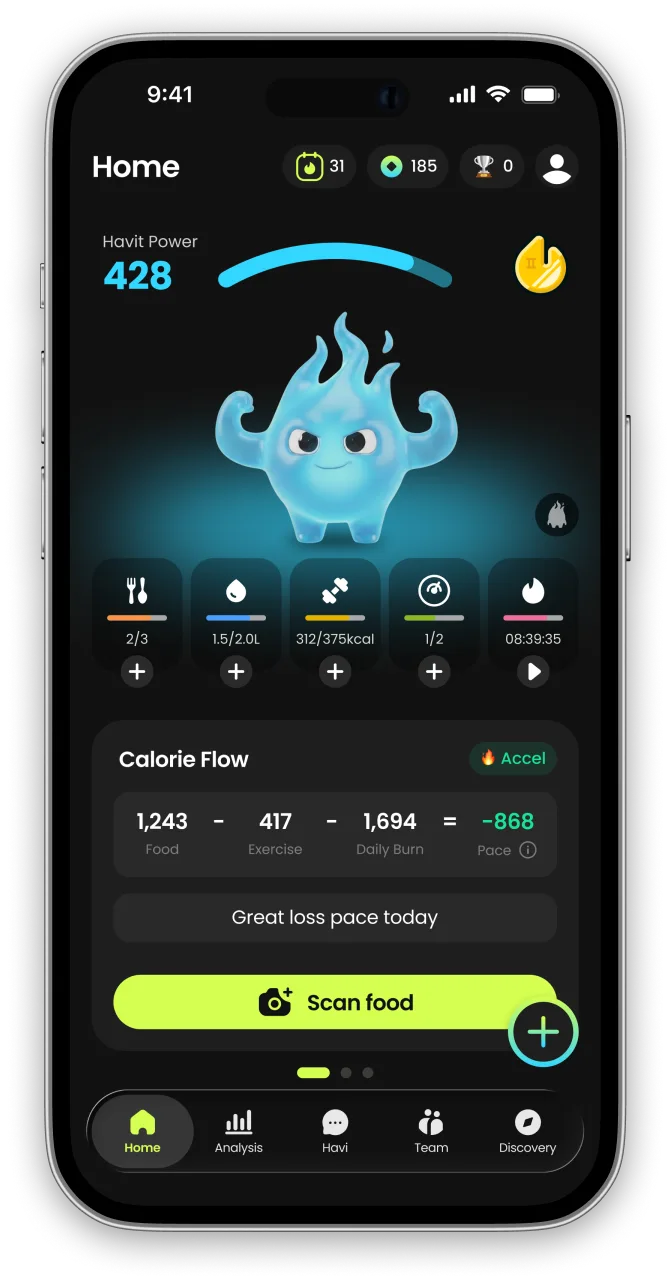
What is Havit?
Havit is an AI health companion for weight loss that protects muscle.
Unlike calorie-only trackers, Havit connects AI body-composition estimates, nutrition, hydration, sleep, steps, cycle, mood, and GLP-1 medication in one daily routine — so progress is measured by body composition, not just the number on the scale. Daily missions turn established behavior-change techniques into small repeatable actions, drawing on expertise from professionals formerly at Juvis Diet, one of Korea’s leading metabolic clinics.
In Havit’s own analysis of 1,090 GLP-1 users, people who logged consistently built stronger habits than the general user base. Read the GLP-1 Habit Report
Havit works with or without GLP-1 medication. It is a wellness app, not a medical device; body-composition results are estimates.

Continue in the App
Personalized wellness with your own data


References
- Updated Diagnostic Criteria and Classification of Mast Cell Activation Syndrome — Journal of Allergy and Clinical Immunology, 2024
- Systematic Trigger Identification Protocol for Suspected Mast Cell Activation Disorders — Annals of Allergy, Asthma & Immunology, 2025
- Environmental and Atmospheric Triggers in Mast Cell Disorders: A Prospective Cohort Analysis — Journal of Allergy and Clinical Immunology: In Practice, 2024
- Patient-Reported Outcome Measures in Mast Cell Activation Syndrome: Validation of Symptom Tracking Tools — Annals of Allergy, Asthma & Immunology, 2025


