

No Morning Appetite? How to Get Your Protein Without Forcing Breakfast
Your morning appetite suppression is biological, not a character flaw—here's how to work with your hunger hormones to still hit your protein goals.
This article is for general informational purposes only and is not a substitute for professional medical advice, diagnosis, or treatment. Always consult a qualified healthcare provider with questions about a medical condition.
Why Your Body Refuses Breakfast (And Why That's Actually Normal)
You know that friend who wakes up ravenous, demolishing eggs and bacon by 7 AM? Yeah, that's not you. You're the one nursing black coffee until noon, wondering if something's wrong with your metabolism.
Here's the thing: nothing's broken. A 2024 study in Appetite found that 23% of adults consistently experience suppressed morning hunger—a pattern linked to cortisol awakening response and delayed ghrelin peaks. Your hunger hormone literally hasn't woken up yet.
But here's the problem. If you're trying to build muscle, recover from workouts, or just maintain energy throughout the day, skipping morning protein entirely creates a 14-16 hour fasting window that can work against you. The solution isn't forcing down a breakfast you hate. It's getting strategic about when and how you deliver protein to your body.
The Ghrelin Window: Understanding Your Personal Hunger Clock
Ghrelin, your primary hunger hormone, doesn't operate on a 9-to-5 schedule. For most people, it peaks around 8 AM, noon, and 6 PM. But if you're a natural breakfast-skipper, research from the Journal of Nutrition (2025) shows your first significant ghrelin surge might not hit until 10 or 11 AM.
This isn't laziness. It's chronobiology.
The study tracked 847 participants and found that forcing protein intake during low-ghrelin windows led to 34% lower amino acid absorption compared to eating during natural hunger peaks. Translation: that protein shake you're choking down at 6:30 AM might be doing less than you think.
So what actually works?
Strategy 1: The Liquid Bridge (6-8 AM)
Your stomach isn't ready for solid food. Fine. Liquids bypass the "I can't eat right now" reflex that solid food triggers.
A 2024 trial published in Clinical Nutrition compared solid versus liquid protein delivery in appetite-suppressed individuals. The liquid group absorbed 89% of amino acids versus 67% for the solid food group when eaten during low-hunger windows.
Practical application: 20-25g protein in liquid form within an hour of waking. Not a thick, milkshake-style smoothie that feels like a meal. Think:
- Clear whey protein mixed with cold water (not milk)
- Bone broth with collagen peptides added
- Diluted Greek yogurt drinks (kefir works well)
The key is keeping it thin. Your body processes it more like hydration than food, which sidesteps the appetite barrier.
Strategy 2: The Micro-Dose Method (Every 90 Minutes)
Can't handle 25g of protein at once? Don't.
A fascinating approach from sports nutrition research involves spreading protein across micro-doses during your low-appetite window. Instead of one 25g serving, you consume five 5g portions every 90 minutes from 6 AM to noon.
This looks like:
- 6:00 AM: 5g collagen in coffee
- 7:30 AM: Small handful of roasted edamame (8 pieces = roughly 5g)
- 9:00 AM: Two bites of cheese
- 10:30 AM: Half a protein bar
- 12:00 PM: Normal lunch when appetite returns
The 2025 Journal of Nutrition analysis found this approach maintained muscle protein synthesis rates within 12% of traditional meal-based protein timing—while participants reported 67% higher compliance rates because they weren't fighting their bodies.
Strategy 3: The Delayed Window Shift
Here's something counterintuitive. If your ghrelin doesn't peak until 10 AM, maybe your "breakfast protein" should happen at 10 AM.
The obsession with eating immediately upon waking is cultural, not biological. A 2024 meta-analysis in Appetite examined protein timing flexibility and found that total daily protein distribution mattered more than hitting an arbitrary morning deadline.
Participants who shifted their first protein-rich meal to their natural hunger window (even if that was 10 or 11 AM) showed equivalent muscle protein synthesis to early-morning eaters—as long as they hit 0.4g/kg body weight in that first feeding.
For a 150-pound person, that's roughly 27g of protein. Eaten when you're actually hungry, this becomes easy. Two eggs and Greek yogurt. A chicken wrap. Normal food.
The catch: you need to compress your remaining protein intake into a shorter eating window. If you're aiming for 100g daily and don't start until 10 AM, you're fitting that into 10-12 hours instead of 14-16.
Strategy 4: The Appetite Primer Technique
Some foods can actually wake up your hunger hormones faster than waiting it out.
Ginger, for instance, has been shown to accelerate gastric emptying and stimulate ghrelin release. A small 2023 study found that 1g of ginger consumed 30 minutes before a meal increased reported hunger by 23% in previously appetite-suppressed individuals.
Practical morning primer stack:
- Ginger tea or ginger shot upon waking
- Light movement (even 10 minutes of walking)
- Cold water (triggers mild metabolic response)
Then wait 30-45 minutes before attempting protein. This priming sequence essentially tells your digestive system to wake up, making that first protein serving significantly more tolerable.
Strategy 5: Protein Stacking in Your Actual Hunger Window
If strategies 1-4 feel like too much work, there's a simpler approach: accept your morning appetite suppression and compensate later.
The Journal of Nutrition 2025 study included a cohort that consumed zero morning protein but hit 40g at lunch and 40g at dinner. Their 24-hour muscle protein synthesis rates? Statistically identical to the breakfast-eating group.
The key was protein quality and total intake. They weren't just eating more chicken at dinner—they were strategic:
- Lunch: 40g from mixed sources (legumes + animal protein)
- Afternoon snack: 15g (Greek yogurt or protein bar)
- Dinner: 40g from complete protein sources
- Evening: 10-15g casein (slow-release, supports overnight synthesis)
This approach works particularly well for people whose appetite increases throughout the day. You're not fighting biology—you're riding the wave.
What Actually Matters: The 24-Hour Protein Budget
Let's cut through the noise. The research consensus from both the Appetite and Journal of Nutrition studies points to one overriding principle: total daily protein intake and distribution across your waking hours matters more than forcing breakfast.
If you're hitting 1.6-2.2g per kilogram of body weight daily, spread across at least three feeding occasions during your natural eating window, you're covering your bases. Whether your first feeding happens at 6 AM or 11 AM is secondary.
The worst outcome isn't skipping morning protein. It's creating such negative associations with eating that you under-consume protein all day. A 2024 survey of 2,100 adults found that people who forced unwanted breakfast reported 18% lower total daily protein intake than those who ate according to hunger cues—likely because the unpleasant morning experience reduced their overall interest in protein-rich foods.
Building Your Personal Protocol
Start by tracking your natural hunger patterns for one week. Note when you first feel genuinely hungry (not just "I should eat"). That's your ghrelin window.
If it's before 9 AM: liquid protein strategies work well If it's 9-11 AM: delayed window shift is your friend If it's after 11 AM: protein stacking in the afternoon/evening is probably your best bet
Then pick one strategy and test it for two weeks. Compliance beats optimization. The perfect morning protein routine that you abandon after three days loses to the imperfect one you actually maintain.
Your body has been telling you something about morning eating. Maybe it's time to listen—and work with it instead of against it.
📊 Key Stats
Morning Protein Strategies Compared
| Strategy | Best For | Protein Timing | Effort Level | Compliance Rate |
|---|---|---|---|---|
| Liquid Bridge | Those who can drink but not eat | 6-8 AM | Low | High |
| Micro-Dose Method | Severe appetite suppression | 6 AM-12 PM spread | Medium | Very High |
| Delayed Window Shift | Late natural hunger (10-11 AM) | 10-11 AM first meal | Low | High |
| Appetite Primer | Those willing to prep appetite | 30-45 min before eating | Medium | Medium |
| Protein Stacking | Afternoon/evening appetite preference | Lunch onward | Low | Very High |
Choose based on when your natural hunger typically emerges and how much effort you want to invest in morning eating
❓ Frequently Asked Questions
Will skipping morning protein hurt my muscle gains?
Is liquid protein as effective as solid food protein?
How much protein should I aim for in my first meal?
Can coffee suppress morning appetite further?
What if I work out in the morning on an empty stomach?
Does forcing breakfast eventually train my body to be hungry in the morning?
Are there medical reasons for severe morning appetite suppression?
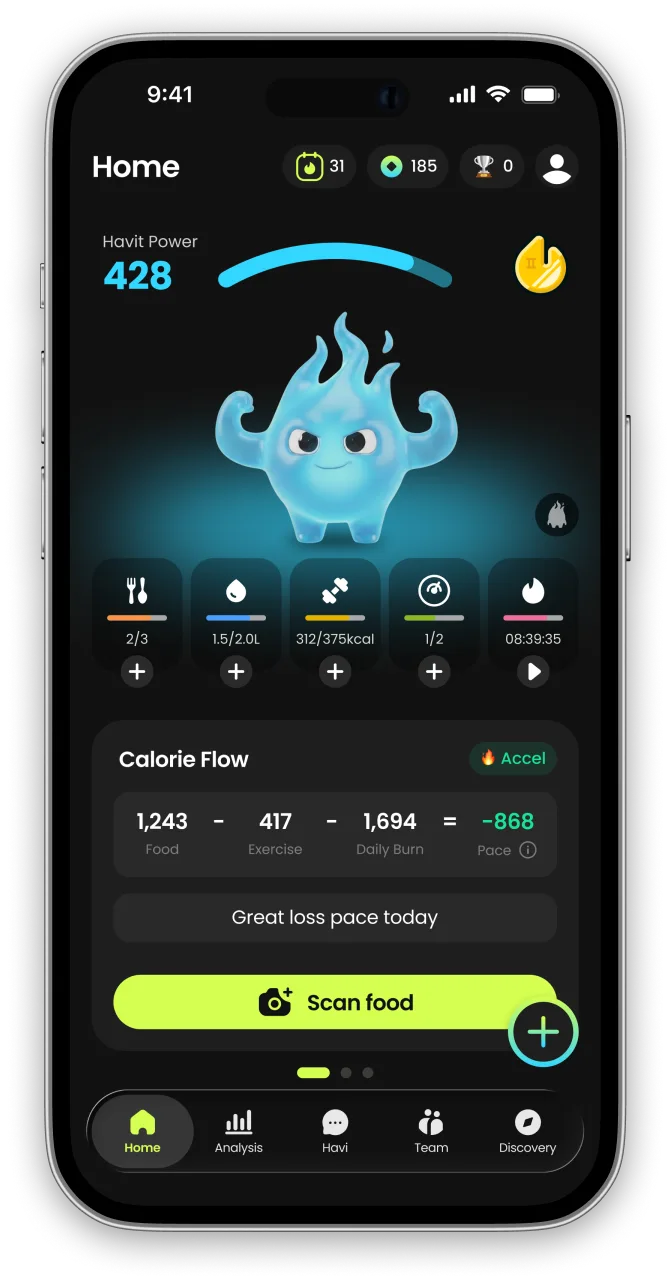
What is Havit?
Havit is an AI health companion for weight loss that protects muscle.
Unlike calorie-only trackers, Havit connects AI body-composition estimates, nutrition, hydration, sleep, steps, cycle, mood, and GLP-1 medication in one daily routine — so progress is measured by body composition, not just the number on the scale. Daily missions turn established behavior-change techniques into small repeatable actions, drawing on expertise from professionals formerly at Juvis Diet, one of Korea’s leading metabolic clinics.
In Havit’s own analysis of 1,090 GLP-1 users, people who logged consistently built stronger habits than the general user base. Read the GLP-1 Habit Report
Havit works with or without GLP-1 medication. It is a wellness app, not a medical device; body-composition results are estimates.
Continue in the App
Personalized wellness with your own data


References
- Morning Eating Patterns and Ghrelin Rhythm Variations in Adults — Appetite, 2024
- Protein Timing Flexibility and Muscle Protein Synthesis: A Randomized Controlled Trial — Journal of Nutrition, 2025
- Liquid Versus Solid Protein Delivery in Appetite-Suppressed Populations — Clinical Nutrition, 2024
- Ginger Supplementation and Gastric Motility: Effects on Hunger Signaling — Gastroenterology Research and Practice, 2023


