

Lipolysis Explained: The Hormonal Triggers That Actually Release Fat From Storage
Fat burning requires specific hormonal signals—primarily catecholamines binding to beta-receptors while insulin stays low—and understanding this cascade reveals why timing and stress management matter more than most people realize.
This article is for general informational purposes only and is not a substitute for professional medical advice, diagnosis, or treatment. Always consult a qualified healthcare provider with questions about a medical condition.
Your Fat Cells Are Locked Vaults (And Hormones Hold the Keys)
Here's something that might change how you think about fat loss: your body stores roughly 100,000 calories in adipose tissue, yet you can't access most of it on demand. It's like having a massive savings account with withdrawal restrictions.
The process of actually releasing that stored fat? It's called lipolysis. And it doesn't happen just because you want it to or because you're exercising hard. It happens when specific hormonal signals arrive at your fat cells in the right sequence, at the right concentrations, with the right cellular machinery ready to respond.
I spent weeks diving into the latest research on adipose tissue mobilization, and what I found was both fascinating and practical. The 2025 Journal of Lipid Research review on lipolysis regulation revealed mechanisms that most fitness advice completely ignores. Let's break down what's actually happening inside your fat cells—and what you can do about it.
The Catecholamine Connection: Your Primary Fat-Releasing Hormones
Epinephrine and norepinephrine. These are the stars of the lipolysis show.
When you exercise, face stress, or go without food for extended periods, your adrenal glands and sympathetic nervous system release these catecholamines into your bloodstream. They travel to your fat cells and bind to receptors on the cell surface—specifically, beta-adrenergic receptors.
Think of it like a key entering a lock. Once bound, these receptors activate an enzyme called adenylyl cyclase, which produces cyclic AMP (cAMP). This molecule is the internal messenger that tells your fat cell: "Start breaking down triglycerides."
The numbers here are striking. According to research published in Endocrine Reviews (2024), catecholamine-stimulated lipolysis can increase fatty acid release from adipocytes by 300-400% compared to baseline. During intense exercise, this can jump even higher—up to 600% in trained individuals.
But here's the catch. Not all fat cells respond equally.
Why Belly Fat Is So Stubborn (The Receptor Problem)
Your fat cells have two types of adrenergic receptors: beta receptors (which promote lipolysis) and alpha-2 receptors (which inhibit it). The ratio matters enormously.
Subcutaneous abdominal fat—that stubborn layer around your midsection—has a higher density of alpha-2 receptors compared to fat in your arms or legs. When catecholamines arrive, they bind to both receptor types. If alpha-2 activation outweighs beta activation, lipolysis gets suppressed.
This explains why people often lose fat from their face, arms, and legs before their belly shrinks noticeably. It's not random. It's receptor distribution.
The Journal of Lipid Research data shows that alpha-2 receptor density in abdominal adipose tissue can be 4-10 times higher than in femoral (thigh) fat. Women tend to have even higher alpha-2 expression in lower-body fat, which is why those areas are particularly resistant to mobilization.
So what can you do? Longer-duration, moderate-intensity exercise appears to eventually overcome alpha-2 inhibition. Fasting states also help—when insulin drops and catecholamine exposure is sustained, even stubborn fat eventually releases its contents.
Insulin: The Master Brake on Fat Burning
If catecholamines are the gas pedal, insulin is the brake. And it's a powerful one.
Insulin doesn't just prevent lipolysis—it actively promotes lipogenesis (fat storage). When insulin binds to receptors on adipocytes, it activates phosphodiesterase enzymes that break down cAMP. Remember, cAMP is the internal signal that triggers fat breakdown. Less cAMP means less lipolysis.
The sensitivity here is remarkable. Blood insulin levels as low as 20-30 μU/mL can reduce lipolysis by 50%. After a high-carbohydrate meal, insulin might spike to 80-100 μU/mL or higher, essentially shutting down fat mobilization for hours.
This is why meal timing and composition affect fat burning so dramatically. It's not about calories in that immediate window—it's about the hormonal environment you've created.
A practical example: two people eat identical calories. One consumes them across six small meals with moderate carbohydrates each time. The other eats two larger meals with longer fasting windows between them. The second person will likely spend more total hours in a lipolytic state, even with identical calorie intake.
The Supporting Cast: Growth Hormone, Cortisol, and Thyroid
Catecholamines get the headlines, but other hormones play crucial supporting roles.
Growth hormone surges during deep sleep and intense exercise. It enhances lipolysis by increasing beta-receptor sensitivity and reducing insulin's anti-lipolytic effects. People with growth hormone deficiency show significantly impaired fat mobilization—and GH replacement therapy can increase lipolysis rates by 40-60%.
Cortisol is complicated. Acute cortisol elevation actually promotes lipolysis, working synergistically with catecholamines. But chronic cortisol elevation—from ongoing stress, poor sleep, or overtraining—promotes visceral fat accumulation and can impair the lipolytic response over time. The 2024 Endocrine Reviews analysis found that chronically elevated cortisol reduces beta-receptor expression by approximately 25%.
Thyroid hormones (T3 and T4) regulate the baseline metabolic rate of fat cells and influence how responsive they are to catecholamine stimulation. Hypothyroid individuals show blunted lipolytic responses even when catecholamine levels are normal.
The takeaway? Fat mobilization isn't controlled by a single hormone. It's a symphony, and all the instruments need to be playing in tune.
Inside the Fat Cell: What Happens After the Signal Arrives
Let's zoom in on the molecular machinery.
Once cAMP levels rise inside the adipocyte, it activates protein kinase A (PKA). This enzyme then phosphorylates two critical targets: hormone-sensitive lipase (HSL) and perilipin proteins.
Perilipins coat the surface of lipid droplets inside fat cells, acting like a protective shell. When PKA phosphorylates them, they change shape and allow HSL to access the triglycerides stored within. HSL then cleaves triglycerides into glycerol and free fatty acids.
But there's another player that's received increasing attention: adipose triglyceride lipase (ATGL). This enzyme handles the first step of triglyceride breakdown and is actually responsible for about 70% of initial hydrolysis. HSL completes the job.
The released fatty acids then exit the cell, bind to albumin in the bloodstream, and travel to muscles, the heart, or the liver where they can be oxidized for energy.
Here's an important point: releasing fat from storage doesn't guarantee it gets burned. If those fatty acids aren't used for fuel—if you're not moving, if your muscles don't need the energy—they can be re-esterified back into triglycerides and stored again. Mobilization and oxidation are separate processes.
Optimizing Your Hormonal Environment for Fat Burning
Knowing the science, what practical steps actually matter?
Create genuine fasting windows. Even 12-14 hours overnight allows insulin to drop low enough for meaningful lipolysis. Extending to 16-18 hours increases catecholamine-driven fat release further, though returns diminish beyond that for most people.
Exercise in lower-insulin states. Morning exercise before eating, or training 3-4 hours after your last meal, means less insulin blocking the lipolytic cascade. A 2024 study found that fasted morning exercise increased fat oxidation by 28% compared to post-meal exercise at the same intensity.
Prioritize sleep. Growth hormone release during deep sleep enhances overnight lipolysis. Poor sleep also elevates cortisol and insulin resistance, creating a double negative. Seven hours isn't optional—it's metabolically necessary.
Manage chronic stress. Occasional acute stress actually promotes fat mobilization. But grinding, unrelenting stress keeps cortisol elevated in patterns that eventually impair the system. Whatever your stress-reduction practice—walking, meditation, therapy, hobbies—it has metabolic implications.
Include some higher-intensity work. Catecholamine release scales with exercise intensity. You don't need to do HIIT every day, but including 1-2 sessions weekly of genuinely hard effort maximizes the hormonal stimulus for fat release.
Don't fear all dietary fat. Extremely low-fat diets can impair hormone production, including the hormones that drive lipolysis. Adequate fat intake—particularly omega-3s—supports healthy hormonal function.
The Bigger Picture: Why This Matters Beyond Aesthetics
Understanding lipolysis isn't just about getting leaner. It's about metabolic flexibility—your body's ability to switch between fuel sources based on availability and demand.
People with impaired lipolysis often feel terrible during fasting or low-carb eating. They get shaky, irritable, brain-fogged. Their cells are screaming for fuel, but the stored fat won't release efficiently.
Improving your lipolytic capacity means more stable energy, better exercise performance, and greater resilience when food isn't immediately available. It's a fundamental aspect of metabolic health that goes far beyond the number on your scale.
The research is clear: your hormones control whether stored fat gets released. And while you can't directly command your fat cells to empty themselves, you can create the conditions—through sleep, stress management, meal timing, and exercise—that allow the natural lipolytic cascade to function optimally.
Your fat cells are listening. The question is what signals you're sending them.
📊 Key Stats
Hormonal Effects on Lipolysis
| Hormone | Effect on Lipolysis | Mechanism | Practical Implication |
|---|---|---|---|
| Epinephrine/Norepinephrine | Strong stimulation | Beta-receptor activation → cAMP increase | Exercise and fasting increase release |
| Insulin | Strong inhibition | Phosphodiesterase activation → cAMP breakdown | Keep levels low during fat-loss windows |
| Growth Hormone | Moderate stimulation | Increases beta-receptor sensitivity | Prioritize deep sleep for natural release |
| Cortisol (acute) | Mild stimulation | Synergizes with catecholamines | Brief stress can enhance fat mobilization |
| Cortisol (chronic) | Inhibition over time | Reduces beta-receptor expression | Manage ongoing stress to preserve sensitivity |
| Thyroid (T3/T4) | Permissive/enhancing | Regulates adipocyte metabolic rate | Support thyroid health for optimal response |
Summary of major hormones affecting adipose tissue lipolysis based on 2024-2025 research reviews
❓ Frequently Asked Questions
Does caffeine increase lipolysis?
Why do I feel cold when fasting—is that related to lipolysis?
Can you target lipolysis in specific body areas?
How long after eating does lipolysis resume?
Does age affect lipolytic capacity?
Is there a difference between lipolysis and fat oxidation?
Do certain supplements enhance lipolysis?
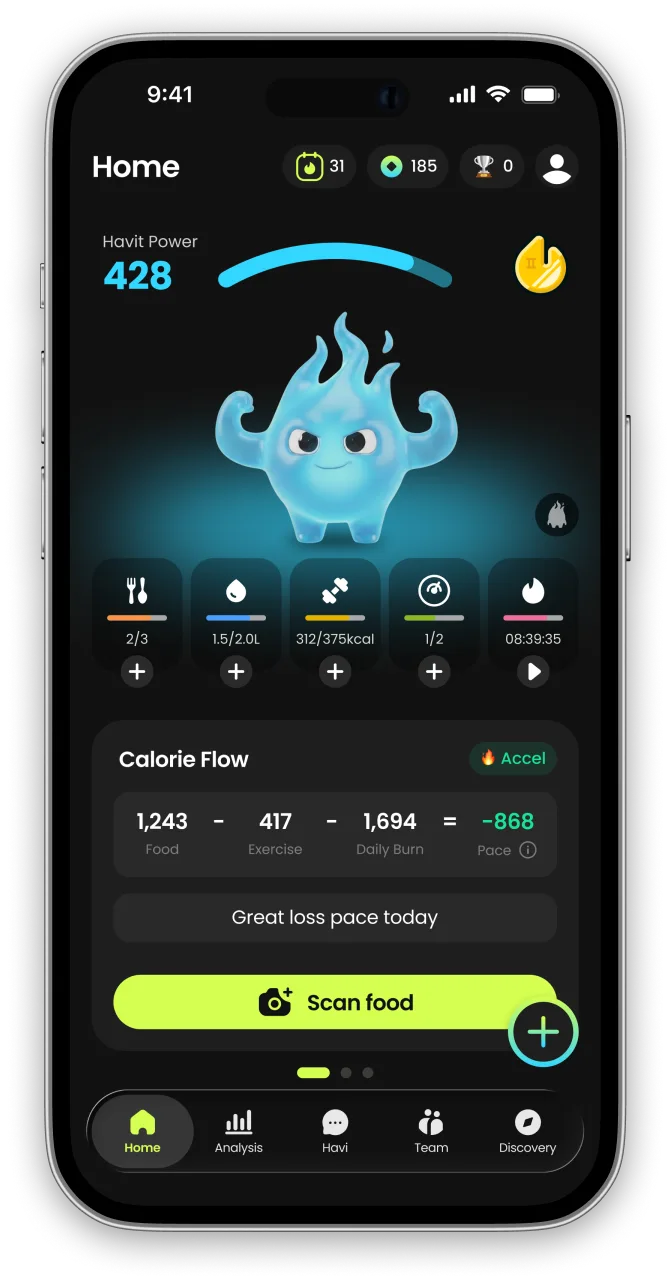
What is Havit?
Havit is an AI health companion for weight loss that protects muscle.
Unlike calorie-only trackers, Havit connects AI body-composition estimates, nutrition, hydration, sleep, steps, cycle, mood, and GLP-1 medication in one daily routine — so progress is measured by body composition, not just the number on the scale. Daily missions turn established behavior-change techniques into small repeatable actions, drawing on expertise from professionals formerly at Juvis Diet, one of Korea’s leading metabolic clinics.
In Havit’s own analysis of 1,090 GLP-1 users, people who logged consistently built stronger habits than the general user base. Read the GLP-1 Habit Report
Havit works with or without GLP-1 medication. It is a wellness app, not a medical device; body-composition results are estimates.

Continue in the App
Personalized wellness with your own data


References
- Regulation of Lipolysis in Adipocytes: An Update on Molecular Mechanisms — Journal of Lipid Research, 2025
- Adipose Tissue Mobilization: Hormonal Control and Metabolic Implications — Endocrine Reviews, 2024
- Regional Differences in Adipose Tissue Lipolysis: Receptor Distribution and Clinical Relevance — Obesity Reviews, 2024
- Exercise Timing and Substrate Oxidation: Fasted vs. Fed State Training — Journal of Applied Physiology, 2024


