

Leaky Gut Syndrome: What Science Actually Says About Intestinal Permeability in 2026
Intestinal permeability is real and measurable, but 'leaky gut syndrome' as marketed isn't a recognized diagnosis—here's what the research actually supports.
This article is for general informational purposes only and is not a substitute for professional medical advice, diagnosis, or treatment. Always consult a qualified healthcare provider with questions about a medical condition.
Your Gut Has 40 Million Billion Reasons to Stay Sealed
That's roughly how many bacteria live in your intestines. And between them and your bloodstream? A barrier just one cell thick.
When people talk about 'leaky gut,' they're describing something real—increased intestinal permeability that lets molecules slip through gaps that should stay closed. But here's where it gets complicated: the wellness industry has taken this legitimate phenomenon and turned it into a catch-all explanation for everything from brain fog to autoimmune disease.
So let's separate what we actually know from what's being sold.
The Biology: How Your Gut Barrier Actually Works
Your intestinal lining isn't a solid wall. It's more like a sophisticated security checkpoint with multiple layers of control.
The outermost defense is mucus—a gel layer that keeps bacteria at arm's length from your actual cells. Beneath that, a single layer of epithelial cells forms the main barrier. These cells connect to each other through protein complexes called tight junctions, which act like adjustable zippers between cells.
Here's what makes this interesting: tight junctions aren't static. They open and close in response to signals. A protein called zonulin, discovered in 2000 by Dr. Alessio Fasano's team, regulates this opening. When zonulin levels spike, tight junctions loosen. This is normal—it's how nutrients get absorbed.
The problem starts when this system gets stuck in the 'open' position.
A 2025 review in Gut mapped out the cascade: chronic inflammation triggers excess zonulin release, tight junctions stay loose, bacterial fragments called lipopolysaccharides (LPS) leak into the bloodstream, and the immune system responds with more inflammation. It becomes a feedback loop.
What Increases Intestinal Permeability? The Evidence Hierarchy
Not everything blamed for 'leaky gut' actually causes it. Here's what the research supports, ranked by evidence quality.
Strong evidence:
- Celiac disease (gluten triggers zonulin release in genetically susceptible people)
- Inflammatory bowel disease (Crohn's, ulcerative colitis)
- Chronic alcohol consumption (even moderate drinking—3+ drinks daily—increases permeability within hours)
- NSAIDs like ibuprofen (a 2024 Gastroenterology study found just 2 weeks of regular use measurably increased permeability)
- Severe burns, trauma, or major surgery
Moderate evidence:
- Chronic stress (cortisol affects tight junction proteins)
- High-fat, low-fiber Western diet patterns
- Certain gut infections
Weak or conflicting evidence:
- Gluten in people without celiac disease (studies show mixed results)
- Lectins from legumes and grains
- GMO foods
- Most 'gut-disrupting' foods on wellness blogs
The gap between what's proven and what's claimed is substantial.
The Zonulin Controversy: Why Testing Gets Complicated
You might see functional medicine practitioners offering zonulin blood tests as proof of leaky gut. The science here is murkier than marketing suggests.
Zonulin was initially thought to be a single protein. More recent research shows the commercial tests actually detect a family of related proteins, and levels fluctuate significantly throughout the day. A 2024 analysis found that the same person could test 'normal' in the morning and 'elevated' by afternoon.
The lactulose-mannitol test—where you drink these two sugars and measure how much appears in urine—remains the research gold standard. But it's rarely used clinically because results don't clearly translate to treatment decisions.
This doesn't mean intestinal permeability isn't real. It means we don't yet have a reliable, validated test for clinical use. Researchers measure it in studies. Doctors don't have good tools for individual patients.
What Actually Improves Barrier Function? Evidence-Based Interventions
Forget the $200 'gut healing protocols.' Here's what controlled trials actually support.
Dietary fiber, especially fermentable types. When gut bacteria ferment fiber, they produce short-chain fatty acids like butyrate. Butyrate directly fuels intestinal cells and strengthens tight junctions. A 2025 trial found that 30 grams of diverse fiber daily for 6 weeks reduced markers of intestinal permeability by 23% in participants with metabolic syndrome.
Specific probiotic strains. Not all probiotics help barrier function—this is strain-specific. Lactobacillus rhamnosus GG and Bifidobacterium infantis have the most evidence. A meta-analysis of 12 trials found these strains reduced intestinal permeability markers, though effect sizes varied.
Zinc. Deficiency impairs tight junction function. Supplementation helps—but only if you're actually deficient. The sweet spot appears to be 15-30mg daily; higher doses can backfire by disrupting copper absorption.
Glutamine. Your intestinal cells use this amino acid as fuel. Doses of 5-10 grams daily showed benefit in studies of athletes and surgical patients. Evidence in healthy people is less clear.
Vitamin D. Receptors for vitamin D exist throughout the intestinal lining and influence tight junction proteins. Maintaining adequate levels (above 30 ng/mL) appears protective.
What doesn't have strong evidence: bone broth (minimal research), collagen peptides (promising but preliminary), most 'gut healing' supplement stacks.
The Autoimmune Connection: Real But Overstated
Here's where the leaky gut narrative gets both interesting and overblown.
Increased intestinal permeability does appear in many autoimmune conditions—type 1 diabetes, rheumatoid arthritis, multiple sclerosis, and others. The question is: does permeability cause these diseases, or does the disease cause permeability?
The honest answer: we don't fully know yet.
Some evidence suggests permeability precedes disease. In relatives of people with type 1 diabetes who later developed the condition themselves, increased permeability was detectable before clinical symptoms appeared. Similar patterns show up in celiac disease research.
But correlation isn't causation. And critically, no trial has shown that fixing intestinal permeability prevents or reverses autoimmune disease. The 2025 Gut review was explicit about this gap: 'While barrier dysfunction is consistently observed in autoimmune pathology, interventional evidence demonstrating disease modification through permeability restoration remains lacking.'
This matters because people with serious autoimmune conditions are being sold expensive protocols with promises that outpace the science.
Why 'Leaky Gut Syndrome' Isn't a Medical Diagnosis
Conventional doctors aren't dismissing intestinal permeability—they're objecting to how it's being packaged and sold.
The term 'leaky gut syndrome' implies a discrete condition with clear boundaries, specific symptoms, and defined treatments. That's not what the research shows. What exists is a measurable physiological phenomenon—increased permeability—that occurs in various contexts with various causes and various consequences.
It's like calling 'elevated blood pressure' a syndrome. Technically accurate, but not useful without context. High blood pressure from kidney disease requires different treatment than high blood pressure from stress.
The same logic applies here. Increased permeability from celiac disease requires strict gluten avoidance. Permeability from NSAID use requires stopping the medication. Permeability from alcohol requires addressing drinking patterns. There's no universal 'leaky gut protocol' because there's no universal cause.
A Practical Framework for Gut Barrier Support
If you're concerned about intestinal permeability, here's a reasonable approach based on current evidence.
Start with the basics. Eat 30+ grams of diverse fiber daily. Minimize alcohol. Avoid unnecessary NSAID use. Manage chronic stress. These interventions have benefits beyond gut barrier function and carry minimal risk.
Consider targeted supplements if relevant. Zinc if you might be deficient (vegetarians, elderly, people with GI conditions). Vitamin D if your levels are low. A well-studied probiotic strain if you have specific symptoms.
Be skeptical of comprehensive testing. Current commercial tests for intestinal permeability aren't validated for clinical decision-making. Spending $500 on a stool panel won't give you actionable information that changes what you should do.
Address underlying conditions. If you have celiac disease, IBD, or another condition associated with permeability issues, work with a gastroenterologist. These require proper medical management, not supplements.
Recognize uncertainty. We're still learning. The research is evolving. Anyone claiming definitive answers about leaky gut is overselling what we actually know.
The gut barrier is real. Its dysfunction matters. But the path forward is careful science, not marketing hype.
📊 Key Stats
Evidence Levels for Factors Affecting Intestinal Permeability
| Factor | Effect on Permeability | Evidence Quality | Key Studies |
|---|---|---|---|
| Celiac disease + gluten | Strongly increases | High | Multiple RCTs, mechanism established |
| Chronic alcohol (3+ drinks/day) | Increases within hours | High | Gastroenterology 2024 |
| Regular NSAID use | Increases after 2 weeks | High | Multiple controlled trials |
| Fermentable fiber (30g+) | Decreases | Moderate-High | Gut 2025 trial |
| L. rhamnosus GG probiotic | May decrease | Moderate | Meta-analysis of 12 trials |
| Chronic psychological stress | May increase | Moderate | Cortisol-tight junction studies |
| Gluten (non-celiac) | Conflicting results | Low | Mixed trial outcomes |
| Bone broth | Unknown | Very Low | No controlled human trials |
Evidence hierarchy for intestinal permeability factors, based on 2024-2025 research
❓ Frequently Asked Questions
Is leaky gut a real medical condition?
Can I test for leaky gut at home or through a practitioner?
Does gluten cause leaky gut in everyone?
What supplements actually help gut barrier function?
Can fixing leaky gut cure autoimmune disease?
How long does it take to improve intestinal permeability?
Should I avoid all lectins and processed foods for gut health?
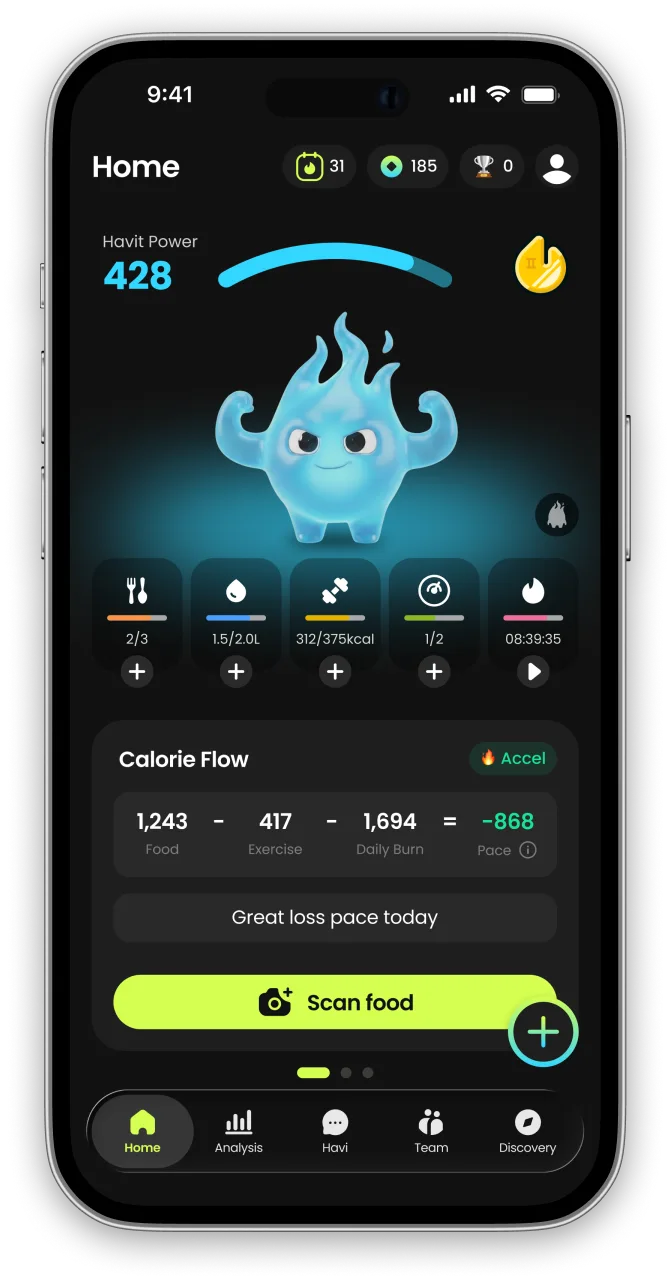
What is Havit?
Havit is an AI health companion for weight loss that protects muscle.
Unlike calorie-only trackers, Havit connects AI body-composition estimates, nutrition, hydration, sleep, steps, cycle, mood, and GLP-1 medication in one daily routine — so progress is measured by body composition, not just the number on the scale. Daily missions turn established behavior-change techniques into small repeatable actions, drawing on expertise from professionals formerly at Juvis Diet, one of Korea’s leading metabolic clinics.
In Havit’s own analysis of 1,090 GLP-1 users, people who logged consistently built stronger habits than the general user base. Read the GLP-1 Habit Report
Havit works with or without GLP-1 medication. It is a wellness app, not a medical device; body-composition results are estimates.

Continue in the App
Personalized wellness with your own data


References
- Intestinal Permeability: Mechanisms, Measurement, and Clinical Implications — Gut, 2025
- Zonulin and Barrier Function: New Insights into Tight Junction Regulation — Gastroenterology, 2024
- Short-Chain Fatty Acids and Intestinal Barrier Function: A Systematic Review — Nutrients, 2024
- NSAID-Induced Intestinal Permeability Changes: A Controlled Trial — Gastroenterology, 2024
- Probiotics and Gut Barrier Function: Meta-Analysis of Randomized Trials — Alimentary Pharmacology & Therapeutics, 2025


