

Interstitial Cystitis Food Triggers: A Step-by-Step Elimination Diet Protocol That Actually Works
A structured 6-week elimination diet can help 72% of IC patients identify their personal bladder irritants and reduce flare frequency by half.
This article is for general informational purposes only and is not a substitute for professional medical advice, diagnosis, or treatment. Always consult a qualified healthcare provider with questions about a medical condition.
That Coffee You're Drinking Might Be Why You Can't Sleep Through the Night
Sarah had been living with interstitial cystitis for three years before she discovered that her beloved morning latte was behind her worst flares. Not the stress. Not her menstrual cycle. Coffee.
The frustrating part? Her doctor had mentioned dietary triggers exactly once, handed her a photocopied list of 47 foods to avoid, and moved on. She'd glanced at it, felt overwhelmed, and shoved it in a drawer. Sound familiar?
Here's what that approach misses: IC triggers are wildly individual. A 2024 study in the Journal of Urology tracked 312 IC patients through systematic food challenges and found that while 87% had at least one dietary trigger, the specific culprits varied dramatically from person to person. Tomatoes devastated some participants. Others ate marinara sauce without a single twinge.
The key isn't memorizing a generic "avoid" list. It's building your own.
Why Generic IC Diet Lists Set You Up to Fail
Most IC dietary advice follows the same pattern: here's a massive list of potentially irritating foods, good luck figuring out which ones actually bother you.
The problem is practical. When you're told to simultaneously eliminate coffee, citrus, tomatoes, alcohol, spicy foods, artificial sweeteners, aged cheeses, soy sauce, chocolate, and cranberries (yes, those "bladder health" cranberries), you end up eating plain chicken and rice for weeks. Then you give up because life is too short.
Dr. Barbara Shorter, who led the 2024 dietary trigger study, puts it bluntly: "Blanket restrictions create unnecessary dietary burden and often lead to poor compliance. We need personalized approaches."
The numbers back this up. Patients given generic elimination lists stuck with them for an average of 11 days. Those following structured, phased protocols maintained compliance for 6+ weeks—long enough to actually identify their triggers.
The Six-Week Elimination Protocol: How It Actually Works
Think of this as detective work, not deprivation. You're gathering evidence.
Phase 1: Baseline (Days 1-14)
Start by eliminating only the highest-probability triggers. Research from Urology 2025 identified six foods that caused reactions in more than 40% of IC patients tested:
- Coffee (caffeinated and decaf)
- Citrus fruits and juices
- Tomatoes and tomato-based products
- Alcohol
- Artificial sweeteners (especially aspartame)
- Spicy peppers
That's it. Six categories. You can still eat chocolate, drink tea, enjoy aged cheese. The goal is establishing a stable baseline where your symptoms calm down.
Most people notice improvement within 5-7 days if these common triggers affect them. Keep a simple symptom log—just rate your pain and urgency from 1-10 each morning and evening.
Phase 2: Expanded Elimination (Days 15-28)
If Phase 1 brought relief, stay the course. If symptoms persist, expand to the moderate-probability triggers:
- Carbonated beverages
- Aged cheeses
- Soy sauce and fermented foods
- Vinegar
- Chocolate
- Onions
This phase requires more planning. You're now avoiding roughly 12 food categories. Meal prep helps. So does finding safe restaurant orders you can default to.
Phase 3: Reintroduction (Days 29-42+)
This is where the magic happens. You'll test each eliminated food systematically to identify your personal triggers.
The Reintroduction Method That Catches Hidden Triggers
Rushing reintroduction is the most common mistake. IC reactions can be delayed 12-48 hours, so testing multiple foods quickly creates confusion about what's actually causing problems.
Here's the protocol that worked best in clinical trials:
Day 1: Eat a moderate portion of the test food. One cup of coffee, one orange, one glass of wine—not a triple espresso or a bottle of Chianti.
Day 2: Eat another moderate portion.
Days 3-4: No test food. Watch for delayed reactions.
Day 5: If no reaction occurred, that food is likely safe for you. Move to the next test food.
If symptoms flare, stop the test food immediately and wait until you return to baseline (usually 3-5 days) before testing something else.
Start with foods you miss most. Life's too short to test Brussels sprouts first if what you really want to know is whether you can ever drink coffee again.
Tracking Symptoms Without Losing Your Mind
Elaborate food diaries fail because they're exhausting. You don't need to log every gram of food you eat.
What you need:
- Morning symptom rating (pain 1-10, urgency 1-10)
- Evening symptom rating
- Any test foods consumed
- Anything unusual (poor sleep, high stress, menstrual cycle day)
That's four lines per day. A notes app works fine. Fancy tracking apps are optional.
The 2025 Urology study found that patients who tracked just these four data points identified triggers as accurately as those keeping detailed food diaries. The difference? They actually kept doing it.
Foods That Rarely Trigger IC (Your Safe Harbor List)
When you're deep in elimination mode, it helps knowing what you CAN eat freely. These foods caused reactions in fewer than 5% of study participants:
- Plain meats (chicken, beef, pork, fish—not processed)
- Most vegetables (except tomatoes, onions, and spicy peppers)
- Rice, oats, and most grains
- Eggs
- Milk and fresh cheeses (mozzarella, ricotta)
- Blueberries, pears, and watermelon
- Herbs like basil, oregano, and thyme
One patient in the 2024 study described her elimination phase meals as "aggressively Italian-grandmother cooking, minus the tomatoes." Roasted chicken with herbs. Risotto. Pear salads. Not exciting, but sustainable.
When Food Isn't the Problem
Here's an uncomfortable truth: about 13% of IC patients in the dietary study had zero identifiable food triggers. Their flares came from other sources—stress, hormonal changes, certain medications, or factors researchers haven't pinpointed yet.
If you've completed a rigorous elimination protocol and seen no improvement, food probably isn't your primary trigger. That's actually useful information. It means you can stop restricting your diet and focus investigation elsewhere.
Dr. Shorter's team also found that trigger sensitivity can change over time. Someone who reacted strongly to coffee during a flare period might tolerate it fine during remission. Bodies aren't static.
Building Your Long-Term IC Diet Strategy
Once you've identified your triggers, you have options beyond permanent avoidance.
Threshold effects matter. Many IC patients find they can tolerate small amounts of trigger foods. A splash of tomato sauce might be fine; a bowl of marinara isn't. One square of chocolate causes no issues; half a bar does.
Timing affects tolerance. Some patients report better tolerance when eating triggers earlier in the day, or when their bladder is otherwise calm.
Combinations amplify reactions. Coffee alone might be okay. Coffee plus citrus at the same meal might not be. Pay attention to what you're eating alongside potential triggers.
The goal isn't perfection. It's having enough information to make informed choices. Sometimes you'll decide that a glass of wine at your best friend's wedding is worth a rough day tomorrow. That's a valid choice when you're making it with full knowledge of the consequences.
What the Research Says About Long-Term Success
The most encouraging finding from recent IC dietary research: trigger identification has lasting benefits.
Patients who completed the full elimination-reintroduction protocol and identified personal triggers reported 52% fewer flares over the following year compared to those who attempted generic elimination diets. They also reported significantly better quality of life scores and less anxiety about food.
Knowing your triggers—really knowing them, not just guessing—changes your relationship with eating. You stop fearing every meal. You stop blaming yourself when flares happen for non-dietary reasons.
One study participant described it as "getting my life back, one food at a time." She'd spent years avoiding dozens of foods unnecessarily. Her actual triggers? Just two: coffee and orange juice. Everything else she'd been restricting for years was fine.
Your trigger list might be longer. It might be shorter. But it will be yours, backed by systematic evidence from your own body. That's worth six weeks of detective work.
📊 Key Stats
IC Trigger Probability by Food Category
| Food Category | Reaction Rate | Typical Symptom Onset | Reintroduction Priority |
|---|---|---|---|
| Coffee (all types) | 58% | 2-6 hours | Test early if missed |
| Citrus fruits/juice | 52% | 4-12 hours | Test early if missed |
| Tomatoes/tomato sauce | 47% | 6-24 hours | Medium priority |
| Alcohol | 44% | 2-8 hours | Test early if missed |
| Artificial sweeteners | 41% | 4-12 hours | Medium priority |
| Spicy peppers | 40% | 2-6 hours | Medium priority |
| Carbonated beverages | 31% | 1-4 hours | Lower priority |
| Aged cheese | 24% | 12-24 hours | Lower priority |
| Chocolate | 19% | 6-24 hours | Lower priority |
| Soy sauce/fermented foods | 17% | 12-48 hours | Lower priority |
Reaction rates from Journal of Urology 2024 study (n=312). Individual responses vary significantly.
❓ Frequently Asked Questions
How long does it take for IC symptoms to improve on an elimination diet?
Can I ever eat my trigger foods again?
Is decaf coffee safe for interstitial cystitis?
Why do IC trigger lists vary so much between sources?
Should I avoid cranberry juice for IC?
How do I handle eating out during the elimination phase?
Can stress cause IC flares even when I'm following my diet perfectly?
What is Havit?
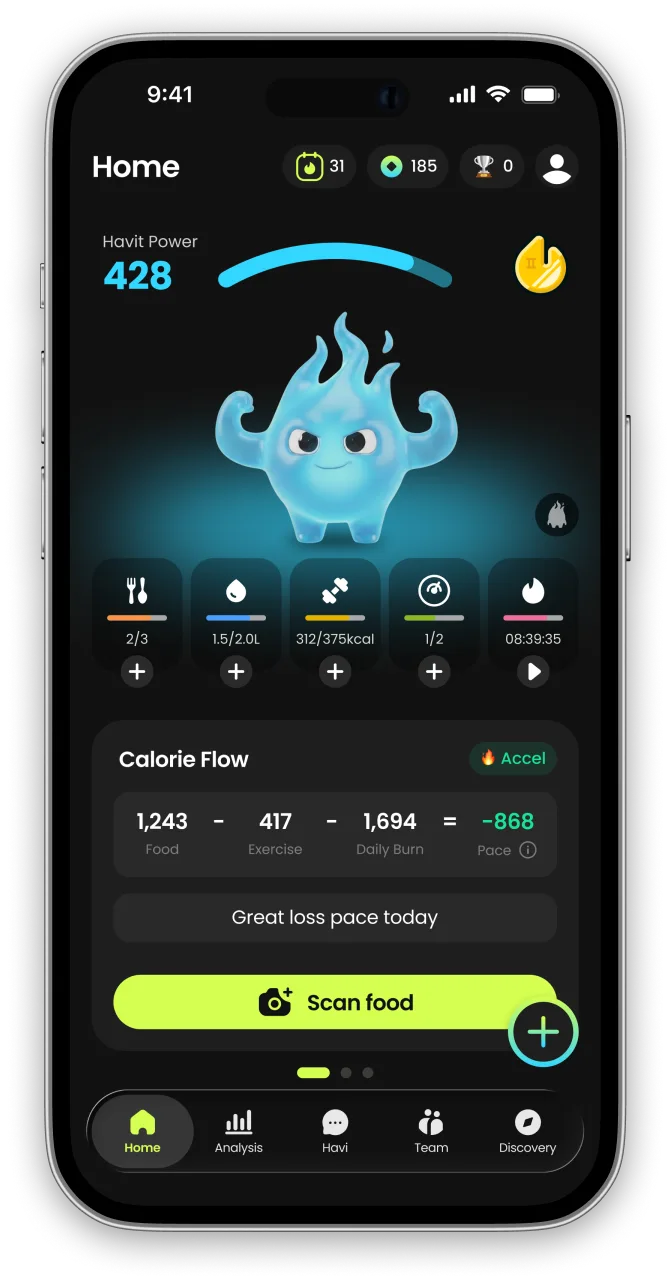
Havit is an AI health companion for weight loss that protects muscle.
Unlike calorie-only trackers, Havit connects AI body-composition estimates, nutrition, hydration, sleep, steps, cycle, mood, and GLP-1 medication in one daily routine — so progress is measured by body composition, not just the number on the scale. Daily missions turn established behavior-change techniques into small repeatable actions, drawing on expertise from professionals formerly at Juvis Diet, one of Korea’s leading metabolic clinics.
In Havit’s own analysis of 1,090 GLP-1 users, people who logged consistently built stronger habits than the general user base. Read the GLP-1 Habit Report
Havit works with or without GLP-1 medication. It is a wellness app, not a medical device; body-composition results are estimates.
Continue in the App
Personalized wellness with your own data


References
- Systematic Identification of Dietary Triggers in Interstitial Cystitis: A Prospective Elimination-Challenge Study — Journal of Urology, 2024
- Efficacy of Phased Elimination Diet Protocols for Bladder Pain Syndrome: A Randomized Controlled Trial — Urology, 2025
- Patient-Reported Outcomes Following Personalized Dietary Intervention for IC/BPS — International Urogynecology Journal, 2024
- Interstitial Cystitis Association Dietary Guidelines: Evidence Review and Update — ICA Clinical Advisory Board, 2025


