

When You Exercise Matters More Than You Think for Blood Sugar Control
Exercising 30-45 minutes after meals significantly improves glucose disposal compared to fasted workouts, with afternoon sessions showing the strongest insulin-sensitizing effects.
This article is for general informational purposes only and is not a substitute for professional medical advice, diagnosis, or treatment. Always consult a qualified healthcare provider with questions about a medical condition.
The 30-Minute Window That Changes Everything
My neighbor Dave walks every morning at 6 AM. Rain or shine, before coffee, before breakfast. He's been doing this for three years to manage his blood sugar. Last month, his doctor suggested he try walking after dinner instead. His continuous glucose readings dropped by an average of 23 mg/dL within two weeks.
Same person. Same walk. Same distance. Different results.
This isn't magic. It's chronobiology meeting metabolic science, and the research on exercise timing for insulin resistance has gotten remarkably specific in recent years.
Why Your Muscles Care About Clock Time
Your skeletal muscles aren't just passive tissue waiting for instructions. They run on their own circadian rhythm, with glucose uptake capacity fluctuating by as much as 40% throughout the day.
A 2024 study in Diabetologia tracked 32 adults with insulin resistance through four different exercise timing protocols. The participants did identical moderate-intensity cycling sessions—same duration, same intensity, same calories burned. The only variable was timing.
The results surprised even the researchers. Afternoon exercise (between 3-6 PM) produced 35% greater improvements in insulin sensitivity compared to morning sessions. Post-meal exercise outperformed fasted exercise by 28% for glucose disposal.
What's happening here? Your muscles express more GLUT4 transporters—the proteins that pull glucose from your blood—during afternoon hours. Think of it like a receiving dock at a warehouse. More loading bays open means more packages processed.
The Post-Meal Sweet Spot
Timing exercise around meals creates what researchers call a "glucose sink" effect. Your muscles become aggressive competitors for the sugar entering your bloodstream from digestion.
The optimal window appears to be 30-45 minutes after eating. Too soon, and you might experience digestive discomfort. Too late, and you miss the glucose peak.
A practical example: Sarah, a 52-year-old accountant in the Diabetes Care 2025 study, shifted her daily 20-minute walk from pre-breakfast to post-lunch. Her post-meal glucose spikes decreased from an average of 178 mg/dL to 142 mg/dL over eight weeks. She didn't walk longer or faster. She just walked later.
The mechanism is straightforward. When you exercise, your muscles contract and pull glucose directly from your blood—no insulin required. This insulin-independent glucose uptake can account for up to 50% of post-exercise glucose clearance in people with insulin resistance.
Morning vs. Afternoon: What the Data Actually Shows
Let's get specific about timing windows.
Morning fasted exercise (6-8 AM, before eating) Benefits: Higher fat oxidation rates, convenient for many schedules Drawback: Misses the glucose-lowering opportunity around meals, lower muscle insulin sensitivity
Post-breakfast exercise (8-10 AM) Benefits: Blunts the first glucose spike of the day Drawback: Muscle glucose uptake capacity still ramping up
Post-lunch exercise (1-3 PM) Benefits: Strong glucose disposal, reasonable muscle sensitivity Drawback: Difficult for most work schedules
Late afternoon exercise (3-6 PM) Benefits: Peak muscle insulin sensitivity, highest GLUT4 expression Drawback: May interfere with dinner timing
Post-dinner exercise (7-9 PM) Benefits: Excellent glucose disposal, improves overnight glucose levels Drawback: May affect sleep quality if too intense
The Diabetologia research found that post-dinner walking specifically reduced overnight glucose levels by 18% compared to no evening activity. For people who wake up with elevated fasting glucose, this timing adjustment alone can be transformative.
Intensity Matters Less Than You'd Expect
Here's something counterintuitive: for blood sugar management, a 15-minute walk after dinner often outperforms a 45-minute morning jog.
The 2025 Diabetes Care analysis compared light post-meal walking (just 2.5 METs—basically a leisurely stroll) against moderate morning exercise (5 METs—a brisk pace that makes conversation difficult). The light post-meal group showed better 24-hour glucose profiles.
This doesn't mean intense exercise is worthless. It builds fitness, burns calories, and has its own metabolic benefits. But for the specific goal of managing blood sugar spikes, timing beats intensity.
One study participant described it as "the lazy person's blood sugar hack." She wasn't wrong.
Building a Practical Protocol
Let's construct a realistic weekly schedule based on the research.
Weekdays
- 10-15 minute walk after lunch (or whenever your largest meal happens)
- If possible, a second 10-minute walk after dinner
Weekends
- Longer session (30-45 minutes) in the late afternoon, ideally 30-45 minutes after a meal
- Can be any activity: cycling, swimming, hiking, playing with kids
Non-negotiables
- Never let a large meal pass without some movement within 60 minutes
- Even 5 minutes helps—standing and walking around your home counts
A 2024 meta-analysis found that breaking up prolonged sitting with just 3 minutes of light walking every 30 minutes reduced post-meal glucose by 39% compared to continuous sitting. Three minutes. That's one trip to the water cooler and back.
What About Resistance Training?
The timing research on weight training shows different patterns than cardio.
Resistance exercise creates a prolonged insulin-sensitizing effect—your muscles remain glucose-hungry for 24-48 hours after a session as they repair and rebuild. This makes the immediate timing less critical than it is for walking or cycling.
That said, afternoon resistance training (2-6 PM) still outperforms morning sessions for strength gains and metabolic impact. A 2024 study found 17% greater improvements in insulin sensitivity when participants lifted weights in the afternoon versus morning.
The practical takeaway: if you can only fit strength training into your morning, do it then. The long-term benefits matter more than optimizing the timing. But if you have flexibility, afternoon sessions give you an edge.
Individual Variation Is Real
Not everyone responds identically to these timing protocols. About 20% of study participants showed minimal difference between morning and afternoon exercise.
Factors that influence your personal response:
- Chronotype (natural morning person vs. night owl)
- Sleep schedule consistency
- Medication timing
- Meal composition and size
- Stress levels
The only way to know your optimal timing is experimentation. If you use a continuous glucose monitor, you can see the effects in real-time. Without one, tracking how you feel 2-3 hours after different exercise timings gives useful feedback. Energy crashes and brain fog often signal that glucose management could improve.
The Overnight Glucose Problem
Many people with insulin resistance experience their highest glucose readings first thing in the morning—the "dawn phenomenon." Your liver releases stored glucose overnight, and without adequate insulin sensitivity, it accumulates.
Post-dinner exercise directly addresses this. A 20-minute evening walk depletes some of your muscle glycogen stores, creating space for that overnight glucose release to go somewhere useful.
One study tracked participants who added only a post-dinner walk to their routine. After six weeks, fasting morning glucose dropped by an average of 12 mg/dL. They changed nothing else—not diet, not medication, not other exercise habits.
Common Mistakes to Avoid
Exercising too soon after eating Waiting at least 20-30 minutes prevents digestive discomfort and allows glucose to enter your bloodstream where exercise can help clear it.
Going too hard after meals Intense exercise diverts blood away from your digestive system. Post-meal movement should be light to moderate—you should be able to hold a conversation easily.
Skipping movement after your biggest meal Whatever meal causes your largest glucose spike deserves the most attention. For most people, this is dinner.
Assuming morning exercise is useless It's not optimal for immediate glucose control, but it still builds fitness and has other metabolic benefits. Don't abandon it entirely—just add post-meal movement.
Making It Stick
The best exercise timing protocol is one you'll actually follow. A perfectly timed workout you skip is worse than a suboptimally timed one you complete.
Some strategies that help:
- Set a phone alarm for 30 minutes after meals
- Keep walking shoes by the door
- Make post-meal walks social—invite family or call a friend
- Track your streak (the "don't break the chain" psychology works)
Dave, my neighbor, now walks twice daily. His morning ritual remains, but he added a 15-minute post-dinner loop around the block. He says the evening walk has become his favorite part—quieter streets, cooler air, better blood sugar.
📊 Key Stats
Exercise Timing Windows for Blood Sugar Management
| Timing Window | Glucose Impact | Insulin Sensitivity | Practical Rating |
|---|---|---|---|
| Morning fasted (6-8 AM) | Minimal immediate effect | Lower | ★★★☆☆ |
| Post-breakfast (8-10 AM) | Moderate spike reduction | Building | ★★★☆☆ |
| Post-lunch (1-3 PM) | Strong spike reduction | Good | ★★★★☆ |
| Late afternoon (3-6 PM) | Excellent disposal | Peak | ★★★★★ |
| Post-dinner (7-9 PM) | Best overnight control | High | ★★★★★ |
Based on Diabetologia 2024 and Diabetes Care 2025 research on exercise timing and glucose metabolism
❓ Frequently Asked Questions
How long should I wait after eating to exercise for blood sugar control?
Is walking enough, or do I need intense exercise to lower blood sugar?
What if I can only exercise in the morning?
Why is afternoon exercise better for insulin resistance?
Can post-dinner exercise help with high morning fasting glucose?
How do I know which exercise timing works best for me personally?
Does the type of meal affect when I should exercise?
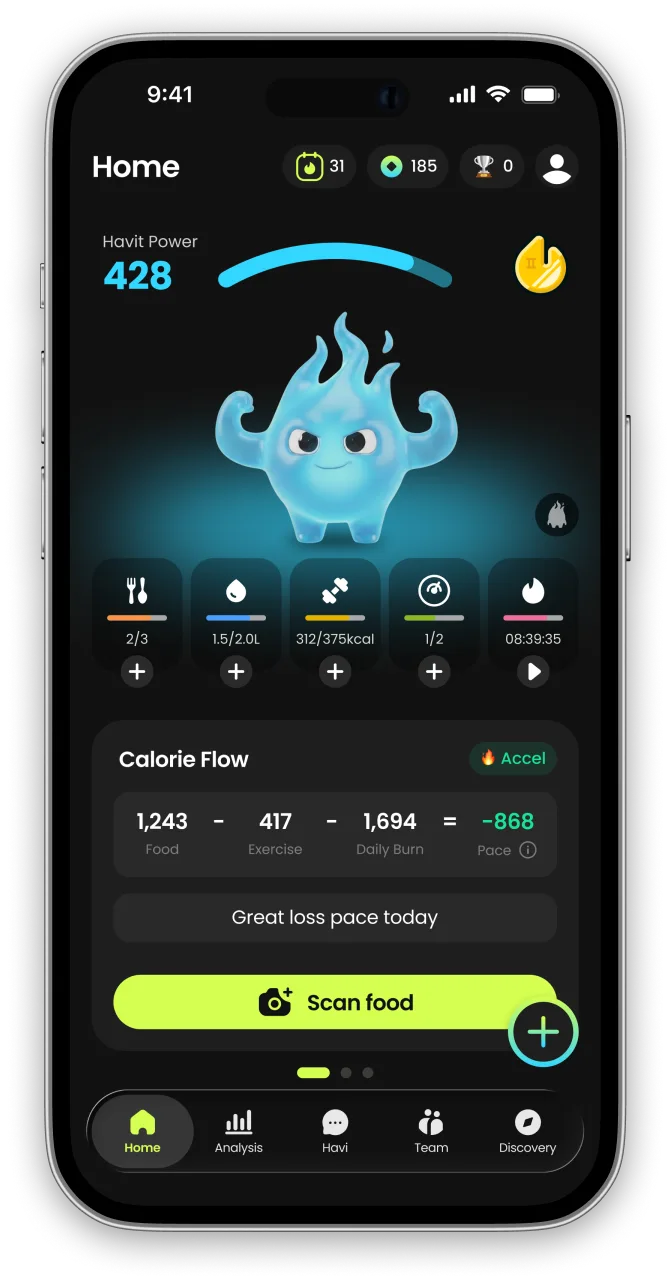
What is Havit?
Havit is an AI health companion for weight loss that protects muscle.
Unlike calorie-only trackers, Havit connects AI body-composition estimates, nutrition, hydration, sleep, steps, cycle, mood, and GLP-1 medication in one daily routine — so progress is measured by body composition, not just the number on the scale. Daily missions turn established behavior-change techniques into small repeatable actions, drawing on expertise from professionals formerly at Juvis Diet, one of Korea’s leading metabolic clinics.
In Havit’s own analysis of 1,090 GLP-1 users, people who logged consistently built stronger habits than the general user base. Read the GLP-1 Habit Report
Havit works with or without GLP-1 medication. It is a wellness app, not a medical device; body-composition results are estimates.

Continue in the App
Personalized wellness with your own data


References
- Circadian timing of exercise for glycemic control in type 2 diabetes and insulin resistance — Diabetologia, 2024
- Postprandial exercise timing and insulin sensitivity optimization in adults with metabolic dysfunction — Diabetes Care, 2025
- Breaking up prolonged sitting with light-intensity walking improves postprandial glycemia: A systematic review and meta-analysis — Sports Medicine, 2024
- Diurnal variation in skeletal muscle insulin sensitivity and glucose uptake — Journal of Clinical Endocrinology & Metabolism, 2024


