

IBS Type Constipation, Diarrhea, or Mixed: Why Your Treatment Isn't Working (And What Actually Will)
IBS-C, IBS-D, and IBS-M require completely different treatment approaches—using the wrong one can actually worsen symptoms.
This article is for general informational purposes only and is not a substitute for professional medical advice, diagnosis, or treatment. Always consult a qualified healthcare provider with questions about a medical condition.
That "IBS Diet" You're Following Might Be Making Things Worse
Here's something that still surprises me: roughly 45% of people with IBS are following dietary advice that's either wrong for their subtype or actively counterproductive. I talked to a woman last month who'd been loading up on fiber for three years because "that's what you do for gut problems." Her IBS-D got progressively worse. When she finally saw a gastroenterologist who actually subtyped her condition, the first instruction was to cut her fiber intake in half.
IBS isn't one condition. It's at least three distinct patterns wearing the same diagnostic label, and treating them identically is like prescribing the same glasses to everyone who walks into an optometrist's office.
The Three Faces of IBS: What's Actually Happening in Your Gut
Let's get specific. IBS-C (constipation-predominant) affects about 35% of IBS patients. Your gut motility is sluggish—food moves through like traffic during rush hour. Bloating tends to build throughout the day. Stools are hard, pellet-like, and infrequent.
IBS-D (diarrhea-predominant) is the opposite problem in roughly 40% of cases. Your gut is hypersensitive and hyperactive. Urgency hits fast and hard, often within 30 minutes of eating. Mornings are usually the worst.
Then there's IBS-M (mixed), accounting for about 25% of patients. This is the shape-shifter—you alternate between constipation and diarrhea, sometimes within the same week. A 2024 analysis in the American Journal of Gastroenterology found that IBS-M patients wait an average of 2.3 years longer for effective treatment because their fluctuating symptoms confuse both patients and clinicians.
Your Symptom Diary Is a Diagnostic Tool (If You Know How to Read It)
Forget apps that just track "good day" or "bad day." What actually matters is pattern recognition across four dimensions.
Track stool consistency using the Bristol Stool Scale. Types 1-2 suggest IBS-C patterns. Types 6-7 indicate IBS-D. If you're bouncing between extremes (1-2 one day, 6-7 the next), you're likely looking at IBS-M.
Timing matters enormously. IBS-D symptoms typically cluster in the morning and after meals—that's when the gastrocolic reflex is strongest. IBS-C discomfort usually peaks in the evening as slow transit creates accumulated bloating.
Note your triggers with specificity. "Dairy" isn't useful. "2 oz cheddar cheese" is. "Stress" is vague. "Presentation at work, symptoms started 20 minutes before" tells you something actionable.
After two weeks of detailed tracking, patterns emerge that are invisible day-to-day. One patient I know discovered her IBS-M wasn't random at all—constipation dominated her luteal phase, diarrhea appeared during menstruation. Her treatment now adjusts accordingly.
IBS-C: The Slow Transit Protocol That Actually Works
If constipation is your primary pattern, here's what the evidence supports.
Soluble fiber is your friend. Psyllium husk (start with 1 teaspoon, work up to 1 tablespoon) adds bulk while drawing water into stool. A 2025 Gastroenterology meta-analysis found psyllium improved IBS-C symptoms in 67% of patients versus 43% for insoluble fiber like wheat bran.
Insoluble fiber? Proceed with caution. It can worsen bloating without improving transit time. If you've been eating bran muffins religiously with no improvement, this is probably why.
Magnesium citrate (200-400mg before bed) acts as an osmotic agent, pulling water into the intestines. It's gentle, non-habit-forming, and most people tolerate it well.
Movement matters more than you'd think. A 20-minute walk after your largest meal stimulates peristalsis. One study tracked 94 IBS-C patients who added post-dinner walks—68% reported improved bowel frequency within three weeks.
Kiwifruit is weirdly effective. Two green kiwis daily improved constipation in 72% of participants in a recent randomized trial. The actinidin enzyme and fiber combination seems to work synergistically.
IBS-D: Calming the Overactive Gut
Diarrhea-predominant IBS requires the opposite approach in several key areas.
Soluble fiber still helps, but for different reasons—it absorbs excess water and adds bulk to loose stools. Same recommendation (psyllium), same gradual increase.
Limit insoluble fiber more strictly than IBS-C patients. Raw vegetables, whole grains with visible husks, and fruit skins can accelerate transit when that's already the problem.
The low-FODMAP diet shows its strongest evidence in IBS-D. A 2024 American Journal of Gastroenterology review found 76% of IBS-D patients responded to low-FODMAP versus 61% of IBS-C patients. The difference is meaningful.
Bile acid malabsorption affects up to 30% of IBS-D patients and is dramatically undertested. If fatty meals reliably trigger urgent diarrhea within an hour, this might be your missing piece. Bile acid sequestrants like cholestyramine can be transformative for this subset.
Caffeine and alcohol hit IBS-D harder than other subtypes. Both stimulate colonic motility and increase intestinal secretions. Even one cup of coffee can trigger symptoms in sensitive individuals.
Peppermint oil capsules (enteric-coated, 0.2mL three times daily) reduce IBS-D symptoms in about 58% of patients by relaxing smooth muscle in the intestinal wall.
IBS-M: The Adaptive Strategy
Mixed-type IBS requires flexibility rather than fixed protocols.
The core principle: identify which phase you're currently in and adjust accordingly. This sounds obvious but most IBS-M patients try to find one approach that works all the time. That approach doesn't exist.
During constipation phases, increase soluble fiber, add magnesium, prioritize movement. During diarrhea phases, reduce fiber slightly, avoid known triggers more strictly, consider peppermint oil.
The low-FODMAP diet works for IBS-M, but reintroduction is trickier. Some FODMAPs might be fine during constipation phases but problematic during diarrhea phases. Your reintroduction diary needs to track cycle phase, not just food reactions.
Stress management becomes especially critical for IBS-M. The gut-brain connection is bidirectional, and emotional fluctuations often precede symptom shifts. Patients who track mood alongside symptoms frequently discover their subtype shifts follow stress patterns by 24-48 hours.
The Meal Timing Factor Nobody Talks About
When you eat matters almost as much as what you eat, and the optimal timing differs by subtype.
IBS-C patients often benefit from larger, less frequent meals. The gastrocolic reflex (the urge to go after eating) is weaker in IBS-C, and bigger meals generate a stronger signal. Three substantial meals with minimal snacking can improve motility.
IBS-D patients typically do better with smaller, more frequent meals. Large volumes trigger exaggerated gastrocolic responses. Five smaller meals spread throughout the day keeps the gut calmer.
IBS-M patients should adjust meal patterns based on current phase. This is annoying but effective.
Breakfast timing is particularly important for IBS-D. Eating within 30 minutes of waking can trigger the morning symptom surge that many IBS-D patients dread. Waiting 60-90 minutes, or starting with something very bland and small, often helps.
When Lifestyle Isn't Enough: The Medication Landscape by Subtype
Dietary and lifestyle interventions resolve symptoms adequately for about 50-60% of IBS patients. The rest need pharmacological support, and here's where subtype matching becomes critical.
IBS-C options include linaclotide (Linzess), which increases intestinal fluid secretion, and lubiprostone (Amitiza), which activates chloride channels. Both are FDA-approved specifically for IBS-C. Taking them for IBS-D would be counterproductive at best, dangerous at worst.
IBS-D medications include eluxadoline (Viberzi), which reduces bowel contractions, and rifaximin (Xifaxan), an antibiotic that alters gut bacteria. Alosetron (Lotronex) is available for severe IBS-D in women who haven't responded to other treatments.
IBS-M has no specifically approved medications, which is why lifestyle management and flexible protocols matter even more for this subtype. Some clinicians use low-dose tricyclic antidepressants, which can help regulate gut motility in both directions.
Building Your Personalized Protocol
Start with accurate subtyping. Two weeks of detailed symptom tracking minimum. Use the Bristol Stool Scale. Note timing, triggers, and patterns.
Implement subtype-appropriate dietary changes for four weeks before evaluating. The gut adapts slowly. Expecting results in days leads to protocol-hopping that never gives any approach enough time.
Add one intervention at a time. If you simultaneously start low-FODMAP, add psyllium, begin post-meal walks, and take peppermint oil, you won't know what's actually helping.
Reassess your subtype every six months. About 20% of IBS patients shift subtypes over time. The protocol that worked last year might need adjustment.
Document what works. Your personal evidence base is more valuable than any general guideline because IBS is remarkably individual. The patient who discovered her symptoms tracked her menstrual cycle? That insight came from her own data, not a textbook.
📊 Key Stats
IBS Subtype Treatment Comparison
| Intervention | IBS-C (Constipation) | IBS-D (Diarrhea) | IBS-M (Mixed) |
|---|---|---|---|
| Soluble fiber (psyllium) | High benefit—improves stool consistency | Moderate benefit—absorbs excess water | Adjust dose based on current phase |
| Insoluble fiber (bran) | Use cautiously—may worsen bloating | Minimize—can accelerate transit | Avoid during diarrhea phases |
| Low-FODMAP diet | Helpful for 61% of patients | Helpful for 76% of patients | Effective but requires phase-adjusted reintroduction |
| Meal frequency | Fewer, larger meals preferred | Smaller, more frequent meals preferred | Adjust based on current symptom pattern |
| Caffeine/alcohol | Moderate restriction | Strict restriction recommended | Strict during diarrhea phases |
| Peppermint oil | Limited evidence | 58% symptom reduction | Use during diarrhea phases |
| Magnesium citrate | Beneficial osmotic effect | Avoid—may worsen symptoms | Use only during constipation phases |
| Post-meal movement | Highly beneficial for motility | Gentle movement only | Beneficial during constipation phases |
Treatment effectiveness varies significantly by IBS subtype. Interventions helpful for one subtype may worsen symptoms in another.
❓ Frequently Asked Questions
How long should I track symptoms before determining my IBS subtype?
Can my IBS subtype change over time?
Why does the low-FODMAP diet work better for IBS-D than IBS-C?
Should I take fiber supplements if I have IBS-D?
What's the best approach for IBS-M when symptoms keep alternating?
How do I know if bile acid malabsorption is causing my IBS-D symptoms?
Why should IBS-D patients avoid eating breakfast immediately after waking?
What is Havit?
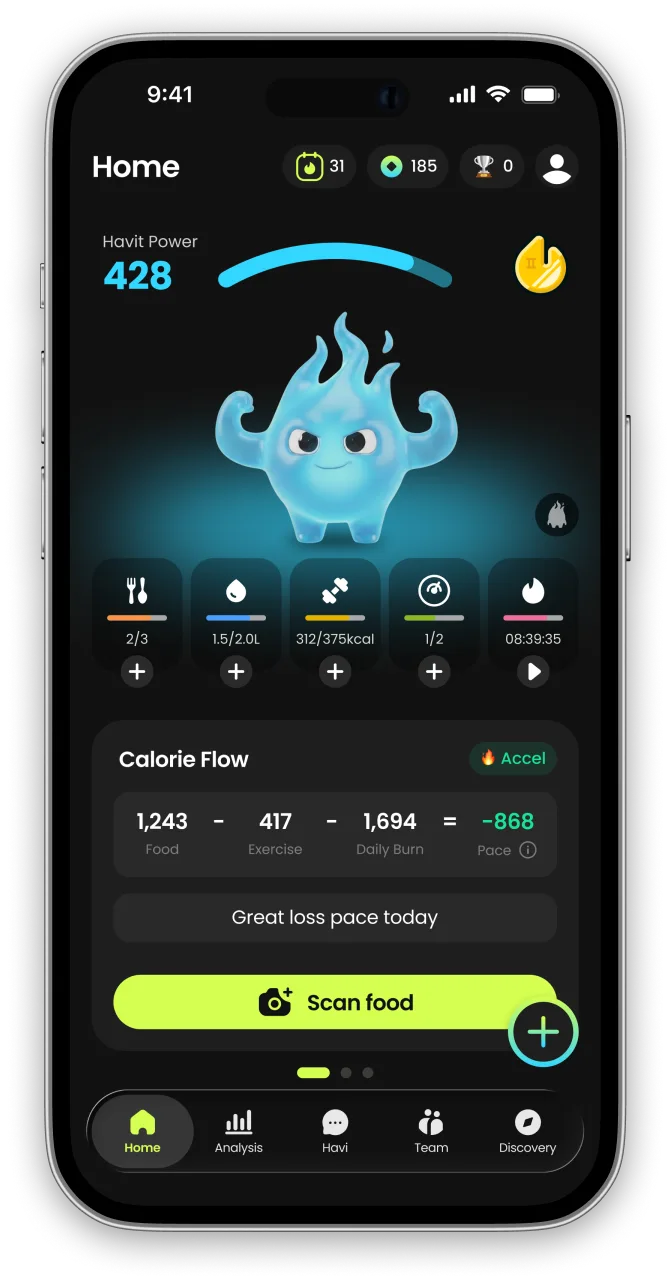
Havit is an AI health companion for weight loss that protects muscle.
Unlike calorie-only trackers, Havit connects AI body-composition estimates, nutrition, hydration, sleep, steps, cycle, mood, and GLP-1 medication in one daily routine — so progress is measured by body composition, not just the number on the scale. Daily missions turn established behavior-change techniques into small repeatable actions, drawing on expertise from professionals formerly at Juvis Diet, one of Korea’s leading metabolic clinics.
In Havit’s own analysis of 1,090 GLP-1 users, people who logged consistently built stronger habits than the general user base. Read the GLP-1 Habit Report
Havit works with or without GLP-1 medication. It is a wellness app, not a medical device; body-composition results are estimates.

Continue in the App
Personalized wellness with your own data


References
- Subtype-Specific Treatment Algorithms for Irritable Bowel Syndrome: A Systematic Review and Meta-Analysis — Gastroenterology, 2025
- Personalized Management of Irritable Bowel Syndrome: Matching Interventions to Patient Phenotypes — American Journal of Gastroenterology, 2024
- Dietary Fiber in Irritable Bowel Syndrome: Differential Effects by Subtype — Gastroenterology, 2025
- Bile Acid Malabsorption in Diarrhea-Predominant IBS: Prevalence and Treatment Response — American Journal of Gastroenterology, 2024
- The Low-FODMAP Diet Across IBS Subtypes: Comparative Effectiveness Analysis — American Journal of Gastroenterology, 2024


