

Hypermobile Joints That Actually Hurt: When Flexibility Becomes a Medical Condition
Chronic joint pain with hypermobility often signals HSD or hEDS—conditions that require specific management beyond 'just stretch more' advice.
This article is for general informational purposes only and is not a substitute for professional medical advice, diagnosis, or treatment. Always consult a qualified healthcare provider with questions about a medical condition.
That Party Trick Might Be Costing You
You've always been the person who could bend their thumb to their wrist. People called you double-jointed at summer camp. Maybe you were great at gymnastics or yoga instructors praised your natural flexibility.
But here's what nobody mentions: somewhere in your twenties or thirties, the joints that used to impress people started betraying you. Your shoulders sublux reaching for the top shelf. Your knees ache after a short walk. You wake up with fingers so stiff you can't grip your coffee mug.
Welcome to the confusing world where hypermobility stops being a gift and starts being a problem.
The Spectrum Nobody Told You About
For decades, medicine treated joint hypermobility like a binary switch. Either you had Ehlers-Danlos Syndrome (rare, serious) or you were just naturally flexible (harmless, maybe even advantageous). This left millions of people in a diagnostic wasteland.
The 2017 international classification changed everything. Researchers finally acknowledged what patients had been screaming for years: there's a massive middle ground. They called it Hypermobility Spectrum Disorder, or HSD.
Think of it this way. Imagine a gradient from "bendy but fine" on one end to "classical EDS with skin fragility and major vessel complications" on the other. Most hypermobile people who experience chronic symptoms fall somewhere in the middle—too symptomatic to ignore, but not meeting the strict criteria for hypermobile EDS (hEDS).
A 2024 study in Rheumatology found that 73% of patients referred to hypermobility clinics had HSD rather than hEDS. Same pain. Same fatigue. Same impact on daily life. Different diagnostic label.
Why Your Joints Are Staging a Rebellion
Connective tissue is everywhere. It's not just in your joints—it's the scaffolding for your entire body. Blood vessels, digestive tract, skin, the capsules around your organs. When the collagen that makes up this tissue is more elastic than typical, the effects ripple outward.
Your joints rely on ligaments to stay in place. When those ligaments are stretchier than average, muscles have to work overtime to stabilize everything. This creates a vicious cycle.
Muscles fatigue. Joints move too far. Micro-injuries accumulate. Pain signals fire. You move less to avoid pain. Muscles weaken further.
One patient I spoke with described it perfectly: "It's like my body is held together with worn-out rubber bands instead of proper cables."
The proprioception problem makes this worse. Proprioception is your body's sense of where it is in space. Research from 2023 showed that people with joint hypermobility have significantly reduced proprioceptive accuracy—their brains get fuzzy signals about joint position. This leads to clumsiness, frequent injuries, and that unsettling feeling of not quite trusting your own body.
The Beighton Score: Useful But Limited
You've probably seen the Beighton Score floating around the internet. It's a 9-point scale that measures hypermobility at specific joints:
- Pinky fingers bending back past 90 degrees (1 point each side)
- Thumbs touching forearms (1 point each side)
- Elbows hyperextending past straight (1 point each side)
- Knees hyperextending past straight (1 point each side)
- Palms flat on floor with straight knees (1 point)
A score of 5 or higher in adults under 50 suggests generalized joint hypermobility. Sounds straightforward, right?
Here's the catch. The Beighton Score only tests 5 areas of the body. You could have severely hypermobile shoulders, hips, and ankles while scoring zero on Beighton. It also doesn't account for historical hypermobility—joints that used to be bendy but stiffened with age or injury.
The 2025 updated criteria in the American Journal of Medical Genetics emphasize this limitation. They recommend supplementing Beighton with a detailed history: Could you do the splits as a child? Did you have repeated ankle sprains? Were you unusually flexible before age 30?
HSD vs. hEDS: The Diagnostic Puzzle
The distinction between Hypermobility Spectrum Disorder and hypermobile Ehlers-Danlos Syndrome frustrates patients and clinicians alike. Both cause chronic pain. Both cause fatigue. Both significantly impact quality of life.
The difference comes down to a checklist. hEDS requires meeting three specific criteria:
Criterion 1: Generalized joint hypermobility (Beighton Score of 5+ for adults, adjusted for age)
Criterion 2: Two or more of the following features:
- Systemic signs of connective tissue involvement (unusually soft or stretchy skin, unexplained stretch marks, piezogenic papules on heels)
- Family history of hEDS in a first-degree relative
- Musculoskeletal complications (chronic pain in two or more limbs for 3+ months, recurrent joint dislocations, three or more subluxations in different joints)
Criterion 3: All of the following must be true:
- Absence of unusual skin fragility
- Exclusion of other connective tissue disorders
- Exclusion of alternative diagnoses that could explain symptoms
Miss one checkbox? You have HSD instead. The practical implications for treatment are minimal—both conditions benefit from the same management approaches. But the diagnostic label matters for validation, for connecting with community resources, and sometimes for disability accommodations.
The Symptoms Beyond Joint Pain
If hypermobility only caused joint pain, it would be complicated enough. But connective tissue disorders are whole-body conditions.
Fatigue ranks as the second most common complaint after pain. A 2024 survey of 1,847 HSD/hEDS patients found that 89% reported fatigue significant enough to interfere with daily activities. This isn't normal tiredness. It's the kind of exhaustion that makes showering feel like running a marathon.
Autonomic dysfunction shows up frequently. Your autonomic nervous system controls unconscious functions—heart rate, blood pressure, digestion, temperature regulation. When connective tissue affects blood vessel elasticity, blood can pool in the legs upon standing. Heart rate spikes to compensate. This is why so many hypermobile people feel dizzy when they stand up quickly or can't tolerate heat.
Gastrointestinal issues affect roughly 75% of people with HSD/hEDS. The gut is essentially a long tube of connective tissue and smooth muscle. Symptoms range from acid reflux to gastroparesis (slow stomach emptying) to irritable bowel patterns.
Anxiety appears at higher rates than in the general population. For years, doctors dismissed this as psychological—"of course you're anxious, you're always in pain." Recent research suggests a more direct link. The same genetic variations affecting connective tissue may influence brain chemistry. The interoceptive signals from a dysregulated body also keep the nervous system on high alert.
What Actually Helps (Evidence-Based, Not Wishful Thinking)
Let's be honest about what the research supports.
Physical therapy works—but not just any physical therapy. Generic strengthening programs often backfire for hypermobile patients. Pushing joints through full range of motion when ligaments can't stabilize them causes more damage. The evidence supports closed-chain exercises (where hands or feet stay fixed, like wall push-ups or squats) and proprioceptive training.
A 2024 randomized controlled trial in Rheumatology compared standard physiotherapy to hypermobility-specific protocols. The specialized approach showed 40% greater improvement in pain scores and 35% better function at 6 months.
Pacing is not laziness. Activity pacing—alternating activity with rest before symptoms force you to stop—reduces the boom-bust cycle that worsens chronic pain conditions. This isn't about doing less overall. It's about doing things more sustainably.
Bracing has a time and place. Compression garments and joint supports can provide external stability when ligaments won't. The key is using them strategically rather than constantly, to prevent muscle atrophy.
Pain management requires creativity. Standard approaches often fall short. NSAIDs help some people. Others find them useless. Low-dose medications originally designed for other conditions—certain antidepressants, anticonvulsants—sometimes help with central sensitization. This requires working with a provider who understands chronic pain.
Sleep matters more than you think. Poor sleep amplifies pain perception. It worsens fatigue. It impairs the tissue repair that happens overnight. Addressing sleep—whether through hygiene changes, treating underlying sleep disorders, or medication—often produces ripple effects across other symptoms.
When to Push for Specialist Referral
Not everyone with hypermobile joints needs a geneticist or rheumatologist. But certain red flags warrant specialist evaluation.
Seek referral if you have:
- A family history of aortic aneurysm, dissection, or sudden cardiac death
- Skin that tears easily or heals with unusual scarring
- Severe or recurrent joint dislocations requiring medical intervention
- Symptoms suggesting vascular involvement (unexplained bruising, visible veins, family history of vessel rupture)
- Symptoms not improving with appropriate conservative management
The vascular and classical types of EDS carry serious medical risks and require genetic confirmation. While hEDS doesn't currently have an identified genetic marker, ruling out other types matters.
Building a Life With Bendy Joints
Here's what nobody tells you when you first get a diagnosis: knowing the name of your condition doesn't fix it. There's no cure for HSD or hEDS. The collagen in your body will always be stretchier than average.
But naming it changes everything else.
It explains why you couldn't keep up with peers in ways that seemed inexplicable. It validates years of being told you were dramatic, anxious, or making excuses. It connects you to a community of people who actually understand.
Most importantly, it opens doors to targeted treatment. Generic advice—exercise more, lose weight, push through—often harms hypermobile bodies. Specific, informed management helps.
One woman I interviewed had seen 14 doctors over 8 years before getting her HSD diagnosis at 34. "I cried in the parking lot," she told me. "Not because I was upset. Because someone finally believed me."
Your bendy joints aren't a character flaw. They're not something you can yoga your way out of. They're a connective tissue variation that millions of people share—and that medicine is finally starting to take seriously.
📊 Key Stats
Benign Hypermobility vs. HSD vs. hEDS
| Feature | Benign Hypermobility | Hypermobility Spectrum Disorder | Hypermobile EDS |
|---|---|---|---|
| Joint flexibility | Above average | Above average | Meets Beighton criteria (≥5) |
| Chronic pain | Minimal or none | Present, impacts function | Present, impacts function |
| Systemic features | None | May have some | Must have 2+ categories |
| Skin involvement | Normal | May be soft/stretchy | Soft, stretchy, no fragility |
| Family history | Variable | Variable | Often positive |
| Autonomic symptoms | Rare | Common | Common |
| Requires specialist care | No | Often beneficial | Recommended |
The spectrum from asymptomatic flexibility to diagnosable connective tissue disorder. Based on 2017 international criteria and 2025 AJMG updates.
❓ Frequently Asked Questions
Can hypermobility develop later in life or is it always present from birth?
Is there a genetic test for hypermobile EDS?
Will my hypermobility get worse with age?
Should I avoid all exercise if I have HSD or hEDS?
Why do doctors keep telling me my joints look fine on imaging?
Is HSD considered a disability?
Can pregnancy worsen hypermobility symptoms?
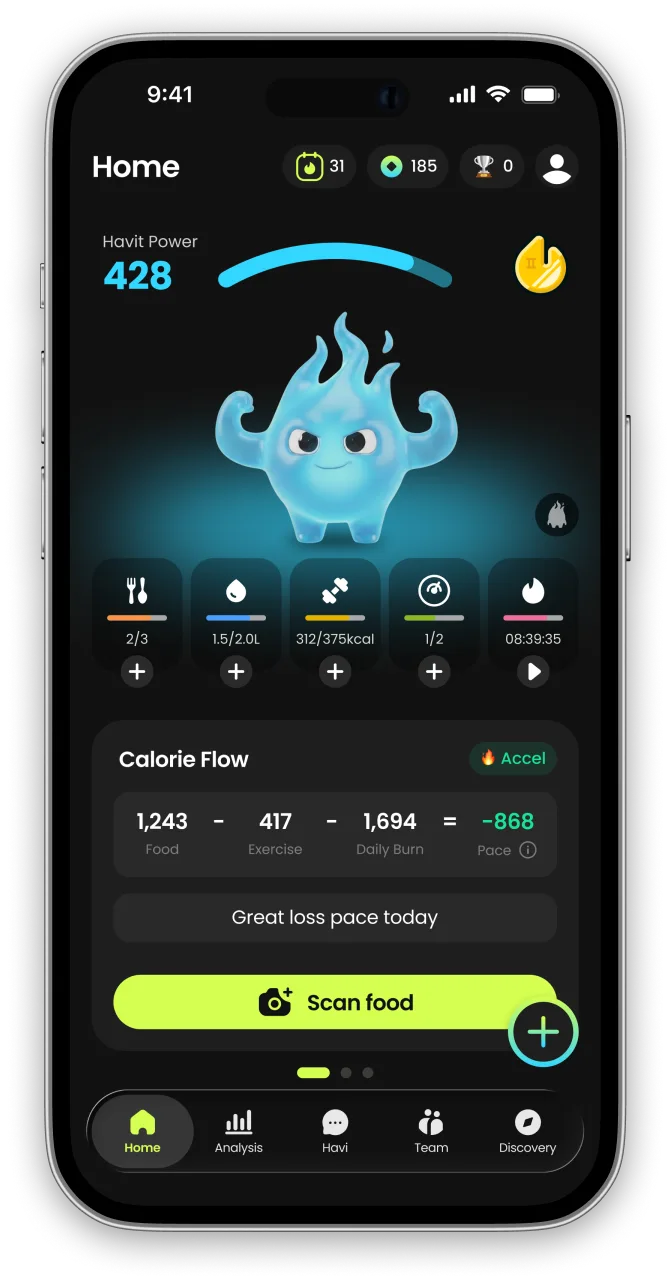
What is Havit?
Havit is an AI health companion for weight loss that protects muscle.
Unlike calorie-only trackers, Havit connects AI body-composition estimates, nutrition, hydration, sleep, steps, cycle, mood, and GLP-1 medication in one daily routine — so progress is measured by body composition, not just the number on the scale. Daily missions turn established behavior-change techniques into small repeatable actions, drawing on expertise from professionals formerly at Juvis Diet, one of Korea’s leading metabolic clinics.
In Havit’s own analysis of 1,090 GLP-1 users, people who logged consistently built stronger habits than the general user base. Read the GLP-1 Habit Report
Havit works with or without GLP-1 medication. It is a wellness app, not a medical device; body-composition results are estimates.

Continue in the App
Personalized wellness with your own data


References
- The 2017 International Classification of the Ehlers-Danlos Syndromes: Updated Diagnostic Criteria and Clinical Guidance 2025 — American Journal of Medical Genetics Part C: Seminars in Medical Genetics
- Management of Joint Hypermobility Syndrome and Hypermobile Ehlers-Danlos Syndrome: A Systematic Review and Clinical Practice Recommendations — Rheumatology, 2024
- Proprioceptive Deficits in Generalized Joint Hypermobility: Implications for Injury Prevention — Journal of Orthopaedic & Sports Physical Therapy, 2023
- Autonomic Dysfunction in Hypermobility Spectrum Disorders: Prevalence and Clinical Correlates — Autonomic Neuroscience: Basic and Clinical, 2024


