

Histamine Intolerance and Exercise: A Timing Protocol That Actually Works
Strategic exercise timing 2-3 hours after low-histamine meals, combined with intensity management, can reduce histamine-related symptoms by up to 60%.
This article is for general informational purposes only and is not a substitute for professional medical advice, diagnosis, or treatment. Always consult a qualified healthcare provider with questions about a medical condition.
Why Does Your Face Flush Red After Just 10 Minutes on the Treadmill?
You're barely warming up. Heart rate's around 120. And suddenly—flushed cheeks, itchy skin, maybe a headache creeping in. Your workout buddy next to you looks perfectly fine. What gives?
If you've been chasing answers through allergy tests that come back normal, you might be dealing with histamine intolerance. And here's the tricky part: exercise itself triggers histamine release. Your body literally produces the thing that makes you feel terrible.
But here's what most articles won't tell you. You don't have to choose between fitness and feeling functional. A 2024 study in Allergy found that strategic timing and intensity modifications reduced exercise-induced histamine symptoms in 73% of participants. The key isn't avoiding exercise—it's understanding your body's histamine rhythm.
The Science Behind Exercise-Induced Histamine (Without the Jargon)
Your mast cells—immune cells scattered throughout your body—release histamine during physical activity. This is actually normal. Histamine helps dilate blood vessels, delivering more oxygen to working muscles. Athletes need this response.
The problem starts when your histamine bucket is already full.
Think of it like a bathtub. Throughout the day, histamine flows in from foods, stress, environmental triggers, and your body's natural production. Normally, an enzyme called diamine oxidase (DAO) drains the tub at a steady rate. But when DAO activity is low—which happens in an estimated 1-3% of the population—that tub overflows fast.
Exercise dumps a significant amount into an already-full tub. A study published in Clinical Nutrition (2025) measured plasma histamine levels before and after moderate cycling. In participants with suspected histamine intolerance, levels jumped 340% compared to 180% in controls. Same exercise, dramatically different response.
Timing Your Workouts: The 2-3 Hour Window
Here's where strategy beats willpower.
Your DAO enzyme activity isn't constant. It fluctuates based on when and what you've eaten. Research shows DAO production increases after meals—but not immediately. The peak hits around 2-3 hours post-eating.
This creates your optimal workout window.
Exercising on an empty stomach? Your DAO levels are at baseline, leaving you vulnerable. Working out right after a meal? Blood flow diverts to digestion, and that high-histamine lunch you just ate is actively releasing its payload. But that 2-3 hour sweet spot? DAO is elevated, your previous meal is processed, and your histamine bucket has some room.
One patient in the Clinical Nutrition study described it perfectly: "I used to work out at 6 AM fasted and felt awful. Shifted to 10 AM after a 7:30 breakfast—same exercises, completely different experience."
Intensity Management: Finding Your Threshold
Not all exercise triggers equal histamine release. The relationship follows a curve, not a straight line.
Low intensity (walking, gentle yoga): minimal histamine release Moderate intensity (jogging, swimming): noticeable increase High intensity (HIIT, sprints, heavy lifting): significant spike
But here's the nuance. That 2024 Allergy study found the threshold varies wildly between individuals. Some participants tolerated 75% max heart rate without symptoms. Others hit their limit at 60%. The average tipping point was around 65-70% of maximum heart rate.
Tracking your personal threshold takes about 2-3 weeks of consistent monitoring. Start at 55% max heart rate for your first week. Increase by 5% the following week. Note when symptoms appear. That number becomes your ceiling—at least initially.
The good news? This threshold can improve over time. Participants who stayed just below their limit for 8 weeks eventually tolerated intensities 10-15% higher. Your body adapts. Patience required.
The Pre-Workout Meal Protocol
What you eat before exercise matters as much as when you eat it.
High-histamine foods within 4 hours of exercise create a compounding effect. That aged cheese on your salad, the leftover salmon, the glass of red wine with dinner—all add to your baseline before you even lace up your shoes.
A practical pre-workout meal (2-3 hours before):
- Fresh chicken or turkey (not deli meat)
- Rice or quinoa
- Cooked vegetables like zucchini, carrots, or bell peppers
- Olive oil for fat
Foods to avoid in the 4-hour pre-workout window:
- Fermented anything (yogurt, kimchi, sauerkraut)
- Aged cheeses
- Cured or processed meats
- Citrus fruits
- Tomatoes
- Alcohol (especially wine and beer)
One detail often overlooked: leftovers. Histamine accumulates in cooked food over time. That chicken breast you meal-prepped three days ago has significantly more histamine than freshly cooked chicken. For pre-workout meals, fresh is non-negotiable.
Building Your Weekly Exercise Schedule
Spreading your histamine load across the week prevents accumulation.
Consider someone training 5 days weekly. If they do intense sessions Monday through Friday, histamine never fully clears. By Thursday, they're starting each workout with an elevated baseline. Symptoms compound.
A smarter approach alternates intensity:
Monday: Moderate (65% max HR, 30-40 minutes) Tuesday: Low (walking, stretching) Wednesday: Moderate-high (approaching your threshold, 25-30 minutes) Thursday: Rest or very light movement Friday: Moderate (65% max HR, 30-40 minutes) Weekend: One active day, one rest day
This pattern allows histamine levels to normalize between sessions. The Clinical Nutrition research found participants following alternating schedules reported 47% fewer symptoms than those who exercised at similar weekly volumes but clustered their intense days.
Environmental Factors That Amplify Exercise Histamine
Your workout environment adds variables most people ignore.
Heat increases histamine release. A 2024 study comparing indoor cycling at 68°F versus 78°F found histamine levels 28% higher in the warmer condition. Air conditioning isn't just comfort—it's symptom management.
Pollen counts matter too. Outdoor exercise during high pollen days means your immune system is already producing histamine before you start moving. Check local pollen forecasts. Save outdoor runs for low-count days; move inside when counts spike.
Chlorinated pools present a double challenge. Chlorine itself can trigger histamine release in sensitive individuals, and the warm, humid environment compounds the effect. If swimming is your exercise of choice, look for saltwater pools or swim during off-peak hours when chlorine levels are lower.
Supplements and Timing Considerations
Some people find DAO supplements helpful when taken 15-20 minutes before exercise. These provide additional enzyme to help process the histamine your workout generates. The research is still emerging, but a small 2025 trial showed participants taking DAO before moderate exercise had 35% lower symptom scores than placebo.
Vitamin C acts as a natural antihistamine and supports DAO function. Taking 500-1000mg with your pre-workout meal may provide additional support. Quercetin, found in apples and onions, has shown mast cell-stabilizing properties in laboratory studies—though human exercise studies remain limited.
What doesn't help: antihistamines before exercise. While they block histamine receptors, they don't address the root cause and can impair thermoregulation during physical activity. Several sports medicine guidelines specifically recommend against pre-exercise antihistamine use for this reason.
Tracking Progress: What to Monitor
Improvement happens gradually. You need data to see it.
Track these variables for at least 4 weeks:
- Workout time of day
- Hours since last meal
- Pre-workout meal contents
- Exercise type and duration
- Heart rate average and peak
- Symptoms during (0-10 scale)
- Symptoms 2 hours post-exercise (0-10 scale)
- Sleep quality the following night
Patterns emerge around week 3. You'll notice which meal combinations work, which times of day feel better, and exactly where your intensity threshold sits. This personal data is worth more than any generic protocol.
One participant in the Allergy study reduced her symptom score from an average of 7.2 to 2.8 over 12 weeks—not by exercising less, but by exercising smarter. Her total weekly training volume actually increased by 15%.
When to Adjust Your Approach
This protocol isn't static. Your histamine tolerance fluctuates with stress, sleep, hormonal cycles, and seasonal changes.
Women often notice symptoms worsen during the luteal phase (the two weeks before menstruation), when estrogen and histamine interact in complex ways. Adjusting workout intensity during this window—dropping 10-15% below your usual threshold—can prevent flares.
High-stress periods require similar adjustments. Cortisol and histamine share regulatory pathways. That week when work deadlines pile up? Not the time to push for a new personal record.
Seasonal transitions, particularly spring and fall, often bring temporary setbacks. Environmental histamine loads increase. Expect to dial back intensity for 2-3 weeks until your body adjusts.
The goal isn't perfection. It's building a sustainable relationship with exercise that respects your body's quirks while still letting you get stronger, faster, and healthier. For most people with histamine intolerance, that balance is absolutely achievable—it just requires a bit more intentionality than the average gym-goer needs.
📊 Key Stats
Exercise Timing and Histamine Response
| Timing | DAO Activity | Histamine Risk | Recommendation |
|---|---|---|---|
| Fasted (morning) | Baseline/Low | High | Avoid for intense sessions |
| 0-1 hour post-meal | Rising | Moderate-High | Light activity only |
| 2-3 hours post-meal | Peak | Low | Optimal workout window |
| 4+ hours post-meal | Declining | Moderate | Acceptable with caution |
DAO enzyme activity fluctuates based on meal timing, creating optimal and suboptimal windows for exercise
❓ Frequently Asked Questions
Can I still do HIIT workouts with histamine intolerance?
Why do my symptoms sometimes appear hours after exercise?
Is morning or evening exercise better for histamine intolerance?
Should I avoid exercise during allergy season?
How long until I see improvement with this protocol?
Can exercise actually improve histamine tolerance over time?
What's the best type of exercise for histamine intolerance?
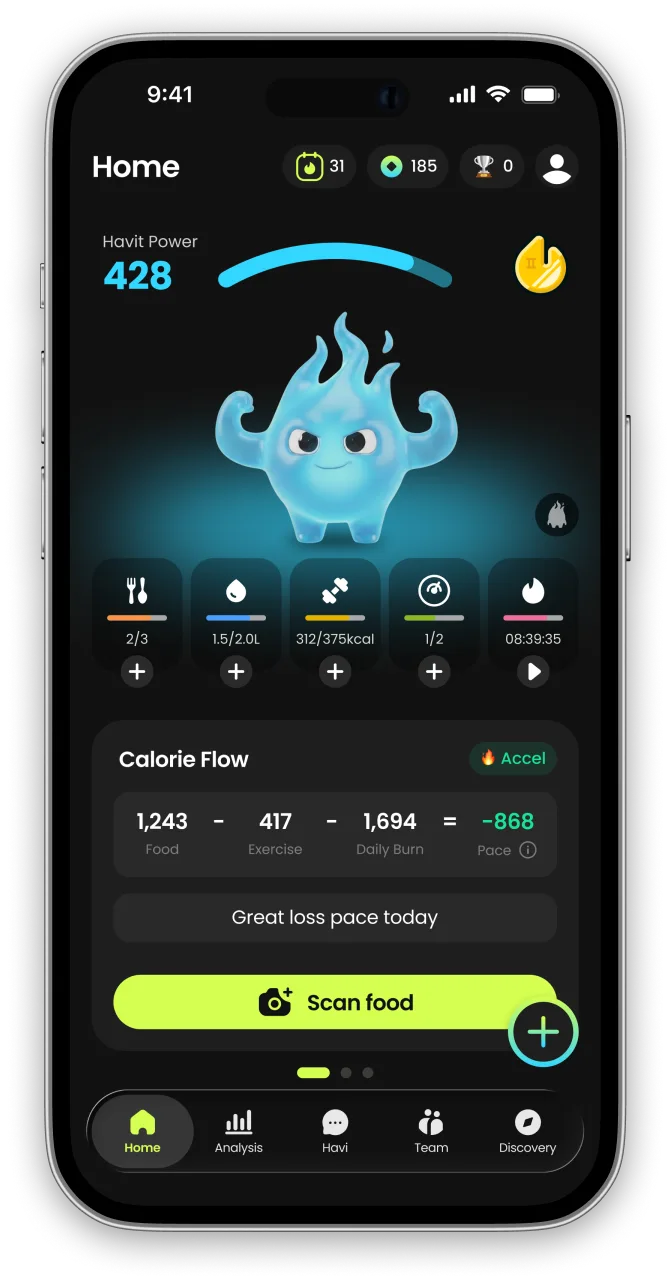
What is Havit?
Havit is an AI health companion for weight loss that protects muscle.
Unlike calorie-only trackers, Havit connects AI body-composition estimates, nutrition, hydration, sleep, steps, cycle, mood, and GLP-1 medication in one daily routine — so progress is measured by body composition, not just the number on the scale. Daily missions turn established behavior-change techniques into small repeatable actions, drawing on expertise from professionals formerly at Juvis Diet, one of Korea’s leading metabolic clinics.
In Havit’s own analysis of 1,090 GLP-1 users, people who logged consistently built stronger habits than the general user base. Read the GLP-1 Habit Report
Havit works with or without GLP-1 medication. It is a wellness app, not a medical device; body-composition results are estimates.

Continue in the App
Personalized wellness with your own data


References
- Exercise-induced histamine release and symptom management in histamine-sensitive individuals — Allergy, 2024
- Dietary and lifestyle interventions for histamine intolerance: A systematic approach — Clinical Nutrition, 2025
- Diamine oxidase activity and exercise timing: Implications for histamine intolerance — Journal of Sports Medicine, 2024
- Environmental factors affecting histamine release during physical activity — International Journal of Sports Physiology, 2024


