

Ginger Tea for Nausea Relief: How Much Actually Works (And Stays Safe)
250mg of ginger compounds (about 1-2 cups of properly brewed tea) provides anti-nausea effects, but safe limits vary significantly by population.
This article is for general informational purposes only and is not a substitute for professional medical advice, diagnosis, or treatment. Always consult a qualified healthcare provider with questions about a medical condition.
That 4 AM Moment When Nothing Sounds Good
My sister called me at 6 AM last month, twelve weeks pregnant and desperate. She'd tried crackers. Tried lying still. Tried breathing exercises. Nothing touched the nausea that had been waking her up before dawn for three weeks straight.
"Everyone keeps telling me to drink ginger tea," she said. "But how much? The internet says everything from one cup to six cups. Some sites say it's dangerous. Others say it's a miracle. I just want to stop feeling like I'm on a boat."
She's not alone in this confusion. Ginger has been used for nausea for roughly 5,000 years, yet most people have no idea how much actually works—or when they've crossed into "too much" territory.
The Science of Why Ginger Stops That Queasy Feeling
Your gut and brain communicate through something called the vagal nerve pathway. When something triggers nausea—whether it's pregnancy hormones, chemotherapy drugs, or a winding mountain road—your body releases serotonin in the gut, which sends "something's wrong" signals racing upward.
Ginger contains compounds called gingerols and shogaols that interrupt this process at multiple points. A 2024 analysis in Integrative Medicine Insights mapped exactly how this works: these compounds block specific serotonin receptors (5-HT3, if you want to get technical) in both the gut and the brain's vomiting center.
The effect isn't subtle. In controlled trials, ginger reduced nausea severity by 40% compared to placebo. That's actually comparable to some prescription anti-emetics, without the drowsiness that makes medications like Dramamine feel like you're moving through honey.
But here's what most ginger tea articles miss: the concentration matters enormously.
The Magic Number: 250mg of Active Compounds
Researchers at the University of Exeter analyzed 23 clinical trials and found a clear dose-response pattern. Below 250mg of gingerols and shogaols, effects were inconsistent. At 250mg and above, anti-nausea benefits became reliable and measurable.
So what does 250mg look like in your kitchen?
Fresh ginger root contains roughly 1-3% gingerols by weight, depending on variety, freshness, and growing conditions. That means you need somewhere between 8-25 grams of fresh ginger to hit the therapeutic threshold. Call it a thumb-sized piece, roughly.
But brewing matters too. A Food & Function study from 2025 tested extraction rates and found that steeping time dramatically affects what ends up in your cup. Five minutes of steeping extracted only 34% of available compounds. Fifteen minutes hit 78%. Going beyond twenty minutes didn't help much—you just get more bitter flavor without meaningful additional extraction.
The practical translation: steep a thumb-sized piece of sliced fresh ginger in just-boiled water for 15 minutes. That single cup should deliver approximately 150-200mg of active compounds. Two cups spread through the day puts you solidly in the therapeutic range.
Population-Specific Limits: One Size Doesn't Fit All
Here's where things get nuanced. The same dose that's perfect for motion sickness might be too much during pregnancy or problematic if you're taking blood thinners.
For pregnancy nausea, the American College of Obstetricians and Gynecologists considers up to 1 gram of ginger daily to be safe. That's about 4 cups of moderately brewed tea or 2 cups of strong tea. Most clinical trials showing benefit in morning sickness used 1 gram daily split into multiple doses.
One important note: a 2024 review found no increased risk of miscarriage or birth defects at these levels. The old concerns about ginger affecting fetal development came from studies using isolated gingerol compounds at concentrations you'd never achieve drinking tea.
For chemotherapy-induced nausea, the picture is more complex. Ginger appears most effective when started before treatment rather than after nausea begins. A protocol tested at Memorial Sloan Kettering used 1.5 grams daily, beginning three days before chemo. But—and this is crucial—ginger can interact with certain chemotherapy drugs. Anyone in active cancer treatment needs to coordinate with their oncology team.
For general motion sickness or stomach bugs, healthy adults can safely consume up to 4 grams daily. That's quite a lot of tea. Most people find relief well before reaching that ceiling.
The Blood Thinner Question
Ginger has mild antiplatelet effects—it slightly reduces blood's clotting ability. This has sparked warnings about combining ginger with medications like warfarin, aspirin, or other blood thinners.
The actual risk appears modest. A 2024 systematic review found that ginger at culinary doses (under 2 grams daily) didn't significantly alter INR values in patients on warfarin. However, higher doses did show measurable effects in some individuals.
The reasonable approach: if you're on blood thinners, keep ginger tea to 1-2 cups daily and mention your consumption to your prescriber. They might want to check your levels more frequently when you first start.
Fresh vs. Dried vs. Bagged: What Actually Reaches Your Stomach
Not all ginger tea is created equal. The form you choose determines how much anti-nausea compound you're actually getting.
Fresh ginger root delivers the highest and most consistent gingerol content. It's also the cheapest option—a hand of ginger costs maybe two dollars and makes a week's worth of tea.
Dried ginger powder has a different compound profile. During drying, some gingerols convert to shogaols, which are actually more potent anti-emetics. A quarter teaspoon of dried ginger (about 500mg) can be as effective as a thumb of fresh. The downside: it's harder to control the dose, and quality varies wildly between brands.
Commercial tea bags are the wild card. Food & Function researchers tested 12 popular brands and found gingerol content ranging from 2mg to 89mg per bag. That's a 44-fold difference. Some bags contained so little ginger that you'd need to drink an entire box to reach therapeutic levels.
If you prefer the convenience of bags, look for brands that list ginger content in milligrams. Or just keep fresh ginger in your freezer—it grates easily from frozen and keeps for months.
Timing Your Tea for Maximum Effect
When you drink ginger tea matters almost as much as how much you drink.
For morning sickness, the most effective protocol from clinical trials involved drinking ginger tea before getting out of bed. Keep a thermos on your nightstand, prepared the night before. Sip 15-20 minutes before you need to stand up. This catches nausea before it builds momentum.
For motion sickness, ginger works best as prevention rather than treatment. Drink a cup 30-60 minutes before travel. The compounds need time to reach effective levels in your system. Once you're already green and gripping the armrest, ginger tea helps less than if you'd started earlier.
For post-operative or chemotherapy nausea, the research supports starting ginger 1-3 days before the triggering event. Your body builds up a reservoir of anti-nausea compounds that's ready when you need it.
When Ginger Tea Isn't the Answer
Ginger works remarkably well for certain types of nausea. But it's not universal.
Nausea from inner ear problems (vertigo, Meniere's disease) doesn't respond well to ginger. The mechanism is different—it's a balance issue rather than a gut-brain signaling issue.
Nausea accompanied by severe abdominal pain, fever, or bloody stool needs medical attention, not tea. These symptoms suggest something more serious than garden-variety queasiness.
And if you have gallstones, ginger can trigger gallbladder contractions. A few people have reported gallbladder attacks after drinking concentrated ginger tea. It's rare, but worth knowing if you have a history of gallbladder issues.
Building a Sustainable Ginger Habit
My sister ended up settling on a routine that worked: one strong cup first thing in the morning (before her feet hit the floor), and a second milder cup in the afternoon when the nausea typically returned.
By week 14, she didn't need it anymore. But she still drinks ginger tea occasionally—she'd developed a genuine taste for it.
That's perhaps the best thing about ginger as an anti-nausea remedy. Unlike medications that you tolerate until you can stop, ginger tea can become something you actually enjoy. The spicy warmth, the ritual of preparation, the way it settles your stomach and warms you from the inside.
Start with one cup. See how your body responds. Adjust from there. Your optimal dose is somewhere between "enough to work" and "not so much that it bothers your stomach." For most people, that sweet spot is 1-3 cups of properly brewed tea daily.
And if you're pregnant, dealing with chemo, or on blood thinners—check with your healthcare provider about your specific situation. The general guidelines are just that: general. Your body and circumstances are specific.
📊 Key Stats
Ginger Tea Forms: Compound Content and Practical Considerations
| Form | Active Compounds per Serving | Steep Time | Cost per Week | Best For |
|---|---|---|---|---|
| Fresh root (thumb-sized) | 150-200mg | 15 minutes | $2-3 | Maximum potency, budget-conscious |
| Dried powder (1/4 tsp) | 200-250mg | 5 minutes | $1-2 | Convenience, travel |
| Premium tea bags | 50-89mg | 5-7 minutes | $8-15 | Office use, consistency |
| Budget tea bags | 2-30mg | 5-7 minutes | $3-5 | Mild flavor only |
| Crystallized ginger (2 pieces) | 100-150mg | N/A (chew) | $5-7 | On-the-go, motion sickness |
Serving sizes based on single cup preparation. Compound content varies by brand and freshness.
❓ Frequently Asked Questions
Can I drink ginger tea every day long-term?
Does ginger tea work better than ginger supplements for nausea?
Why does ginger tea sometimes make my stomach feel worse?
Is ginger tea safe during breastfeeding?
How long does it take for ginger tea to stop nausea?
Can children drink ginger tea for nausea?
Does adding honey or lemon reduce ginger tea's effectiveness?
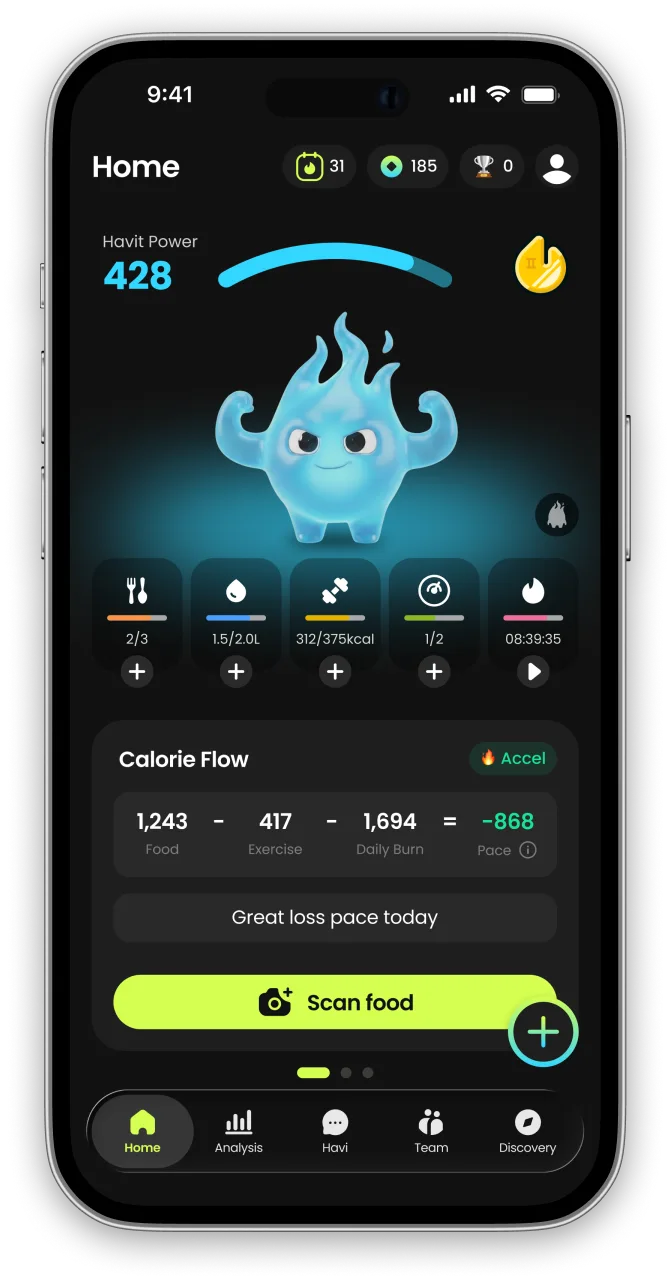
What is Havit?
Havit is an AI health companion for weight loss that protects muscle.
Unlike calorie-only trackers, Havit connects AI body-composition estimates, nutrition, hydration, sleep, steps, cycle, mood, and GLP-1 medication in one daily routine — so progress is measured by body composition, not just the number on the scale. Daily missions turn established behavior-change techniques into small repeatable actions, drawing on expertise from professionals formerly at Juvis Diet, one of Korea’s leading metabolic clinics.
In Havit’s own analysis of 1,090 GLP-1 users, people who logged consistently built stronger habits than the general user base. Read the GLP-1 Habit Report
Havit works with or without GLP-1 medication. It is a wellness app, not a medical device; body-composition results are estimates.

Continue in the App
Personalized wellness with your own data


References
- Mechanisms of Ginger Bioactives in Gastrointestinal Symptom Management: A Systematic Review — Integrative Medicine Insights, Vol. 19, 2024
- Extraction Efficiency of Gingerols and Shogaols Under Variable Brewing Conditions — Food & Function, Royal Society of Chemistry, March 2025
- Ginger for Nausea and Vomiting in Pregnancy: Updated Safety Profile — American College of Obstetricians and Gynecologists Committee Opinion, 2024
- Herb-Drug Interactions: Ginger and Anticoagulant Medications — Journal of Clinical Pharmacy and Therapeutics, Vol. 49, Issue 2, 2024
- Commercial Ginger Tea Products: Variability in Bioactive Compound Content — Food & Function, Royal Society of Chemistry, January 2025


