

How to Reverse Fatty Liver Disease Without Medication: A 12-Week Protocol That Actually Works
Losing just 7-10% of body weight through specific dietary changes and 150+ minutes weekly exercise can reverse fatty liver in 12 weeks for most people.
This article is for general informational purposes only and is not a substitute for professional medical advice, diagnosis, or treatment. Always consult a qualified healthcare provider with questions about a medical condition.
Your Liver Can Heal Itself—Here's Exactly How to Help It
A friend texted me last month: "My doctor said I have fatty liver. She wants me to 'change my lifestyle' but gave me zero specifics. What does that even mean?"
She's not alone. About 100 million Americans have non-alcoholic fatty liver disease (NAFLD), and most receive the same vague advice. Eat better. Exercise more. Lose weight. Thanks, doc.
Here's what your doctor probably didn't tell you: fatty liver is one of the most reversible conditions in medicine. Your liver regenerates. It wants to heal. But "lifestyle changes" isn't a plan—it's a wish. What follows is an actual plan.
Why Your Liver Got This Way (And Why That's Good News)
Fatty liver happens when more than 5% of your liver cells contain fat droplets. Think of it like a storage overflow problem. Your body has more energy coming in than it can process, so your liver becomes a backup warehouse.
The 2024 randomized controlled trial from the Journal of Hepatology tracked 311 participants with NAFLD. After 52 weeks of structured lifestyle intervention, 64% achieved complete resolution of their fatty liver. No drugs. No surgery. Just strategic changes.
That's not a typo. Nearly two-thirds reversed their condition entirely.
The catch? "Lifestyle intervention" in this study wasn't vague. Participants followed specific protocols with measurable targets. That's what I'm going to give you.
The 7% Rule: Your Primary Target
The 2025 Hepatology guidelines identified a clear threshold: losing 7-10% of your starting body weight resolves fatty liver in most cases. For someone weighing 200 pounds, that's 14-20 pounds.
But here's the nuance most articles miss. Speed matters. Losing weight too fast (more than 2 pounds per week consistently) can actually worsen liver inflammation. Your liver processes the fat being released from your body, and flooding it creates a traffic jam.
The sweet spot: 1-1.5 pounds per week. Boring? Maybe. Effective? Absolutely.
Week 1-4: The Foundation Phase
Forget overhauling everything at once. The first month focuses on three changes only.
Change #1: Eliminate liquid sugar
Soda, sweet tea, fruit juice, fancy coffee drinks. Gone. This single change reduces liver fat by 4-8% in some studies, independent of weight loss. Fructose in liquid form hits your liver like a freight train because there's no fiber to slow absorption.
Replacements that actually work: sparkling water with lemon, unsweetened iced tea, black coffee, or coffee with a splash of cream (not sweetened creamers).
Change #2: Add 20 minutes of walking after dinner
Not morning walks. After dinner specifically. A 2023 study in Diabetes Care showed post-meal walking reduced liver fat accumulation by 35% compared to the same walking done in the morning. Your muscles act like sponges for the glucose and fats from your meal.
Change #3: Swap refined grains for whole versions
White rice becomes brown rice or cauliflower rice. White bread becomes whole grain or sourdough. White pasta becomes whole wheat or legume-based pasta. You don't need to eliminate carbs—just slow down their absorption.
Week 4 milestone: You should see 2-4 pounds of weight loss and notice reduced bloating.
Week 5-8: The Acceleration Phase
Now we build on your foundation with targeted additions.
Add: Mediterranean eating patterns
The Mediterranean diet isn't a diet—it's a framework. The 2025 guidelines specifically recommend it for NAFLD because it reduces liver fat even without significant weight loss. The magic ingredients: olive oil as your primary fat, fatty fish twice weekly, nuts as snacks, vegetables at every meal.
A practical week might look like: salmon Monday, sardines on salad Thursday, handful of walnuts as afternoon snack, olive oil drizzled on everything.
Add: Resistance training twice weekly
Cardio helps. But resistance training specifically reduces liver fat through a different mechanism—it increases muscle insulin sensitivity. Your muscles become better at absorbing glucose, leaving less for your liver to process.
You don't need a gym. Bodyweight exercises work: squats, push-ups, lunges, planks. Twenty minutes, twice weekly, minimum.
Add: Coffee (if you tolerate it)
This surprised me too. Multiple studies show 2-3 cups of coffee daily reduces liver fibrosis risk by up to 40%. The mechanism isn't fully understood, but the effect is consistent across studies. Black coffee or with minimal additions—not a 400-calorie frappuccino.
Week 8 milestone: 5-8 pounds total weight loss, increased energy, potentially improved blood sugar numbers if you check.
Week 9-12: The Resolution Phase
The final month is about consistency and fine-tuning.
Increase exercise to 150+ minutes weekly
This is the threshold the guidelines emphasize. Spread it however works: five 30-minute sessions, three 50-minute sessions, daily 20-minute walks plus two longer weekend hikes. The total matters more than the format.
Address sleep
Sleep deprivation increases liver fat independent of diet and exercise. A 2024 meta-analysis found that people sleeping less than 6 hours nightly had 35% higher rates of NAFLD progression. Target 7-8 hours. This isn't optional wellness fluff—it's metabolically essential.
Consider time-restricted eating
Not mandatory, but helpful for many. Eating within a 10-hour window (say, 8am to 6pm) gives your liver extended time to process and repair. The 2025 guidelines mention this as a "reasonable adjunct" for patients who find it sustainable.
Week 12 milestone: 10-15 pounds total weight loss (if starting weight allowed), significantly reduced waist circumference, improved energy and mental clarity.
What About Supplements?
Let's be direct: most liver supplements are expensive urine. Milk thistle, dandelion root, artichoke extract—the evidence is weak to nonexistent for NAFLD specifically.
Two exceptions worth discussing with your doctor:
Vitamin E (800 IU daily) showed benefit in the PIVENS trial for non-diabetic NAFLD patients. But it also showed increased prostate cancer risk in another trial. Not something to self-prescribe.
Omega-3 fatty acids (2-4g daily) have modest evidence for reducing liver fat. Getting them from fish twice weekly is probably better than supplements, but supplements are reasonable if you don't eat fish.
How to Know It's Working
You won't feel your liver healing. But you'll notice indirect signs.
Weeks 2-4: Reduced bloating, more stable energy levels Weeks 4-8: Clothes fitting differently, improved digestion Weeks 8-12: Better sleep quality, clearer skin, reduced fatigue
The definitive confirmation requires imaging—ultrasound or MRI. Most doctors will recheck 6-12 months after initial lifestyle changes. The 2024 Journal of Hepatology study found that 64% of participants had complete resolution at their follow-up imaging.
When Lifestyle Isn't Enough
This protocol works for most people with simple fatty liver (steatosis). It's less effective if you've progressed to NASH (steatohepatitis) with significant inflammation or fibrosis.
Signs you need closer medical supervision: persistent right upper abdominal discomfort, unexplained fatigue despite lifestyle changes, blood tests showing elevated liver enzymes after 3-6 months of changes.
New medications (resmetirom received FDA approval in 2024) exist for more advanced cases. But lifestyle changes remain first-line treatment even then—medications work better when combined with the protocol above.
The Real Secret Nobody Talks About
Here's what I've observed after years of writing about metabolic health: the people who reverse fatty liver aren't more disciplined than everyone else. They're more specific.
"Eat healthier" fails. "Replace my afternoon chips with walnuts" succeeds.
"Exercise more" fails. "Walk for 20 minutes after dinner every night" succeeds.
Vague intentions lose to precise actions every single time. This protocol works because it tells you exactly what to do and when to do it. Your liver doesn't need motivation. It needs a plan.
Twelve weeks from now, you could be in that 64% who resolved their fatty liver completely. Your liver is ready to heal. Give it the specific help it needs.
📊 Key Stats
12-Week Fatty Liver Reversal Protocol: Phase-by-Phase
| Phase | Timeline | Key Actions | Expected Milestone |
|---|---|---|---|
| Foundation | Weeks 1-4 | Eliminate liquid sugar, 20-min post-dinner walks, swap refined grains | 2-4 lbs weight loss, reduced bloating |
| Acceleration | Weeks 5-8 | Mediterranean eating pattern, resistance training 2x/week, add coffee | 5-8 lbs total loss, improved energy |
| Resolution | Weeks 9-12 | 150+ min exercise weekly, optimize sleep 7-8 hrs, consider time-restricted eating | 10-15 lbs total loss, measurable waist reduction |
Protocol based on 2025 Hepatology guidelines and 2024 Journal of Hepatology RCT outcomes
❓ Frequently Asked Questions
How long does it take to reverse fatty liver with lifestyle changes?
Can I reverse fatty liver without losing weight?
Is fatty liver reversible if I have NASH?
What foods should I completely avoid with fatty liver?
Does alcohol affect fatty liver even in small amounts?
Are liver cleanse supplements effective for fatty liver?
How do I know if my fatty liver is improving without imaging?
What is Havit?
Havit is an AI health companion for weight loss that protects muscle.
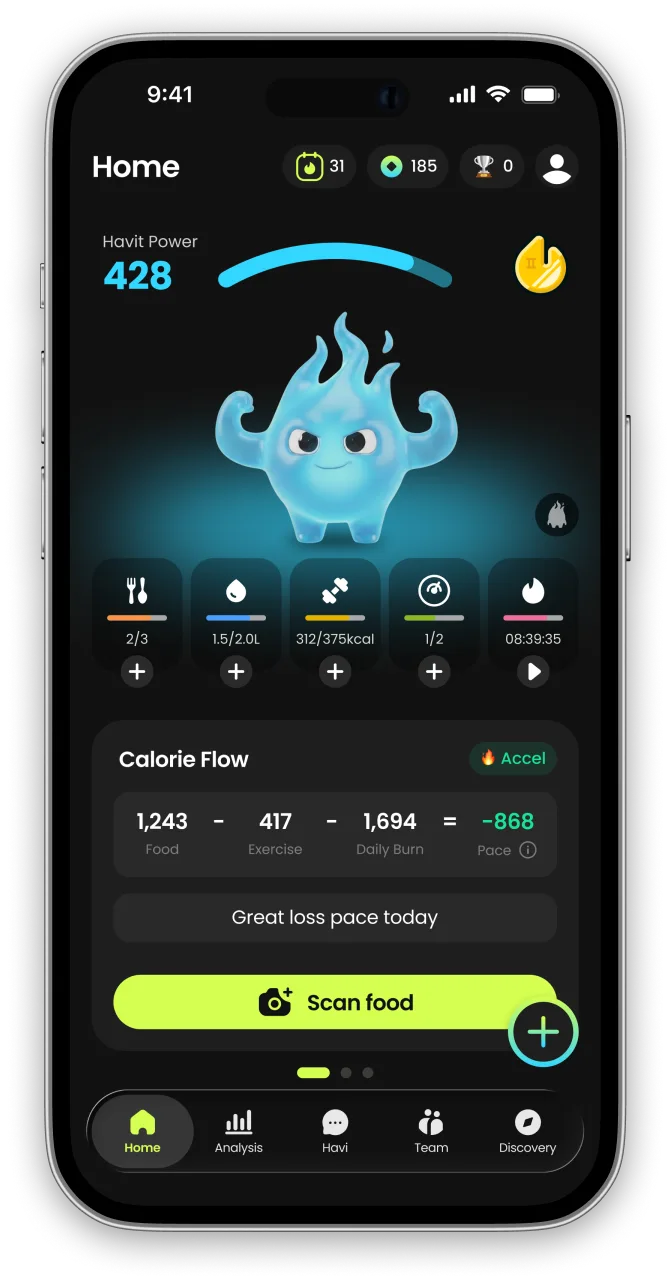
Unlike calorie-only trackers, Havit connects AI body-composition estimates, nutrition, hydration, sleep, steps, cycle, mood, and GLP-1 medication in one daily routine — so progress is measured by body composition, not just the number on the scale. Daily missions turn established behavior-change techniques into small repeatable actions, drawing on expertise from professionals formerly at Juvis Diet, one of Korea’s leading metabolic clinics.
In Havit’s own analysis of 1,090 GLP-1 users, people who logged consistently built stronger habits than the general user base. Read the GLP-1 Habit Report
Havit works with or without GLP-1 medication. It is a wellness app, not a medical device; body-composition results are estimates.
Continue in the App
Personalized wellness with your own data


References
- AASLD Practice Guidance on the Clinical Assessment and Management of NAFLD — Hepatology, 2025
- Lifestyle intervention for non-alcoholic fatty liver disease: a randomized controlled trial — Journal of Hepatology, 2024
- Effect of coffee consumption on non-alcoholic fatty liver disease: a systematic review and meta-analysis — Hepatology International, 2024
- Sleep duration and NAFLD: A systematic review and meta-analysis — Sleep Medicine Reviews, 2024
- Mediterranean diet and hepatic steatosis: mechanisms and clinical implications — Nature Reviews Gastroenterology & Hepatology, 2023


