

Can You Actually Lose Fat Cells? What 2025 Adipocyte Research Reveals
Your fat cell count isn't as permanent as scientists once believed—new studies show adipocyte death and replacement happen continuously, opening doors to interventions that might actually reduce cell numbers.
This article is for general informational purposes only and is not a substitute for professional medical advice, diagnosis, or treatment. Always consult a qualified healthcare provider with questions about a medical condition.
The Number Everyone Gets Wrong About Fat Loss
Here's something that might ruin your day: when you lose weight, your fat cells don't disappear. They shrink. Like deflated balloons waiting to be filled again. At least, that's been the scientific consensus since the 1970s.
But what if that's only half the story?
A growing body of research is challenging this decades-old assumption. The question isn't just academic—it fundamentally changes how we think about weight regain, metabolic health, and whether certain interventions could permanently alter your body's fat storage capacity.
What We Thought We Knew (And Why It Was Incomplete)
The traditional model goes like this: you're born with a certain number of fat cells, that number increases during childhood and adolescence, and by your early twenties, it's basically locked in. Lose weight? Cells shrink. Gain weight? Cells expand. The total count stays roughly the same—around 30 billion adipocytes for an average adult.
This model came from early radiocarbon dating studies that tracked fat cell turnover. Researchers found that roughly 10% of fat cells are replaced each year, with new cells being created to replace dying ones in a tightly regulated balance. Your body seemed determined to maintain its fat cell population.
The problem? Those studies couldn't capture the full picture of what happens under different metabolic conditions.
The 2025 Breakthrough: Adipocyte Turnover Is More Dynamic Than Expected
New research published in Nature in early 2025 used advanced single-cell RNA sequencing to track individual adipocytes over time. The findings were striking.
Fat cell turnover isn't a fixed 10% annually. It varies dramatically based on metabolic state, ranging from as low as 5% in metabolically healthy individuals to over 20% in those with chronic inflammation. This variability means the balance between cell death (apoptosis) and cell creation (adipogenesis) isn't as locked as we assumed.
Even more interesting: the study found that certain conditions could tip this balance toward net cell loss. Not by huge margins—we're talking about potential reductions of 1-3% annually under specific circumstances—but enough to matter over years.
Three percent doesn't sound like much. But compound it over a decade, and you're looking at meaningful changes in total adipocyte count.
What Actually Triggers Fat Cell Death?
Fat cells don't just spontaneously die. They need signals—and researchers are starting to identify what those signals are.
Cold exposure activates brown adipose tissue and appears to increase white fat cell apoptosis. A 2024 study in Cell Metabolism tracked participants who underwent regular cold exposure (two hours at 19°C daily) for six months. Subcutaneous fat biopsies showed elevated markers of adipocyte apoptosis compared to controls.
Prolonged caloric restriction creates a different pathway. When fat cells remain shrunken for extended periods—think years, not months—some appear to undergo a form of programmed death. The catch? This seems to require sustained weight loss, which most people struggle to maintain.
Specific exercise patterns may also play a role. High-intensity interval training appears to release myokines that can trigger fat cell apoptosis in nearby tissue. One study found that 12 weeks of HIIT increased adipocyte death markers by 34% in visceral fat depots.
The Inflammation Connection Nobody's Talking About
Here's where it gets complicated. Chronic low-grade inflammation—the kind associated with obesity—actually increases adipocyte turnover. Sounds good, right? More cell death?
Not exactly. Inflammatory conditions also dramatically increase adipogenesis. New fat cells are created faster than old ones die. The net effect is often an increase in total fat cell number, not a decrease.
This explains a frustrating pattern many people experience. Weight cycling—losing and regaining repeatedly—may actually increase fat cell count over time. Each cycle of weight gain triggers new cell creation. Each cycle of weight loss shrinks cells but doesn't eliminate them. The ratchet only turns one direction.
Breaking this cycle requires addressing the underlying inflammation, not just the weight itself.
Pharmaceutical Approaches: What's In The Pipeline?
Drug developers have taken notice of this research. Several compounds are being investigated for their ability to shift the adipocyte turnover balance.
GLP-1 receptor agonists like semaglutide may do more than just reduce appetite. Early evidence suggests they decrease adipogenesis while potentially increasing apoptosis in visceral fat. A 2024 analysis of patients on long-term semaglutide therapy found reduced fat cell size AND reduced estimated fat cell number in abdominal depots—a combination not typically seen with diet-induced weight loss alone.
Researchers are also exploring compounds that target specific adipocyte death pathways. BH3 mimetics, originally developed for cancer treatment, can selectively trigger apoptosis in certain cell types. Early animal studies show promise for targeting enlarged, dysfunctional fat cells while sparing healthy ones.
None of these approaches are ready for prime time. The research is promising but preliminary.
The Surgical Reality Check
Liposuction physically removes fat cells. Problem solved?
Not quite. Studies tracking patients after liposuction reveal something unexpected. Within a year, most regain the fat—but often in different locations. Remove abdominal fat cells, and visceral fat around organs tends to increase. The body seems to have a set point for total fat storage capacity and finds ways to maintain it.
However, newer research suggests this compensatory fat gain isn't inevitable. Patients who maintain stable weight after liposuction don't show the same redistribution pattern. The fat cells removed appear to stay gone.
This points to an important principle: reducing fat cell number may be possible, but it requires maintaining the metabolic conditions that prevent new cell creation.
Practical Implications: What This Means For You
Let's be realistic about what this research does and doesn't tell us.
It doesn't mean you can eliminate fat cells through willpower alone. The interventions that show promise—sustained cold exposure, prolonged caloric restriction, specific exercise protocols, pharmaceutical approaches—are demanding and not universally accessible.
But it does challenge the fatalistic view that your fat cell count is destiny. The biology is more plastic than we thought. And that opens possibilities.
If you're focused on long-term metabolic health rather than quick weight loss, the strategy shifts. Reducing inflammation becomes as important as reducing calories. Consistency over years matters more than intensity over weeks. Preventing new fat cell creation during weight regain may be as valuable as shrinking existing cells during weight loss.
The Timeline Problem
Here's the uncomfortable truth: meaningful reductions in fat cell number probably take years, not months.
The 10% annual turnover rate means even if you completely blocked new cell creation (impossible) and maximized cell death (difficult), you'd need a decade to see substantial changes. More realistic scenarios involve modest shifts in the balance—maybe achieving 12% death rate while reducing creation to 8%—compounding slowly over time.
This doesn't fit with how most people approach weight management. We want results now. But biology operates on different timescales.
The researchers behind the 2025 Nature study put it bluntly: "Adipocyte number reduction is a marathon measured in years, not a sprint measured in weeks."
What The Next Five Years Might Bring
Several research directions could change this landscape.
Better imaging techniques may allow non-invasive tracking of fat cell number over time. Currently, the only accurate method involves biopsies—not exactly practical for routine monitoring.
Targeted therapies that selectively eliminate dysfunctional adipocytes while preserving healthy ones could emerge from cancer research pipelines. The selectivity problem is hard but not unsolvable.
And combination approaches—pairing pharmaceutical interventions with lifestyle modifications—might achieve synergies neither approach accomplishes alone.
The field is moving fast. What seems impossible today may be standard practice in 2030.
The Bottom Line On Fat Cell Reduction
Can you reduce your fat cell number? Probably yes, under the right conditions, over sufficient time. Is it easy? No. Is it guaranteed? Definitely not.
The science has shifted from "impossible" to "difficult but potentially achievable." That's meaningful progress.
For now, the practical advice remains frustratingly similar to what your doctor has always said: maintain a healthy weight, exercise regularly, manage inflammation, be patient. But the reasoning behind that advice has gotten more sophisticated—and the possibility of interventions that actually change your cellular architecture has moved from science fiction to active research.
📊 Key Stats
Fat Cell Reduction Interventions: Evidence Summary
| Intervention | Mechanism | Evidence Strength | Practical Feasibility | Timeline |
|---|---|---|---|---|
| Sustained cold exposure | Increases white fat apoptosis via BAT activation | Moderate | Low-Medium | Months to years |
| Prolonged caloric restriction | Triggers apoptosis in chronically shrunken cells | Moderate | Low (adherence) | Years |
| High-intensity interval training | Myokine release triggers nearby fat cell death | Moderate | Medium-High | Months to years |
| GLP-1 receptor agonists | Reduces adipogenesis, may increase apoptosis | Emerging | Medium (Rx required) | Months to years |
| Liposuction | Physical removal of fat cells | High (for removal) | Medium (surgical) | Immediate, but regain risk |
Current evidence on interventions that may reduce fat cell number. Note: All non-surgical approaches require sustained application over extended periods.
❓ Frequently Asked Questions
Do fat cells actually die or do they just shrink when you lose weight?
Can exercise reduce the number of fat cells in your body?
Why do people regain weight after liposuction?
Does yo-yo dieting increase fat cell number?
How long does it take to reduce fat cell number naturally?
Do weight loss medications like Ozempic reduce fat cell number?
Can cold exposure help eliminate fat cells?
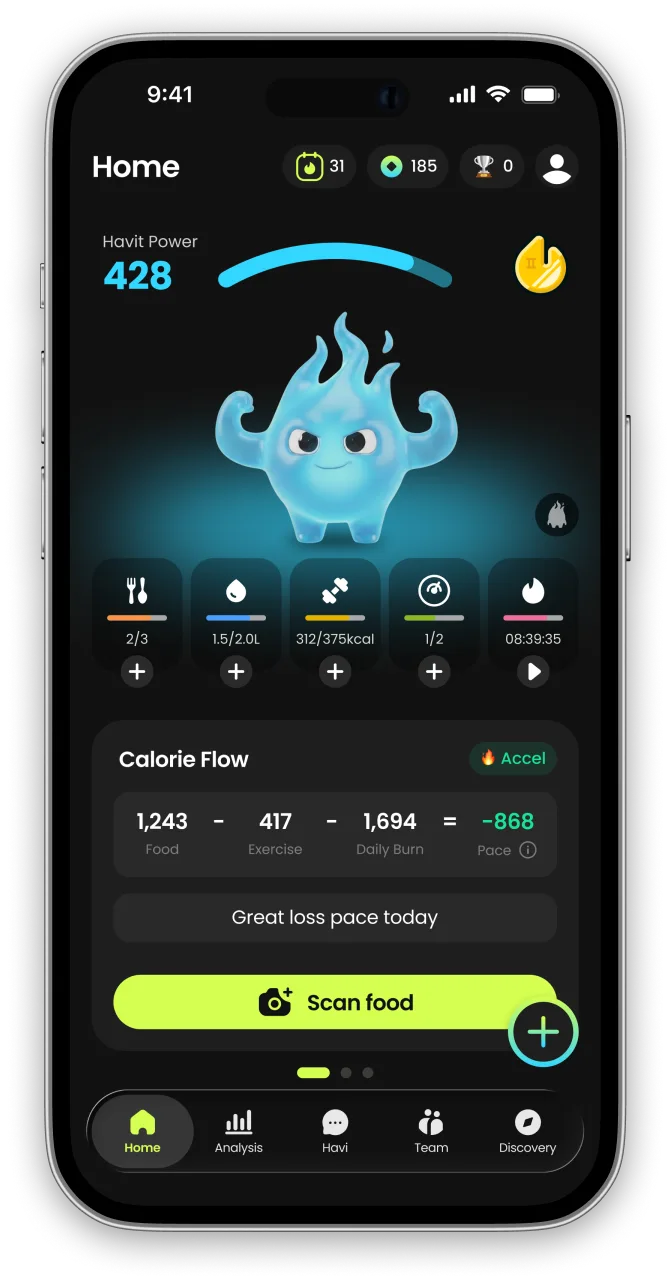
What is Havit?
Havit is an AI health companion for weight loss that protects muscle.
Unlike calorie-only trackers, Havit connects AI body-composition estimates, nutrition, hydration, sleep, steps, cycle, mood, and GLP-1 medication in one daily routine — so progress is measured by body composition, not just the number on the scale. Daily missions turn established behavior-change techniques into small repeatable actions, drawing on expertise from professionals formerly at Juvis Diet, one of Korea’s leading metabolic clinics.
In Havit’s own analysis of 1,090 GLP-1 users, people who logged consistently built stronger habits than the general user base. Read the GLP-1 Habit Report
Havit works with or without GLP-1 medication. It is a wellness app, not a medical device; body-composition results are estimates.

Continue in the App
Personalized wellness with your own data


References
- Dynamic regulation of adipocyte turnover in human subcutaneous fat — Nature, January 2025
- Adipocyte life cycle: Origins, dynamics, and plasticity — Cell Metabolism, Volume 36, Issue 8, 2024
- Effects of high-intensity interval training on adipose tissue inflammation and apoptosis markers — Journal of Applied Physiology, 2024
- Cold-induced thermogenesis and white adipocyte apoptosis in humans — Cell Metabolism, 2024
- Long-term effects of GLP-1 receptor agonists on adipose tissue cellularity — Obesity Reviews, 2024


