

Bruising Easily: When Those Mystery Marks Actually Mean Something
Most easy bruising is harmless—aging skin, medications, or minor vitamin gaps—but certain patterns signal conditions worth investigating with your doctor.
This article is for general informational purposes only and is not a substitute for professional medical advice, diagnosis, or treatment. Always consult a qualified healthcare provider with questions about a medical condition.
That Bruise on Your Shin You Don't Remember Getting
You're changing clothes and spot it—a purple-green splotch the size of a golf ball on your thigh. No memory of bumping anything. Sound familiar?
If you bruise from what feels like a gentle tap, you're in crowded company. Roughly 18% of adults report easy bruising as a regular occurrence. The vast majority have nothing seriously wrong. But every so often, those mystery marks are the body's way of waving a small flag.
Here's how to tell the difference.
What Actually Happens When You Bruise
A bruise is essentially a tiny internal bleed. Something impacts your skin, capillaries rupture, and blood pools beneath the surface. Your immune system shows up to clean the mess, breaking down hemoglobin into biliverdin (green) and bilirubin (yellow). That rainbow progression from purple to brown to yellow? That's your cleanup crew at work.
The whole process typically takes 2-3 weeks. Faster healing usually means your clotting system and blood vessels are functioning well.
Some people's capillaries are simply more fragile than others. Think of it like pipes—some are industrial-grade PVC, others are older copper that's seen better days. Neither is necessarily broken. They just respond differently to pressure.
The Benign Reasons Behind Most Easy Bruising
Let's start with the causes that don't require alarm.
Age catches up to everyone's skin. After 60, the protective fat layer beneath your skin thins. Collagen production drops by about 1% annually starting in your mid-20s. By the time you're 70, you've lost roughly 40% of that structural support. Blood vessels sit closer to the surface with less cushioning. A 2024 dermatology review found that adults over 65 bruise from impacts that wouldn't leave a mark on a 30-year-old.
Medications are a huge factor. Blood thinners like warfarin and apixaban are obvious culprits, but the list extends further. Daily aspirin—even low-dose 81mg—affects platelet function for 7-10 days per dose. Fish oil supplements at doses above 3 grams daily can amplify bleeding tendency. SSRIs like sertraline and fluoxetine interfere with platelet serotonin, increasing bruise risk by roughly 40% according to a 2023 pharmacology study.
Vitamin deficiencies play a role too. Vitamin C is essential for collagen synthesis—without enough, blood vessel walls weaken. You don't need scurvy-level deficiency; even mild inadequacy shows up in easier bruising. Vitamin K helps produce clotting factors. A week of antibiotics can wipe out the gut bacteria that produce it, temporarily affecting clotting.
Women bruise more easily than men. This isn't folklore. Female skin tends to be thinner, and estrogen affects blood vessel structure. Studies show women report easy bruising at nearly twice the rate of men.
When the Pattern Suggests Something Worth Investigating
Now for the situations that merit attention.
The American Journal of Hematology's 2024 screening guidelines highlight specific patterns that warrant evaluation:
Location matters. Bruises on shins and forearms? Usually just bumps you forgot. Bruises on your trunk, back, or face without clear trauma? That's different. These protected areas don't typically sustain random impacts.
Size and number count. A single large bruise from a known bump is normal. Multiple bruises appearing simultaneously—especially larger than a quarter—deserves a conversation with your doctor.
Accompanying symptoms change everything. Easy bruising plus frequent nosebleeds, bleeding gums, heavy menstrual periods, or blood in urine or stool creates a pattern. One symptom might be nothing. A cluster suggests your clotting system needs assessment.
Family history adds context. If your mother, siblings, or children also bruise easily or have bleeding issues, genetic conditions like von Willebrand disease become more plausible. This affects about 1% of the population but often goes unrecognized.
Conditions That Can Cause Significant Easy Bruising
Several medical conditions affect bruising tendency.
Platelet disorders reduce either the number or function of these clotting cells. Your blood contains 150,000-400,000 platelets per microliter. Drop below 100,000, and bruising increases. Below 50,000, spontaneous bruising becomes common. Immune thrombocytopenia, where your body attacks its own platelets, affects roughly 3-4 people per 100,000 annually.
Von Willebrand disease is the most common inherited bleeding disorder, affecting clotting factor production. Most cases are mild—people just bruise easily and bleed longer from cuts. Severe cases cause joint bleeds and dangerous surgical bleeding.
Liver disease impairs clotting factor production since the liver manufactures most of them. Cirrhosis, hepatitis, and fatty liver disease can all affect bruising. A 2025 Blood journal algorithm notes that unexplained bruising plus fatigue, abdominal swelling, or yellowing skin warrants liver function testing.
Certain leukemias and bone marrow disorders crowd out normal platelet-producing cells. Easy bruising is sometimes an early sign, though usually accompanied by fatigue, frequent infections, or unexplained weight loss.
Cushing's syndrome, where cortisol levels run chronically high, thins skin dramatically. People develop bruises from minimal contact, often with other signs like facial rounding, central weight gain, and muscle weakness.
The Evaluation Process: What to Expect
If your doctor agrees investigation makes sense, the workup is usually straightforward.
A complete blood count checks platelet numbers. A peripheral blood smear examines platelet appearance under a microscope. Prothrombin time (PT) and partial thromboplastin time (PTT) assess clotting factor function.
If these come back normal but suspicion remains, specialized tests for von Willebrand factor and platelet function studies might follow.
The 2025 Blood journal evaluation algorithm recommends this stepwise approach: start simple, go deeper only if initial tests suggest a direction. Most people with easy bruising have completely normal results.
Practical Steps If You Bruise Easily
While figuring out the cause—or if the cause is simply benign fragility—some strategies help.
Protect vulnerable areas. Shin guards aren't just for soccer. Long sleeves reduce forearm bruising from doorframes and furniture edges. It sounds simple because it is.
Review your medications and supplements with your doctor. That fish oil plus daily aspirin plus occasional ibuprofen combination might be additive. Sometimes adjusting one element reduces bruising significantly.
Ensure adequate vitamin C and K intake. Citrus fruits, bell peppers, and strawberries for C. Leafy greens, broccoli, and fermented foods for K. A 2024 nutrition study found that adults consuming less than 60mg of vitamin C daily had 30% more bruising than those meeting the 90mg recommendation.
Applying ice immediately after an impact reduces blood pooling. It's not glamorous advice, but it works. The first 10 minutes matter most.
The Bottom Line on Mystery Bruises
That unexplained bruise probably came from bumping something you didn't register—a desk corner while distracted, a doorframe while carrying groceries. Human memory for minor impacts is remarkably poor.
But your body knows its baseline. If something has genuinely changed—more bruises, bigger bruises, bruises in unusual places, or bruises accompanied by other bleeding symptoms—that shift deserves attention.
Most investigations end with reassurance. Occasionally, they catch something treatable early. Either outcome beats wondering.
📊 Key Stats
Bruising Patterns: Likely Benign vs. Worth Investigating
| Characteristic | Usually Benign | Consider Evaluation |
|---|---|---|
| Location | Shins, forearms, outer thighs | Trunk, back, face without trauma |
| Size | Proportional to remembered impact | Large bruises from minimal contact |
| Frequency | Occasional, stable over time | Increasing frequency or sudden change |
| Other symptoms | Isolated bruising only | Nosebleeds, bleeding gums, heavy periods |
| Family history | No relatives with bleeding issues | Multiple family members affected |
| Healing time | Resolves in 2-3 weeks | Persists beyond 4 weeks |
These patterns help distinguish common easy bruising from situations warranting medical evaluation. Based on American Journal of Hematology 2024 screening guidelines.
❓ Frequently Asked Questions
At what age does easy bruising become normal?
Can supplements cause easy bruising?
Should I worry about bruises I don't remember getting?
Do certain foods help reduce bruising?
When should I see a doctor about easy bruising?
Can stress cause easy bruising?
How long should a normal bruise take to heal?
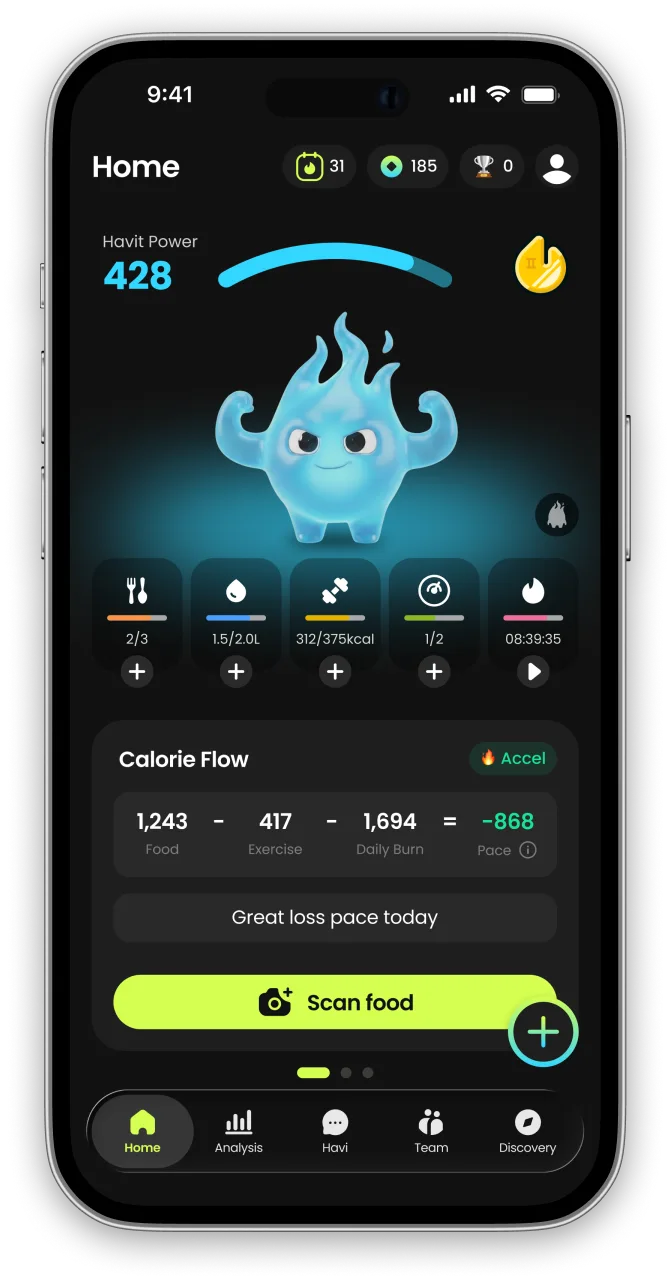
What is Havit?
Havit is an AI health companion for weight loss that protects muscle.
Unlike calorie-only trackers, Havit connects AI body-composition estimates, nutrition, hydration, sleep, steps, cycle, mood, and GLP-1 medication in one daily routine — so progress is measured by body composition, not just the number on the scale. Daily missions turn established behavior-change techniques into small repeatable actions, drawing on expertise from professionals formerly at Juvis Diet, one of Korea’s leading metabolic clinics.
In Havit’s own analysis of 1,090 GLP-1 users, people who logged consistently built stronger habits than the general user base. Read the GLP-1 Habit Report
Havit works with or without GLP-1 medication. It is a wellness app, not a medical device; body-composition results are estimates.

Continue in the App
Personalized wellness with your own data


References
- Evidence-Based Evaluation Algorithm for Easy Bruising in Adults — Blood, 2025
- Screening Guidelines for Inherited Bleeding Disorders — American Journal of Hematology, 2024
- Age-Related Skin Changes and Bruising Susceptibility — Journal of Dermatological Science, 2024
- SSRI-Associated Bleeding Risk: A Systematic Review — Clinical Pharmacology and Therapeutics, 2023


