

Random Muscle Twitching All Over Body: When It's Benign and When to Worry
Random muscle twitching throughout the body is almost always benign fasciculation syndrome—annoying but harmless, especially when strength remains normal.
This article is for general informational purposes only and is not a substitute for professional medical advice, diagnosis, or treatment. Always consult a qualified healthcare provider with questions about a medical condition.
That Weird Twitch in Your Calf at 2 AM
Your eyelid won't stop fluttering. Then your calf starts doing its own little dance. By morning, you've convinced yourself something is seriously wrong—and you've definitely Googled things you shouldn't have.
Take a breath. You're probably experiencing benign fasciculation syndrome, and you're far from alone. A 2025 study in Muscle & Nerve found that roughly 70% of healthy adults experience random muscle twitching at some point in their lives. Most never mention it to a doctor. The ones who do often arrive terrified, having fallen down an internet rabbit hole that led them to worst-case scenarios.
Here's what the research actually says about those random twitches—and how to tell the difference between annoying and alarming.
What's Actually Happening Under Your Skin
Fasciculations are involuntary contractions of muscle fibers controlled by a single motor neuron. Picture a tiny section of muscle—maybe a few hundred fibers—suddenly firing without permission. You might see it ripple under your skin, or just feel a flutter.
The key word here is "involuntary." Your brain didn't send that signal. The motor neuron got a little overly excited on its own, fired off a message, and a small bundle of muscle fibers responded. The whole episode typically lasts seconds to minutes.
Benign fasciculation syndrome (BFS) describes a pattern where these twitches happen repeatedly, often in different locations, without any underlying neurological disease. They can pop up in your calves, thighs, arms, eyelids, even your tongue. One day it's your left thumb. The next week, your right shoulder blade. The randomness itself is actually reassuring—more on that later.
Why Your Muscles Are Staging a Rebellion
The triggers for benign twitching read like a checklist of modern life. Caffeine tops the list. A 2024 analysis in Neurology Clinical Practice found that people consuming more than 400mg of caffeine daily—roughly four cups of coffee—reported fasciculations at nearly double the rate of lighter drinkers.
Stress and anxiety create a feedback loop that makes things worse. You notice a twitch, you worry about it, your nervous system ramps up, and you twitch more. Sleep deprivation amplifies everything. One study tracked medical residents during their intern year and found fasciculation complaints peaked during months with the most overnight shifts.
Other common culprits:
- Intense exercise: Your muscles are fatigued, and tired motor neurons get twitchy
- Dehydration: Electrolyte imbalances affect nerve signaling
- Certain medications: Stimulants, some asthma drugs, even antihistamines
- Magnesium deficiency: Though this is less common than supplement companies want you to believe
Sometimes there's no identifiable trigger at all. Bodies are weird. Motor neurons occasionally misfire for no particular reason.
The Anxiety Spiral Is Real
Here's something doctors don't always say out loud: the anxiety about twitching often causes more suffering than the twitching itself.
A 2024 survey of 312 people with benign fasciculation syndrome found that 67% had searched online for their symptoms before seeing a doctor. Of those, 89% encountered information about serious neurological conditions within the first page of results. Nearly half reported significant anxiety lasting weeks or months.
The pattern is predictable. You notice a twitch. You Google it. You find something terrifying. Your stress hormones spike. You start monitoring your body obsessively, noticing every tiny sensation. More twitches appear—because you're now hyper-aware and because stress triggers them. The cycle feeds itself.
Breaking this loop often requires actively stepping away from symptom-checking. Some people find it helpful to set a rule: no Googling symptoms after 8 PM, or only allowing one search per week. Cognitive behavioral therapy techniques can also help interrupt the pattern.
The Red Flags That Actually Matter
So when should you actually worry? Neurologists look for specific accompanying symptoms that separate benign twitching from something that needs investigation.
Weakness is the big one. Not "my leg feels tired after a long walk" weakness, but objective, measurable loss of strength. Can you still stand on your toes? Rise from a chair without using your arms? Open a jar you could open last month? If your strength is genuinely declining, that warrants evaluation.
Muscle wasting is another significant finding. This means visible shrinkage of muscle tissue, not just feeling like your muscles are smaller. Look for actual asymmetry—one calf noticeably thinner than the other, one hand's muscles looking flatter than the other side.
Other concerning features:
- Difficulty swallowing or changes in speech
- Twitching that stays in one specific location for weeks without moving around
- Numbness or tingling (fasciculations alone don't cause sensory symptoms)
- Family history of motor neuron disease
The reassuring pattern looks different: twitches that jump around to different body parts, normal strength, no wasting, no sensory changes. That randomness—the fact that it's your eyelid one day and your thigh the next—actually suggests benign fasciculation syndrome rather than something localized and progressive.
What Doctors Do When You Show Up Worried
A neurologist evaluating muscle twitching will start with a detailed history and physical exam. They'll test your strength in multiple muscle groups, check your reflexes, look for any signs of muscle wasting.
If the exam is normal and you have no red flags, many neurologists will reassure you without ordering tests. A 2025 consensus statement in Muscle & Nerve specifically recommended against routine electromyography (EMG) in patients with isolated fasciculations and normal neurological exams, noting that the test often increases anxiety without changing management.
When testing is warranted—usually because of exam findings or persistent concern—an EMG can help characterize the electrical activity in your muscles. Blood tests might check for thyroid function, electrolytes, or other metabolic issues that can contribute to twitching.
The vast majority of people who get worked up for fasciculations receive good news. One long-term follow-up study tracked 121 patients initially diagnosed with benign fasciculation syndrome for an average of 7 years. None developed motor neuron disease.
Managing the Twitches You're Stuck With
Benign fasciculation syndrome often improves on its own, but "often" isn't "always." Some people deal with twitches for months or years. Here's what actually helps:
Address the obvious triggers first. Cut back on caffeine for two weeks and see what happens. Prioritize sleep. If you've been training hard, consider a recovery week. These changes won't cure everyone, but they help many people.
Magnesium supplementation has modest evidence behind it. A small trial found that 300mg of magnesium glycinate daily reduced fasciculation frequency in about 40% of participants. It's generally safe, though check with your doctor if you have kidney issues.
Stress management matters more than most people want to admit. Regular exercise (paradoxically, given that exercise can trigger twitches), adequate sleep, and whatever relaxation practices work for you—meditation, time outdoors, talking to friends—all help calm an overactive nervous system.
Limit body scanning. The more you monitor for twitches, the more you'll notice them. This isn't denial; it's redirecting attention. Some people find it helpful to designate one brief "check-in" time per day rather than constant surveillance.
For severe cases that don't respond to lifestyle changes, some neurologists prescribe low-dose medications like gabapentin or carbamazepine. These aren't first-line treatments and come with their own side effects, but they're options for people whose quality of life is significantly affected.
The Reassurance You Came Here For
If you're reading this article, you're probably worried. That's understandable. Random muscle twitching feels strange, and the internet is full of frightening information.
But here's the statistical reality: benign fasciculation syndrome is common. Serious conditions that cause fasciculations are rare. The presence of twitching alone, without weakness or wasting, has an extremely low predictive value for neurological disease.
Your body does weird things sometimes. Motor neurons occasionally fire when they shouldn't. Muscles twitch for reasons that have nothing to do with serious illness. The calf that's been fluttering for three days is almost certainly just annoyed about something—too much coffee, not enough sleep, a hard workout, or nothing at all.
If you have genuine red flags—real weakness, visible muscle loss, difficulty swallowing—see a neurologist. But if you're a healthy person whose muscles have decided to put on an involuntary light show, you're probably fine. Annoyed, maybe. But fine.
📊 Key Stats
Benign Fasciculation Syndrome vs. Concerning Presentations
| Feature | Benign Pattern | Warrants Evaluation |
|---|---|---|
| Twitch location | Moves around to different body parts | Stays localized to one area for weeks |
| Muscle strength | Normal—can do everything you could before | Objective weakness in specific muscles |
| Muscle appearance | No visible changes | Wasting or asymmetry between sides |
| Sensory symptoms | None (twitching only) | Numbness, tingling, or pain present |
| Speech/swallowing | Normal | Any difficulty or changes |
| Typical triggers | Caffeine, stress, fatigue, exercise | No clear triggers; progressive pattern |
Key differences between benign fasciculations and presentations requiring neurological evaluation
❓ Frequently Asked Questions
How long do benign fasciculations typically last?
Can anxiety alone cause muscle twitching?
Should I get an EMG if I have muscle twitching?
Does the location of twitching matter?
Will reducing caffeine actually help?
Is benign fasciculation syndrome a lifelong condition?
When should I actually see a doctor about muscle twitching?
What is Havit?
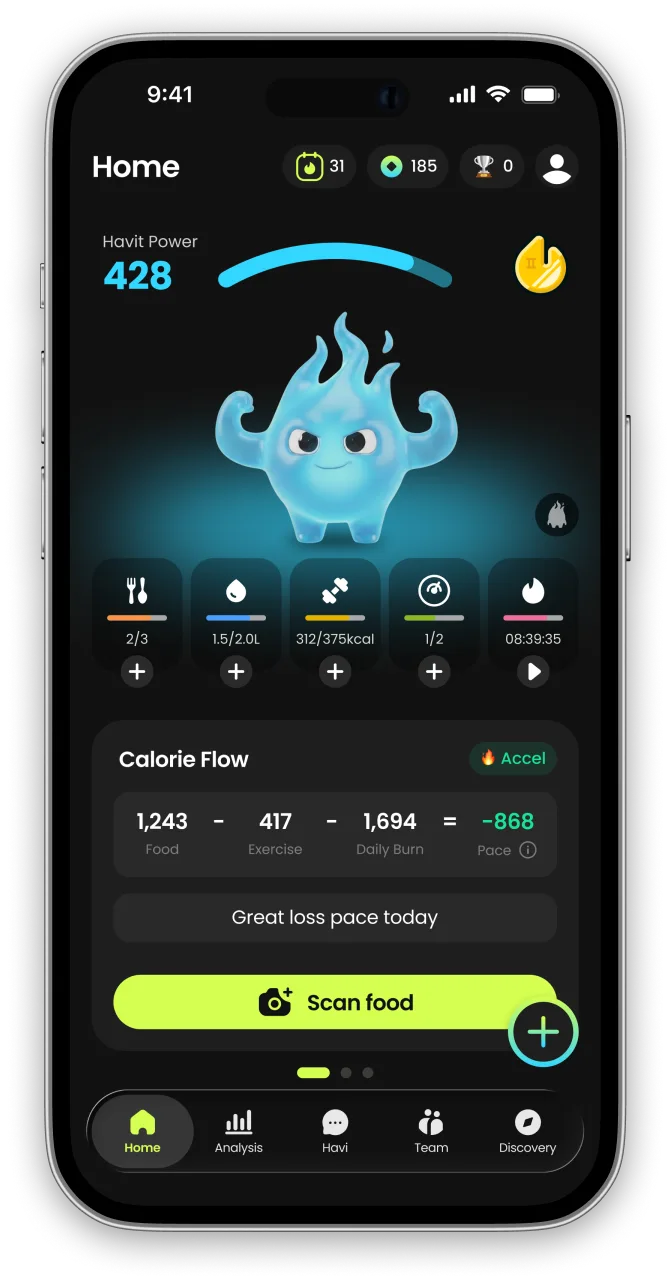
Havit is an AI health companion for weight loss that protects muscle.
Unlike calorie-only trackers, Havit connects AI body-composition estimates, nutrition, hydration, sleep, steps, cycle, mood, and GLP-1 medication in one daily routine — so progress is measured by body composition, not just the number on the scale. Daily missions turn established behavior-change techniques into small repeatable actions, drawing on expertise from professionals formerly at Juvis Diet, one of Korea’s leading metabolic clinics.
In Havit’s own analysis of 1,090 GLP-1 users, people who logged consistently built stronger habits than the general user base. Read the GLP-1 Habit Report
Havit works with or without GLP-1 medication. It is a wellness app, not a medical device; body-composition results are estimates.

Continue in the App
Personalized wellness with your own data


References
- Benign Fasciculation Syndrome: Clinical Characteristics and Long-term Outcomes — Muscle & Nerve, 2025
- Differential Diagnosis of Fasciculations in Clinical Practice — Neurology Clinical Practice, 2024
- Caffeine Intake and Neuromuscular Symptoms: A Population-Based Analysis — Neurology Clinical Practice, 2024
- Consensus Guidelines for Evaluation of Benign Fasciculations — Muscle & Nerve, 2025


