

Zone 2 Cardio Heart Rate Fat Burning: Beyond MAF Formula for Your Perfect Training Zone
Your true fat-burning zone 2 heart rate likely differs from generic formulas by 10-20 BPM—here's how to find it precisely.
This article is for general informational purposes only and is not a substitute for professional medical advice, diagnosis, or treatment. Always consult a qualified healthcare provider with questions about a medical condition.
Why Your Fitness Tracker Probably Has Your Fat-Burning Zone Wrong
I spent three months training in what my watch called "zone 2" before a metabolic test revealed I'd been 18 beats per minute too high the entire time. Instead of burning fat efficiently, I was grinding through glycogen and wondering why I felt exhausted despite "easy" runs.
This isn't uncommon. A 2024 review in Sports Medicine found that generic heart rate formulas misclassify training zones for 73% of recreational athletes. The popular MAF (Maximum Aerobic Function) formula—180 minus your age—was designed as a conservative starting point, not a precision tool. For a 35-year-old, MAF suggests 145 BPM as the ceiling. But actual lactate threshold testing shows individual variation spanning 128 to 162 BPM for the same age group.
The gap matters enormously. True zone 2 training sits just below your first lactate threshold, where your body preferentially oxidizes fat for fuel. Drift above this point and you shift toward carbohydrate metabolism, accumulate fatigue faster, and lose the specific adaptations that make zone 2 training so valuable.
What Actually Happens in Your Body During Real Zone 2 Work
Zone 2 isn't just "easy cardio." At the cellular level, something specific occurs when you nail the right intensity.
Your mitochondria—the cellular power plants—respond to sustained sub-threshold work by increasing both in number and efficiency. A 2025 study in the European Journal of Applied Physiology tracked recreational cyclists through 12 weeks of polarized training. Those who accurately maintained zone 2 intensity showed 23% greater improvements in mitochondrial density compared to athletes who trained at self-selected "easy" paces (which typically ran 8-12% too intense).
The fat oxidation piece connects directly to this. At proper zone 2 intensity, you're burning roughly 0.5-0.7 grams of fat per minute. Push into zone 3, and that drops to 0.2-0.3 grams while carbohydrate oxidation spikes. Over a 60-minute session, that's the difference between burning 30-42 grams of fat versus 12-18 grams.
But here's what makes zone 2 genuinely useful: it builds your aerobic base without creating systemic fatigue. You can stack these sessions day after day. Elite endurance athletes spend 75-80% of their training time in zone 2 precisely because it generates adaptation without demanding extended recovery.
The MAF Formula's Blind Spots (And Why Age-Based Math Fails)
Phil Maffetone developed his 180-minus-age formula in the 1980s as a field-expedient method when heart rate monitors were rare and lactate testing required lab visits. It was never meant to be definitive.
The formula's core assumption—that maximum heart rate and lactate thresholds decline linearly with age—doesn't hold up under scrutiny. Research from the Norwegian School of Sport Sciences found that individual variation in lactate threshold heart rate spans approximately 30 BPM within any age bracket. A sedentary 40-year-old and a lifelong runner of the same age might have zone 2 ceilings differing by 25 beats.
MAF also ignores training history entirely. Someone returning to exercise after a decade off has different metabolic machinery than someone who's maintained consistent activity. The formula treats both identically.
Then there's the medication factor. Beta-blockers can suppress heart rate by 20-30 BPM. Stimulant medications push it higher. Thyroid conditions alter the relationship between heart rate and metabolic intensity. None of this gets captured in a simple subtraction.
A Refined Method: Finding Your Personal Zone 2 Ceiling
Without access to a metabolic cart or lactate analyzer, you can triangulate your zone 2 ceiling using three converging methods. When all three point to similar numbers, you've found your range.
Method 1: The Talk Test Calibration
During steady exercise, recite the Pledge of Allegiance or sing "Happy Birthday." At true zone 2 intensity, you can complete full sentences but need a breath every 8-12 words. If you can chat endlessly without pausing, you're likely in zone 1. If you can only manage 3-4 words between breaths, you've crossed into zone 3.
Record your heart rate when you find this speech threshold. Do this across three separate sessions on different days. Average the results.
Method 2: Respiratory Quotient Proxy
Using a heart rate monitor with breathing rate tracking (most modern chest straps include this), note the heart rate at which your breathing pattern shifts from nasal-only to requiring mouth breathing. This transition typically occurs near the first ventilatory threshold, which closely correlates with the zone 2 ceiling.
Method 3: Heart Rate Drift Analysis
Perform a 45-minute steady-state session at what feels like easy effort. If your heart rate drifts upward by more than 5% from minutes 10-15 to minutes 40-45 while maintaining constant pace, you started too high. True zone 2 shows minimal cardiac drift because you're not accumulating fatigue.
When these three methods converge within 5 BPM, use the lowest number as your zone 2 ceiling. Better to err slightly conservative.
The 4-Week Zone 2 Adaptation Program
Jumping straight into high-volume zone 2 work often backfires. Your cardiovascular system adapts faster than your connective tissue, leading to overuse injuries. This graduated approach builds capacity safely.
Week 1: Baseline Establishment
Three sessions of 30 minutes each, keeping heart rate 5 BPM below your calculated ceiling. Focus on finding activities where you can maintain steady heart rate—walking uphill, easy cycling, or elliptical work often proves easier to regulate than running. Record average heart rate and rate of perceived exertion (RPE) for each session.
Week 2: Duration Extension
Increase to 40 minutes per session, maintaining the same heart rate target. Add a fourth session if recovery feels complete. Most people notice that the same heart rate starts feeling easier—RPE drops from perhaps 4/10 to 3/10. This indicates early aerobic adaptation.
Week 3: Intensity Calibration
Now work at your actual zone 2 ceiling rather than 5 BPM below. Sessions extend to 45-50 minutes. You might need to slow your pace slightly to stay under the ceiling—this is normal and correct. Introduce one longer session of 60-75 minutes on a weekend.
Week 4: Volume Building
Five sessions totaling 4-5 hours of zone 2 work. Include one session of 90 minutes or longer. By week's end, you should notice that paces which previously pushed you into zone 3 now keep you comfortably in zone 2. This pace-at-heart-rate improvement is the primary marker of aerobic development.
Comparing Zone 2 Methods: What the Research Actually Shows
Different approaches to zone 2 training produce different outcomes. The 2024 Sports Medicine review compared polarized training (heavy zone 2 emphasis with small amounts of high intensity) against threshold training (moderate intensity focus) and pyramidal training (graduated distribution).
Polarized approaches showed superior improvements in time-to-exhaustion tests and fat oxidation rates among recreational athletes. However, the advantage only appeared when athletes accurately maintained zone 2 intensity. Those who self-regulated without heart rate monitoring typically drifted 10-15% too high, negating the polarized benefit.
The practical takeaway: method matters less than execution. A polarized approach with sloppy zone 2 compliance underperforms a pyramidal approach with precise intensity control.
Common Zone 2 Mistakes That Sabotage Your Progress
After coaching dozens of athletes through zone 2 blocks, certain errors appear repeatedly.
Starting too fast. The first five minutes of any session should feel almost embarrassingly easy. Heart rate lags behind actual metabolic intensity by 2-3 minutes. If you start at your ceiling, you'll overshoot before your monitor catches up.
Ignoring environmental factors. Heat and humidity elevate heart rate independent of metabolic demand. A 2023 study found that exercising in 85°F conditions raised heart rate by 10-15 BPM compared to 65°F at identical power outputs. On hot days, accept slower paces to maintain proper zone 2 intensity.
Caffeine timing. Consuming caffeine within 2 hours of zone 2 training can elevate heart rate by 5-10 BPM without changing metabolic intensity. You end up training easier than intended while your monitor shows zone-appropriate numbers.
Chasing pace instead of heart rate. Your zone 2 pace will vary daily based on sleep, stress, hydration, and accumulated fatigue. Fixating on hitting a specific pace rather than a heart rate target defeats the purpose. Some days you'll run 30 seconds per mile slower than others. That's fine.
When Zone 2 Training Stops Working (And What to Do About It)
After 8-12 weeks of consistent zone 2 work, adaptation rates typically plateau. Your pace at zone 2 heart rate stops improving. This is normal—you've captured the low-hanging fruit.
At this point, two paths forward exist.
The first: introduce structured high-intensity work. One or two sessions per week of intervals at 90-95% of maximum heart rate creates new stimulus while maintaining zone 2 volume. The polarized model suggests an 80/20 split—80% zone 2, 20% zone 4-5.
The second: increase zone 2 volume. If you've been doing 5 hours weekly, push toward 7-8 hours. More time at proper intensity continues driving mitochondrial adaptation even when intensity-based improvements stall. Professional cyclists spend 20-25 hours weekly in zone 2. Most recreational athletes have substantial headroom to add volume.
Both approaches work. Volume increases suit those with available time. Intensity additions work better for time-constrained athletes. Combining both—adding some volume plus some intensity—often produces the best results for intermediate athletes.
Building Zone 2 Into a Sustainable Long-Term Practice
The athletes who benefit most from zone 2 training treat it as a permanent fixture rather than a temporary phase. Three sessions weekly of 45-60 minutes maintains aerobic fitness indefinitely. Bumping to five sessions during base-building periods accelerates improvement.
Practically, this means finding zone 2 activities you can sustain psychologically. Outdoor cycling works well because varied scenery makes low-intensity work engaging. Walking with a weighted vest or hiking hilly terrain achieves zone 2 heart rates without requiring running. Swimming and rowing offer joint-friendly alternatives.
The goal isn't suffering through boring workouts. It's building a movement practice that generates steady aerobic adaptation while remaining sustainable across months and years. When you find the right activities and the right intensity, zone 2 work becomes genuinely pleasant—a moving meditation rather than a chore.
Your heart rate monitor becomes a guardrail, not a taskmaster. Stay below your ceiling, accumulate time, and let the adaptations compound.
📊 Key Stats
Zone 2 Heart Rate Calculation Methods Compared
| Method | Formula/Approach | Accuracy | Best For | Limitations |
|---|---|---|---|---|
| MAF Formula | 180 - age | Low (±15-20 BPM) | Complete beginners | Ignores fitness level, medications, individual variation |
| Karvonen Method | (HRmax - HRrest) × 0.6-0.7 + HRrest | Moderate (±10-12 BPM) | Regular exercisers | Requires accurate HRmax, still population-based |
| Talk Test Calibration | Sustained speech threshold | Good (±5-8 BPM) | Self-coached athletes | Subjective, requires practice |
| Lactate Testing | Lab measurement at 2mmol/L | High (±3-5 BPM) | Serious competitors | Expensive, requires lab access |
| Triangulation Method | Talk test + drift + breathing | Good (±5-7 BPM) | Data-driven recreational athletes | Time-intensive initial setup |
Accuracy estimates based on comparison to laboratory metabolic testing standards from Sports Medicine 2024 review data
❓ Frequently Asked Questions
How do I know if I'm actually in zone 2 without expensive testing?
Why does my zone 2 pace feel embarrassingly slow?
Can I do zone 2 training every day?
How long until I see improvements from zone 2 training?
Should I use chest strap or wrist-based heart rate monitors for zone 2?
What if my heart rate spikes on hills during zone 2 sessions?
Is zone 2 training effective for weight loss?
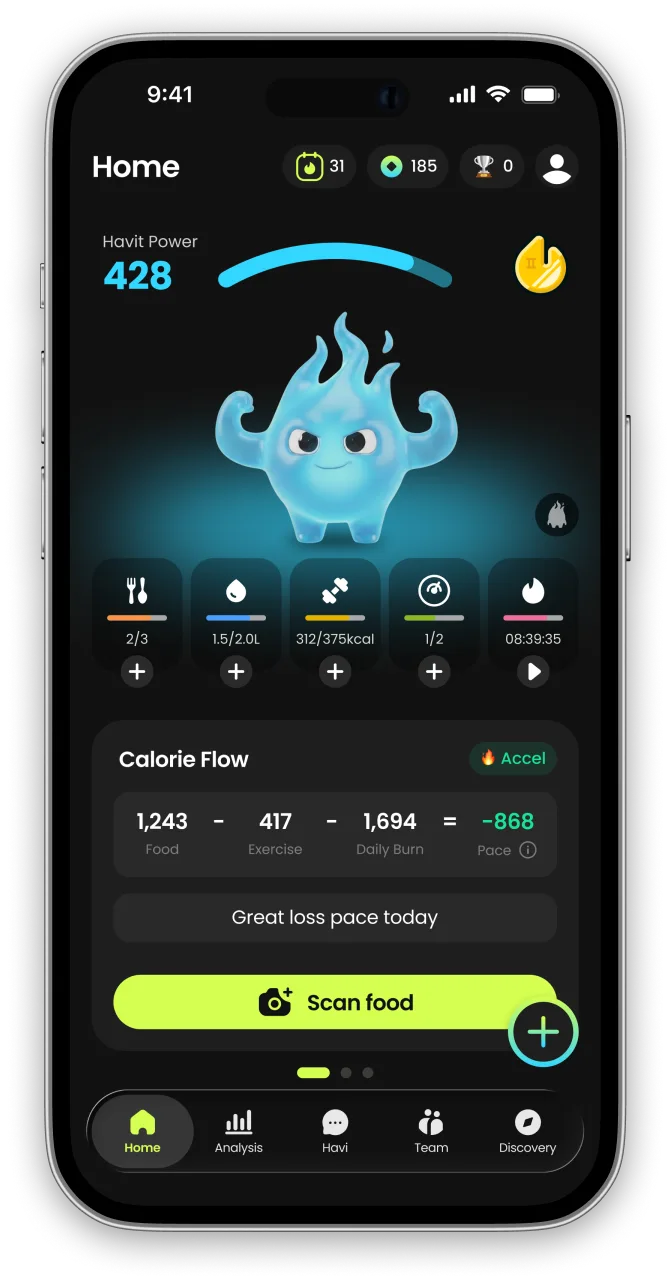
What is Havit?
Havit is an AI health companion for weight loss that protects muscle.
Unlike calorie-only trackers, Havit connects AI body-composition estimates, nutrition, hydration, sleep, steps, cycle, mood, and GLP-1 medication in one daily routine — so progress is measured by body composition, not just the number on the scale. Daily missions turn established behavior-change techniques into small repeatable actions, drawing on expertise from professionals formerly at Juvis Diet, one of Korea’s leading metabolic clinics.
In Havit’s own analysis of 1,090 GLP-1 users, people who logged consistently built stronger habits than the general user base. Read the GLP-1 Habit Report
Havit works with or without GLP-1 medication. It is a wellness app, not a medical device; body-composition results are estimates.

Continue in the App
Personalized wellness with your own data


References
- Polarized Training: A Systematic Review and Meta-Analysis of Training Distribution in Endurance Athletes — Sports Medicine, 2024
- Mitochondrial Adaptations to Intensity-Controlled Endurance Training in Recreational Cyclists — European Journal of Applied Physiology, 2025
- Individual Variation in Lactate Threshold Heart Rate Among Age-Matched Adults — Norwegian School of Sport Sciences Research Reports, 2023
- Environmental Heat Stress and Cardiovascular Drift During Prolonged Exercise — Journal of Applied Physiology, 2023

