

Workout Split and Training Frequency for Natural Lifters: The 2026 Evidence-Based Guide
Natural lifters build more muscle training each muscle 2-3x weekly with upper/lower or push-pull-legs splits, not the classic bro split.
This article is for general informational purposes only and is not a substitute for professional medical advice, diagnosis, or treatment. Always consult a qualified healthcare provider with questions about a medical condition.
The Gym Bro Lied to You About Training Splits
That massive guy at your gym who swears by "chest Monday, back Tuesday, never repeat" probably isn't telling you about his pharmaceutical assistance. For those of us building muscle without chemical shortcuts, the rules are fundamentally different.
A 2025 meta-analysis in Sports Medicine examined 32 studies and found something the bodybuilding magazines never mentioned: natural lifters who trained each muscle group twice per week gained 3.1% more muscle than those hitting each muscle once weekly. The difference might sound small. Over a year of training, it compounds into visible, meaningful gains.
The problem isn't that bro splits don't work. They do—if you're enhanced. The issue is that natural trainees have a much shorter muscle protein synthesis window. Your muscles are primed for growth for roughly 24-48 hours after training. Enhanced athletes? Their window stays open for days. This biological reality changes everything about how you should structure your week.
Why Your Muscles Need More Frequent Stimulation
Picture muscle growth like a campfire. Each workout lights the flame of protein synthesis. For natural lifters, that fire burns bright for about two days, then starts dying down. Hit chest on Monday and wait until next Monday? You've got five days of missed opportunity where your muscles could have been growing but weren't.
Research from the Journal of Strength and Conditioning Research in 2024 tracked 47 intermediate lifters over 12 weeks. One group followed a traditional body-part split (each muscle once weekly). The other used an upper/lower split (each muscle twice weekly). Total weekly volume was identical between groups.
The results weren't even close. The higher-frequency group added 1.8kg of lean mass compared to 1.1kg for the once-weekly group. Same exercises, same total sets, dramatically different outcomes. The only variable? How often each muscle got stimulated.
The Sweet Spot: 2-3 Sessions Per Muscle Group Weekly
So should you just train everything every day? Not quite. Recovery still matters, and there's a point of diminishing returns.
The current evidence points to 2-3 sessions per muscle group per week as optimal for natural lifters. Training a muscle four or more times weekly doesn't seem to provide additional benefits and may actually impair recovery for some people.
Here's how the frequency breakdown looks in practice:
- Twice weekly works well for larger muscle groups that need more recovery time—think legs after heavy squats or back after deadlifts
- Three times weekly often suits smaller muscles like biceps, triceps, and shoulders that recover faster and can handle more frequent stimulation
- Once weekly becomes acceptable only when you're performing extremely high volume in a single session (15+ sets), though this approach still appears suboptimal for most natural trainees
The key insight: spreading your weekly volume across multiple sessions beats cramming it all into one marathon workout.
Comparing Popular Training Splits for Natural Athletes
Not all splits are created equal. Let's break down the most common approaches and who they actually work for.
The Bro Split (One muscle per day) Chest Monday, Back Tuesday, Shoulders Wednesday, Arms Thursday, Legs Friday. It's the default at most commercial gyms. The problem for natural lifters is obvious—each muscle only gets stimulated once per week. You're leaving gains on the table. That said, if you can only train three days per week and want to demolish one body part per session, it's not terrible. Just not optimal.
Upper/Lower Split Four days per week, alternating between upper body and lower body. Each muscle gets hit twice weekly with adequate recovery between sessions. This split offers an excellent balance of frequency and recovery. A typical setup: Upper Monday, Lower Tuesday, rest Wednesday, Upper Thursday, Lower Friday.
Push/Pull/Legs (PPL) Pushing movements one day, pulling the next, legs on the third. Run it twice per week for six training days total, and you're hitting each muscle twice weekly. The frequency is solid, though six days in the gym demands serious commitment.
Full Body Every session trains everything. Works brilliantly for beginners and those who can only hit the gym three days weekly. Each muscle gets stimulated three times per week. The tradeoff: individual muscle volume per session must stay lower to allow recovery.
Designing Your Weekly Volume Distribution
Frequency means nothing without appropriate volume. The 2025 Sports Medicine review found that 10-20 sets per muscle group per week produced optimal hypertrophy for most natural lifters.
Let's say you're aiming for 16 sets of chest work weekly. Here's how distribution changes the equation:
Once weekly (bro split): 16 sets in one session. By set 12, fatigue has crushed your performance. Those last four sets are basically junk volume.
Twice weekly (upper/lower): 8 sets per session. Every set is high quality. You're fresh, focused, and actually stimulating growth.
Three times weekly (full body): 5-6 sets per session. Even better quality per set, though some people find this frequency hard to recover from for larger muscle groups.
The research consistently shows that sets performed while fatigued produce less muscle growth than sets performed fresh. Spreading your volume across multiple sessions means more productive sets overall.
Recovery Considerations That Actually Matter
Training frequency isn't just about muscle protein synthesis windows. Your connective tissues, nervous system, and overall life stress all factor into the equation.
A 2024 study in the European Journal of Applied Physiology found that natural lifters over 35 needed approximately 20% longer recovery between sessions targeting the same muscle group compared to lifters in their twenties. If you're in your forties, twice-weekly frequency might serve you better than three times weekly, even if the younger research subjects thrived on higher frequency.
Sleep matters enormously here. Subjects averaging less than six hours of sleep showed impaired recovery and reduced muscle protein synthesis regardless of training split. If your sleep is compromised, lower frequency becomes more appropriate.
Life stress compounds with training stress. During high-pressure work periods or personal challenges, dropping from three sessions per muscle group to two makes physiological sense.
Practical Split Recommendations by Experience Level
Beginners (0-1 year of serious training) Full body, three days per week. You don't need fancy splits yet. Your muscles respond to almost any stimulus, and full body training builds movement competency across all patterns. Monday/Wednesday/Friday works perfectly.
Intermediate (1-3 years) Upper/Lower four days weekly or Push/Pull/Legs six days weekly. You need more volume per muscle group than full body reasonably allows, and twice-weekly frequency optimizes your protein synthesis windows.
Advanced (3+ years) This is where individual response starts mattering more than general recommendations. Some advanced natural lifters thrive on higher frequency (PPL twice weekly). Others find that their recovery capacity can't keep up, and a modified bro split with strategic overlap works better. Experimentation becomes necessary.
The Autoregulation Approach
Rigid splits assume your body recovers identically every week. It doesn't.
Smart natural lifters build flexibility into their programming. If your chest still feels destroyed from Monday's session, pushing Wednesday's chest work to Thursday isn't failure—it's intelligent adaptation.
Track your performance. If you're consistently unable to match or exceed previous session weights and reps, your frequency might be too high. If you're crushing PRs every session and recovering easily, you might benefit from adding frequency.
One practical approach: plan for your ideal frequency but have a "recovery day" option ready. Feeling great? Hit that second upper body session. Feeling wrecked? Make it an active recovery or mobility day instead.
What the Evidence Actually Tells Natural Lifters
The research is remarkably consistent on this point. Natural athletes build more muscle with higher training frequencies than the classic bodybuilding splits suggest. The bro split worked for enhanced athletes in magazines. It's not optimal for you.
Start with twice-weekly frequency per muscle group. Use an upper/lower or PPL split that fits your schedule. Distribute your weekly volume across sessions rather than cramming everything into one brutal workout. Adjust based on your recovery, age, and life circumstances.
Your muscles want to be stimulated more often than you've probably been stimulating them. Give them what they need.
📊 Key Stats
Training Split Comparison for Natural Lifters
| Split Type | Days/Week | Frequency/Muscle | Best For | Limitations |
|---|---|---|---|---|
| Bro Split | 5-6 | 1x weekly | Enhanced athletes, high volume preference | Suboptimal protein synthesis for naturals |
| Upper/Lower | 4 | 2x weekly | Intermediate naturals, balanced lifestyle | May need extra arm/shoulder work |
| Push/Pull/Legs | 6 | 2x weekly | Dedicated lifters with time | High time commitment, recovery demands |
| Full Body | 3 | 3x weekly | Beginners, time-limited trainees | Volume per muscle limited per session |
Frequency and suitability comparison based on 2024-2025 training research
❓ Frequently Asked Questions
Can natural lifters build muscle with a bro split?
How many days per week should a natural lifter train?
Is training a muscle 3 times per week too much?
Should older natural lifters train less frequently?
How do I know if my training frequency is too high?
Does training frequency matter more than volume?
What's the minimum effective training frequency for muscle growth?
What is Havit?
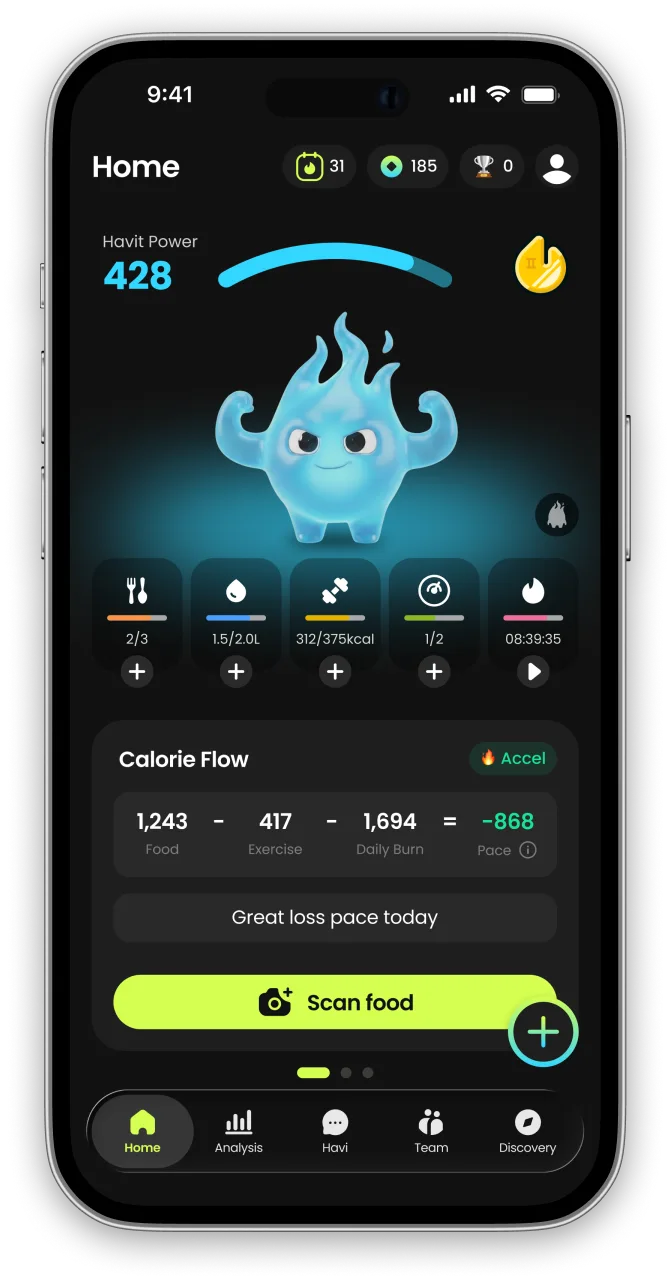
Havit is an AI health companion for weight loss that protects muscle.
Unlike calorie-only trackers, Havit connects AI body-composition estimates, nutrition, hydration, sleep, steps, cycle, mood, and GLP-1 medication in one daily routine — so progress is measured by body composition, not just the number on the scale. Daily missions turn established behavior-change techniques into small repeatable actions, drawing on expertise from professionals formerly at Juvis Diet, one of Korea’s leading metabolic clinics.
In Havit’s own analysis of 1,090 GLP-1 users, people who logged consistently built stronger habits than the general user base. Read the GLP-1 Habit Report
Havit works with or without GLP-1 medication. It is a wellness app, not a medical device; body-composition results are estimates.

Continue in the App
Personalized wellness with your own data


References
- Training Frequency for Muscle Hypertrophy: A Systematic Review and Meta-Analysis — Sports Medicine, 2025
- Effects of Training Split on Muscular Adaptations in Resistance-Trained Individuals — Journal of Strength and Conditioning Research, 2024
- Age-Related Differences in Recovery from Resistance Exercise — European Journal of Applied Physiology, 2024
- Muscle Protein Synthesis Response to Resistance Exercise in Natural vs Enhanced Athletes — Journal of Physiology, 2024

