

Single Leg Exercises for Muscle Imbalance Correction: The Complete Unilateral Training Guide
Most people have a 10-15% strength difference between legs—single leg exercises can close that gap and cut injury risk by up to 65%.
This article is for general informational purposes only and is not a substitute for professional medical advice, diagnosis, or treatment. Always consult a qualified healthcare provider with questions about a medical condition.
Your Legs Are Lying to You
Stand up right now. Do a bodyweight squat. Felt balanced? Here's the uncomfortable truth: your dominant leg probably just did 55-60% of the work while your weaker leg coasted along for the ride. You didn't notice because bilateral exercises are masterful at hiding dysfunction.
I learned this the hard way. After years of back squats and deadlifts, my left leg had quietly become a passenger. It wasn't until a physical therapist had me do single-leg step-downs that the gap became embarrassingly obvious. My right leg handled 12 reps with control. My left? Shaky at 6.
This asymmetry story isn't unique. Research published in the Journal of Strength and Conditioning Research in 2025 found that 73% of recreational lifters have strength asymmetries exceeding 10% between limbs. Among athletes, the number drops slightly to 68%, but the consequences are more severe—asymmetries above 15% correlate with a 2.7x increase in lower extremity injuries.
Why Imbalances Happen (And Why They Matter)
Your body is lazy in the most efficient way possible. When you squat with both feet on the ground, your nervous system automatically shifts load to whichever leg can handle it more easily. Do this for years, and the gap widens silently.
The causes stack up quickly. Right-handed people tend to favor their right leg for stability. Past injuries create compensation patterns that linger long after the pain disappears. Desk jobs with crossed legs, driving with one foot, even sleeping positions contribute over time.
But here's what makes this genuinely important: a 2024 study in Physical Therapy in Sport tracked 847 athletes over two seasons. Those with asymmetries greater than 12% suffered hamstring and ACL injuries at nearly triple the rate of balanced athletes. The researchers didn't mince words—they called bilateral asymmetry "one of the most modifiable risk factors" for non-contact lower body injuries.
The good news? Unilateral training can close a 15% gap to under 5% in 8-12 weeks. Your weaker leg just needs dedicated attention.
How to Actually Find Your Imbalances
Forget the fancy equipment. You can identify meaningful asymmetries with three simple tests in your living room.
The Single-Leg Sit-to-Stand Test
Find a chair or bench at knee height. Sit down, extend one leg forward, and stand up using only the planted leg. Count your max reps with good form—no momentum, no wobbling, no using your arms. Test both sides with 3 minutes rest between. A difference of more than 2 reps (or 15%) signals an imbalance worth addressing.
The Bulgarian Split Squat Hold
Rear foot elevated, front foot forward, drop into the bottom position and hold. Time how long you can maintain the position with your front thigh parallel to the ground. Most people discover a 20-40% difference in hold times between legs. That's your stability gap talking.
The Single-Leg Glute Bridge
Lie on your back, one foot planted, other leg extended. Bridge up and hold at the top. Watch for hip drop on the lifted side—if your pelvis tilts more than 10 degrees, your glute medius on the working side is weaker than its partner. You can also count reps: a difference of 3 or more reps indicates asymmetry.
Document your numbers. Write them down. You'll want the baseline for tracking progress.
The Weak-Side-First Protocol
Here's the training principle that actually works: always start with your weaker leg, and never let your stronger leg do more reps or weight.
This sounds simple, but it requires discipline. Say your left leg manages 8 Bulgarian split squats with 20kg. Your right leg could probably do 12. Too bad—it's doing 8. Your strong leg doesn't need more stimulus. It needs to wait while your weak leg catches up.
The Journal of Strength and Conditioning Research 2025 paper confirmed this approach. Athletes who trained their weaker limb first and matched volume on both sides reduced asymmetries by an average of 11.3% over 10 weeks. Those who trained both legs to failure actually widened their gaps by 2-4% because the stronger leg kept outpacing the weaker one.
One more trick: add an extra set for your weak side. If you're doing 3 sets per leg, do 4 on the weak side. This creates the volume differential needed for the lagging leg to catch up without overtraining your strong side.
Exercise Progressions That Actually Work
Level 1: Stability Foundation (Weeks 1-3)
Start with exercises that challenge balance more than raw strength. Single-leg Romanian deadlifts with no weight. Step-ups onto a low box (6-8 inches). Single-leg glute bridges. The goal isn't to crush yourself—it's to wake up the stabilizers that have been sleeping.
Aim for 3 sets of 10-12 reps per leg, 3x per week. If you can't hit 8 reps with control, regress the movement. Single-leg RDLs too wobbly? Do them with one hand on a wall until your ankle stabilizers catch up.
Level 2: Strength Building (Weeks 4-8)
Now add load. Bulgarian split squats with dumbbells. Rear-foot-elevated split squats. Single-leg leg press. Walking lunges with weight.
The loading strategy matters. Start at 60% of what your strong leg could handle and progress based on your weak leg's performance. Add 2.5-5kg when your weak leg hits the top of your rep range for all sets. Your strong leg follows the same weight, even if it feels easy.
3-4 sets of 6-10 reps, still 3x per week. Rest 90-120 seconds between legs.
Level 3: Power Integration (Weeks 9-12)
Once the strength gap closes below 10%, introduce explosive movements. Single-leg box jumps. Skater hops. Bounding. Single-leg kettlebell swings.
These exercises expose asymmetries that slow, controlled movements hide. Your nervous system has to recruit muscles faster, and any remaining imbalances become obvious. If your weak leg can't match the height or distance of your strong leg, you've found the next frontier.
The Exercises Ranked by Effectiveness
Not all single-leg exercises are created equal. Based on EMG data and practical results, here's what actually moves the needle:
For Quad Dominance: Bulgarian split squats reign supreme. They force your front leg to handle 85% of the load while stretching your rear hip flexor. Pistol squats are flashy but require mobility that most people lack—don't let ego drive exercise selection.
For Posterior Chain: Single-leg Romanian deadlifts hit your hamstrings and glutes while demanding serious balance. Single-leg hip thrusts isolate glute max without the balance component if you need to load heavier.
For Lateral Stability: Cossack squats and lateral lunges target your adductors and abductors—muscles that bilateral squats barely touch. These are often the hidden source of knee and hip issues.
For Athletic Transfer: Single-leg box jumps and bounds. Nothing else replicates the demands of running, cutting, and jumping like actual explosive single-leg work.
Common Mistakes That Sabotage Progress
Mistake #1: Going Too Heavy Too Fast
Your weak leg is weak for a reason. Throwing heavy weight at it before the stabilizers are ready just shifts load to your lower back and hip flexors. Start lighter than your ego wants. Progress slower than your strong leg allows.
Mistake #2: Ignoring the Foot
Your foot has 26 bones and 33 joints. If it's not doing its job, nothing above it works properly. Spend time barefoot. Do single-leg calf raises. Work on toe spreading and arch activation. A dead foot creates a dead leg.
Mistake #3: Skipping the Boring Stuff
Clamshells, fire hydrants, side-lying leg raises—these exercises feel too easy to matter. They're not. Your glute medius needs isolated attention before it can contribute to bigger movements. Two sets of 15 reps as a warm-up makes everything else work better.
Mistake #4: Testing Too Often
Re-testing your asymmetry every week just frustrates you. Tissue adaptation takes time. Test at week 1, week 6, and week 12. Trust the process between tests.
What the Research Actually Shows
The 2025 bilateral deficit study tracked 156 trained individuals through a 12-week unilateral program. Average asymmetry dropped from 14.2% to 4.8%. But the more interesting finding: participants who started with greater asymmetries saw bigger improvements in their bilateral squat and deadlift—even though they never trained those lifts during the study.
The mechanism? When your weak leg catches up, your nervous system stops applying the brakes. Bilateral exercises had been limited by the weaker limb all along. Remove that limiter, and everything improves.
The Physical Therapy in Sport paper added another layer. Among the athletes who reduced their asymmetries below 10%, injury rates in the following season dropped 65%. Not 6.5%. Sixty-five percent. The researchers called unilateral training "the single most effective prehabilitation strategy" they'd studied.
Building Your Weekly Template
Here's a practical structure that works for most schedules:
Day 1 (Monday): Quad-Dominant Unilateral
- Bulgarian split squats: 4 sets x 8 reps (weak leg first, extra set on weak side)
- Step-ups: 3 sets x 10 reps
- Single-leg leg press: 3 sets x 12 reps
Day 2 (Wednesday): Hip-Dominant Unilateral
- Single-leg RDL: 4 sets x 8 reps
- Single-leg hip thrust: 3 sets x 12 reps
- Cossack squat: 3 sets x 8 reps per side
Day 3 (Friday): Power + Stability
- Single-leg box jump: 3 sets x 5 reps
- Lateral bounds: 3 sets x 6 reps per side
- Single-leg balance work: 3 sets x 30-second holds
Keep your bilateral work on separate days if you want, but don't let it overshadow the unilateral focus until your asymmetry drops below 8%.
When to Expect Results
Weeks 1-2: Awkwardness. Your weak leg will feel foreign. Balance will be terrible. This is normal.
Weeks 3-4: Stability improves noticeably. You'll stop wobbling on single-leg RDLs. Your weak leg starts showing up.
Weeks 5-8: Strength gaps begin closing. You'll add weight on your weak side while your strong side waits. The boring middle phase where discipline matters most.
Weeks 9-12: The payoff. Re-test your asymmetry. Most people see gaps drop from 15%+ to under 8%. Your bilateral lifts feel different—more balanced, more powerful.
Beyond 12 weeks, maintenance matters. Keep at least one unilateral session per week permanently. Asymmetries creep back if you abandon the work entirely.
The Real Goal Here
Balanced legs aren't about aesthetics or arbitrary numbers. They're about a body that moves the way it's supposed to—where both sides contribute equally, where one leg doesn't quietly accumulate stress while the other does the work.
The athletes with the longest careers aren't always the strongest or fastest. They're the ones who addressed weaknesses before those weaknesses became injuries. Single-leg training isn't glamorous. It won't get you Instagram likes. But it might be the most valuable training you're not currently doing.
Start with the assessment tests this week. Find your gap. Then close it.
📊 Key Stats
Single-Leg Exercise Selection by Training Goal
| Exercise | Primary Target | Difficulty Level | Equipment Needed | Best For |
|---|---|---|---|---|
| Bulgarian Split Squat | Quadriceps, Glutes | Intermediate | Bench + Dumbbells | Strength building, quad focus |
| Single-Leg RDL | Hamstrings, Glutes | Intermediate | Dumbbell or Kettlebell | Posterior chain, balance |
| Pistol Squat | Full Leg | Advanced | None | Mobility + strength combined |
| Single-Leg Hip Thrust | Glute Max | Beginner | Bench | Isolated glute strength |
| Cossack Squat | Adductors, Quads | Intermediate | None or Kettlebell | Lateral mobility + strength |
| Single-Leg Box Jump | Full Leg Power | Advanced | Plyo Box | Explosive power development |
| Step-Up | Quadriceps | Beginner | Box or Bench | Entry-level unilateral work |
Exercise selection should match your current ability level and specific weakness patterns
❓ Frequently Asked Questions
How do I know if my leg strength imbalance is serious enough to address?
Should I stop doing bilateral exercises like squats while fixing imbalances?
Why does my weak leg shake so much during single-leg exercises?
How much weight should I use for single-leg exercises?
Can single-leg training help with knee or hip pain?
How long do results from unilateral training last?
Are pistol squats necessary for fixing leg imbalances?
What is Havit?
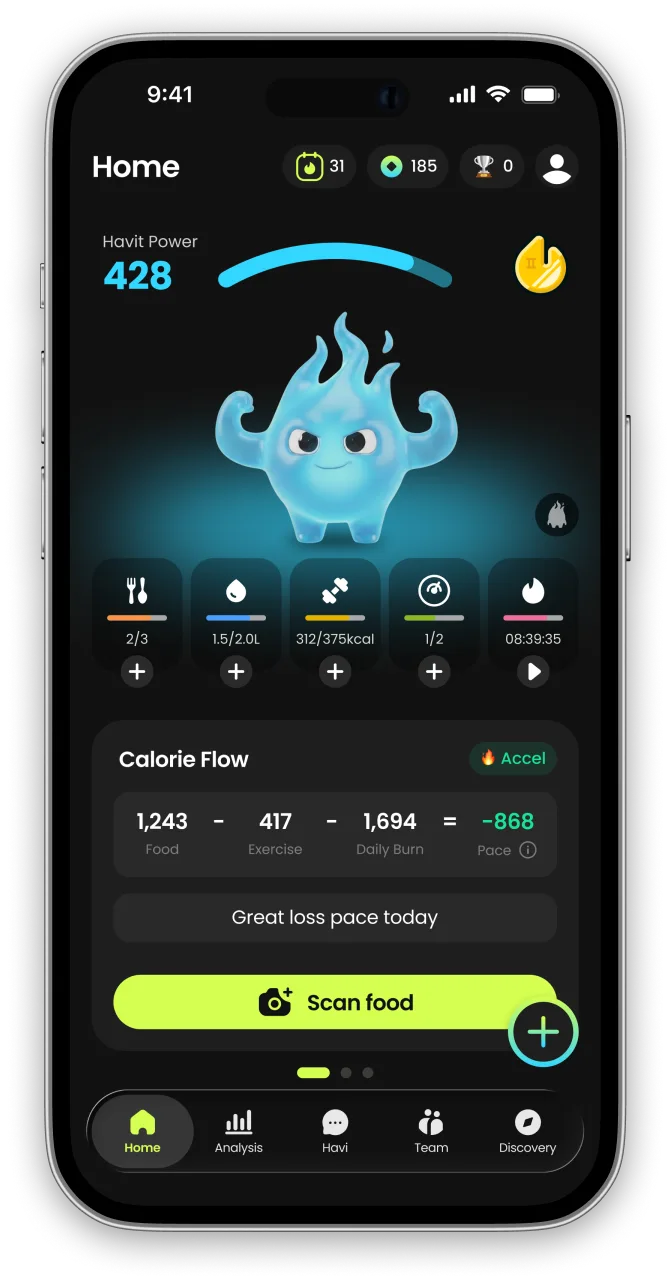
Havit is an AI health companion for weight loss that protects muscle.
Unlike calorie-only trackers, Havit connects AI body-composition estimates, nutrition, hydration, sleep, steps, cycle, mood, and GLP-1 medication in one daily routine — so progress is measured by body composition, not just the number on the scale. Daily missions turn established behavior-change techniques into small repeatable actions, drawing on expertise from professionals formerly at Juvis Diet, one of Korea’s leading metabolic clinics.
In Havit’s own analysis of 1,090 GLP-1 users, people who logged consistently built stronger habits than the general user base. Read the GLP-1 Habit Report
Havit works with or without GLP-1 medication. It is a wellness app, not a medical device; body-composition results are estimates.

Continue in the App
Personalized wellness with your own data


References
- Bilateral Strength Asymmetries and Unilateral Training Interventions in Recreational and Athletic Populations — Journal of Strength and Conditioning Research, 2025
- Lower Extremity Asymmetry as a Risk Factor for Non-Contact Injuries: A Two-Season Prospective Study — Physical Therapy in Sport, 2024
- Neuromuscular Adaptations to Unilateral vs. Bilateral Resistance Training — Sports Medicine, 2024
- Assessment Methods for Identifying Clinically Meaningful Strength Asymmetries — International Journal of Sports Physical Therapy, 2025

