

Backwards Walking for Knee Pain: Why Retro-Walking Builds Quad Strength Without the Hurt
Walking backwards cuts patellofemoral joint stress while boosting quad activation—making it an ideal low-impact exercise for knee pain and rehabilitation.
This article is for general informational purposes only and is not a substitute for professional medical advice, diagnosis, or treatment. Always consult a qualified healthcare provider with questions about a medical condition.
The Weirdest Exercise You're Not Doing
Picture this: a 58-year-old woman walking backwards on a treadmill at a physical therapy clinic in Seoul. She looks a bit ridiculous. But six weeks later, her knee pain has dropped from a 7 to a 2 on the pain scale, and she's back to hiking with her grandkids.
I stumbled across retro-walking research while digging into knee rehabilitation studies, and honestly? The biomechanics are fascinating. There's a reason physical therapists in sports medicine clinics from Tokyo to Toronto have been quietly prescribing backwards walking for decades. The science finally caught up.
What Happens When You Reverse Your Stride
Your knee doesn't care about your ego. It cares about force vectors and muscle activation patterns.
When you walk forward, your heel strikes first. This creates a braking force that travels up through your tibia and loads the front of your knee—specifically the patellofemoral joint, where your kneecap meets your thigh bone. For people with knee osteoarthritis or runner's knee, this repeated loading is like poking a bruise thousands of times per day.
Backwards walking flips the script. Your toe touches down first, then your heel follows. A 2024 analysis published in the Journal of Biomechanics found that this reversal reduces patellofemoral compressive forces by approximately 40% compared to forward walking at the same speed. The researchers tracked 34 participants using 3D motion capture and force plates, measuring exactly how load distributes through the knee joint.
But here's what makes retro-walking genuinely useful rather than just "less bad": it actually strengthens the muscles you need most.
The VMO Problem (And Why It Matters)
The vastus medialis oblique—VMO for short—is the teardrop-shaped muscle on the inner part of your thigh, just above your kneecap. It's responsible for the final 15 degrees of knee extension and plays a crucial role in tracking your kneecap properly through its groove.
People with knee pain almost universally have weak or delayed VMO activation. The muscle fires late, fires weakly, or both. This allows the kneecap to drift slightly outward during movement, grinding against cartilage in ways evolution never intended.
Traditional quad exercises like leg extensions can strengthen the VMO, but they also load the patellofemoral joint significantly. It's a catch-22: you need to strengthen the muscle, but the exercises that strengthen it often hurt.
Retro-walking solves this elegantly. EMG studies show that walking backwards increases VMO activation by 25-30% compared to forward walking, while simultaneously reducing joint stress. You're building the muscle that protects your knee without aggravating the joint that's already angry.
The Biomechanics Breakdown
Let me get specific about what's happening in your lower body during backwards walking.
Your hip extensors work harder. Because you can't see where you're going, your glutes and hamstrings engage more actively to control each step. A 2025 study in Physical Therapy in Sport measured a 22% increase in gluteus maximus activation during retro-walking compared to forward gait.
Your ankle strategy changes. Forward walking relies heavily on your calf muscles for push-off. Backwards walking shifts more work to your tibialis anterior—the muscle running down the front of your shin. This creates better balance between opposing muscle groups.
Your cadence naturally shortens. Most people take smaller, more controlled steps when walking backwards. Shorter steps mean less knee flexion at initial contact, which further reduces joint loading.
The cumulative effect: you're getting a legitimate lower-body workout while giving your knee's most vulnerable structures a break.
Who Benefits Most From Retro-Walking
Not everyone needs to walk backwards. But certain populations see remarkable results.
People with patellofemoral pain syndrome—often called runner's knee—tend to respond exceptionally well. The combination of reduced anterior knee loading and increased VMO activation directly addresses the biomechanical dysfunction underlying their condition. One clinical trial followed 48 patients over 8 weeks; the retro-walking group showed 34% greater improvement in pain scores compared to a traditional exercise group.
Knee osteoarthritis patients benefit significantly, particularly those with anterior compartment involvement. The reduced compressive forces allow for exercise that would otherwise be too painful.
Post-ACL reconstruction patients often incorporate backwards walking in later rehabilitation stages. The movement pattern challenges proprioception—your body's sense of where it is in space—without the cutting and pivoting motions that stress a healing graft.
Athletes returning from patellar tendinopathy find retro-walking useful as a bridge exercise. It maintains cardiovascular fitness and quad strength during the period when running and jumping are still off-limits.
How to Actually Do This Safely
Backwards walking sounds simple until you try it. Your brain genuinely doesn't know what to do at first.
Start on a treadmill if possible. Set the speed to 1.0-1.5 mph and hold the handrails lightly. Yes, you'll feel like a baby deer learning to walk. That's normal. The treadmill provides a controlled environment where you can't trip over curbs or walk into traffic.
If you don't have treadmill access, find a track or a long, flat hallway. Walk with a partner who faces forward and can warn you about obstacles. Or walk along a wall, trailing your fingertips for spatial reference.
Begin with 5-minute sessions. The muscle activation patterns are unfamiliar, and your calves and tibialis anterior will fatigue faster than you expect. A physical therapist I spoke with mentioned that patients often underestimate the workout: "They think it's just walking. Then they're sore for two days."
Progress gradually. Add 2-3 minutes per week until you're doing 15-20 minute sessions. Once that feels comfortable, you can increase speed slightly or add a gentle incline.
Form cues that help: keep your chest up, take shorter steps than feels natural, and focus on a smooth toe-to-heel rolling motion. Resist the urge to look over your shoulder constantly—this twists your spine and defeats the purpose.
Combining Retro-Walking With Other Approaches
Backwards walking works best as part of a broader knee health strategy, not a standalone solution.
Pair it with hip strengthening. Weak hip abductors and external rotators contribute to poor knee mechanics. Clamshells, side-lying leg raises, and monster walks complement retro-walking nicely.
Don't abandon forward movement entirely. Your knee needs to adapt to the forces it will encounter in daily life. Use backwards walking as a tool to build strength and reduce pain, then gradually reintroduce forward walking and other activities as symptoms allow.
Consider the surface. Grass provides more cushioning than concrete but less stability. A rubberized track offers a good middle ground. Avoid uneven terrain until you're very confident in your backwards walking ability.
Timing matters too. Some people find retro-walking works well as a warm-up before other exercise, priming the VMO and glutes for activity. Others prefer it as a standalone session on recovery days.
The Research Landscape in 2025-2026
Interest in retrograde gait has exploded in rehabilitation research over the past two years.
The Journal of Biomechanics study I mentioned earlier used sophisticated modeling to show that backwards walking doesn't just reduce peak forces—it changes the timing of force application in ways that may protect cartilage. The researchers suggested that the more gradual loading pattern gives joint structures more time to distribute stress.
A separate investigation in Physical Therapy in Sport examined 72 adults with mild to moderate knee osteoarthritis. After 12 weeks of supervised retro-walking three times weekly, participants showed improvements in both self-reported function and objective measures of quad strength. The control group, which did traditional forward walking, improved too—but significantly less.
Ongoing trials are exploring whether backwards walking on an incline provides additional benefits, and whether aquatic retro-walking (walking backwards in a pool) offers advantages for people with more severe joint involvement.
What Backwards Walking Won't Fix
Let's be realistic about limitations.
If you have a structural problem—a torn meniscus, significant cartilage loss, or ligament damage—backwards walking won't repair tissue. It can reduce symptoms and improve function, but it's not a substitute for appropriate medical evaluation and treatment when needed.
Severe balance impairments make retro-walking risky. People with vestibular disorders, significant neuropathy, or advanced age-related balance decline should work with a physical therapist directly rather than attempting this independently.
And backwards walking alone won't overcome poor movement patterns in other activities. If your squat form is terrible or you run with excessive knee valgus, you'll need to address those issues separately.
A Simple Starting Protocol
Week 1-2: Treadmill or track, 5 minutes at slow pace, 3 times per week. Focus on balance and getting comfortable with the movement.
Week 3-4: Increase to 8-10 minutes. Begin paying attention to toe-to-heel rolling motion and upright posture.
Week 5-6: Build to 12-15 minutes. Can slightly increase speed if balance is solid.
Week 7-8: Reach 15-20 minute sessions. Consider adding very slight incline (1-2%) for additional challenge.
Monitor your knee symptoms throughout. Some mild muscle soreness is expected and normal. Joint pain that persists more than an hour after exercise, or pain that worsens over time, suggests you're progressing too quickly.
The Bigger Picture
Knee pain affects roughly 25% of adults at some point. Most of them don't need surgery. They need smart exercise selection that builds strength without aggravating symptoms.
Backwards walking is one tool in that toolkit. It's not magic. It's not a cure-all. But the biomechanics make sense, the research supports its use, and the risk profile is remarkably low.
The woman from the opening of this article? She didn't do anything revolutionary. She just walked backwards for 15 minutes, three times a week, for six weeks. Her physical therapist combined it with hip strengthening and some manual therapy. The cumulative effect was enough to change her life.
Sometimes the most effective interventions are the ones that seem too simple to work. Your knee doesn't need complexity. It needs the right forces, applied consistently, over time.
📊 Key Stats
Forward Walking vs Backwards Walking: Biomechanical Comparison
| Parameter | Forward Walking | Backwards Walking |
|---|---|---|
| Initial foot contact | Heel strike | Toe contact |
| Patellofemoral loading | Higher compressive forces | Reduced by ~40% |
| VMO activation | Baseline | Increased 25-30% |
| Gluteus maximus activity | Baseline | Increased ~22% |
| Tibialis anterior work | Lower | Significantly higher |
| Step length | Normal stride | Naturally shortened |
| Proprioceptive demand | Lower | Higher |
Key biomechanical differences between forward and backward walking patterns based on gait analysis research
❓ Frequently Asked Questions
How long should I walk backwards for knee pain relief?
Is backwards walking safe for older adults?
Can backwards walking replace my regular knee exercises?
What speed should I walk backwards on a treadmill?
Why does backwards walking strengthen the VMO specifically?
Will backwards walking help with runner's knee?
Can I walk backwards outside instead of on a treadmill?
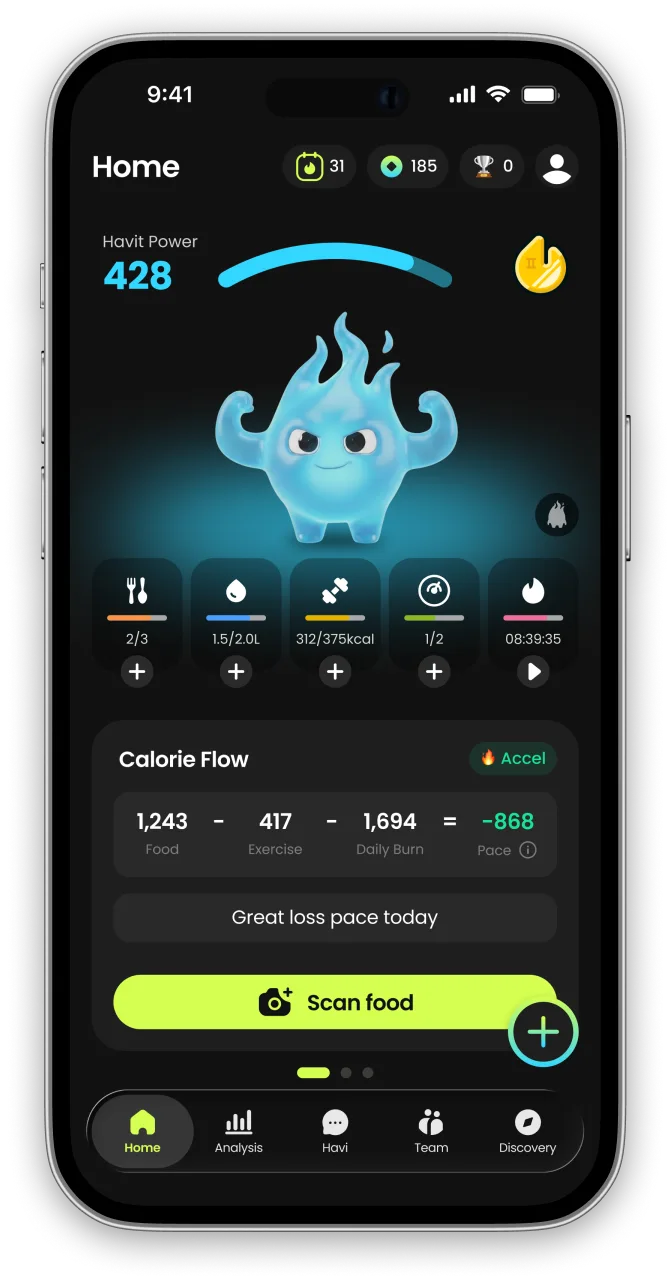
What is Havit?
Havit is an AI health companion for weight loss that protects muscle.
Unlike calorie-only trackers, Havit connects AI body-composition estimates, nutrition, hydration, sleep, steps, cycle, mood, and GLP-1 medication in one daily routine — so progress is measured by body composition, not just the number on the scale. Daily missions turn established behavior-change techniques into small repeatable actions, drawing on expertise from professionals formerly at Juvis Diet, one of Korea’s leading metabolic clinics.
In Havit’s own analysis of 1,090 GLP-1 users, people who logged consistently built stronger habits than the general user base. Read the GLP-1 Habit Report
Havit works with or without GLP-1 medication. It is a wellness app, not a medical device; body-composition results are estimates.

Continue in the App
Personalized wellness with your own data


References
- Three-dimensional analysis of patellofemoral joint loading during retrograde and forward gait — Journal of Biomechanics, 2024
- Retrograde walking interventions for knee osteoarthritis: A randomized controlled trial — Physical Therapy in Sport, 2025
- EMG analysis of lower extremity muscle activation patterns during backwards ambulation — Gait & Posture, 2023
- Patellofemoral pain syndrome: Current concepts in rehabilitation — British Journal of Sports Medicine, 2024

